‘The Value of the Ability to Deal with Disequilibria,’ by Theodore Schultz
The most valuable skill in the age of artificial intelligence (AI) may not be coding, prompt engineering, or any of the other competencies appearing in job listings. It may be the ability to figure out which skills will be valuable next. Half a century ago, Theodore Schultz had a name for something much like this: ... ‘The Value of the Ability to Deal with Disequilibria,’ by Theodore Schultz

‘The Economics of the Marriage Contract: Theories and Evidence,’ by Niko Matouschek and Imran Rasul
Marriage is a natural subject for law & economics scholars. From Gary Becker’s “A Treatise on the Family” (1981) to Margaret Brinig’s “From Contract to Covenant” (2000), scholars have expanded our understanding of romantic love by examining it through an economic lens. Some object that bringing law & economics into marriage risks coarsening and cheapening ... ‘The Economics of the Marriage Contract: Theories and Evidence,’ by Niko Matouschek and Imran Rasul

‘Incomplete Contracts and the Theory of Contract Design,’ by Robert Scott and George Triantis
Economists and lawyers know that almost every contract is incomplete. Contracts routinely omit or leave undefined important terms, and they rarely anticipate every circumstance that might frustrate performance. The reason is simple: It makes little sense to spend $1,000 drafting a provision that has an expected value of only $100. Parties therefore leave lower-value contingencies ... ‘Incomplete Contracts and the Theory of Contract Design,’ by Robert Scott and George Triantis

‘The Use of Knowledge in Society,’ by Friedrich A. Hayek
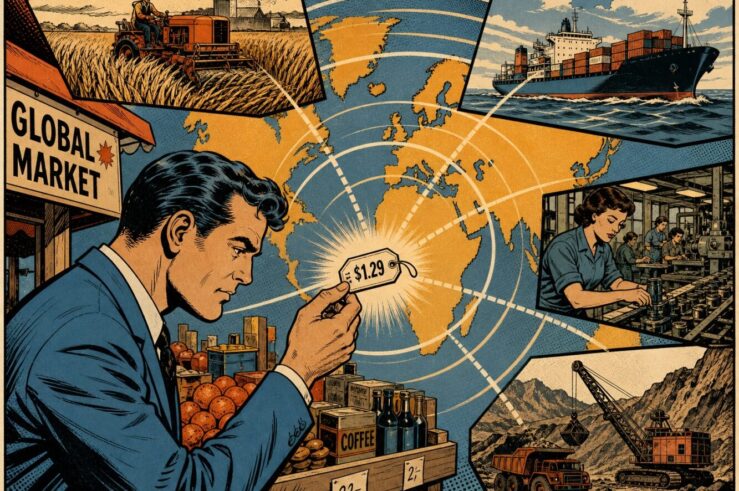
The wealth and technological sophistication of modern society are readily apparent. Less visible, but no less remarkable, is its ability to coordinate the actions of billions of people who know almost nothing about one another’s circumstances. Every day we make decisions without possessing most of the information on which those decisions ultimately depend. We purchase ... ‘The Use of Knowledge in Society,’ by Friedrich A. Hayek
‘Deliberation as Self-Discovery and Institutions for Political Speech,’ by Catherine Hafer and Dimitri Landa
The We Are What We Read series is, in part, about what defines the field of law & economics. The field’s natural home lies in applications that are, well, economic. Hence its longstanding—and now standard—role in contracts, corporations, antitrust, torts, and other areas. For this selection, I wanted to show how law & economics can ... ‘Deliberation as Self-Discovery and Institutions for Political Speech,’ by Catherine Hafer and Dimitri Landa

‘The Logic of Political Survival,’ by Bruce Bueno de Mesquita, Alastair Smith, Randolph M. Siverson & James D. Morrow
Since the COVID-19 pandemic and the political upheavals that followed, concerns have grown that many Western democracies face authoritarian pressure and are becoming less democratic. This shift has renewed interest in one of political science’s most influential frameworks for understanding democratic and nondemocratic rule: Selectorate Theory, developed by Bruce Bueno de Mesquita, Alastair Smith, Randolph ... ‘The Logic of Political Survival,’ by Bruce Bueno de Mesquita, Alastair Smith, Randolph M. Siverson & James D. Morrow

‘Uncertainty, Evolution, and Economic Theory,’ by Armen Alchian
One of the most persistent criticisms of law & economics is that it rests on unrealistic assumptions. Economic models often assume firms maximize profits, investors respond rationally to incentives, and market participants systematically adjust their behavior in predictable ways. Critics frequently point to these assumptions as evidence that economic analysis is detached from reality. Real ... ‘Uncertainty, Evolution, and Economic Theory,’ by Armen Alchian

‘Raid or Trade? An Economic Model of Indian-White Relations’ by Terry L. Anderson & Fred S. McChesney
The traditional domain of law & economics is the courtroom, the legislature, and the administrative agency. But in their 1994 article, “Raid or Trade? An Economic Model of Indian-White Relations,” Terry Anderson and Fred McChesney took the theoretical tools developed to explain modern legal disputes and set out to settle a wider continent. When European ... ‘Raid or Trade? An Economic Model of Indian-White Relations’ by Terry L. Anderson & Fred S. McChesney

‘Punitive Damages as Societal Damages,’ by Catherine M. Sharkey
Catherine Sharkey’s “Punitive Damages as Societal Damages” addresses a tension that has been obvious for decades, but usually treated as an annoyance: punitive damages are justified in public-regarding terms—punishment, deterrence, and condemnation—yet delivered through private litigation and typically paid to a single plaintiff. The doctrinal rhetoric often tracks conduct broad in scope, such as systematic ... ‘Punitive Damages as Societal Damages,’ by Catherine M. Sharkey

‘Market Power in Antitrust: Economic Analysis after Kodak,’ by Benjamin Klein
In 1992, the U.S. Supreme Court held in Eastman Kodak Co. v. Image Technical Services that a firm without market power in photocopiers might still possess market power in photocopier parts and service. The Court’s logic turned on opportunistic hold-up: Kodak could profit by trading short-run exploitation of locked-in customers for long-run losses in equipment ... ‘Market Power in Antitrust: Economic Analysis after Kodak,’ by Benjamin Klein

The Evaluative Emptiness of the Economic Approach to Law
Law & economics traces its intellectual roots to the University of Chicago. That lineage still shapes how the field is understood. Chicago price theory—especially Gary Becker’s (1976) systematic application of maximization, equilibrium, and stable preferences across social life, and George Stigler’s (1992, p. 459) suggestion that “every durable social institution or practice is efficient, or ... The Evaluative Emptiness of the Economic Approach to Law

‘What is Law? A Coordination Model of the Characteristics of Legal Order,’ by Gillian Hadfield and Barry Weingast
“What Is Law? A Coordination Model of the Characteristics of Legal Order” by Gillian K. Hadfield and Barry R. Weingast asks whether legal order requires a centralized enforcement agency. The paper argues it does not. It presents a model in which a system of decentralized enforcement, carried out collectively by individual agents, sustains legal order. ... ‘What is Law? A Coordination Model of the Characteristics of Legal Order,’ by Gillian Hadfield and Barry Weingast