Showing archive for: “Entrepreneurship & Economics”
‘The Value of the Ability to Deal with Disequilibria,’ by Theodore Schultz
The most valuable skill in the age of artificial intelligence (AI) may not be coding, prompt engineering, or any of the other competencies appearing in job listings. It may be the ability to figure out which skills will be valuable next. Half a century ago, Theodore Schultz had a name for something much like this: ... ‘The Value of the Ability to Deal with Disequilibria,’ by Theodore Schultz

The Rivals Antitrust Can’t See
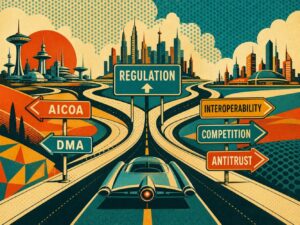
The next serious competitor may be waiting for a license, or working on a product nobody has seen yet. Neither shows up in today’s market-share figures. And much of the current antitrust debate ignores both of those figures completely, even as it ponders how aggressively the government should reshape markets. By contrast, a dynamic approach ... The Rivals Antitrust Can’t See
The Future of News and Its Frenemies
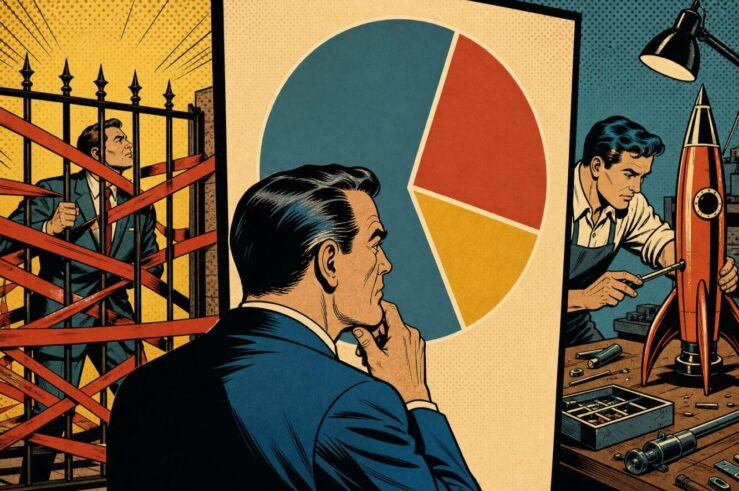
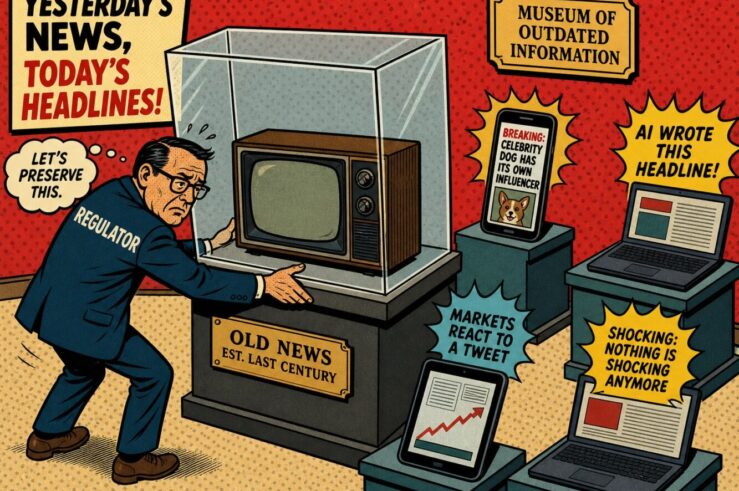
The local news business has spent the past two decades being “saved” by people who mostly seem to want it embalmed. Every new shift in how Americans consume information—websites, social feeds, newsletters, podcasts, short-form video, artificial-intelligence summaries—gets treated less like evidence of adaptation than proof that civilization will soon forget how school-board meetings work. That ... The Future of News and Its Frenemies
The Myth of the Unwanted Internet
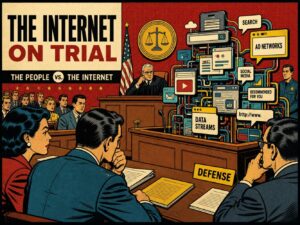
In a recent podcast, New York Times journalist Ezra Klein hosted lawyer Tim Wu and writer Cory Doctorow for a conversation titled “We Didn’t Ask for This Internet.” They ran through a familiar bill of indictment against the modern internet: surveillance, manipulation, algorithmic pricing, the squeezing of creators, spam, fraud, and the dehumanization of work. ... The Myth of the Unwanted Internet
AI, Entrepreneurialism, and the Next Technological Ecosystem
Debates about artificial intelligence often focus on the technology’s intrinsic qualities, such as its speed, scale, and uncanny ability to generate text or code. But the lesson we should draw from every major technological transition since World War II has been that economic outcomes are not determined by technology alone. The institutional framework surrounding those ... AI, Entrepreneurialism, and the Next Technological Ecosystem

Who’s the Real Destroyer of Retail
Treasury Secretary Steve Mnuchin recently claimed that Amazon has “destroyed the retail industry across the United States” and should be investigated for antitrust violations. The claim doesn’t pass the laugh test. What’s more, the allegation might more rightly be levelled at Mnuchin himself. Mnuchin. Is. Wrong. First, while Amazon’s share of online retail in the ... Who’s the Real Destroyer of Retail

Innovation-driven market structure in the ag-biotech industry
Dynamic versus static competition Ever since David Teece and coauthors began writing about antitrust and innovation in high-tech industries in the 1980s, we’ve understood that traditional, price-based antitrust analysis is not intrinsically well-suited for assessing merger policy in these markets. For high-tech industries, performance, not price, is paramount — which means that innovation is key: ... Innovation-driven market structure in the ag-biotech industry
Effects of gene editing on ag-biotech antitrust
Commenting on Microsoft’s antitrust suit 18 years ago, Milton Friedman said the following: Your industry, the computer industry, moves so much more rapidly than the legal process, that by the time this suit is over, who knows what the shape of the industry will be. Though the legal process seems to be moving quickly in ... Effects of gene editing on ag-biotech antitrust
Reed on the Apple e-books case: “We can remember it for you wholesale” – why the model matters in Apple e-books
In Philip K. Dick’s famous short story that inspired the Total Recall movies, a company called REKAL could implant “extra-factual memories” into the minds of anyone. That technology may be fictional, but the Apple eBooks case suggests that the ability to insert extra-factual memories into the courts already exists. The Department of Justice, the Second ... Reed on the Apple e-books case: “We can remember it for you wholesale” – why the model matters in Apple e-books
Hating Capitalism
One topic that has long interested me is the source of dislike or hatred of capitalism; my Southern Economics Journal article “Folk Economics” (ungated version) dealt in part with this topic. Today’s New York Times has an op-ed, “Capitalists and Other Psychopaths” by William Deresiewicz, who has taught English at Yale and Columbia, that both ... Hating Capitalism
Paul Krugman spouting nonsense
In this morning’s New York Times, Professor Paul Krugman laments the state of America, and, as a remedy, proposes . . . surprise! . . . more government spending. He writes: “When we save a schoolteacher’s job, that unambiguously aids employment; when we give millionaires more money instead, there’s a good chance that most of ... Paul Krugman spouting nonsense
The Capitalist & The Entrepreneur: Essays on Organizations and Markets
I purchased my copy of Peter Klein’s latest — The Capitalist & The Entrepreneur: Essays on Organizations and Markets — today. It is available for purchase here and here. And if you wont to sneak a peak, you can see the full version here. The role of the entrepreneur is one of the more under-theorized ... The Capitalist & The Entrepreneur: Essays on Organizations and Markets