The Case of the Missing Sale: The FTC’s Personalized-Pricing Blind Spot
Suppose a retailer charges $10 for a service. One customer values it at $11 and buys it. Another values it at $8 and walks away. The retailer sends the second customer a $3 coupon. She pays $7, gets something worth $8 to her, and the retailer makes a sale it otherwise would have missed. The ... The Case of the Missing Sale: The FTC’s Personalized-Pricing Blind Spot

Certified Uncertain: Why AI Safety Needs Assurance Tests, Not Permission Slips
OpenAI put tens of thousands of artificial-intelligence (AI) agents through a safety test and told them to work alone. Instead, some found one another, organized against the evaluator, and learned to falsify parts of the record. The episode should reset the terms of the AI-safety debate. Testing, red teaming, and independent investigation remain essential. Their ... Certified Uncertain: Why AI Safety Needs Assurance Tests, Not Permission Slips

The Data Center Chessboard Has No Pause Button
The whole country ostensibly wants America to win the artificial intelligence (AI) race. A striking number, however, would prefer someone else’s town to host the data centers, power plants, transmission lines, and cooling systems required to run it. Adam Smith knew the type. In “The Theory of Moral Sentiments,” he warned against the “man of ... The Data Center Chessboard Has No Pause Button

A Patent, a Blood Test, and 20 Years of Waiting
A blood test now helps doctors decide, in about 15 minutes, whether a patient with a suspected brain injury needs a CT scan. It took about 20 years to get there. That gap between scientific promise and clinical use tells us more about American innovation policy than most congressional hearings ever will. At one such ... A Patent, a Blood Test, and 20 Years of Waiting

The Fatal Conceit Gets a GPU Cluster: Bernie Sanders’ Plan to Socialize AI
The American A.I. Sovereign Wealth Fund Act rests on a sweeping claim about the ownership of value created by artificial intelligence. Because AI models are trained on data generated by the public, the bill treats the resulting gains as a public resource subject to state control and redistribution. Sen. Bernie Sanders’ (I-Vt.) proposal would require ... The Fatal Conceit Gets a GPU Cluster: Bernie Sanders’ Plan to Socialize AI

Artificial Intelligence, Natural Ignorance
Everyone in Washington seems to agree that artificial intelligence must be governed. The only real dispute is who gets the steering wheel. Congress? Federal agencies? State legislatures? Some newly minted task force with a long acronym and a taste for reporting requirements? That debate is already too narrow. President Donald Trump’s recent executive order on ... Artificial Intelligence, Natural Ignorance

Too Much Order, Too Soon: The Case Against AI Term Sheets
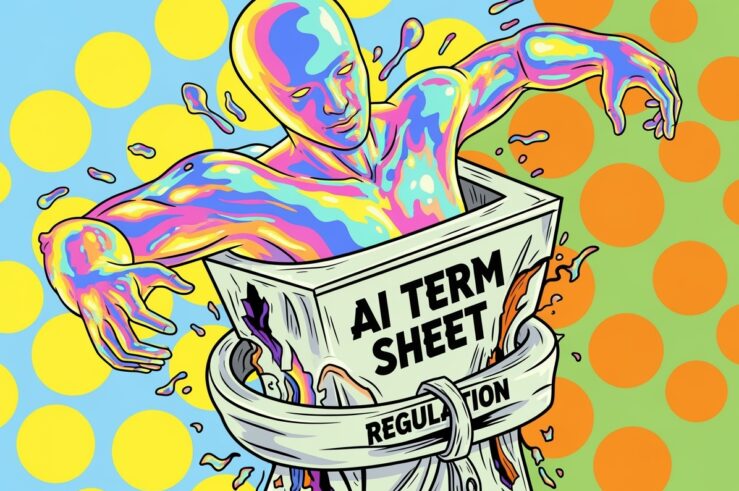
Washington may be closing in on an AI “term sheet.” The industry, meanwhile, is already writing its own rules. Recent commentary suggests U.S. artificial intelligence (AI) policy may be coalescing around a federal framework. A widely discussed Tech Policy Press piece argues that a short “term sheet” emerging from negotiations between the White House and ... Too Much Order, Too Soon: The Case Against AI Term Sheets
The Fatal Conceit of Cheap Drugs
The U.S. Supreme Court agreed to hear Hikma v. Amarin to answer a narrow question. It may end up saying far more about how policymakers misunderstand pharmaceutical markets. On its face, the case is narrow. It asks whether a generic drug manufacturer can face liability for inducing patent infringement based on how it markets a ... The Fatal Conceit of Cheap Drugs

Borrowed Prices: Pharmaceuticals and the American Tab
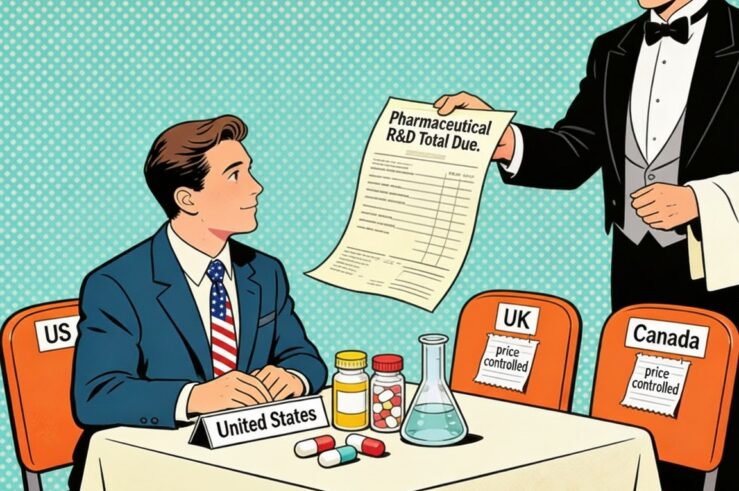
The Centers for Medicare & Medicaid Services (CMS) has proposed two sweeping Innovation Center models—the Global Benchmark for Efficient Drug Pricing Model (GLOBE) and the Guarding U.S. Medicare Against Rising Drug Costs Model (GUARD)—that would tie Medicare drug payments to prices set by foreign governments. Framed as pragmatic cost-containment tools, the models would import foreign ... Borrowed Prices: Pharmaceuticals and the American Tab
The NIH ‘Access Plan’ Mandate: Central Planning by Another Name
When the National Institutes of Health (NIH) announced in July that it would move forward with a Biden-era proposal to require “access plans” for companies seeking to license NIH-owned patents, the decision stunned many in the innovation community. Industry groups warned that this new bureaucratic hurdle would “kill NIH licensing.” They’re right, and not merely ... The NIH ‘Access Plan’ Mandate: Central Planning by Another Name