Showing archive for: “Corporate Governance: Acquisitions Mergers Contests for Control & Activism”
Four Patents and a Time Machine: CareFirst and the Perils of Backdated Antitrust
Four patents can carry a lot of antitrust baggage—especially when they come tucked inside a portfolio of more than 500. In CareFirst of Maryland v. Johnson & Johnson, health insurer CareFirst alleges that Johnson & Johnson unlawfully acquired and later asserted four patents to delay competition from biosimilars, highly similar alternatives to biologic drugs, for ... Four Patents and a Time Machine: CareFirst and the Perils of Backdated Antitrust
The Fatal Conceit Gets a GPU Cluster: Bernie Sanders’ Plan to Socialize AI
The American A.I. Sovereign Wealth Fund Act rests on a sweeping claim about the ownership of value created by artificial intelligence. Because AI models are trained on data generated by the public, the bill treats the resulting gains as a public resource subject to state control and redistribution. Sen. Bernie Sanders’ (I-Vt.) proposal would require ... The Fatal Conceit Gets a GPU Cluster: Bernie Sanders’ Plan to Socialize AI

The FTC’s Sunk-Cost Social Network
The first rule of holes is supposed to be: stop digging. The sunk-cost fallacy is realized when we keep digging anyway—and then call it resolve. We—people—often have a hard time letting a bad thing go. That’s true even for those who are well acquainted with the sunk-cost fallacy and should know better. I’ve been there. ... The FTC’s Sunk-Cost Social Network

‘Uncertainty, Evolution, and Economic Theory,’ by Armen Alchian
One of the most persistent criticisms of law & economics is that it rests on unrealistic assumptions. Economic models often assume firms maximize profits, investors respond rationally to incentives, and market participants systematically adjust their behavior in predictable ways. Critics frequently point to these assumptions as evidence that economic analysis is detached from reality. Real ... ‘Uncertainty, Evolution, and Economic Theory,’ by Armen Alchian
In Space, No One Can See Your HHI
Two rocket companies walk into an antitrust review. They leave as a de facto monopoly. And somehow, the punchline may be that this was good for consumers, taxpayers, and maybe even competition. A little context. In 2006, Boeing and Lockheed Martin combined their launch divisions into a joint venture called United Launch Alliance (ULA). That’s ... In Space, No One Can See Your HHI

False Positives, Real Casualties: The High Price of Populist Antitrust
Spirit Airlines was supposed to be the “maverick” antitrust saved from JetBlue. Instead, the deal died, Spirit followed it into bankruptcy, and the maverick exited the market altogether. That is an awkward result for a merger challenge brought in the name of preserving competition—and a useful place to start a broader reconsideration of error costs. ... False Positives, Real Casualties: The High Price of Populist Antitrust

The Paramount Question Isn’t Paramount
Big mergers make headlines. They don’t always make antitrust problems. In a previous commentary, I explored the antitrust implications of a potential acquisition of Warner Bros. Discovery (WBD). That uncertainty is now resolved. On Feb. 27, Paramount Skydance Corp. agreed to acquire WBD for roughly $110 billion in enterprise value—$31 per share, all cash. The ... The Paramount Question Isn’t Paramount
Acquihires and Antitrust: When Buying the Team Isn’t Buying the Company
The Federal Trade Commission (FTC) has trained its sights on one of Silicon Valley’s most familiar deal structures: the “acquihire.” In a Bloomberg podcast interview, FTC Chair Andrew Ferguson said the agency plans to scrutinize how acquihires are structured—looking for features that could bring them within merger law and trigger Hart-Scott-Rodino Act (HSR) reporting thresholds. ... Acquihires and Antitrust: When Buying the Team Isn’t Buying the Company

Acquihires and Other Antitrust Ghost Stories
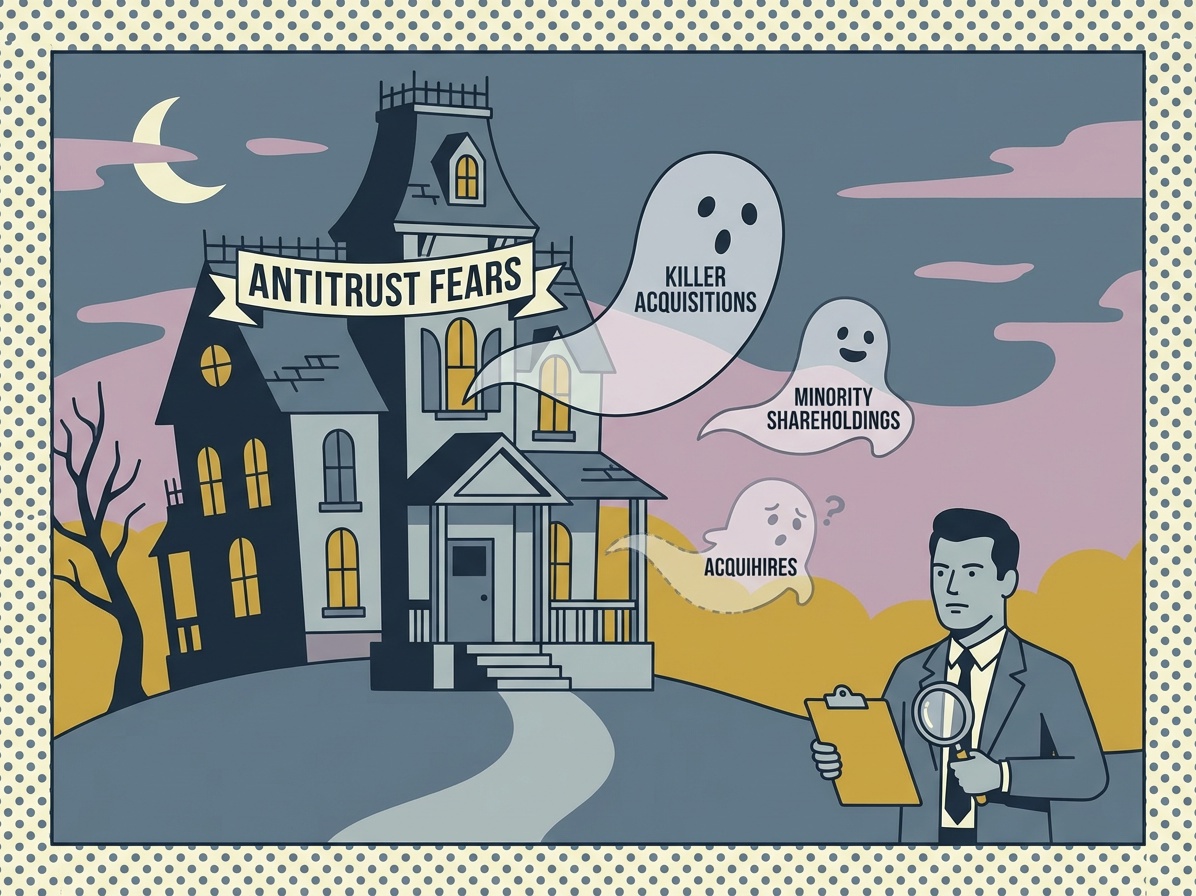
Merger-control debates tend to repeat themselves. As new transaction forms emerge, regulators often move quickly to respond before harm becomes irreversible. Over the past decade, this pattern played out in debates over “killer acquisitions,” and earlier, minority shareholdings. Today, a similar dynamic surrounds so-called “acquihires.” Acquihires are transactions aimed primarily at acquiring a firm’s workforce, ... Acquihires and Other Antitrust Ghost Stories
Antitrust at the Agencies: Vacaturs and Vacancies Edition
Gail Slater has left the building. And that’s a shame, I think. On Feb. 12, Slater posted the following on X: It is with great sadness and abiding hope that I leave my role as AAG for Antitrust today. It was indeed the honor of a lifetime to serve in this role. Huge thanks to ... Antitrust at the Agencies: Vacaturs and Vacancies Edition

Canada’s Merger Guidelines: Size on Trial
Canada is on the verge of hard-coding costly mistakes into its merger policy. The Competition Bureau’s proposed merger guidelines aim to translate Parliament’s recent overhaul of the Competition Act into enforcement practice. The draft instead risks entrenching a merger regime that treats market structure as destiny, discounts consumer-benefiting efficiencies, and substitutes blunt presumptions for evidence ... Canada’s Merger Guidelines: Size on Trial

The Right Approach to Reviewing Netflix-Warner Bros
Ahead of tomorrow’s Senate Judiciary Antitrust Subcommittee hearing, a group of former federal antitrust enforcers sent an open letter to the U.S. Justice Department (DOJ) and the full Judiciary Committee urging a consumer-welfare-focused review of the proposed Netflix–Warner Bros. Discovery merger. The letter rejects the progressive analytical framework advanced during the prior administration and calls ... The Right Approach to Reviewing Netflix-Warner Bros