Showing archive for: “Comparative Law & Trans-National Studies”
Brussels Rules Without the Brussels Perks
Brussels’ latest competition guidelines should probably come with a warning label. Countries borrowing them risk importing dubious economics, remedies designed for Europe’s very specific institutional problems, and a trade fight with Washington. On Sept. 3, after a three-year process, the European Commission adopted its first guidelines on exclusionary abuses under Article 102 of the Treaty ... Brussels Rules Without the Brussels Perks

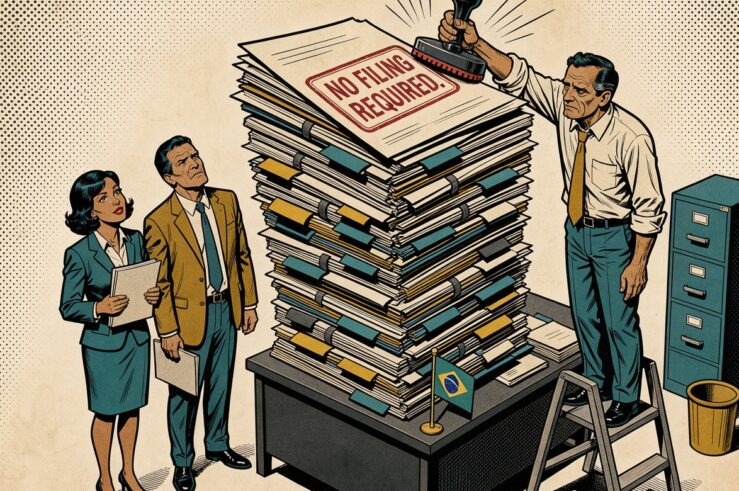
Two Years, 57 Pages, No Merger: Amazon, Anthropic, and Brazil’s Filing Problem
The wave of artificial intelligence (AI) partnerships and “acqui-hires”—deals to acquire a company’s talent—has reached Brazil. The tribunal of Brazil’s Administrative Council for Economic Defense (CADE) decided its first batch of such cases involving large technology firms and AI startups in May. A second round followed in September with Amazon/Anthropic—the would-be merger that turned out ... Two Years, 57 Pages, No Merger: Amazon, Anthropic, and Brazil’s Filing Problem
No Country for Young Posters: Social Media Bans Outrun the Evidence
Governments around the world are rushing to address the youth mental health crisis, with social media squarely in their sights. From Capitol Hill to Paris to Sydney, lawmakers are proposing or enacting strict age restrictions that would ban teenagers from creating social media profiles. But are these heavy-handed mandates the right approach? A recent white ... No Country for Young Posters: Social Media Bans Outrun the Evidence

Premium, Regular, or Collusive? Brazil’s Aprix Case Tests Algorithmic Pricing
Few antitrust investigations find their theory of harm laid out in the target’s sales brochure. Brazil’s investigation of Aprix, a startup that sells pricing software to gas stations, nearly managed the feat. One of the company’s promotional brochures introduced prospective clients to the prisoner’s dilemma, the classic game-theory example in which individually rational choices can ... Premium, Regular, or Collusive? Brazil’s Aprix Case Tests Algorithmic Pricing

Copy, Paste, Compensate: Nigeria’s Misguided Bid to Make Big Tech Pay for News
Nigeria has looked south and seen a $40 million payday for the press. The trouble is that it misread both the price tag and the fine print—and its attempt to collect may leave Nigerian publishers with fewer readers and no comparable payday. On July 6, Nigeria’s Federal Competition and Consumer Protection Commission (FCCPC) announced investigations ... Copy, Paste, Compensate: Nigeria’s Misguided Bid to Make Big Tech Pay for News

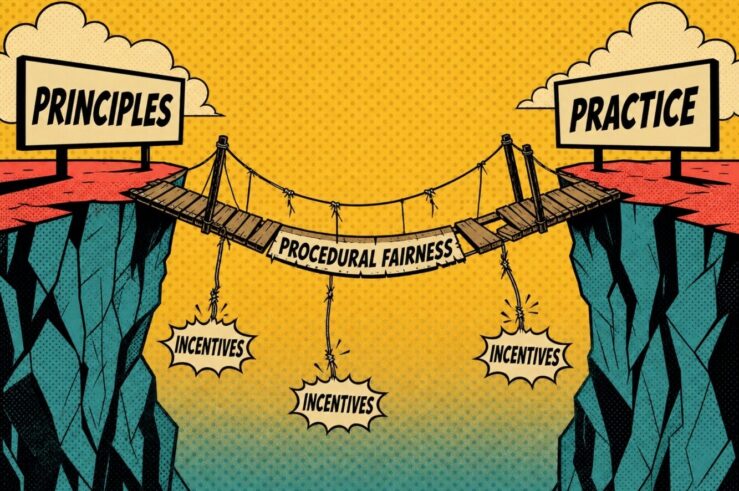
Competition Law’s Fairness Gap: Why Better Procedure Requires Better Incentives
Everyone agrees competition enforcement should be fair. Agreement gets shakier once fairness starts costing agencies time, discretion, or victories. Competition authorities often warn that procedure should not become an obstacle to enforcement. Fair enough. Antitrust investigations can be slow, document-heavy, and vulnerable to delay tactics. A firm with deep pockets may try to turn “process” ... Competition Law’s Fairness Gap: Why Better Procedure Requires Better Incentives
Brazil’s Gatekeeper Bill Gets a Tuneup, Not a Rethink
Brazil may soon become the first country in the Americas to regulate digital platforms before they do anything wrong. Bill 4,675/2025 would let the Administrative Council for Economic Defense (CADE) designate large technology companies as having “systemic relevance” and impose special obligations without first proving anticompetitive conduct or consumer harm. That is a substantial change ... Brazil’s Gatekeeper Bill Gets a Tuneup, Not a Rethink

Brazil’s Google News Case and the Art of Not Letting Go
Some legal cases age like wine. Others age like browser tabs left open too long. Brazil’s Google News inquiry belongs firmly in the latter category. On April 3, Brazil’s Administrative Council for Economic Defense (CADE) announced that its Tribunal had unanimously decided to send a seven-year-old administrative inquiry concerning Google’s use of journalistic content—whether for ... Brazil’s Google News Case and the Art of Not Letting Go

The European Commission’s Search-Data Trust Fall
The European Commission is trying to pull off a difficult trick: force Google to share search-query data with rivals while insisting the shared data is no longer personal data at all. That is the central tension in the Commission’s April 16 preliminary findings under Article 8(2) of the Digital Markets Act (DMA), which specify how ... The European Commission’s Search-Data Trust Fall

Africa’s Imitation Game in Competition Law
African competition authorities are importing the wrong model of competition enforcement—and doing so without the institutional capacity to make even the right model work. Across the continent, regulators are reaching for Europe’s most ambitious digital frameworks. The Common Market for Eastern and Southern Africa (COMESA) Competition and Consumer Commission (CCC) recently overhauled its regime to ... Africa’s Imitation Game in Competition Law

When a Blue Checkmark Becomes a €120 Million Problem
The European Commission’s first major enforcement action under the Digital Services Act (DSA) offers an early glimpse of how the European Union intends to regulate large digital platforms—and how far that approach may diverge from the U.S. model. The DSA is an EU regulation governing how online intermediary services operate, including social-media platforms, online marketplaces, ... When a Blue Checkmark Becomes a €120 Million Problem

COMESA, WhatsApp Business, and Antitrust in Search of a Theory
Meta’s decision to limit third-party AI access to WhatsApp Business has quickly drawn antitrust scrutiny across multiple jurisdictions. The Common Market for Eastern and Southern Africa (COMESA) Competition and Consumer Commission (CCCC) is the latest authority to open an investigation. But before the case can answer whether Meta’s conduct harms competition, a more basic question ... COMESA, WhatsApp Business, and Antitrust in Search of a Theory