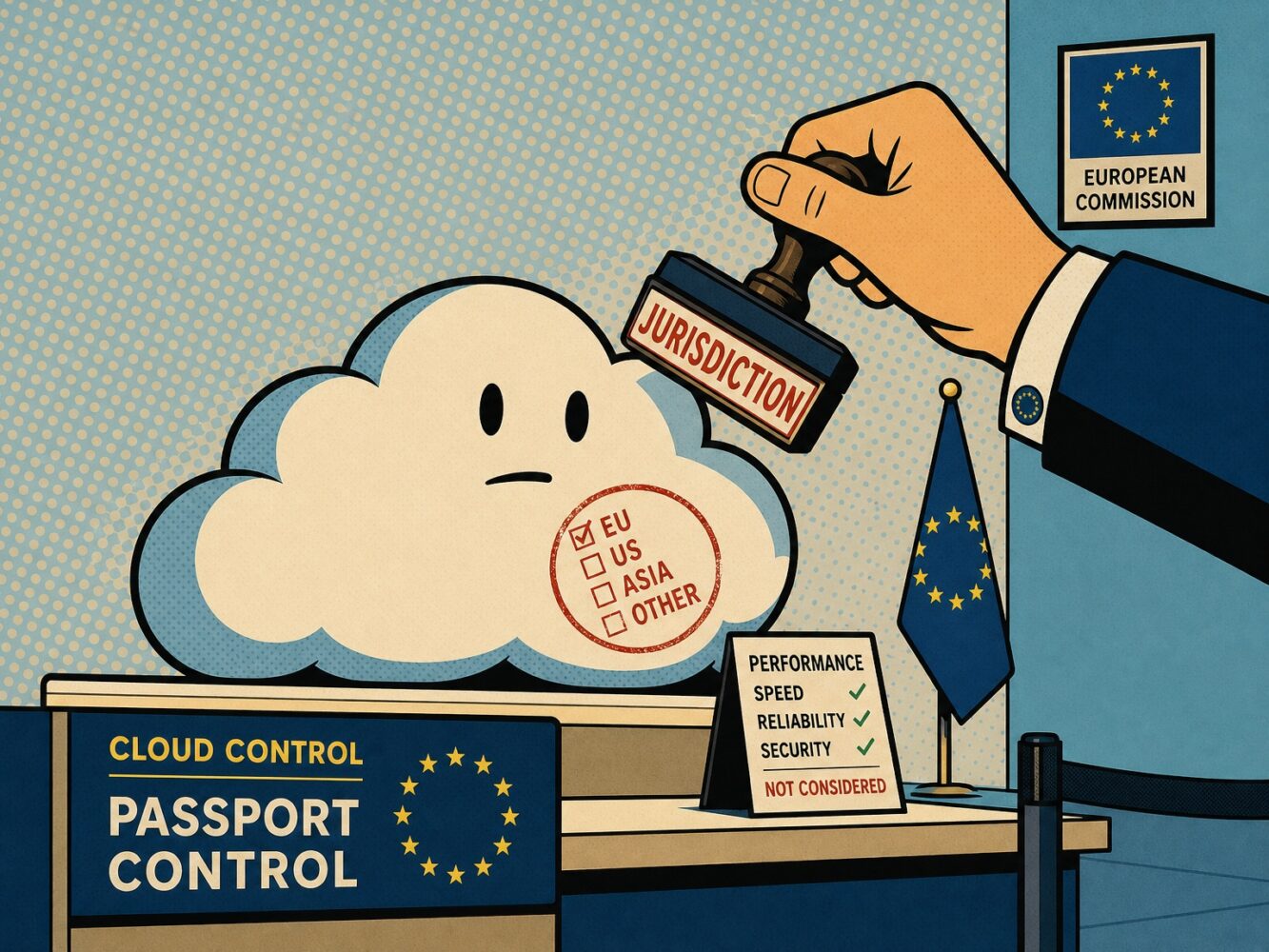
Brussels’ latest competition guidelines should probably come with a warning label. Countries borrowing them risk importing dubious economics, remedies designed for Europe’s very specific institutional problems, and a trade fight with Washington.
On Sept. 3, after a three-year process, the European Commission adopted its first guidelines on exclusionary abuses under Article 102 of the Treaty on the Functioning of the European Union (TFEU). Article 102 prohibits companies from abusing a dominant market position, including through practices that improperly shut out competitors. The guidelines replace the 2008 Guidance Paper on Enforcement Priorities for Exclusionary Abuses. The question here is whether jurisdictions in Latin America, Asia, and Africa should follow their approach.
The reach of the “Brussels effect”—the influence of European Union (EU) rules abroad—is debatable, but the influence itself is clear. Since the EU adopted the Digital Markets Act (DMA), which imposes special obligations on large digital platforms designated as “gatekeepers,” the Common Market for Eastern and Southern Africa (COMESA) has overhauled its rules along similar lines. Japan has enacted its Mobile Software Competition Act, while Brazil, Vietnam, and others have debated their own ex ante regimes—rules that apply upfront, rather than through enforcement after alleged misconduct.
Of course, competition agencies can borrow another jurisdiction’s guidelines more easily than its regulations: Guidelines look like technical advice, attract less political scrutiny, and require no new legislation.
And, indeed, some provisions may be worth borrowing, but wholesale adoption risks importing dubious economics and ill-suited responses to Europe’s political and institutional problems. Those flaws could prove especially harmful elsewhere, while adopting Brussels’ approach to digital rules now carries a concrete risk of trade retaliation.
A Presumption Too Far
Other jurisdictions should examine the EU’s guidelines carefully before borrowing their framework.
There are welcome provisions. From the outset (¶ 2), the guidelines recognize that Article 102 TFEU “does not prevent an undertaking from acquiring a dominant position on a given market based on its own merits, in particular its skills and abilities.” Whether recent EU case law has honored that principle is debatable, but its inclusion is a positive development.
The guidelines also clarify that Article 102 TFEU “does not preclude the departure from the market or the marginalization, as a result of competition on the merits, of competitors that are less efficient than the dominant undertaking and thus less attractive to consumers.” They call it “helpful” to explain “the economic mechanism through which the conduct is capable of directly or indirectly harming consumers”—the “theory of harm.” These are sound, if largely established, principles of abuse-of-dominance law.
The expanded discussion of objective justification and efficiencies—legitimate reasons for conduct and the economic benefits it produces—is a real improvement over the five paragraphs it replaces. The cautious opening to out-of-market efficiencies, or benefits outside the market under investigation (¶ 237), is also a refinement other jurisdictions could usefully adopt.
But the positives largely end there, particularly when the guidelines venture into new territory. Consider the empirical claim in ¶ 4:
In view of growing market concentration in various industries and of the digitalisation of the European Union economy, which makes strong network effects (8) and ‘winner-takes-all’ dynamics increasingly common, it is important that Article 102 TFEU is applied vigorously and effectively.
Network effects arise when a service becomes more valuable as more people use it, potentially helping a leading firm capture much of a market. But the premise of growing concentration—larger shares of business in fewer firms’ hands—is debatable, and the guidelines cite no supporting literature. Concentration’s implications for consumers and economic welfare are also less clear-cut than this passage suggests. As the International Center for Law & Economics (ICLE) explained in its comments on the draft guidelines:
Market concentration “is not, in itself, a bad thing; indeed, recent research challenging the standard account demonstrates that much observed concentration is driven by increased productivity, rather than by anticompetitive conduct or anticompetitive mergers.” There’s no empirical evidence that market concentration has been increasing or that it is necessarily leading to increased market power or harm to the competitive process or consumers. (Citations omitted)
The growing emphasis on digital markets, both in competition policy generally and in these guidelines, raises another question: Is enforcement targeting the markets that most need it? As Herbert Hovenkamp put it:
Antitrust enforcement produces good results when it directs its resources at clearly harmful practices in sluggish markets that show little economic progress. Such markets can benefit from a kickstart. That applies to both identifying violations and creating remedies. An antitrust remedy in a poorly performing market stands a good chance of making the market work better and is less likely to cause serious harm. After all, there are few places to go except up.
Internet technology, including the large firms we call “big tech,” does not come close to satisfying these criteria. The rise of internet commerce and emergence of large digital firms is a tidal wave whose effects are still in progress. Tech firms have put far more into the economy than they have taken out.
(…)
Online markets also do very well when measured on the demand side. Internet prices are usually competitive with offline prices for the same products, and often lower. Customer search costs are almost always lower as well. The customer unhappy with a product or price at Home Depot can get in her car and compare prices at Walmart. The internet customer can do the same thing in a second with a mouse click. In addition, information about prices, quality, or consumer satisfaction is almost always easier to obtain. Someone examining a power tool while standing in a physical Walmart or Home Depot store does not have immediate access to the experiences of other customers. If she wants to obtain it, she will probably go online.
Neither Hovenkamp nor I argue that digital markets deserve a “free pass.” But digitalization alone does not justify more aggressive antitrust enforcement.
Despite this weak empirical foundation, the guidelines seem to push EU competition law in the DMA’s direction, without ever mentioning it.
Consider “self-preferencing,” or a firm favoring its own products or services on its platform. The guidelines appropriately state that “(t)here is no general rule that self-preferencing is problematic from a competition standpoint, even when carried out by dominant undertakings.” Yet the factors listed in ¶ 196 make it easier for the Commission to establish an abuse or require the company to defend its conduct, rather than requiring the Commission to prove that it harms competition.
One factor asks whether preferential treatment amounts to an “unjustified difference in treatment”—because it conflicts with the business rationale or because “in the leveraging market there is an expectation of neutrality or openness.” Here, the leveraging market is the market where the firm allegedly uses its power to benefit a product in another market. Another factor asks whether the treatment influences users “irrespective of the intrinsic qualities of the leveraged product.”
A firm may rank, integrate, or make its own service the default for many reasons: faster performance, security, lower transaction costs, quality control, or liability. An expectation of neutrality does little to distinguish legitimate choices from harmful ones.
The guidelines also identify “conduct that is by its very nature harmful to competition” (¶¶ 198-201), including:
… in a context where the dominant undertaking holds both regulatory and commercial functions and finds itself in a position of conflict of interest, the establishment and implementation of rules and sanctions that, in the absence of substantive criteria and detailed procedural rules that ensure they are transparent, objective, precise and non-discriminatory, give the dominant undertaking the power to deny at its discretion any competing undertaking access to the market.
The guidelines cite the European Superleague case, but this description could equally apply to recent cases involving “digital ecosystems”—interconnected products and services organized around a platform. As I have explained elsewhere, “ecosystem” has clear descriptive value but “risks becoming a doctrinal shortcut”: The same features can serve as evidence of both dominance and abuse, making the reasoning circular.
Here, the guidelines treat a company’s power to set rules on its own platform—an ordinary exercise of property rights and freedom of contract—as grounds for a special obligation. Access rules and terms of use must be “objective, precise and non-discriminatory.” That requirement could exclude subjective but commercially legitimate judgments about trust, taste, or the mix of businesses that makes a platform attractive to users.
If the rules fail that standard, the guidelines classify the conduct as inherently harmful. Once it falls into that category, “the conduct is deemed as such to distort effective competition” (¶ 199). Neither a digital platform nor an organization that sets rules for market participants should face a presumption of competitive harm simply because it controls access. Yet the guidelines extend that presumption to firms with similar powers in other markets.
For example, the description fits port and terminal operators that set access rules for competing stevedores—the businesses that load and unload ships. It also fits payment networks that set participation rules for banks handling card transactions, airport concessionaires, electricity system operators, and financial exchanges and clearing systems. All set access terms that give them a form of “regulatory” authority over rivals.
Some of these markets have genuine competition problems that warrant enforcement. Many do not. Presuming harm rather than demonstrating it—and declaring rebuttals “very unlikely to be successful” (¶ 201)—effectively turns dominance rules on their head. It risks condemning legitimate business conduct as anticompetitive.
These problems share a common source: The Commission seeks firmer presumptions of harm in Article 102 enforcement. The temptation is understandable. When agencies can presume harm instead of proving it, they spend less time and money building cases and have an easier path to winning them. That shortcut is tempting when they face pressure to show they are “doing something.” But easier enforcement does not necessarily mean better enforcement. The price of a lighter administrative burden may be more wrongful findings of abuse.
Bargaining Power Sold Separately
The Commission’s new guidelines also appear at odds with Mario Draghi’s report on EU competitiveness. The report attributes much of the widening EU-U.S. productivity gap to the tech sector and identifies fragmented, restrictive regulation as a contributing factor. Several prominent antitrust academics made that point in a letter about the draft guidelines just days before the final version appeared: “…presumptions and shortcuts are antithetical to the policy paradigm reflected in the Draghi Report.”
Other jurisdictions should take note. Latin America’s productivity has lagged for decades. By the end of 2023, the region’s gross domestic product (GDP) stood just 7% above its 2019 level, compared with 19% in East Asia. The Inter-American Development Bank (IDB) estimates that more competitive markets could raise GDP per capita by 11%.
Competition matters enormously here. But the IDB and the World Bank identify the main obstacles as fragmented markets, infrastructure gaps, government-created barriers to entry, and enforcement agencies with too few resources—not dominant digital platforms’ conduct. Africa faces similar growth problems.
These growth and productivity problems make the entry and expansion of digital platforms more valuable in these economies than in Europe—and deterring them more costly. What these economies need are policies that encourage investment in infrastructure and human capital—people’s skills and education—while removing legal barriers to economic activity.
There is also a question of who pays and who benefits. EU digital enforcement mostly imposes costs on foreign firms, while EU businesses that use their platforms may reap the gains. That is a coherent, if contestable, calculation for a bloc with 450 million consumers and substantial negotiating leverage.
Latin American countries also rely on platforms developed abroad, but they lack the EU’s bargaining power. A market of 21 million people in Zambia, 34 million in Peru, or 52 million in Colombia cannot use the same leverage to extract economic gains from global firms. It can, however, end up with poorer services, delayed features, and platforms that decide entering the market is not worth the trouble.
The Brussels Effect Comes With a Tariff
Foreign enforcers should also ask whether now is the time to adopt guidelines that would intensify enforcement against U.S. companies.
The U.S. government is imposing or threatening tariffs on countries it sees as targeting American firms—through digital services taxes and, more recently, competition fines themselves. Washington has framed these threats broadly. The tariffs it imposed on Brazil in 2025 rested partly on a domestic criminal prosecution and contested claims of censorship.
This is not to say Latin American governments should bow to Washington’s geopolitical preferences, but policymakers should include the trade consequences in their cost-benefit calculations. If the guidelines were analytically sound—if their presumptions reflected case law and their methods made enforcement more rigorous—the trade risks of adopting them might be worth bearing. For the reasons outlined above, they are not. A jurisdiction that imports them therefore risks paying twice: through trade sanctions and through bad policy.
Countries outside Europe may face an even worse bargain. Brussels can absorb a trade confrontation: It has a large market, the capacity to retaliate, and ongoing negotiations, as Dirk Auer has explained. A country of 34 million has far less leverage and may gain none of the advantages Europe enjoys.
Nor has copying Brussels bought emerging economies a seat at the table. Influence over the rules, preferential treatment, or formal recognition comparable to an adequacy decision under the EU’s General Data Protection Regulation (GDPR)—which recognizes another jurisdiction’s privacy protections as sufficient to allow personal data transfers—has not materialized for a single emerging-market adopter. Importing the rules does not grant any say in writing them.
Read the Fine Print Before Importing
Competition agencies in Latin America, Asia, and Africa have plenty of room to improve their rules and institutions. Greater autonomy, larger budgets, and more rigorous legal tests and evidentiary standards would help. Some provisions in the guidelines are worth borrowing. But agencies in developing economies don’t need more powers or procedural shortcuts, especially now.
Across much of these regions, the main obstacles to competition come from governments themselves: licensing regimes, municipal restrictions, entry requirements that protect incumbents, and rules shaped by the businesses they supposedly regulate. Tackling those barriers would do more to address poverty, slow growth, and weak productivity than copying the Commission’s blueprint.
Presumptions also reshape an agency’s caseload. Making harm easier to establish changes not just which cases succeed, but which cases complainants bring and agencies pursue. Enforcement built around presumptions invites agencies to follow complaints rather than focus scarce resources on the most serious competitive harms. That may deliver quick wins, but it can erode the legitimacy agencies need to protect competition over the long run.
Borrowing sound principles makes sense. Importing shortcuts, Europe’s institutional assumptions, and fresh trade risks is a much harder bargain to justify. Brussels’ rules may travel well. That does not mean they work on arrival.