Showing archive for: “South & Central American Law”
Brazil Is Counting Votes Before Counting the Costs of Digital Regulation
Even as Brazil’s government is racing to find the votes for a sweeping digital-markets law, it’s still struggling to explain why the country needs it. The Chamber of Deputies, Brazil’s lower house, is expected to vote tomorrow, Nov. 17, on Bill 4,675/2025. The bill would let the Administrative Council for Economic Defense (CADE), Brazil’s antitrust ... Brazil Is Counting Votes Before Counting the Costs of Digital Regulation

Lula’s Antitrust Non Sequitur: Election Complaints Don’t Make a Competition Case
Brazil’s president has complaints about how digital platforms handled the election he just won. His administration’s proposed remedy? Give the competition regulator more power. The missing step is explaining what one has to do with the other. The legislative timing is easier to explain. Brazil’s 2026 elections gave President Luiz Inácio Lula da Silva a ... Lula’s Antitrust Non Sequitur: Election Complaints Don’t Make a Competition Case
Brussels Rules Without the Brussels Perks
Brussels’ latest competition guidelines should probably come with a warning label. Countries borrowing them risk importing dubious economics, remedies designed for Europe’s very specific institutional problems, and a trade fight with Washington. On Sept. 3, after a three-year process, the European Commission adopted its first guidelines on exclusionary abuses under Article 102 of the Treaty ... Brussels Rules Without the Brussels Perks

Two Years, 57 Pages, No Merger: Amazon, Anthropic, and Brazil’s Filing Problem
The wave of artificial intelligence (AI) partnerships and “acqui-hires”—deals to acquire a company’s talent—has reached Brazil. The tribunal of Brazil’s Administrative Council for Economic Defense (CADE) decided its first batch of such cases involving large technology firms and AI startups in May. A second round followed in September with Amazon/Anthropic—the would-be merger that turned out ... Two Years, 57 Pages, No Merger: Amazon, Anthropic, and Brazil’s Filing Problem
Rate Expectations: Apple and the New Price Regulators
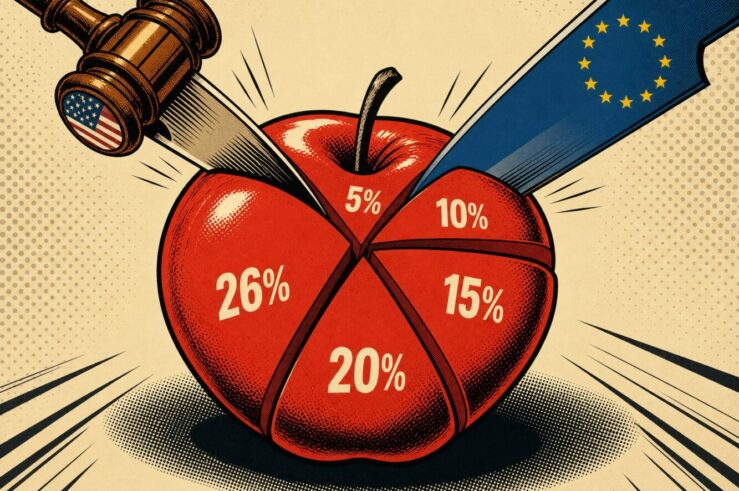
Competition policy is supposed to protect the competitive process, not do double-duty as price regulation. Yet the line between the two appears to be blurring in both a U.S. antitrust case and the European Union’s enforcement of the Digital Markets Act (DMA). On Aug. 14, after years of litigation with Epic Games, Apple submitted a ... Rate Expectations: Apple and the New Price Regulators
Premium, Regular, or Collusive? Brazil’s Aprix Case Tests Algorithmic Pricing
Few antitrust investigations find their theory of harm laid out in the target’s sales brochure. Brazil’s investigation of Aprix, a startup that sells pricing software to gas stations, nearly managed the feat. One of the company’s promotional brochures introduced prospective clients to the prisoner’s dilemma, the classic game-theory example in which individually rational choices can ... Premium, Regular, or Collusive? Brazil’s Aprix Case Tests Algorithmic Pricing

Brazil’s Gatekeeper Bill Gets a Tuneup, Not a Rethink
Brazil may soon become the first country in the Americas to regulate digital platforms before they do anything wrong. Bill 4,675/2025 would let the Administrative Council for Economic Defense (CADE) designate large technology companies as having “systemic relevance” and impose special obligations without first proving anticompetitive conduct or consumer harm. That is a substantial change ... Brazil’s Gatekeeper Bill Gets a Tuneup, Not a Rethink

Killer Theories and Acqui-Hire Alibis
Antitrust agencies have a habit of giving new labels to old anxieties. In artificial intelligence, the latest worry is that partnerships between large technology firms and startups are not partnerships at all, but mergers in clever disguises. In the first article in this series, we examined how Brazil’s Administrative Council for Economic Defense (CADE) has ... Killer Theories and Acqui-Hire Alibis

Brazil Catches the Acqui-Hire Wave
The global antitrust wave over Big Tech’s artificial intelligence deals has reached Brazil. The question is whether Brazil’s competition authority is paddling into a real breaker—or mistaking regulatory chop for a swell. Last month, Brazil’s antitrust authority, the Administrative Council for Economic Defense (CADE), entered that debate. It issued part of its long-awaited decisions on ... Brazil Catches the Acqui-Hire Wave

Brazil, Bots, and the Price of Free
Brazil’s WhatsApp case began as a fight over access to an application programming interface, or API—the technical doorway that lets outside services connect to WhatsApp. It has quickly become a test of how antitrust law should treat AI distribution. The Federal Court of São Paulo has now suspended the R$250,000, or about $50,000, daily fine ... Brazil, Bots, and the Price of Free

Brazil’s Google News Case and the Art of Not Letting Go
Some legal cases age like wine. Others age like browser tabs left open too long. Brazil’s Google News inquiry belongs firmly in the latter category. On April 3, Brazil’s Administrative Council for Economic Defense (CADE) announced that its Tribunal had unanimously decided to send a seven-year-old administrative inquiry concerning Google’s use of journalistic content—whether for ... Brazil’s Google News Case and the Art of Not Letting Go

Don’t Freeze the AI Race at the Starting Line
Regulators keep warning that AI markets are about to be captured by Big Tech. The awkward fact is that AI markets keep refusing to cooperate. Several years into the generative-AI boom, the sector still looks less like a coronation than a street fight: OpenAI, Google, Meta, Amazon, Anthropic, Perplexity, Mistral, xAI, and others are battling ... Don’t Freeze the AI Race at the Starting Line