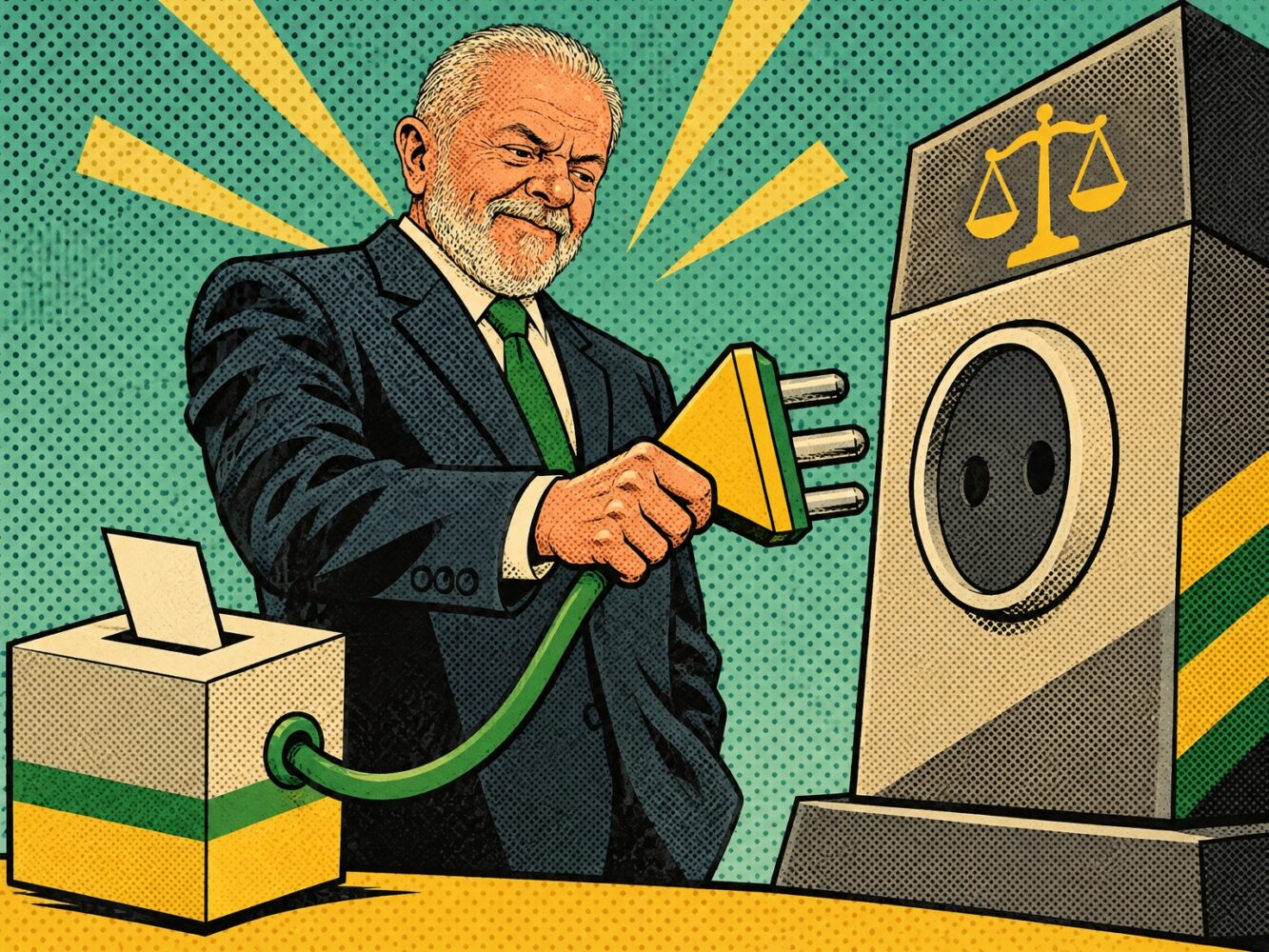
Earlier this year, Meta proposed what amounts to a price increase for its business users. To keep doing business on Facebook and Instagram under the new terms, companies would have had to let Meta’s software scan their websites and use what it found to develop its own products.
German publishers called the proposal “blatant theft.” Their British counterparts went with “an outrageous assault on journalism.” The United Kingdom’s Competition and Markets Authority (CMA) announced Oct. 30 that it was investigating whether Meta’s commercial terms amount to an abuse of dominance under the United Kingdom’s Competition Act.
Meta has since shelved the update, but the CMA is pressing ahead and says it will examine Meta’s existing terms and any revisions.
The strongest economic case for government intervention in a case like this rests on an idea with a Nobel pedigree called holdup. Say a business spends years building an audience on a platform. If leaving would mean losing much of that investment, the platform can use that leverage to demand more. And if businesses expect that treatment, they may invest less in the first place.
That theory is worth taking seriously, but it’s also a poor fit for what happened here. Businesses that read the fine print got Meta to rewrite it, and the proposed clause would have left publishers free to license the same material to rival developers. What remains is a dispute over how much Meta can ask in return for the services it provides. Settling that dispute would put Britain’s competition watchdog in the business of setting prices.
The Case of the Shelved Clause
Meta’s Commercial Terms govern how businesses use its services, whether they run ads, manage a Facebook Page, or use the platform for other commercial purposes. In early October, Meta notified business users that revised terms would take effect Oct. 30.
One proposed clause would have allowed Meta to use automated software to scan any website associated with a business’s products or services, then collect and store the material it found. Meta could also create test accounts to reach content behind a login. The original draft included the word “train” in its list of permitted uses. Legal experts told Nieman Lab they read the clause as permission for Meta to collect material from news sites and use it to train its artificial intelligence (AI) models.
The next day, Meta removed “train” and narrowed the stated purposes to its advertising and business products. A Meta spokesperson said that “this is not about scraping news sites” and that publishers could still use robots.txt, a standard file that tells automated crawlers which pages to skip. Critics pointed out that the revised clause made no mention of that protection.
Meta moved the effective date to Nov. 20 and promised to consult the industry before making any changes. Courts in Norway and Brazil granted temporary injunctions sought by local media groups. On Nov. 5, Meta paused the update indefinitely. Its March 2024 terms remain in force.
The CMA opened its investigation while Meta was still revising its plans. It’s examining whether requiring publishers and other businesses to accept such terms could breach Chapter II of the Competition Act, which bars dominant firms from imposing “unfair purchase or selling prices or other unfair trading conditions.” The CMA noted that thousands of British businesses “rely on its services to reach customers and audiences.” That reliance helps explain why the terms matter to businesses. The question under Chapter II is what would make those terms unfair.
The CMA ruled out using its newer digital-markets powers because it hasn’t designated Meta as having strategic market status. That designation is what allowed the CMA to require Google in June to give publishers control over how it uses their content in AI features.
The case under Chapter II therefore turns on whether Meta used a dominant position to impose unfair terms. So far, there’s little to suggest it did.
The Trouble Starts When the Concrete Sets
Competition policy generally leaves firms to bargain over how they share the value their trading relationship creates. If Meta captures a larger share of the value generated by news articles, newspaper groups may earn less. That shift alone doesn’t raise consumer prices, reduce output, or exclude rivals.
British competition law, borrowing from European Union law, does prohibit dominant firms from imposing “unfair trading conditions.” Enforcers have historically used that provision sparingly. Neither law nor economics offers an obvious benchmark for a “fair” division of the gains from trade. Once an authority starts deciding how much value each party should get, it’s effectively regulating prices—a role competition enforcers generally avoid.
The economic case for intervention depends on whether the terms would discourage investment and reduce output. Holdup offers one way that can happen. Benjamin Klein, Robert Crawford, and Armen Alchian developed the idea in an influential 1978 article, as did Oliver Williamson in work that later earned him a share of the Nobel Prize in economics.
Suppose a supplier builds a plant that can serve only one customer. Once the concrete sets, the customer can demand a lower price, knowing the supplier has nowhere else to sell. Suppliers who anticipate that outcome may invest less or spend money protecting themselves. Some deals that would have benefited both sides never happen. That lost investment is what gives competition authorities a reason to pay attention.
That may be the intuition behind the CMA’s emphasis on reliance. Businesses have spent years building audiences on Facebook and Instagram. If leaving means losing much of the value of that investment, Meta could use the cost of walking away to demand more favorable terms.
But holdup depends on conditions that enforcers can too easily assume. For much of the last two decades, authorities on both sides of the Atlantic treated patent holdup as pervasive in industries that rely on common technology standards. The concern was that patent owners could demand higher royalties once manufacturers had committed to a standard and switching had become costly.
Yet the industries thought most vulnerable posted the fastest quality-adjusted price declines in the United States; in other words, prices fell fastest once improvements in product quality were taken into account. As I’ve argued elsewhere, the theory’s appeal can quickly outrun the evidence. The CMA risks doing the same here if it treats reliance on Meta’s platforms as evidence of holdup by itself.
Where’s the Holdup?
Holdup requires an investment that a business can’t recover and that’s worth substantially less outside the relationship. Economists call the second feature asset specificity. For most businesses that use Meta’s platforms, it’s hard to identify an investment that meets both tests.
Advertisers can move future spending from Instagram to Google, TikTok, or Amazon. Publishers invest in journalism, their brands, and their own websites, all of which retain value outside Facebook and Instagram. A social media following is the clearest exception. Businesses can’t take their followers with them, and rebuilding an audience elsewhere can take time. For many businesses, though, that following grows out of content they’d produce anyway, and its commercial value has always depended on how widely Meta’s algorithms show that content to users.
Williamson’s account also emphasizes opportunism, which he defined as “self-interest seeking with guile.” Meta announced the proposed change weeks before it was due to take effect and would have applied it going forward. Its existing terms already say that Meta can update them and direct businesses that decline the changes to stop using its products. Advance notice can’t undo an investment a business has already made. It does matter, however, when assessing whether Meta sprang a change on businesses that had reason to expect stable terms.
The main economic question is whether businesses would have invested less in the first place. When firms expect a trading partner to use their investments as leverage to claim more of the returns, they may scale back or forgo those investments. So imagine that businesses knew, when they first joined Facebook or Instagram, that Meta might seek permission to crawl their websites years later. Would they still have built a presence there, given the alternatives in a competitive digital advertising market?
They probably would have. For holdup to deter investment, the businesses that stand to lose from the new terms must also face substantial costs if they leave. A restaurant may rely on its Facebook following and have little reason to care if Meta’s crawlers read its menu. A large publisher may care a great deal about crawling and still earn a return on its journalism, brand, and website outside Meta’s platforms.
For some perspective, we should examine what publishers did when Facebook started sending far fewer readers to their sites. Facebook referrals to news sites fell 48% in 2023, the same year Meta announced it would close its dedicated Facebook News tab in Britain. Most publishers stayed anyway.
On these facts, the proposed clause looks like an attempt to claim a larger share of the value Meta and its business users create together. For a holdup case, the CMA would need a credible account of how the change would deter investments that businesses would otherwise make. With little evidence of that effect, intervening would put the CMA in the business of deciding how much each side should get.
Someone Actually Read the Terms
Most of Meta’s business users may never read the terms, much less anticipate how they might change. How much that matters depends on who does read them and what those businesses can do if they object.
When a company offers the same contract to all its customers, the customers most likely to notice an unfavorable clause and take their business elsewhere can influence the terms everyone gets. Alan Schwartz and Louis Wilde made that point in a 1979 article. As they put it, “persons who search sometimes protect nonsearchers from overreaching firms.” Meta’s business users include publishers and other companies that follow platform policies closely. If enough of them object, Meta has a reason to listen.
That’s what happened in October. The editor of a small steampunk publication spotted the proposed change in his Meta dashboard and alerted Nieman Lab, which ran the story Oct. 15. As objections mounted, Meta rewrote the clause, delayed the rollout, and eventually shelved the update.
Regulators and courts added to the pressure, and the CMA credits its talks with Meta for the first delay. Yet Meta made its most substantive revision—narrowing the purposes for which it could use the material—before any court ruled or the CMA opened its investigation. The public backlash gave Meta reasons to act quickly. Its reputation was at stake, and some businesses could take their spending elsewhere.
That early revision weakens the case that a market failure warranted an abuse-of-dominance investigation. Business users who paid attention to the fine print had already shown they could get Meta to change it.
Who’s Supposed to Be Shut Out?
A final objection is that Meta’s proposed terms could harm competition among AI developers. The argument is that Meta could use its position in social media to obtain publishers’ content without paying for it, weakening the licensing market that other AI developers use to obtain the same material.
There are three problems with that argument. First, the CMA has framed its investigation around whether Meta imposed unfair trading conditions on its business users. An exclusion case would ask a different question: whether the clause would make it harder for rival AI developers to obtain publishers’ content.
Second, the proposed clause appears to have given Meta a nonexclusive right. Publishers could still license the same articles to other AI developers. Meta itself signed paid licensing deals in December 2025 with publishers including CNN, Fox News, and Le Monde. Even if the proposed clause reduced what Meta paid publishers for their articles, those publishers could still have licensed those same articles to other AI developers.
Third, as I’ve argued before, Meta holds the status of a challenger to OpenAI and Google in AI. Raising a challenger’s cost of acquiring content is an odd way to protect competition.
The Sticker Price of ‘Free’
Set aside holdup and exclusion, and the complaint comes down to how Meta presented the terms. Businesses could take them or leave them. The British publishers’ trade association calls that an “invidious choice.”
Take-it-or-leave-it terms are routine. I don’t negotiate my broadband contract, the price of bread at the bakery, or the sticker price of a Tesla. And those prices and terms can all change. What keeps them in check is the willingness of enough customers to shop elsewhere when the deal gets worse.
The proposed crawling clause was part of the price of doing business with Meta. In exchange for access to audiences and advertising tools, businesses would have had to let Meta collect and use material from their websites. Calling the clause unfair amounts to saying that Meta asked for too much in return.
Competition law sets a demanding test for that claim. In United Brands, the court asked whether the price bore a reasonable relationship to the economic value of what the firm supplied. If the price was excessive, the next question was whether it was unfair in itself or compared with competing products.
There’s little to suggest Meta’s proposed terms meet that test. How much are Meta’s audience reach and business tools worth, given that businesses get much of that access at no charge? How much is permission to crawl worth when automated tools already scan much of the open web? And which rival offers comparable services on terms that make Meta’s proposed price look excessive?
The Wrong Place to Send the Bill
Whether AI developers should pay for the material their systems learn from remains an open question. In Britain, that debate belongs in copyright policy, where the government decided in March to leave the law unchanged for now.
Publishers have every reason to bargain for a better deal, but the CMA’s job is to protect competition. To justify intervening here, it needs evidence that Meta’s terms would deter investment through holdup or shut out rival developers. So far, the evidence points mostly to a dispute over what Meta should pay.
Meta dropped the clause. The CMA should drop the case.