Showing archive for: “Consumer Law”
The Price of Playing Fair: How Charging Everyone the Same Can Leave Consumers Worse Off
Imagine you have a business that earns zero economic profit. It exactly covers its costs, including the return needed to attract investors, but nothing more. Is this the end state of competition? Is there anything left for competition to do? Sure. If another company comes along with lower costs, it can drive prices down. That’s ... The Price of Playing Fair: How Charging Everyone the Same Can Leave Consumers Worse Off

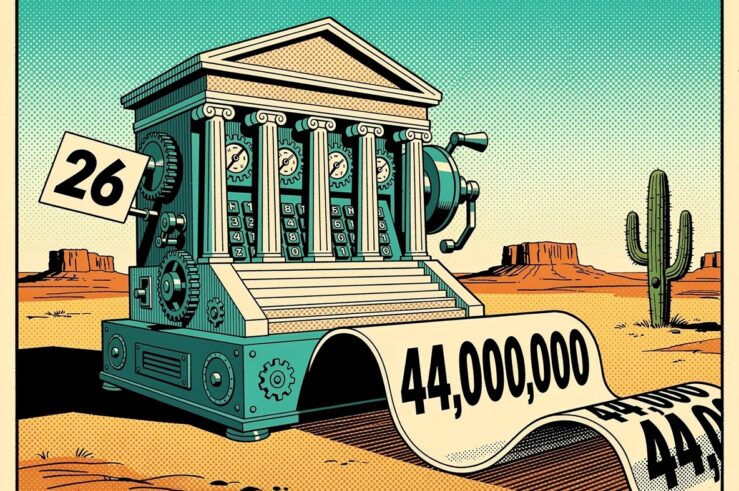
The New (Mexico) Math: Multiply the Violations and Never Mind the Harm
The big news in the competition-plus space—where competition policy meets broader policy concerns—isn’t an antitrust matter at all. It’s New Mexico’s announcement of its “Historic $25 Billion Penalty Against Facebook” (Meta Platforms). Here’s coverage from The New York Times, The Washington Post, The Wall Street Journal, and, for a bit of local flavor, the Albuquerque ... The New (Mexico) Math: Multiply the Violations and Never Mind the Harm
Fraud, Platforms, and the Art of Getting Ahead of Yourself
The Federal Trade Commission (FTC) wants to stop impersonation scams. Fair enough. But calling a new regulatory venture an “update” doesn’t make it one, and spotting a real problem doesn’t tell you which rules—if any—will solve it. A little more homework would help. On Sept. 24, the FTC announced an advance notice of proposed rulemaking ... Fraud, Platforms, and the Art of Getting Ahead of Yourself

Reserve Judgment: The FTC Takes on Amazon’s Ad Auctions
The price to beat in Amazon’s advertising auctions may not have come from another advertiser at all, according to a lawsuit filed Aug. 31 by the Federal Trade Commission (FTC). In the complaint, the FTC alleges that Amazon quietly set the price itself, promising one pricing rule and using another. That allegation could support a ... Reserve Judgment: The FTC Takes on Amazon’s Ad Auctions

Nothing Runs Like a Deere You Can Repair
Farmers have won the right to repair—at least, if they own John Deere equipment. In July, the Federal Trade Commission (FTC) announced a settlement requiring Deere to give farmers and independent repair shops access to the software, manuals, and other resources needed to fix its products. The settlement sensibly balances consumers’ immediate interest in affordable ... Nothing Runs Like a Deere You Can Repair

Fine Print for Every Price: The FTC’s One-Size-Fits-All Guidance
My first post at Truth on the Market—where I called myself a “Refugee from the FTC”—briefly discussed an advance notice of proposed rulemaking (ANPR) published in the Federal Register by the Federal Trade Commission (FTC) under Chair Lina Khan. This one bore the expansive title “Trade Regulation Rule on Commercial Surveillance and Data Security.” I ... Fine Print for Every Price: The FTC’s One-Size-Fits-All Guidance
The FTC’s AI Accuracy Statement Needs a Fact Check
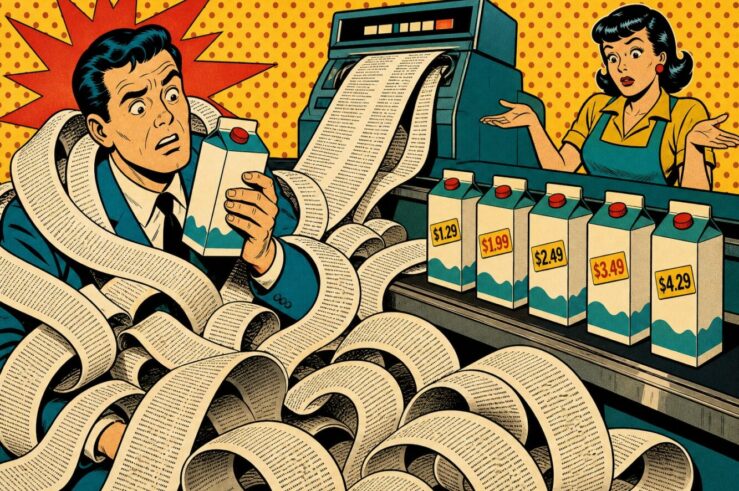
A policy statement about accuracy should, at minimum, be precise. The Federal Trade Commission’s (FTC) Proposed Policy Statement Concerning the Suppression of Accuracy in Artificial Intelligence Systems (AI Policy Statement) struggles with that assignment. The International Center for Law & Economics (ICLE) submitted comments in response to the FTC’s request for input, and this post ... The FTC’s AI Accuracy Statement Needs a Fact Check

Antitrust at the Agencies: National Nanny Hangover Edition
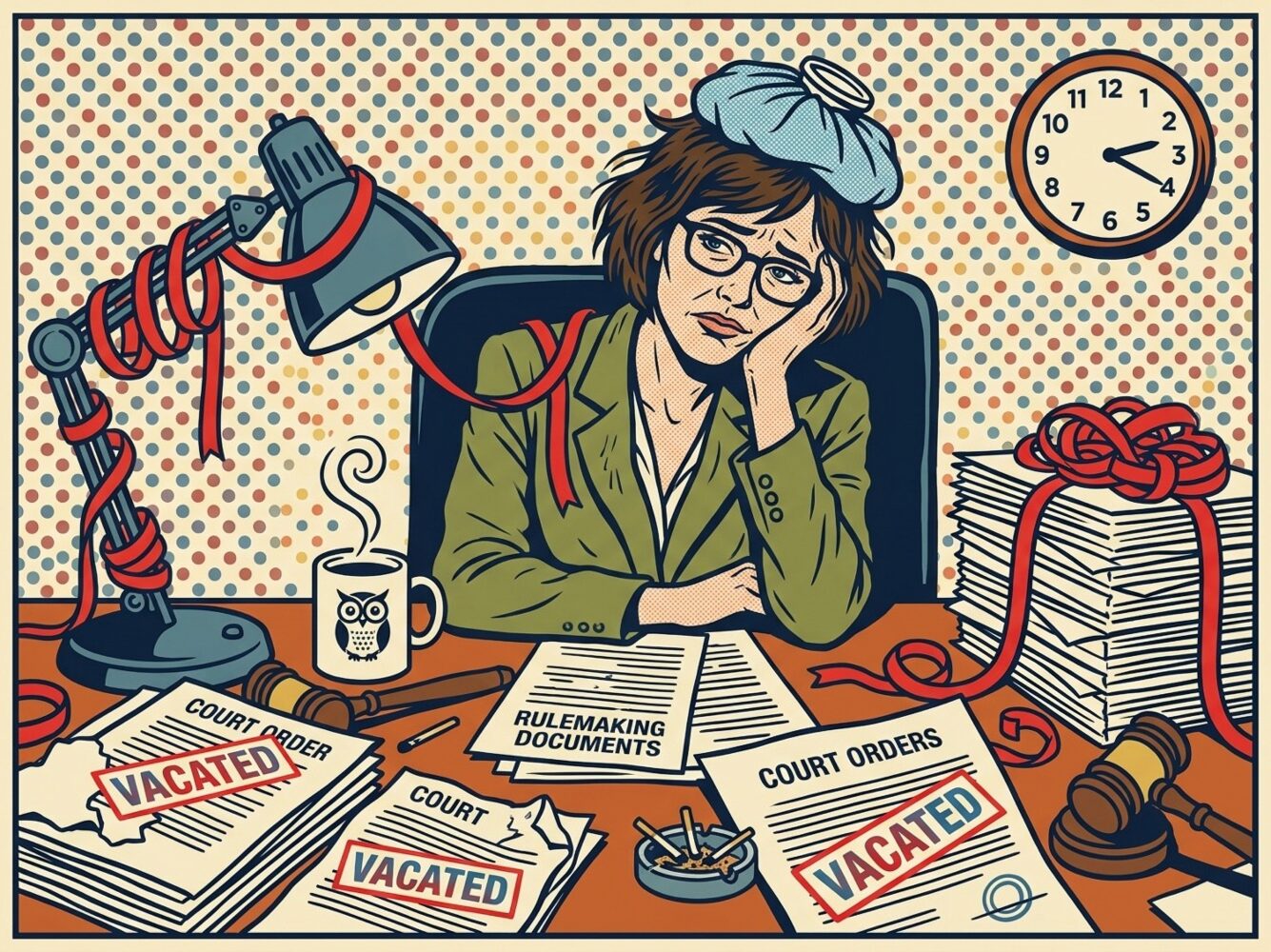
The Federal Trade Commission’s (FTC) rulemaking machinery is humming again. Is it being tuned for optimal performance—or revved for another trip into the ditch? Most of the current action has to do with consumer protection. That’s par for the course, really. Apart from issuing the ill-fated noncompete rule, since vacated—comments here if anyone wants a ... Antitrust at the Agencies: National Nanny Hangover Edition
The Exit Door Theory of Consumer Finance
Consumer protection often begins with a simple question: Can the consumer walk away? If the answer is no—because switching is hard, data are locked up, markets are fragmented, or new competitors cannot enter—then the problem is not just weak consumer protection. It is weak competition. That is the frame for a deceptively basic question: How ... The Exit Door Theory of Consumer Finance

Addicted to Vagueness: Lawmakers Can’t Regulate Social Media by Vibes
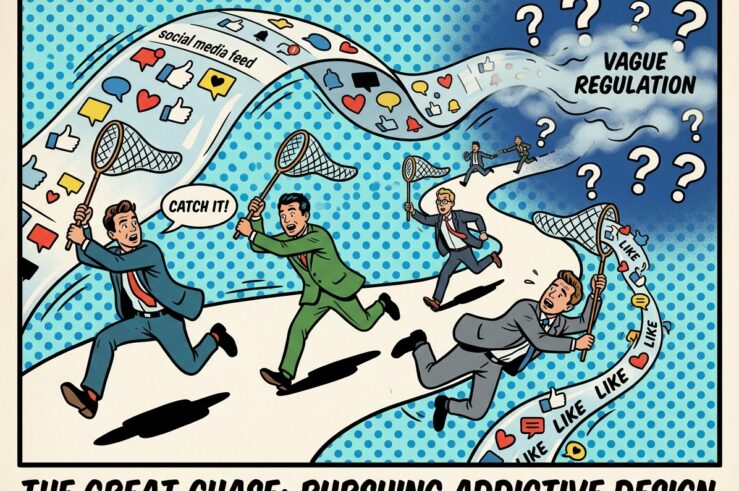
A lawsuit over infinite scroll sounds, at first blush, like a fight over product design. Make the app less sticky. Stop nudging teens to keep scrolling. Turn down the algorithmic dopamine machine. But the harder constitutional question is whether courts can do all that through broad, after-the-fact liability standards without telling platforms what the law ... Addicted to Vagueness: Lawmakers Can’t Regulate Social Media by Vibes
The Hidden Premise: Smuggling Paternalism Through the Back Door
A familiar pattern has taken hold in platform regulation—and in the academic and policy commentary that surrounds it. Critics spot a real phenomenon, recast it as market failure, and then press for intervention that far outstrips what the evidence can support. The result: arguments that read as persuasive but collapse under scrutiny. They conflate distinct ... The Hidden Premise: Smuggling Paternalism Through the Back Door

The View from Singapore: A TOTM Q&A with Alvin Koh
Alvin, can you briefly describe your professional background? In my role as chief executive of the Competition and Consumer Commission of Singapore (CCS), I oversee the administration and enforcement of Singapore’s competition, consumer protection, and legal metrology laws to ensure Singapore’s markets remain competitive and consumers are protected from unfair trading practices. This is my ... The View from Singapore: A TOTM Q&A with Alvin Koh