Showing archive for: “Banking & Insurance”
New Financial Regulatory Reforms Could Spur the Economy
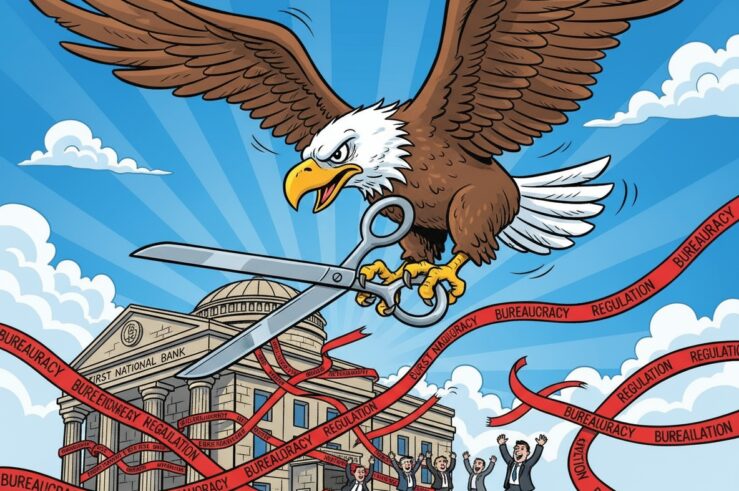
Strong and vibrant financial markets are key to a thriving American economy. Rising regulatory costs, however, pose a burgeoning threat to financial-market efficiency. Recent executive-agency initiatives to harmonize federal government oversight of U.S. financial markets and to reform existing regulatory programs are notable. A new push to eliminate anticompetitive federal financial rules could yield further ... New Financial Regulatory Reforms Could Spur the Economy
The Law & Economics of the Capital One-Discover Merger
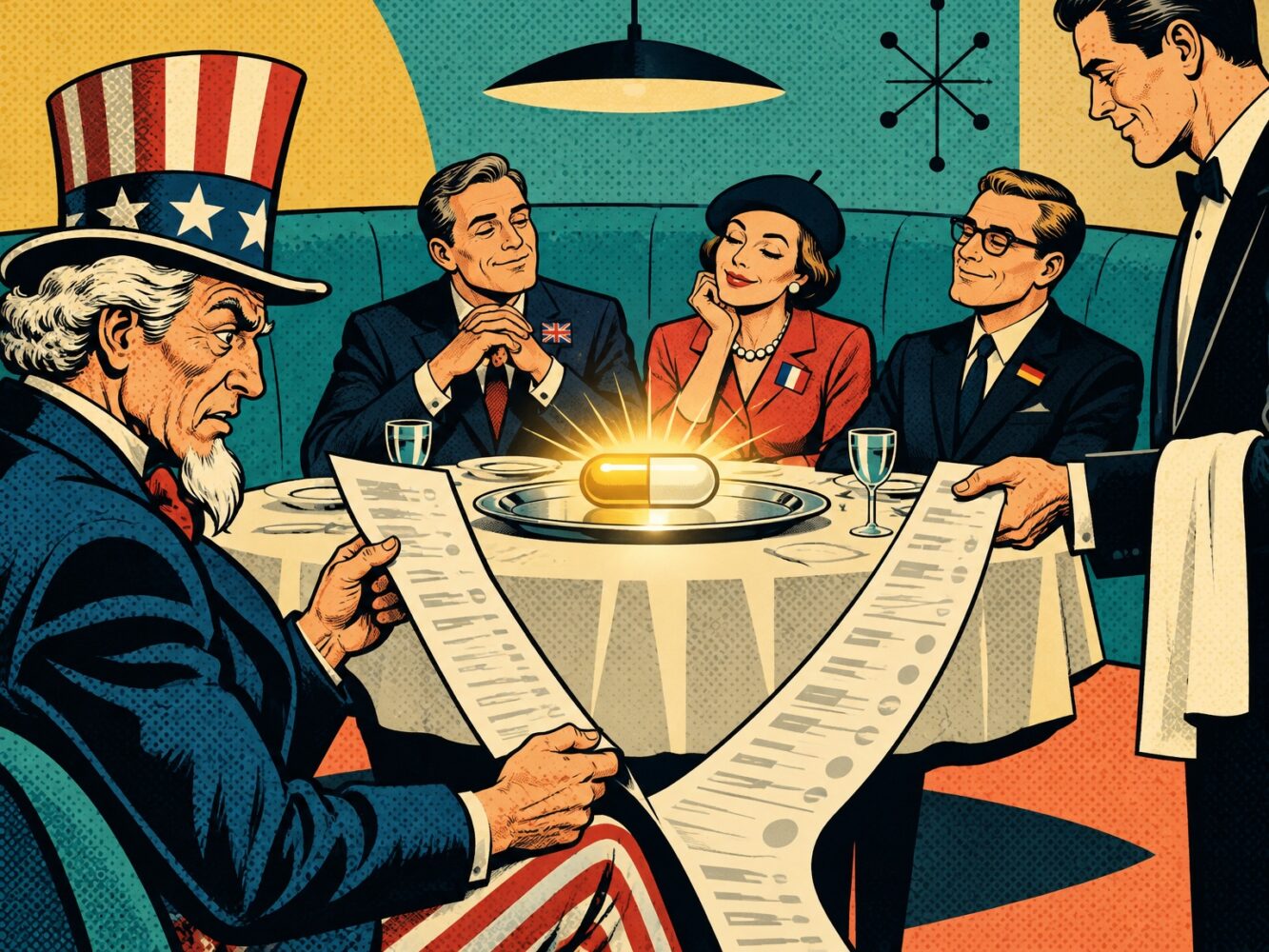
Capital One Financial announced plans late last month to acquire Discover Financial Services in a $35.3 billion deal that would give Capital One its own credit-card payment network, while simultaneously allowing the company to expand its deposit base, credit-card offerings, and rewards programs. Conversely, credit analysts like Matt Schulz of LendingTree note that “if Capital ... The Law & Economics of the Capital One-Discover Merger

The CFPB’s Misleading Slant on Competition in Credit-Card Markets
In yet another example of interagency cheerleading from the Federal Trade Commission (FTC), Chair Lina Khan recently touted the work of the Consumer Financial Protection Bureau (CFPB) on payments networks: New @CFPB research reveals that large banks are offering worse credit card terms & interest rates than small banks and credit unions, regardless of credit ... The CFPB’s Misleading Slant on Competition in Credit-Card Markets

Does ‘Open Finance’ Promote Competition or Facilitate Free Riding?
Financial technology, or so-called “fintech,” is disrupting the financial sector, and that’s a good thing. Fintech services are making finance more digital and more user-friendly. This, in turn, has led to reduced transactions costs and increased levels of competition, innovation, and financial inclusion. Alas, the emergence of fintech has also been accompanied by a rising ... Does ‘Open Finance’ Promote Competition or Facilitate Free Riding?
Cassandra, the Fear of Overregulation, and the CFPB
In the Huffington Post, Marcus Baram warns against those who claim to be concerned about over-regulation on Wall Street and in the consumer protection sphere. Baram writes: Today, Wall Street is again on the attack against a regulatory overhaul that includes more stringent investor and consumer protections. Though the financial landscape is far different and ... Cassandra, the Fear of Overregulation, and the CFPB

Comment to the Federal Reserve Board on Regulation II: Where’s the Competitive Impact Analysis?
I have submitted a comment to the Federal Reserve Board concerning Regulation II, along with the American Enterprise Institute’s Alex Brill, Christopher DeMuth, Alex J. Pollock, and Peter Wallison, as well as my George Mason colleague Todd Zywicki. Regulation II implements the interchange fee provisions of the Dodd-Frank Act. The comment makes a rather straightforward ... Comment to the Federal Reserve Board on Regulation II: Where’s the Competitive Impact Analysis?
Fin Reg and Too Big to Fail: A New Kind of Antitrust?
Simon Johnson argues that the conventional antitrust tools of Sherman Act are outdated and ill-equipped to deal with the power of big banks: Why are these antitrust tools not used against today’s megabanks, which have become so powerful that they can sway legislation and regulation massively in their favor, while also receiving generous taxpayer-financed bailouts ... Fin Reg and Too Big to Fail: A New Kind of Antitrust?
A Defense of the Insurance Industry Antitrust Exemption?
The subject of antitrust exemptions has been an oft-discussed topic here at TOTM (see, e.g. here and here). In the latter of those two links I was somewhat critical of the DOJ for taking a neutral stance on the insurance industry exemption, which has now become rather wrapped up in the health care reform debate. ... A Defense of the Insurance Industry Antitrust Exemption?
Fannie and Freddie as "Greater Fools"
Today’s New York Times features an op-ed by Michigan Law Professor Michael Barr and former Clinton advisor Gene Sperling that (somewhat predictably) blames our current financial mess on a lack of “common sense regulation” and exonerates the Community Reinvestment Act, Fannie Mae, and Freddie Mac. I propose a counter-narrative. It begins with a nutshell version ... Fannie and Freddie as "Greater Fools"
Tabarrok on the Credit Snobs
Marginal Revolution’s Alex Tabarrok has a good post responding to recent attacks on the extension of credit to poor borrowers (and in particular, this rant from Nouriel Roubini). Here is a taste: Roubini and others generating hysteria about defaults in the mortgage market are credit snobs – they think credit is something that only the ... Tabarrok on the Credit Snobs