Showing archive for: “Household Finance”
A Nobel Prize for Thinking Ahead: Hall and Woodford’s Great Expectations
Suppose you get a $1,000 payment. How much do you spend? Before answering, we’d want to know a few things: Is this a one-time payment? The first of many? Can you borrow? Do you already have savings? This year’s Nobel Prize in economics went to Robert Hall and Michael Woodford for providing the theory to ... A Nobel Prize for Thinking Ahead: Hall and Woodford’s Great Expectations
The Exit Door Theory of Consumer Finance
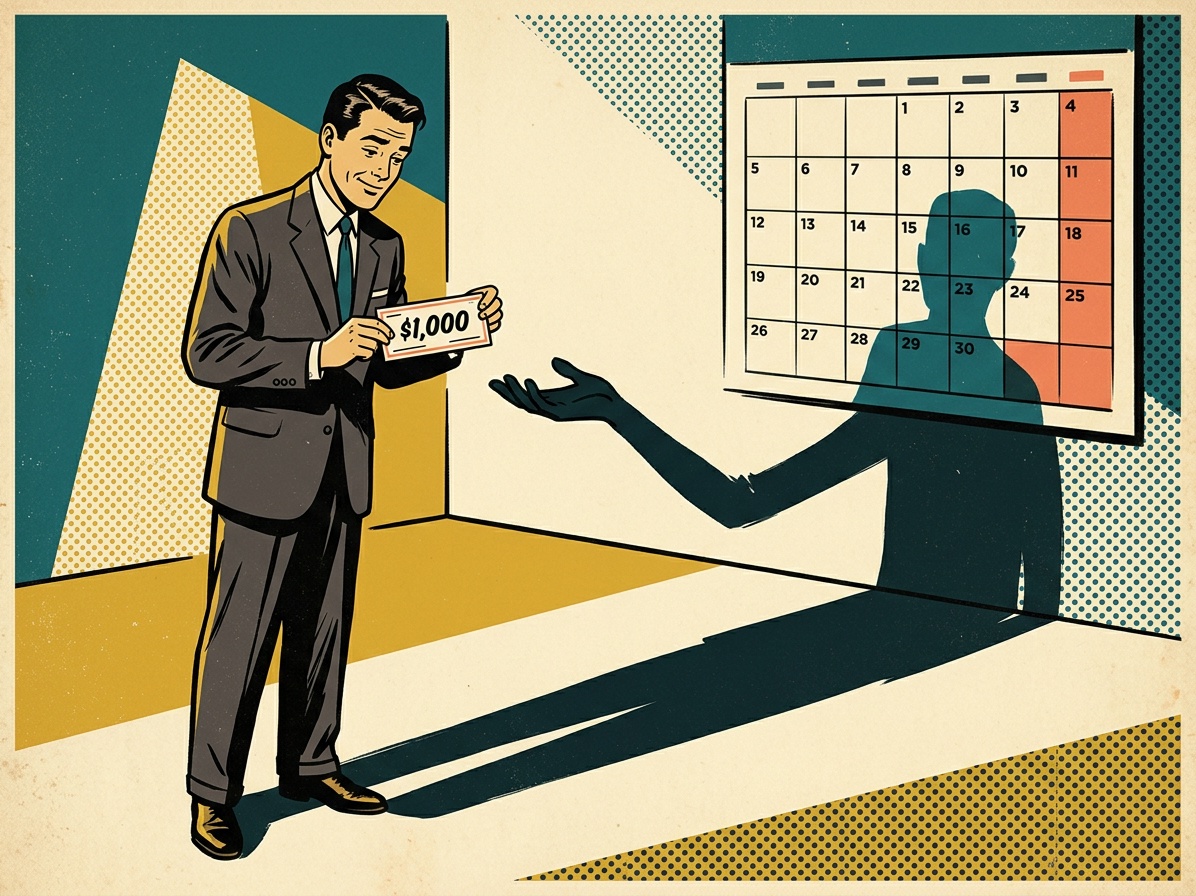
Consumer protection often begins with a simple question: Can the consumer walk away? If the answer is no—because switching is hard, data are locked up, markets are fragmented, or new competitors cannot enter—then the problem is not just weak consumer protection. It is weak competition. That is the frame for a deceptively basic question: How ... The Exit Door Theory of Consumer Finance

Stop Saying a Value-Added Tax Is an Export Subsidy
In a recent Financial Times opinion piece, Jason Cummins (who holds a Ph.D. in economics from Columbia University) argued that the Trump administration should impose a 25% tariff on European goods to offset an “unfair advantage” from Europe’s value-added tax (VAT) system. According to Cummins, European exporters like BMW Group enjoy an “implicit subsidy” when they ... Stop Saying a Value-Added Tax Is an Export Subsidy

The Law & Economics of the Capital One-Discover Merger
Capital One Financial announced plans late last month to acquire Discover Financial Services in a $35.3 billion deal that would give Capital One its own credit-card payment network, while simultaneously allowing the company to expand its deposit base, credit-card offerings, and rewards programs. Conversely, credit analysts like Matt Schulz of LendingTree note that “if Capital ... The Law & Economics of the Capital One-Discover Merger

The CFPB’s Misleading Slant on Competition in Credit-Card Markets
In yet another example of interagency cheerleading from the Federal Trade Commission (FTC), Chair Lina Khan recently touted the work of the Consumer Financial Protection Bureau (CFPB) on payments networks: New @CFPB research reveals that large banks are offering worse credit card terms & interest rates than small banks and credit unions, regardless of credit ... The CFPB’s Misleading Slant on Competition in Credit-Card Markets

Macey Throws Some Cold Water on the CFPB’s New Mortgage Disclosures
In the WSJ, Professor Macey takes measure of the CFPB’s new mortgage disclosures and finds them lacking: The CFPB is proposing to revise the old forms into a new Loan Estimate Form and Closing Disclosure Form. The old loan form had been five pages; according to the agency website, the new one is three. The ... Macey Throws Some Cold Water on the CFPB’s New Mortgage Disclosures

The Bulldozer Solution to the Housing Crisis
My inaugural blog on two-sided markets did not elicit much reaction from TOTM readers. Perhaps it was too boring. In a desperate attempt to generate a hostile comment from at least one housing advocate, I have decided to advocate bulldozing homes in foreclosure as one (of several) means to relieve the housing crisis. Not with ... The Bulldozer Solution to the Housing Crisis
Natural Disasters and Payday Lending
There has been plenty of Hurricane Irene blogging, and some posts linking natural disasters to various aspects of law and policy (see, e.g. my colleague Ilya Somin discussing property rights and falling trees). Often, post-natural disaster economic discussion at TOTM turns to the perverse consequences of price gouging laws. This time around, the damage from ... Natural Disasters and Payday Lending
Cassandra, the Fear of Overregulation, and the CFPB
In the Huffington Post, Marcus Baram warns against those who claim to be concerned about over-regulation on Wall Street and in the consumer protection sphere. Baram writes: Today, Wall Street is again on the attack against a regulatory overhaul that includes more stringent investor and consumer protections. Though the financial landscape is far different and ... Cassandra, the Fear of Overregulation, and the CFPB
The Limits of Behavioral Law and Economics, Australia Edition
At the excellent Core Economics blog, Andreas Ortman discusses an Australian policy debate involving the Review of the Governance, Efficiency, Structure and Operation of Australia’s Superannuation System (also known as the Cooper Review), and more specifically, retirement savings and the superannuation system. The Cooper Review drafters contend that the behavioral economics literature strongly supports a ... The Limits of Behavioral Law and Economics, Australia Edition
Richard Epstein on The Dangerous Allure of Behavioral Economics: The Relationship between Physical and Financial Products
Richard A. Epstein is the Laurence A. Tisch Professor of Law, New York University School of Law, The Peter and Kirsten Bedford Senior Fellow, The Hoover Institution, and the James Parker Hall Distinguished Service Professor of Law, The University of Chicago. Few academic publications have had as much direct public influence on the law as ... Richard Epstein on The Dangerous Allure of Behavioral Economics: The Relationship between Physical and Financial Products
Ronald Mann on Nudging from Debt
The idea that the regularity of behavioral departures from full rationality justifies regulatory intervention has rarely gained more credence than in the context of consumer finance. The Credit CARD Act of 2009 rests on nothing so much as the supposition that cardholder decisions about spending and repayment reflect systematic misapprehension of the likely patterns of ... Ronald Mann on Nudging from Debt