Showing archive for: “Microeconomics: Decision-Making under Risk & Uncertainty”
Season’s Litigations: Olivia Rodrigo, the Waitresses, and the Cost of Sounding Familiar
Olivia Rodrigo has released a Christmas song, and listeners have promptly taken up the seasonal task of deciding whether somebody should sue. “Take Me Home (4 Christmas)” recalls the Waitresses’ “Christmas Wrapping,” prompting accusations of plagiarism. Chris Butler, who wrote the older song, has complicated matters by liking the new one. That seems like a ... Season’s Litigations: Olivia Rodrigo, the Waitresses, and the Cost of Sounding Familiar

Altman’s Memory Problem: The Importance of Being Idle
Your laptop’s memory has a job even when it isn’t working: being ready when you are. Sam Altman, CEO of OpenAI, the company behind ChatGPT, seems concerned about its work ethic. Altman made the case during an Oct. 29 appearance on Cheeky Pint, the podcast hosted by Stripe co-founder John Collison. They were discussing why ... Altman’s Memory Problem: The Importance of Being Idle

The Halloween Effect and the Premature Burial of Efficient Markets
Every October, financial journalism performs a small act of necromancy. Out comes the “Halloween effect,” the finding that stocks tend to earn higher returns from November through April than from May through October. It gives apparent empirical backing to the old stock-market adage “Sell in May and go away.” The implied strategy is simple: Hold ... The Halloween Effect and the Premature Burial of Efficient Markets
‘The Value of the Ability to Deal with Disequilibria,’ by Theodore Schultz
The most valuable skill in the age of artificial intelligence (AI) may not be coding, prompt engineering, or any of the other competencies appearing in job listings. It may be the ability to figure out which skills will be valuable next. Half a century ago, Theodore Schultz had a name for something much like this: ... ‘The Value of the Ability to Deal with Disequilibria,’ by Theodore Schultz

A Nobel Prize for Thinking Ahead: Hall and Woodford’s Great Expectations
Suppose you get a $1,000 payment. How much do you spend? Before answering, we’d want to know a few things: Is this a one-time payment? The first of many? Can you borrow? Do you already have savings? This year’s Nobel Prize in economics went to Robert Hall and Michael Woodford for providing the theory to ... A Nobel Prize for Thinking Ahead: Hall and Woodford’s Great Expectations
Antitrust at the Agencies: Pour One Out for Southern Glazer’s
The Federal Trade Commission (FTC) has settled a wine-and-spirits case, and its press release reads like a victory toast. The two commissioners who approved the deal write as if they’d rather send the bottle back. Consumers might want to check the tab. The settlement in Southern Glazer’s Wine and Spirits landed just after I’d put ... Antitrust at the Agencies: Pour One Out for Southern Glazer’s

California’s COMPETE Act: May the Best Firm Lose
Gov. Gavin Newsom has signed Assembly Bill 1776, the so-called COMPETE Act, making California the first state to add a general prohibition on anticompetitive conduct by individual firms to its principal antitrust statute. Newsom’s announcement casts the law as a way to help small businesses and stop large companies from “shutting out competition.” The law ... California’s COMPETE Act: May the Best Firm Lose

‘The Use of Knowledge in Society,’ by Friedrich A. Hayek
The wealth and technological sophistication of modern society are readily apparent. Less visible, but no less remarkable, is its ability to coordinate the actions of billions of people who know almost nothing about one another’s circumstances. Every day we make decisions without possessing most of the information on which those decisions ultimately depend. We purchase ... ‘The Use of Knowledge in Society,’ by Friedrich A. Hayek
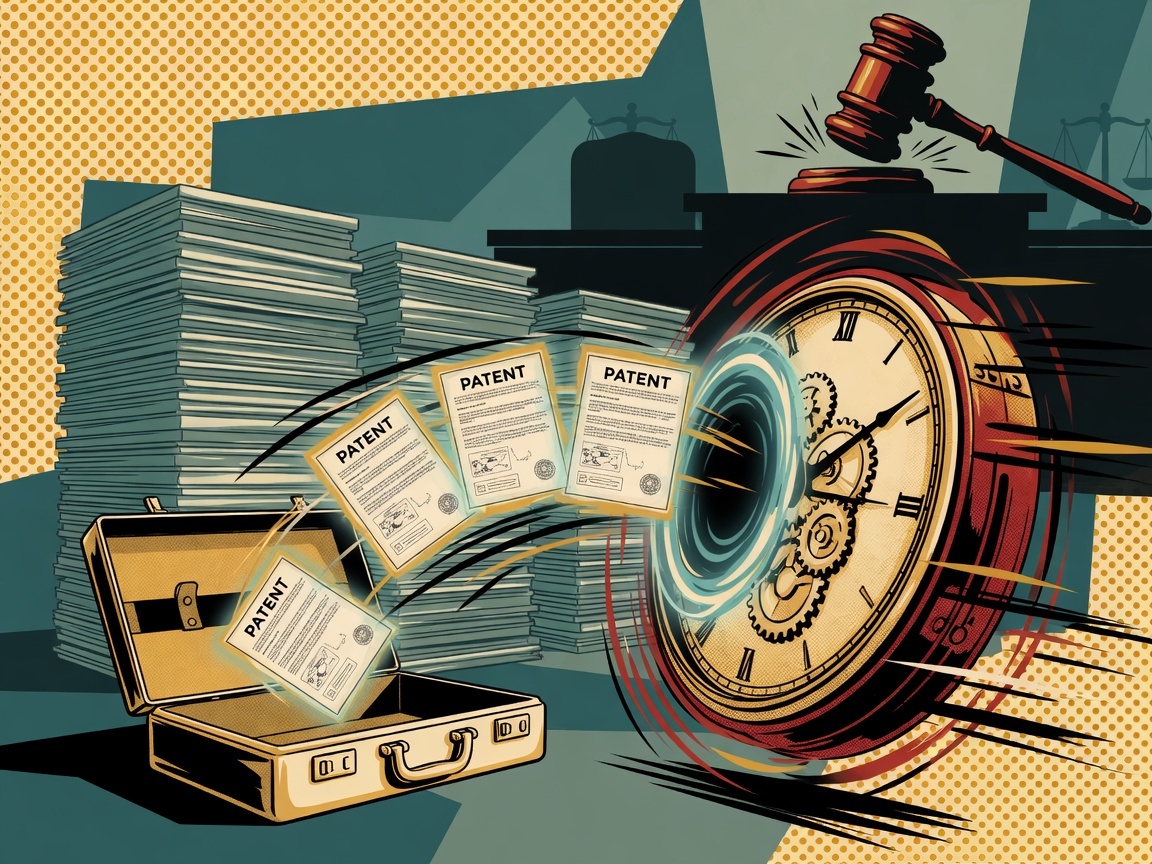
Four Patents and a Time Machine: CareFirst and the Perils of Backdated Antitrust
Four patents can carry a lot of antitrust baggage—especially when they come tucked inside a portfolio of more than 500. In CareFirst of Maryland v. Johnson & Johnson, health insurer CareFirst alleges that Johnson & Johnson unlawfully acquired and later asserted four patents to delay competition from biosimilars, highly similar alternatives to biologic drugs, for ... Four Patents and a Time Machine: CareFirst and the Perils of Backdated Antitrust
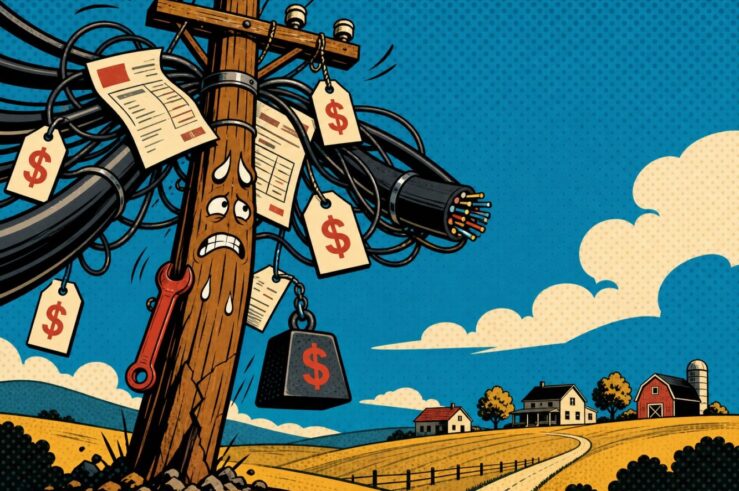
The Cost of Holding Up Broadband
America’s multibillion-dollar broadband push rests on an unglamorous piece of infrastructure: the utility pole. Fiber may carry the future, but first someone has to pay for the wood holding it up. Broadband providers rarely own the poles their networks use. Reaching a new community usually requires attaching equipment to poles owned by a utility or ... The Cost of Holding Up Broadband
Act First, Learn Later: AI Antitrust and the Error Costs of Regulation at Machine Speed
Competition enforcers appear to have discovered their own version of artificial intelligence: act first, learn later. In the span of a week, agencies across four continents moved to reshape how AI products are built, distributed, and integrated—mostly before anyone has shown, in a final appealable decision, that the challenged conduct harms competition. Last week, a ... Act First, Learn Later: AI Antitrust and the Error Costs of Regulation at Machine Speed

Brussels Reboots Merger Control. Now Debug the Discretion.
European Union merger control is getting a software update. The question is whether the new code will make the system faster, smarter, and better at spotting real competitive problems—or simply give the European Commission more buttons to press. The pending rewrite of European Union merger-control guidance is the broadest review of the framework in roughly ... Brussels Reboots Merger Control. Now Debug the Discretion.