Showing archive for: “Economic & Social Impacts of Innovation”
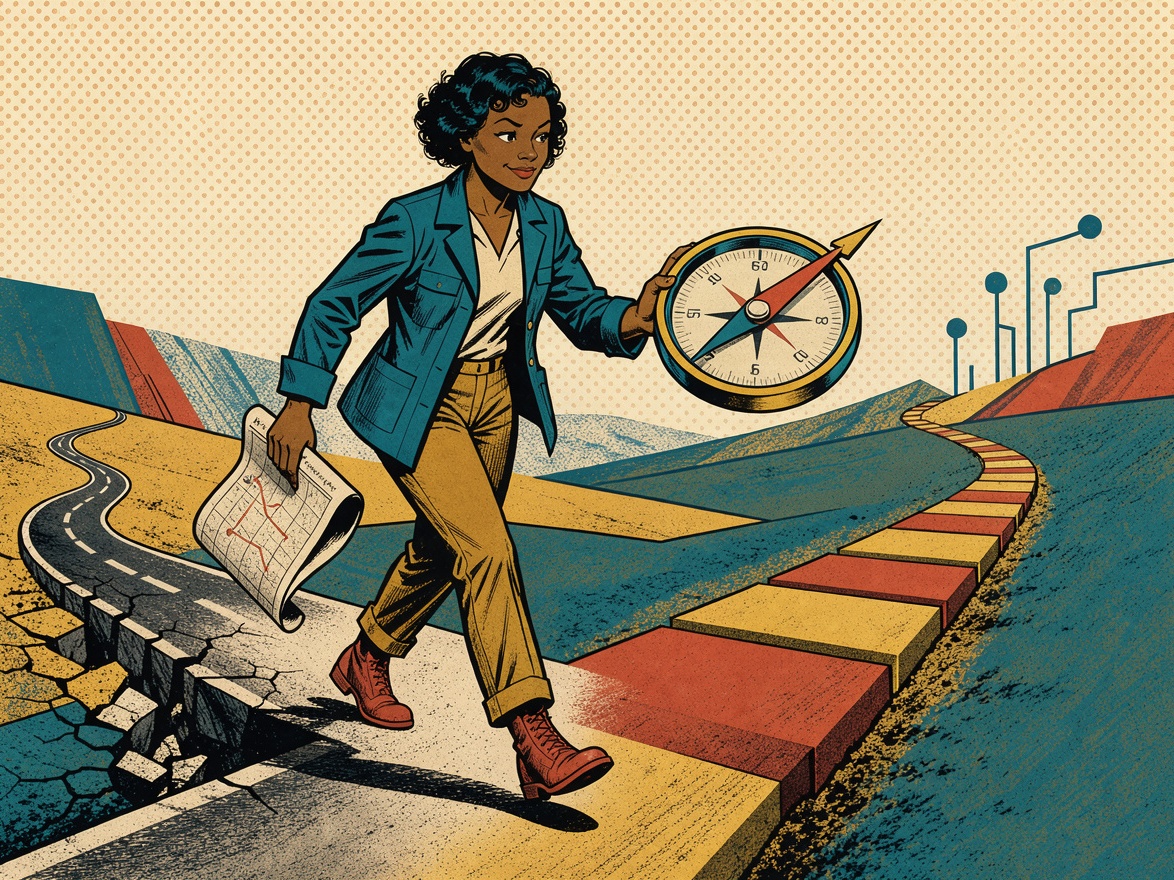
‘The Value of the Ability to Deal with Disequilibria,’ by Theodore Schultz
The most valuable skill in the age of artificial intelligence (AI) may not be coding, prompt engineering, or any of the other competencies appearing in job listings. It may be the ability to figure out which skills will be valuable next. Half a century ago, Theodore Schultz had a name for something much like this: ... ‘The Value of the Ability to Deal with Disequilibria,’ by Theodore Schultz
The Future of News and Its Frenemies
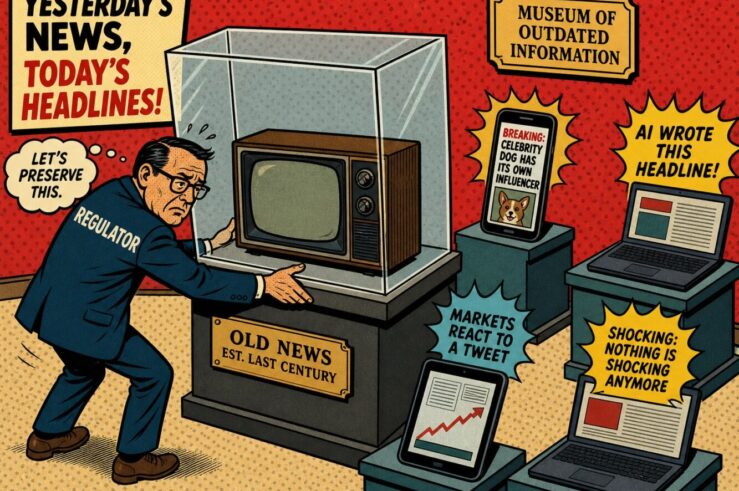
The local news business has spent the past two decades being “saved” by people who mostly seem to want it embalmed. Every new shift in how Americans consume information—websites, social feeds, newsletters, podcasts, short-form video, artificial-intelligence summaries—gets treated less like evidence of adaptation than proof that civilization will soon forget how school-board meetings work. That ... The Future of News and Its Frenemies
Grow the Pie, Skip the Sermon
In a recent Substack essay, “The progress movement needs a better theory of progress,” Brink Lindsey argues that the progress movement has settled for too thin a vision. It focuses on wealth creation and technological advance, he says, when it should adopt a “fuller conception of progress”—one that promotes “spiritual welfare” and thicker accounts of ... Grow the Pie, Skip the Sermon
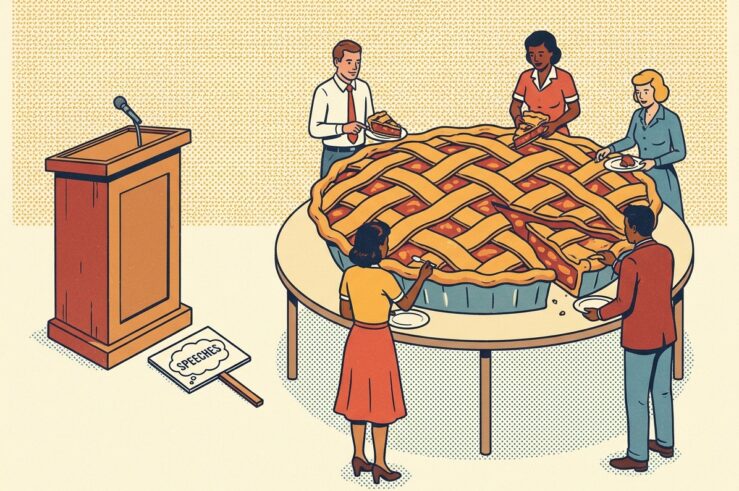
AI, Entrepreneurialism, and the Next Technological Ecosystem
Debates about artificial intelligence often focus on the technology’s intrinsic qualities, such as its speed, scale, and uncanny ability to generate text or code. But the lesson we should draw from every major technological transition since World War II has been that economic outcomes are not determined by technology alone. The institutional framework surrounding those ... AI, Entrepreneurialism, and the Next Technological Ecosystem
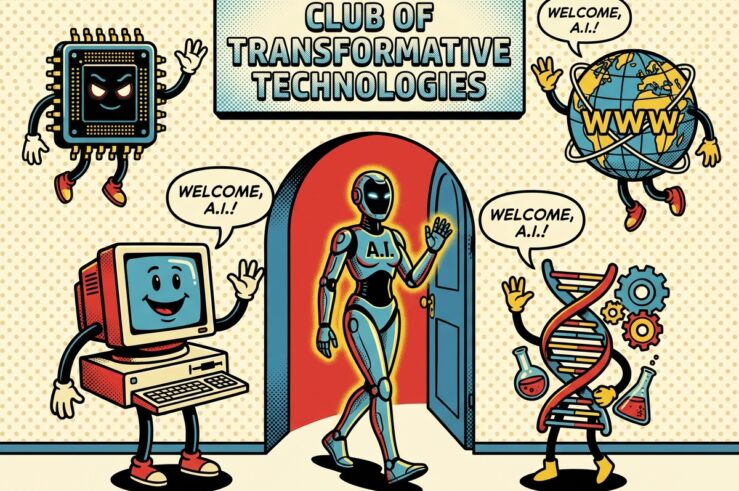
What Competition Scholars Should Know About the 2025 Economics Nobel
The 2025 Economics Nobel went to Joel Mokyr, Philippe Aghion, and Peter Howitt for exploring innovation-driven economic growth. I already wrote a general explainer about the prize. Here I want to make a different claim: If you work in antitrust, you should pay particular attention to their scholarship. Their work, especially that of Aghion and ... What Competition Scholars Should Know About the 2025 Economics Nobel
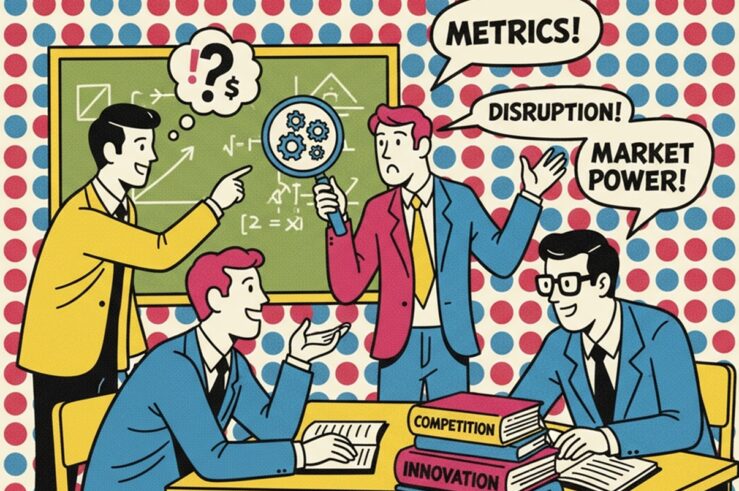
Broadcast, Cable, and Creative Destruction: What This Year’s Nobel Teaches Us About Cord Cutting
The timing could hardly be better. As traditional television continues on its years-long decline—with millions of cable subscribers cutting the cord, broadcast audiences shrinking, and streaming splintering into a dozen rival platforms—this year’s Nobel Memorial Prize in Economic Sciences has gone to three scholars who have spent their careers studying this very kind of market ... Broadcast, Cable, and Creative Destruction: What This Year’s Nobel Teaches Us About Cord Cutting
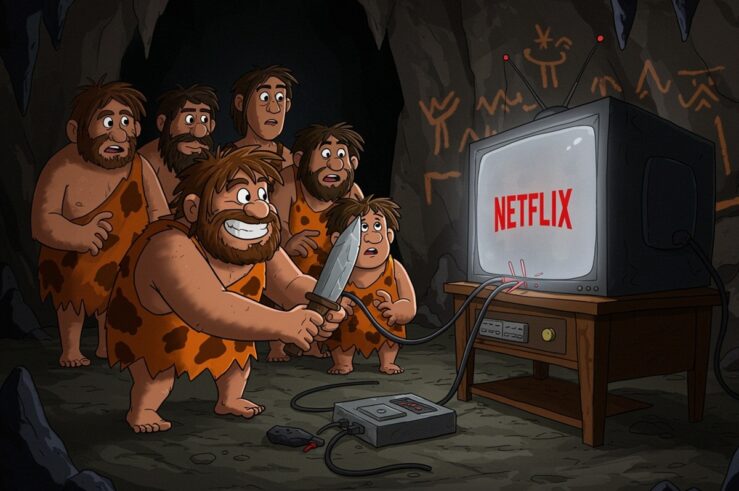
U.S. Antitrust Enforcers Should Reject AI Interventionism
The U.S. Justice Department (DOJ) and Federal Trade Commission (FTC), in tandem with their fellow competition-law enforcers from Europe (the European Commission) and the United Kingdom (the Competition and Markets Authority, or CMA), issued a joint statement July 23 titled “Joint Statement on Competition in Generative AI Foundation Models and AI Products.” This joint statement ... U.S. Antitrust Enforcers Should Reject AI Interventionism

The Snobbery of Bashing Big Tech
In the spring of 1669 a “flying coach” transported six passengers from Oxford to London in a single day. Within a few years similar carriage services connected many major towns to the capital. “As usual,” Lord Macaulay wrote in his history of England, “many persons” were “disposed to clamour against the innovation, simply because it ... The Snobbery of Bashing Big Tech

Who’s the Real Destroyer of Retail
Treasury Secretary Steve Mnuchin recently claimed that Amazon has “destroyed the retail industry across the United States” and should be investigated for antitrust violations. The claim doesn’t pass the laugh test. What’s more, the allegation might more rightly be levelled at Mnuchin himself. Mnuchin. Is. Wrong. First, while Amazon’s share of online retail in the ... Who’s the Real Destroyer of Retail
Are the antitrust laws any defense to the real dangers of mega-mergers and big technology power aggregation?
One year ago, Amazon acquired Whole Foods in a $13.7 billion deal. At the time, David Balto, a disciple of current antitrust orthodoxy, wrote: Those who are saying the Amazon-Whole Foods merger is a competition problem are leading us into the jungle without a compass and no clear objective. Antitrust law should stick to protecting consumers and ... Are the antitrust laws any defense to the real dangers of mega-mergers and big technology power aggregation?
How Uber uses innovative management tactics to incentivize its drivers: A critical commentary on Noam Scheiber’s “How Uber Uses Psychological Tricks to Push Its Drivers’ Buttons”
In a recent long-form article in the New York Times, reporter Noam Scheiber set out to detail some of the ways Uber (and similar companies, but mainly Uber) are engaged in “an extraordinary experiment in behavioral science to subtly entice an independent work force to maximize its growth.” That characterization seems innocuous enough, but it is ... How Uber uses innovative management tactics to incentivize its drivers: A critical commentary on Noam Scheiber’s “How Uber Uses Psychological Tricks to Push Its Drivers’ Buttons”
Innovation trends in agriculture and their implications for M&A analysis
The US agriculture sector has been experiencing consolidation at all levels for decades, even as the global ag economy has been growing and becoming more diverse. Much of this consolidation has been driven by technological changes that created economies of scale, both at the farm level and beyond. Likewise, the role of technology has changed ... Innovation trends in agriculture and their implications for M&A analysis