Showing archive for: “Economic Perspectives on Employment & Labor Law”
Prime Targets: Amazon, No-Poach Rules, and the Limits of Antitrust
The State of New Jersey’s antitrust case against Amazon begins with a serious allegation: that Amazon restricted drivers from moving among competing delivery contractors. But the state’s complaint goes much farther. It argues that Amazon’s entire Delivery Service Partner (DSP) system unlawfully gives the company monopsony power over both the small businesses that deliver its ... Prime Targets: Amazon, No-Poach Rules, and the Limits of Antitrust
Who, Exactly, Does New York City’s Delivery Protection Act Protect?
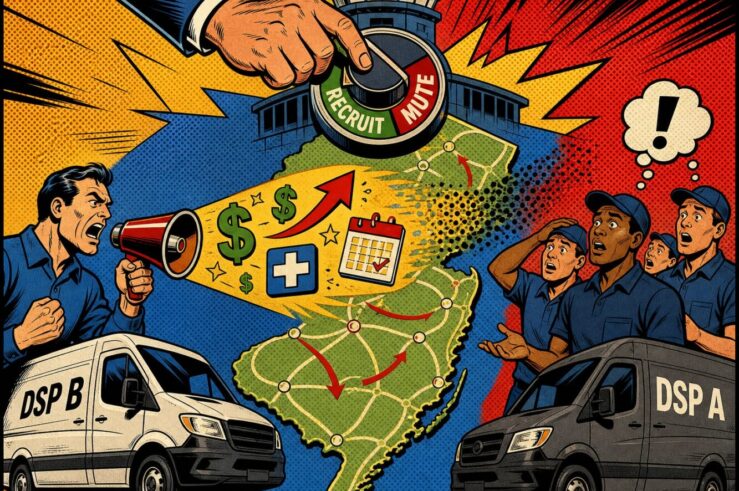
New York City has found an unlikely culprit for unsafe deliveries: the name on a driver’s paycheck. Its proposed cure would force Amazon to bring thousands of drivers in-house. The evidence that this would improve safety is thin. The implications for union organizing are anything but. Last month, New York City Mayor Zohran Mamdani formally ... Who, Exactly, Does New York City’s Delivery Protection Act Protect?

Cartels With Benefits: The Trouble With Extending Labor’s Antitrust Exemption
Antitrust law’s usual instruction to competitors who agree on price is admirably brief: Don’t. Labor law makes a deliberate exception for employees who bargain collectively. Advocates now want that exception to cover at least some independent contractors, including rideshare drivers, truck owner-operators, consultants, and other small-business owners. The proposal may sound like a tidy way ... Cartels With Benefits: The Trouble With Extending Labor’s Antitrust Exemption

Acquihires and Antitrust: When Buying the Team Isn’t Buying the Company
The Federal Trade Commission (FTC) has trained its sights on one of Silicon Valley’s most familiar deal structures: the “acquihire.” In a Bloomberg podcast interview, FTC Chair Andrew Ferguson said the agency plans to scrutinize how acquihires are structured—looking for features that could bring them within merger law and trigger Hart-Scott-Rodino Act (HSR) reporting thresholds. ... Acquihires and Antitrust: When Buying the Team Isn’t Buying the Company

Acquihires and Other Antitrust Ghost Stories
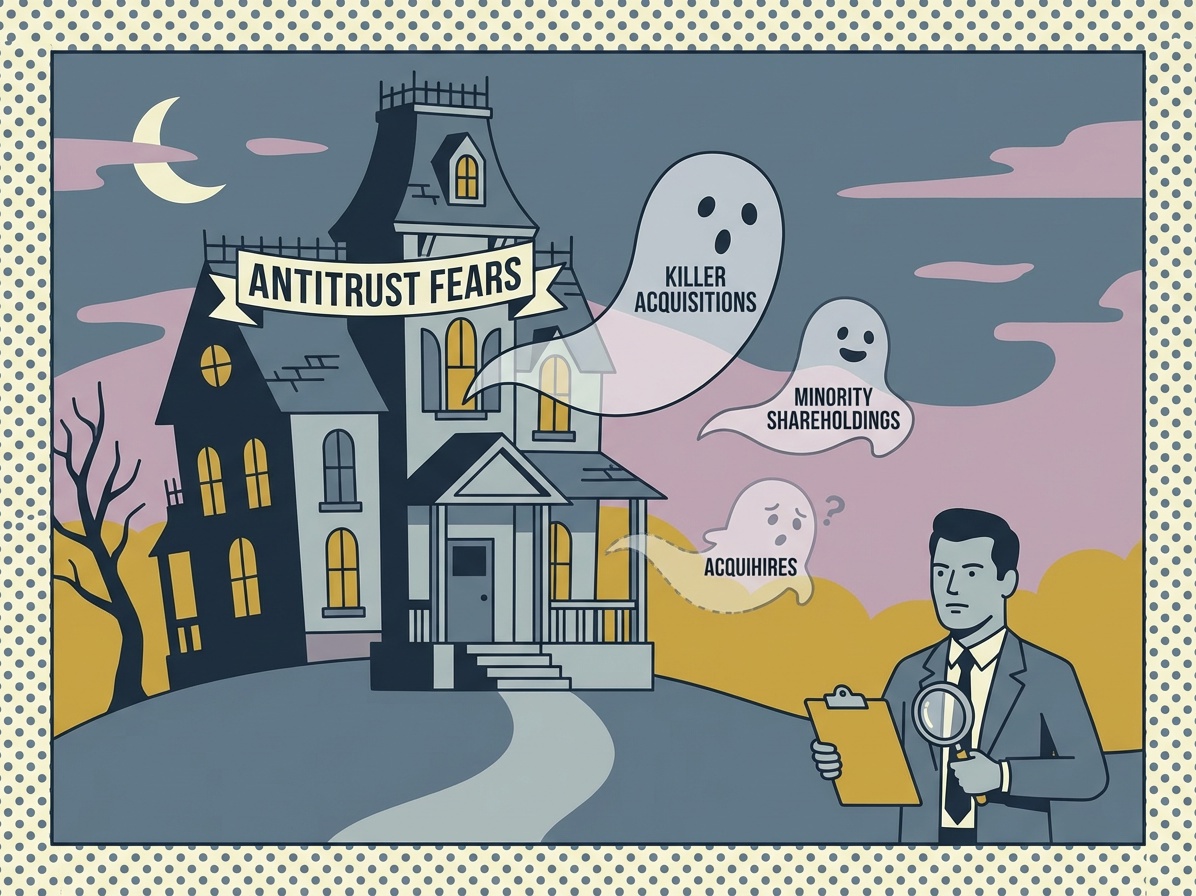
Merger-control debates tend to repeat themselves. As new transaction forms emerge, regulators often move quickly to respond before harm becomes irreversible. Over the past decade, this pattern played out in debates over “killer acquisitions,” and earlier, minority shareholdings. Today, a similar dynamic surrounds so-called “acquihires.” Acquihires are transactions aimed primarily at acquiring a firm’s workforce, ... Acquihires and Other Antitrust Ghost Stories
Curbing Monopoly Union Abuses Benefits Workers and the Economy
U.S. labor unions have long enjoyed an antitrust exemption covering collective bargaining and related activities. But this exemption does not extend to anticompetitive monopolization undertaken by unions. Recent economic research demonstrates that the creation of monopoly unions may actually harm workers, in addition to undermining free-market competition. The administration may wish to consider a new ... Curbing Monopoly Union Abuses Benefits Workers and the Economy

Could the DOJ and FTC Reform Regulations that Harm Competition?
When many think about monopolies and unfair business practices, they typically picture large corporations squashing smaller rivals. But there’s another significant culprit restricting competition that gets far less attention: government regulations themselves. The Trump administration has in recent weeks taken the first steps toward reining in some of these regulations. The U.S. Justice Department (DOJ) ... Could the DOJ and FTC Reform Regulations that Harm Competition?

Antitrust Applies to Unions as Well as to Employers
The Trump administration has signaled its interest in applying antitrust law to protect workers from harm. Business conduct that distorts competition in labor markets is, indeed, covered by the antitrust laws, and various labor-related antitrust-enforcement initiatives have been undertaken in recent years. In contrast, labor-union collective bargaining to improve wages and conditions of employment is ... Antitrust Applies to Unions as Well as to Employers

Last-Minute Biden Labor-Antitrust Initiatives May ‘Have No Future’
The Federal Trade Commission (FTC) issued an unprecedented policy statement Jan. 14 titled “Exemption of Protected Labor Activity by Workers from Antitrust Liability,” which provides that the commission will not sue nonunionized workers who engage in certain potentially anticompetitive joint conduct. This statement could undermine competition and reduce consumer welfare, without providing any real benefits ... Last-Minute Biden Labor-Antitrust Initiatives May ‘Have No Future’

A Possible Federal Role in Reducing State Red Tape
The incoming Trump administration’s commitment to reduce extremely costly regulatory burdens will feature the new Department of Government Efficiency’s (DOGE) evaluation of federal overregulation. But economic research indicates that harmful regulatory bloat exists at the state level, as well. The new administration may wish to propose solutions to state regulatory overreach that harms many Americans. Generic Overregulation at the State ... A Possible Federal Role in Reducing State Red Tape

Big Federal Antitrust Cases Heat Up
The U.S. Justice Department (DOJ) and the Federal Trade Commission (FTC) are advancing two major antitrust cases that will have significant implications for the American public. The DOJ, joined by eight states, announced Aug. 23 that it was suing RealPage Inc. for an “unlawful scheme to decrease competition among landlords in apartment pricing and to monopolize ... Big Federal Antitrust Cases Heat Up

Once More Unto the Breach, Dear Friends: More Regulatory Overreach by the FTC
Go big or go home, they say. It’s not really an either-or choice: one can go big, and then go home. Not infrequently, an attempt to go big is what gets one sent home. The Federal Trade Commission (FTC) swung for the fences in April 23’s open meeting. On purely partisan lines, the commission voted ... Once More Unto the Breach, Dear Friends: More Regulatory Overreach by the FTC