Showing archive for: “Health Law Policy & Ethics”
The World Wants Cures. America Gets the Check.
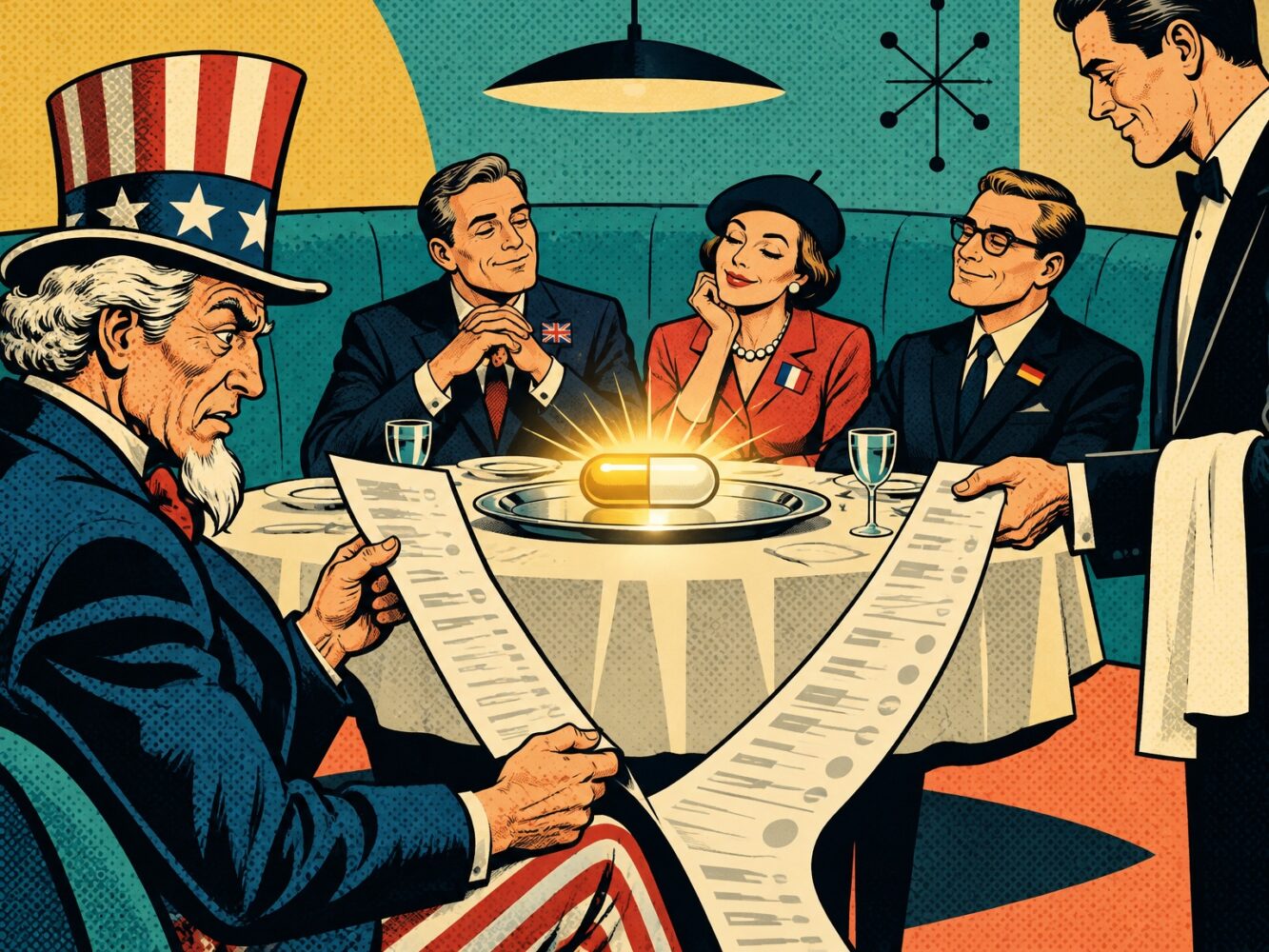
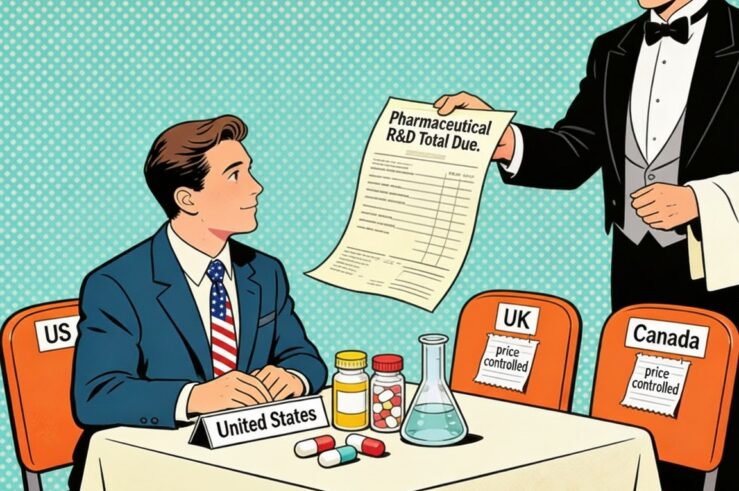
Everyone wants the next medical breakthrough. Few want the bill. The United States pays a disproportionate share of the cost of pharmaceutical innovation, while other wealthy countries hold down medicine prices and count on the research to keep coming. Yet much of the U.S. policy debate proposes copying their approach: because Americans frequently pay more ... The World Wants Cures. America Gets the Check.
A Patent, a Blood Test, and 20 Years of Waiting
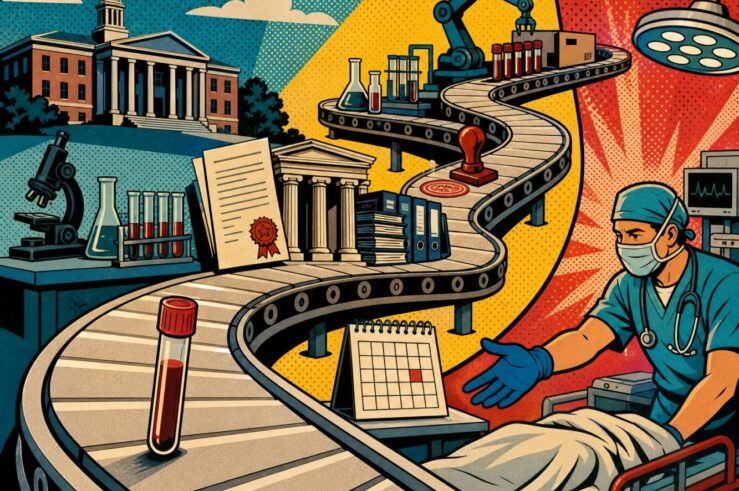
A blood test now helps doctors decide, in about 15 minutes, whether a patient with a suspected brain injury needs a CT scan. It took about 20 years to get there. That gap between scientific promise and clinical use tells us more about American innovation policy than most congressional hearings ever will. At one such ... A Patent, a Blood Test, and 20 Years of Waiting
With Gilead’s Reasonableness Standard, Side Effects May Vary
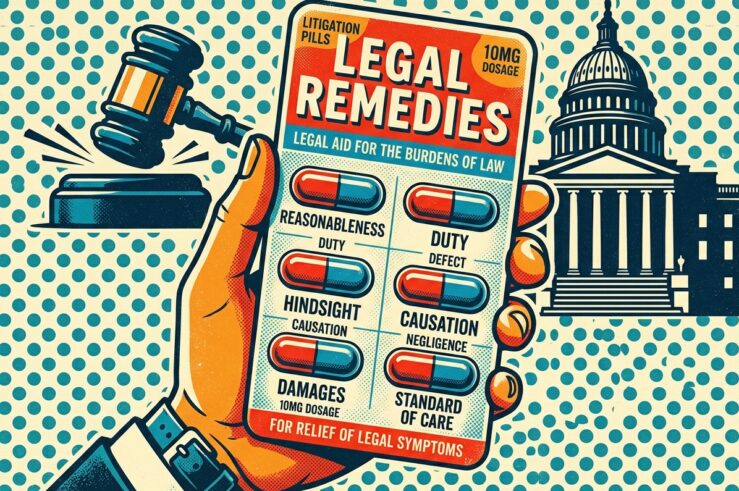
A drug manufacturer’s research pipeline is many things: a bet on science, a bet on regulators, a bet on patents, and a very expensive bet against failure. What it has not traditionally been—at least until now—is a standing invitation for tort plaintiffs to argue, years later, that the company should have bet differently. That is ... With Gilead’s Reasonableness Standard, Side Effects May Vary
Bad Medicine: Why Breaking Up Big Health Care Could Make It Worse
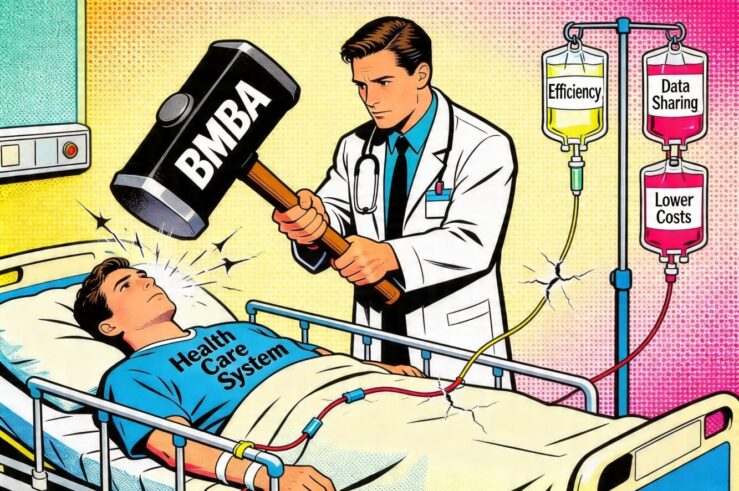
Washington has found its latest villain: “Big Medicine.” The proposed fix? Break it up and hope the pieces behave better than the whole. Americans have real reasons to be frustrated about high health care costs, and large conglomerates rank somewhere between unpopular and reviled—roughly where Microsoft’s “Clippy” sat in the 1990s. So it’s no surprise ... Bad Medicine: Why Breaking Up Big Health Care Could Make It Worse
The Fatal Conceit of Cheap Drugs
The U.S. Supreme Court agreed to hear Hikma v. Amarin to answer a narrow question. It may end up saying far more about how policymakers misunderstand pharmaceutical markets. On its face, the case is narrow. It asks whether a generic drug manufacturer can face liability for inducing patent infringement based on how it markets a ... The Fatal Conceit of Cheap Drugs
Section 5 Soup: The Still-Secret Recipe to the FTC’s PBM Case
The Federal Trade Commission (FTC) just announced a “landmark” settlement with one of the nation’s largest pharmacy benefit managers (PBMs). The problem is that it doesn’t actually end the PBM case—and it raises as many questions as it answers. In its settlement with Express Scripts Inc. (ESI) and its affiliated entities, the agency says the ... Section 5 Soup: The Still-Secret Recipe to the FTC’s PBM Case

Borrowed Prices: Pharmaceuticals and the American Tab
The Centers for Medicare & Medicaid Services (CMS) has proposed two sweeping Innovation Center models—the Global Benchmark for Efficient Drug Pricing Model (GLOBE) and the Guarding U.S. Medicare Against Rising Drug Costs Model (GUARD)—that would tie Medicare drug payments to prices set by foreign governments. Framed as pragmatic cost-containment tools, the models would import foreign ... Borrowed Prices: Pharmaceuticals and the American Tab
Fraud, PBMs, and the Cost of Looking the Other Way
Last month, the U.S. House Judiciary Committee released an interim staff report examining CVS Health’s relationships with digital pharmacy services. Led by Chairman Jim Jordan (R-Ohio), the report takes aim at a core policy concern: rising health-care costs. It frames competition and innovation as central tools for addressing those costs, a welcome emphasis in a ... Fraud, PBMs, and the Cost of Looking the Other Way
Antitrust at the Agencies: More Process, Mo’ Money Edition
The White House announced a slate of administrative nominations Jan. 13, including David MacNeil—founder and CEO of WeatherTech—to fill the Federal Trade Commission (FTC) seat vacated by Melissa Holyoak, who left last November to serve as interim U.S. attorney for the District of Utah. MacNeil made his fortune by importing and later manufacturing (here in ... Antitrust at the Agencies: More Process, Mo’ Money Edition
The Many Tradeoffs of Trump’s ‘Fat Shot’ Deal
Earlier this month, President Donald Trump announced deals with drugmakers to reduce prices and expand access to GLP-1 weight-loss drugs like Ozempic, Zepbound, and Wegovy. Originally developed to help diabetics manage their blood sugar, the drugs mimic the natural hormone glucagone-like-peptide-1 (GLP-1). GLP-1s trigger the pancreas to release insulin at times of high blood-sugar levels, ... The Many Tradeoffs of Trump’s ‘Fat Shot’ Deal
The NIH ‘Access Plan’ Mandate: Central Planning by Another Name
When the National Institutes of Health (NIH) announced in July that it would move forward with a Biden-era proposal to require “access plans” for companies seeking to license NIH-owned patents, the decision stunned many in the innovation community. Industry groups warned that this new bureaucratic hurdle would “kill NIH licensing.” They’re right, and not merely ... The NIH ‘Access Plan’ Mandate: Central Planning by Another Name

Some Ups and Downs in the Realm of Consumer Protection
Consumer protection authority has long been a staple of the Federal Trade Commission’s (FTC) enforcement of the FTC Act, beginning with the 1938 Wheeler-Lea amendments to the agency’s establishing statute. And Congress drew an express connection between the FTC’s competition and consumer protection authorities with the introduction of Section 5(n) of the FTC Act, which ... Some Ups and Downs in the Realm of Consumer Protection