Showing archive for: “Employment Law”
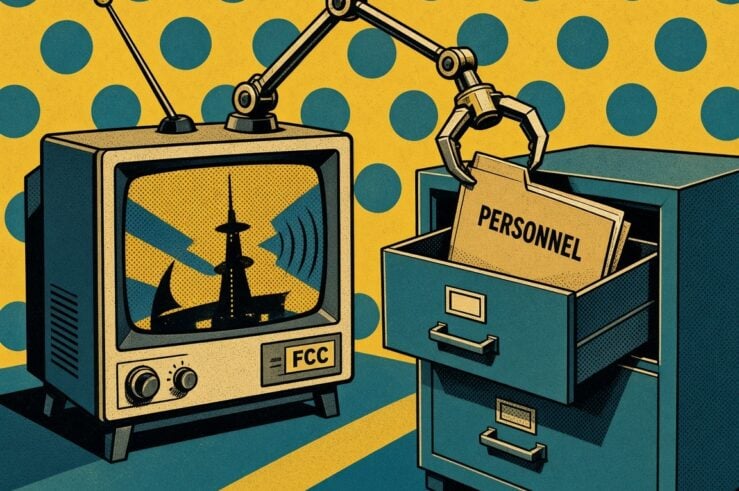
The FCC’s Public Interest in Your Personnel Files
The Federal Communications Commission (FCC) licenses television stations. Does that make it Disney’s human resources department? The agency seems to think so, invoking a “public interest” mandate to investigate the company’s diversity policies—a mandate whose meaning seems to change with whoever holds power. Under the Communications Act of 1934, as amended, the FCC has initiated ... The FCC’s Public Interest in Your Personnel Files
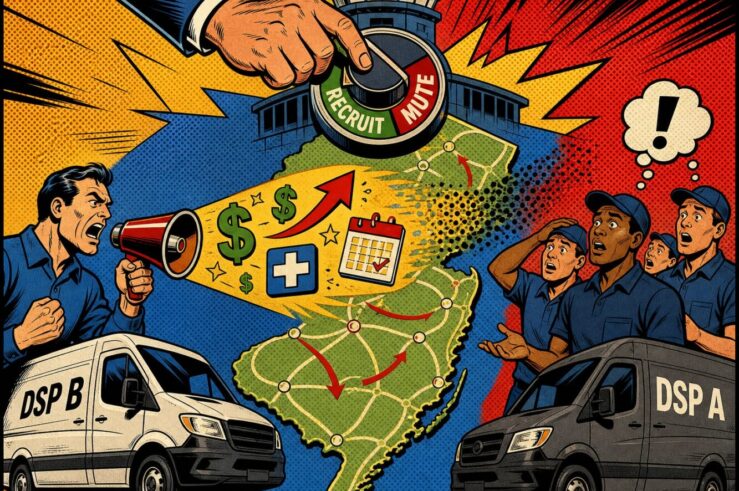
Prime Targets: Amazon, No-Poach Rules, and the Limits of Antitrust
The State of New Jersey’s antitrust case against Amazon begins with a serious allegation: that Amazon restricted drivers from moving among competing delivery contractors. But the state’s complaint goes much farther. It argues that Amazon’s entire Delivery Service Partner (DSP) system unlawfully gives the company monopsony power over both the small businesses that deliver its ... Prime Targets: Amazon, No-Poach Rules, and the Limits of Antitrust
Acquihires and Antitrust: When Buying the Team Isn’t Buying the Company
The Federal Trade Commission (FTC) has trained its sights on one of Silicon Valley’s most familiar deal structures: the “acquihire.” In a Bloomberg podcast interview, FTC Chair Andrew Ferguson said the agency plans to scrutinize how acquihires are structured—looking for features that could bring them within merger law and trigger Hart-Scott-Rodino Act (HSR) reporting thresholds. ... Acquihires and Antitrust: When Buying the Team Isn’t Buying the Company

Curbing Monopoly Union Abuses Benefits Workers and the Economy
U.S. labor unions have long enjoyed an antitrust exemption covering collective bargaining and related activities. But this exemption does not extend to anticompetitive monopolization undertaken by unions. Recent economic research demonstrates that the creation of monopoly unions may actually harm workers, in addition to undermining free-market competition. The administration may wish to consider a new ... Curbing Monopoly Union Abuses Benefits Workers and the Economy

Antitrust Applies to Unions as Well as to Employers
The Trump administration has signaled its interest in applying antitrust law to protect workers from harm. Business conduct that distorts competition in labor markets is, indeed, covered by the antitrust laws, and various labor-related antitrust-enforcement initiatives have been undertaken in recent years. In contrast, labor-union collective bargaining to improve wages and conditions of employment is ... Antitrust Applies to Unions as Well as to Employers

Last-Minute Biden Labor-Antitrust Initiatives May ‘Have No Future’
The Federal Trade Commission (FTC) issued an unprecedented policy statement Jan. 14 titled “Exemption of Protected Labor Activity by Workers from Antitrust Liability,” which provides that the commission will not sue nonunionized workers who engage in certain potentially anticompetitive joint conduct. This statement could undermine competition and reduce consumer welfare, without providing any real benefits ... Last-Minute Biden Labor-Antitrust Initiatives May ‘Have No Future’

Lina’s Lingering Legacy?
First and foremost, a belated Happy New Year, tout le monde. I have just flown home from France and boy are my arms fatigués. I was in Paris for meetings and, especially, for the International Center for Law & Economics’ (ICLE) conference (co-sponsored by European University Institute’s Department of Law, IE Law School Madrid, and ... Lina’s Lingering Legacy?

FTC Noncompete Rule–and FTC Competition Rulemaking–Are on the Ropes
Judge Ada Brown of the U.S. District Court for the Northern District of Texas issued an Aug. 20 order effectively striking down the Federal Trade Commission’s (FTC) April 2024 rule barring noncompete clauses (“noncompetes”) in employment contracts. Ryan LLC, a global tax-services and software provider, had challenged the rule, which had been scheduled to take ... FTC Noncompete Rule–and FTC Competition Rulemaking–Are on the Ropes

Vacatur’s All I Ever Wanted
Yep, more about noncompetes. I’ve been at this a bit. I’m aware. Just last week, and then again here, here, here, here, and here at Truth on the Market; here in a more formal journal article; and here with my International Center for Law & Economics (ICLE) colleagues and scholars of law and economics. Maybe ... Vacatur’s All I Ever Wanted

Rounding Out the Roundup
In yesterday’s Agencies Roundup, I discussed the likely fate of the Federal Trade Commission’s (FTC) new rule banning most noncompete agreements, read through the lens of the Supreme Court’s Loper Bright decision. I thought the rule infirm to begin with—a somewhat foolish swing for the fences on a regulation that the FTC couldn’t possibly enforce. ... Rounding Out the Roundup

After Loper Bright, FTC Awaits Its Turn At-Bat
In an Agencies Roundup post several weeks ago, I revisited the Federal Trade Commission’s (FTC) newly adopted—and not-yet-effective—rule barring the use of noncompete agreements across much of the U.S. economy. It was not my first such post (my ninth, if I’ve counted correctly, and if readers will forgo armchair diagnoses of monomania). The last time ... After Loper Bright, FTC Awaits Its Turn At-Bat

The Waiting Game: Noncompetes, Google, Roll-Ups, and More
I’ll start with a bit of half-empty, half-full (and very partial) resolution in Federal Trade Commission (FTC) publicity. Losing by Winning or Just Losing or . . . ? A couple of weeks ago, the Wall Street Journal editorial board announced that: “Another Lina Khan Theory Loses in Court” And that was right, up to ... The Waiting Game: Noncompetes, Google, Roll-Ups, and More