Showing archive for: “Economics of Innovation”
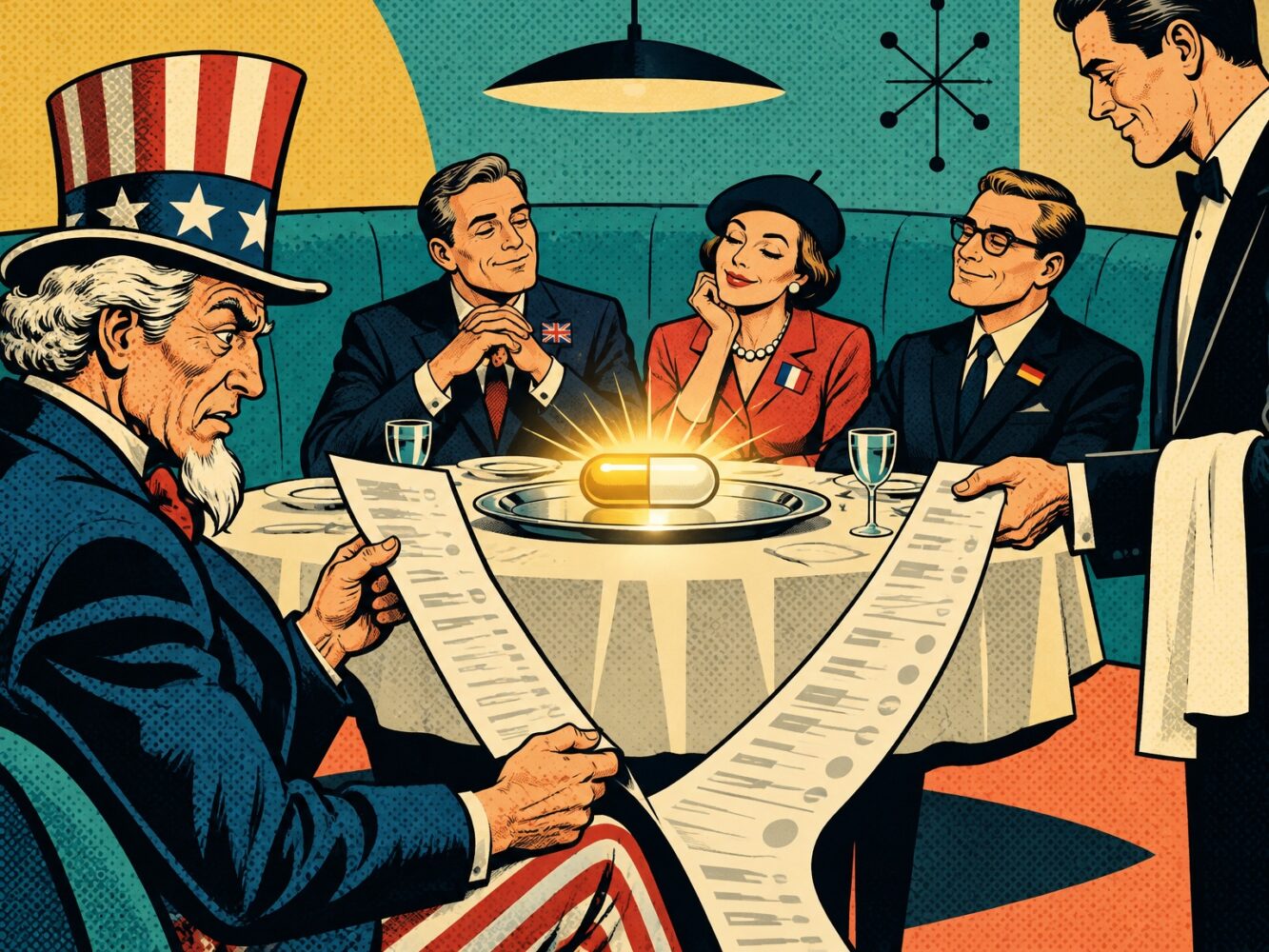
The World Wants Cures. America Gets the Check.
Everyone wants the next medical breakthrough. Few want the bill. The United States pays a disproportionate share of the cost of pharmaceutical innovation, while other wealthy countries hold down medicine prices and count on the research to keep coming. Yet much of the U.S. policy debate proposes copying their approach: because Americans frequently pay more ... The World Wants Cures. America Gets the Check.
Move Slow and Collude: The Antitrust Problem With Pacing AI
The frontier AI race’s latest safety proposal would have the leading contenders agree on how fast to run. Antitrust law has a less flattering name for that arrangement: a cartel. That is the central problem with the “pacing the frontier” plan that Anthropic CEO Dario Amodei unveiled last weekend, and that fellow AI executives Sam ... Move Slow and Collude: The Antitrust Problem With Pacing AI

Europe Wants Tech Champions, Then Makes Them Share the Trophy
Europe wants its own technology champions. It just seems less comfortable with what champions look like once they arrive. The European Commission’s latest Digital Markets Act (DMA) decisions capture that tension. Europe wants more innovation, investment, and globally competitive digital platforms. Yet when a company assembles the data, technology, distribution, and complementary services needed to ... Europe Wants Tech Champions, Then Makes Them Share the Trophy

A Patent, a Blood Test, and 20 Years of Waiting
A blood test now helps doctors decide, in about 15 minutes, whether a patient with a suspected brain injury needs a CT scan. It took about 20 years to get there. That gap between scientific promise and clinical use tells us more about American innovation policy than most congressional hearings ever will. At one such ... A Patent, a Blood Test, and 20 Years of Waiting

Act First, Learn Later: AI Antitrust and the Error Costs of Regulation at Machine Speed
Competition enforcers appear to have discovered their own version of artificial intelligence: act first, learn later. In the span of a week, agencies across four continents moved to reshape how AI products are built, distributed, and integrated—mostly before anyone has shown, in a final appealable decision, that the challenged conduct harms competition. Last week, a ... Act First, Learn Later: AI Antitrust and the Error Costs of Regulation at Machine Speed

How China Accidentally Made Consumer Welfare Cool Again
The consumer welfare standard was supposed to be on the defensive. After nearly a decade of attacks from the neo-Brandeisian movement, critics had cast it as too narrow, too technocratic, and too forgiving of “Big Tech.” Yet the standard’s most important new ally may turn out to be an unexpected one: geopolitics. The consumer welfare ... How China Accidentally Made Consumer Welfare Cool Again

With Gilead’s Reasonableness Standard, Side Effects May Vary
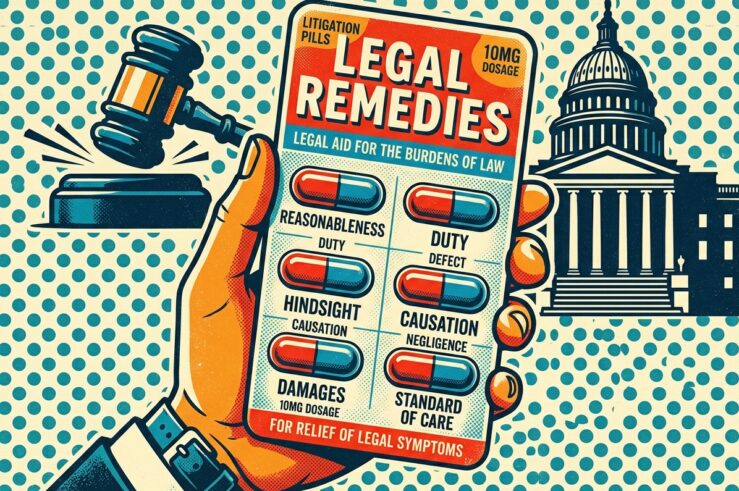
A drug manufacturer’s research pipeline is many things: a bet on science, a bet on regulators, a bet on patents, and a very expensive bet against failure. What it has not traditionally been—at least until now—is a standing invitation for tort plaintiffs to argue, years later, that the company should have bet differently. That is ... With Gilead’s Reasonableness Standard, Side Effects May Vary
False Positives, Real Casualties: The High Price of Populist Antitrust
Spirit Airlines was supposed to be the “maverick” antitrust saved from JetBlue. Instead, the deal died, Spirit followed it into bankruptcy, and the maverick exited the market altogether. That is an awkward result for a merger challenge brought in the name of preserving competition—and a useful place to start a broader reconsideration of error costs. ... False Positives, Real Casualties: The High Price of Populist Antitrust

AI, Antitrust, and the Mirage of Data Dominance
Not all supposed barriers to entry are created equal. The ones that matter for antitrust are not just costs, advantages, or inputs controlled by leading firms. They are durable impediments that keep rivals from entering, expanding, and disciplining market power. That distinction matters in generative artificial intelligence (AI), where policymakers increasingly worry that control over ... AI, Antitrust, and the Mirage of Data Dominance

The Fatal Conceit of Cheap Drugs
The U.S. Supreme Court agreed to hear Hikma v. Amarin to answer a narrow question. It may end up saying far more about how policymakers misunderstand pharmaceutical markets. On its face, the case is narrow. It asks whether a generic drug manufacturer can face liability for inducing patent infringement based on how it markets a ... The Fatal Conceit of Cheap Drugs

Putting the Bite Back in Patents
The U.S. Department of Justice (DOJ) and U.S. Patent and Trademark Office’s (USPTO) Feb. 27 joint statement of interest in Collision Communications v. Samsung signals a possible shift back toward the first Trump administration’s “New Madison Approach” to patent policy. That framework—largely abandoned during the Biden administration—treated patents as property rights and defended the central ... Putting the Bite Back in Patents

Borrowed Prices: Pharmaceuticals and the American Tab
The Centers for Medicare & Medicaid Services (CMS) has proposed two sweeping Innovation Center models—the Global Benchmark for Efficient Drug Pricing Model (GLOBE) and the Guarding U.S. Medicare Against Rising Drug Costs Model (GUARD)—that would tie Medicare drug payments to prices set by foreign governments. Framed as pragmatic cost-containment tools, the models would import foreign ... Borrowed Prices: Pharmaceuticals and the American Tab