Showing archive for: “Demand & Supply in Health Economics”
The World Wants Cures. America Gets the Check.
Everyone wants the next medical breakthrough. Few want the bill. The United States pays a disproportionate share of the cost of pharmaceutical innovation, while other wealthy countries hold down medicine prices and count on the research to keep coming. Yet much of the U.S. policy debate proposes copying their approach: because Americans frequently pay more ... The World Wants Cures. America Gets the Check.

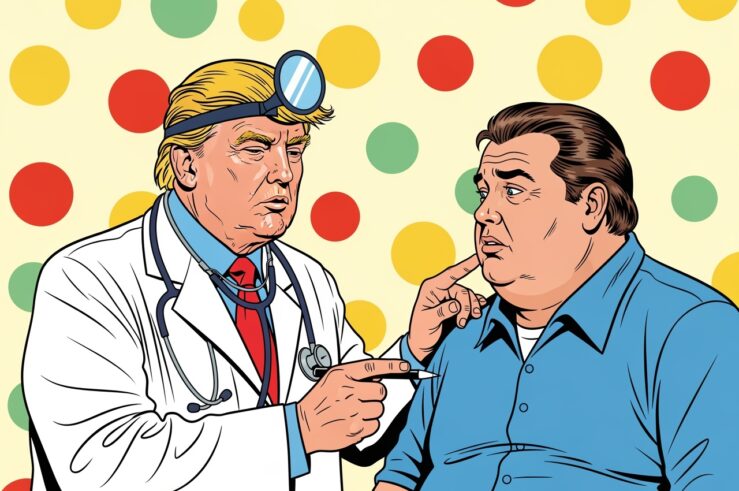
The Many Tradeoffs of Trump’s ‘Fat Shot’ Deal
Earlier this month, President Donald Trump announced deals with drugmakers to reduce prices and expand access to GLP-1 weight-loss drugs like Ozempic, Zepbound, and Wegovy. Originally developed to help diabetics manage their blood sugar, the drugs mimic the natural hormone glucagone-like-peptide-1 (GLP-1). GLP-1s trigger the pancreas to release insulin at times of high blood-sugar levels, ... The Many Tradeoffs of Trump’s ‘Fat Shot’ Deal
The Risks of Adopting Foreign Price Controls for Drugs
Recent reports indicate that President Donald Trump is urging House Republicans to adopt a “most favored nation” (MFN) policy for Medicaid drug purchasing, linking U.S. prices to the lowest rates paid by other countries. While the goal of reducing Medicaid costs is understandable—particularly amid growing concerns about drug affordability—relying on foreign pricing benchmarks would risk ... The Risks of Adopting Foreign Price Controls for Drugs

Oncology Drives Most Recent Accelerated Approvals
In my most recent post on medicine approvals I explored how the HIV/AIDS crisis drove a reevaluation of what was truly essential to demonstrate a new drug’s efficacy. Allowing HIV patients to take investigational treatments meant that research into rarer conditions—which previously would never have been profitable—might now be financially worthwhile. This post estimates the ... Oncology Drives Most Recent Accelerated Approvals

What Does “Flattening the Curve” Mean?
Policy makers are using the term to describe the effects of social distancing and travel restrictions. In this post, we use a cellular automata model of infection to show how they might do this. DISCLAIMER: THIS IS AN UNREALISTIC MODEL, FOR TEACHING PURPOSES ONLY. The images below are from a cellular automata model of the spread of a disease ... What Does “Flattening the Curve” Mean?

Applying harm reduction to smoking
Abstinence approaches work exceedingly well on an individual level but continue to fail when applied to populations. We can see this in several areas: teen pregnancy; continued drug use regardless of severe criminal penalties; and high smoking rates in vulnerable populations, despite targeted efforts to prevent youth and adult uptake. The good news is that ... Applying harm reduction to smoking
The Administration’s Rigorous Defense of the Affordable Care Act
In yesterday’s Washington Post, Health and Human Services Secretary Kathleen Sebelius makes an impassioned plea for skeptics to reconsider the Affordable Care Act. Secretary Sebelius argues that the Act will bring down health care costs by, among other things, assisting those who cannot afford health insurance coverage. Although expanding health insurance coverage is a worthy ... The Administration’s Rigorous Defense of the Affordable Care Act
An Honest Question for Obamacare Supporters
A number of opponents of Obamacare, such as Wall Street Journal columnist William McGurn, have criticized the President and his people for referring to pending proposals as “health insurance reform” rather than “health care reform.” I suppose these critics think the President is engaging in a sleight of hand in an effort to minimize the ... An Honest Question for Obamacare Supporters
Thaler’s Unsound Argument About the Public Insurance Option
University of Chicago economist (and behavioralist doyen) Richard Thaler thinks “the question of whether a ‘public option’ should be part of the health care solution” is just “one big distraction.” In Sunday’s New York Times, Thaler argues that the debate over the public option is a “red herring” if, as President Obama insists, the public ... Thaler’s Unsound Argument About the Public Insurance Option
Expanding Insurance Coverage Is Not the Way to Reduce Health Care Costs
As his Council of Economic Advisers made clear in its recent health care report, President Obama sees two primary goals for his health care reform efforts: to slow the growth of health care costs and to expand coverage of health insurance. It’s pretty clear, though, which of these goals is steering the ship. While the ... Expanding Insurance Coverage Is Not the Way to Reduce Health Care Costs
Medical Self-Defense, Organ Markets, and the Poor
Eugene Volokh has posted a series discussing his new article (forthcoming in Harvard L. Rev.) “Medical Self-Defense, Prohibited Experimental Therapies, and Payment for Organs,” which I point out because the article claims that bans on organ payments violate patients’ medical self-defense rights. As readers of TOTM know, organ markets are a topic of substantial interest ... Medical Self-Defense, Organ Markets, and the Poor
Kidney Donors to be Compensated in Israel
A Jerusalem District Court has ruled that kidney donors will receive compensation (about $13-14K in US dollars) from HMOs for transplant expenses. While the ruling does not address “the question of whether a kidney donor is entitled to an additional reward for the lack of the organ, and if so, how much and what should ... Kidney Donors to be Compensated in Israel