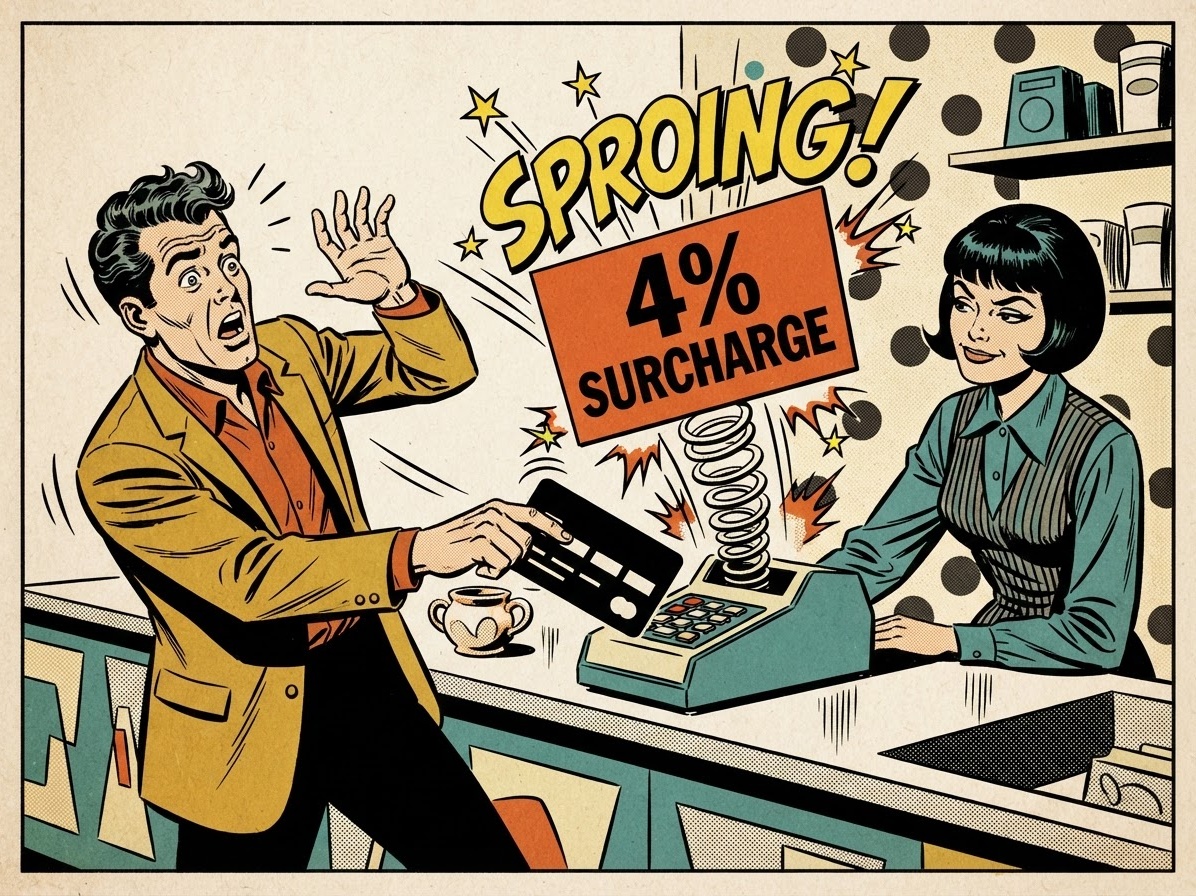
The Centers for Medicare & Medicaid Services (CMS) has proposed two sweeping Innovation Center models—the Global Benchmark for Efficient Drug Pricing Model (GLOBE) and the Guarding U.S. Medicare Against Rising Drug Costs Model (GUARD)—that would tie Medicare drug payments to prices set by foreign governments. Framed as pragmatic cost-containment tools, the models would import foreign price controls directly into Medicare’s reimbursement architecture.
That approach rests on a false premise. American drug prices are not high because U.S. markets lack regulation. The opposite is closer to the truth. The United States already operates within a dense web of federal and state intervention: Medicare reimbursement formulas, mandatory rebates, Inflation Reduction Act “negotiation,” state-level coverage mandates, and a Food and Drug Administration (FDA) approval process marked by high compliance costs, protracted review timelines, and significant barriers to entry. Foreign governments then suppress pharmaceutical prices abroad, shifting a disproportionate share of global research-and-development costs onto the United States.
If that is the distortion, importing foreign price ceilings into Medicare is not a solution. It is capitulation—another bureaucratic contrivance layered onto an already overregulated system.
The better response is disciplined trade enforcement: the use of Section 301 of the Trade Act of 1974 to confront sustained foreign price suppression as an unfair trade practice that burdens U.S. commerce.
Cheap Drugs, Expensive Consequences
Many OECD countries secure lower drug prices not through decentralized competition, but through centralized price-setting, monopsony bargaining, and explicit or implicit rationing. Governments leverage national purchasing power to impose administratively determined ceilings below market-clearing levels.
Pharmaceutical research and development looks nothing like a typical manufacturing market. It involves high fixed costs, extreme uncertainty, and global scale. The cost of a successful therapy reflects not only that product’s development, but also the many candidates that fail. Firms must recover those sunk investments somewhere.
When foreign governments suppress prices through state power, cost recovery shifts to jurisdictions that retain comparatively market-oriented pricing. For decades, the United States has carried much of that burden.
GLOBE and GUARD would not correct the asymmetry. They would extend it. If the world’s largest pharmaceutical market adopts foreign-style administrative pricing, expected returns fall, marginal R&D projects become less viable, and capital moves away from high-risk therapeutic areas. The long-run effect of sustained price ceilings is not merely lower reimbursement outlays. It is slower innovation.
Benchmarking Against Politics
Foreign price benchmarking also rests on a deeper economic error.
Market prices are not arbitrary. In competitive markets, they aggregate dispersed information about risk, scarcity, time preference, and opportunity cost. As Ludwig von Mises explained in “Human Action,” markets operate as a dynamic process that generates the price signals necessary for rational economic calculation.
Foreign drug prices are not market outcomes. They are political artifacts—products of domestic budget constraints and monopsony leverage. Treating them as neutral benchmarks replaces entrepreneurial price discovery with bureaucratic calculation.
That substitution may trim short-term Medicare spending. It also distorts capital allocation in an industry that depends on forward-looking investment signals. When government replaces market prices with administered ones, the informational function of prices degrades, and long-run innovation follows.
Don’t Import Price Controls—Export Consequences
If foreign governments are free-riding on U.S.-financed pharmaceutical innovation, the response should not be imitation. It should be confrontation.
The Supreme Court’s recent decision in Learning Resources, Inc. v. Trump clarified that the International Emergency Economic Powers Act (IEEPA) does not confer open-ended tariff authority untethered from statutory limits. The decision did not eliminate trade remedies. It reaffirmed that they must proceed through proper statutory channels.
Section 301 of the Trade Act of 1974 expressly authorizes the Office of the U.S. Trade Representative to investigate and respond to foreign acts, policies, or practices that are unreasonable or discriminatory and that burden U.S. commerce. Sustained, state-imposed pharmaceutical price suppression that shifts global R&D cost recovery onto American firms fits squarely within that framework.
A serious response would not be symbolic. It would involve escalating reciprocal tariffs applied broadly—not only to pharmaceuticals, but across traded goods—against countries that maintain coercive pharmaceutical price controls. The tariffs would remain in place, and increase if necessary, until those governments abandon monopsony price-setting and allow market-based pricing for medicines sold within their borders.
The objective is not protectionism for its own sake. It is symmetry. If foreign governments suppress drug prices through state power while benefiting from American innovation, they should face corresponding economic consequences. Trade enforcement creates leverage. Importing their price controls into Medicare rewards the distortion.
Drug Pricing and National Security
Pharmaceutical innovation capacity is not just an economic asset. It is a strategic one.
The ability to develop vaccines, oncology therapies, biologics, and advanced medical countermeasures depends on a strong domestic R&D ecosystem. Sustained suppression of expected returns in innovation-intensive sectors erodes that ecosystem over time.
Recent trade debates increasingly recognize that supply-chain resilience and domestic production capacity carry national-security implications. Biomedical innovation is no exception. Where technological leadership and emergency responsiveness matter, economic security and national security converge.
Importing foreign administrative pricing would not simply cut expenditures. It would weaken resilience by undermining the American pharmaceutical innovation base.
Free Trade Isn’t One-Sided
Some critics will argue tariffs are inconsistent with free-market principles. That objection misunderstands the classical-liberal position.
Ludwig von Mises, Friedrich Hayek, and Murray Rothbard opposed permanent protectionism and domestic cartelization. They defended free trade under voluntary exchange and in the absence of state-imposed distortions. Free trade presupposes reciprocity.
When foreign governments impose coercive price ceilings that systematically distort global markets, the trading environment is no longer neutral. A temporary, targeted response aimed at counteracting foreign intervention and restoring competitive conditions does not abandon market principles. It attempts to reestablish them.
The long-term objective remains the elimination of both tariffs and price controls. It is not free trade until both are gone. Importing foreign intervention into Medicare should not be mistaken for fidelity to market principles.
Bureaucracy vs. Innovation
GLOBE and GUARD would layer new federal intervention onto an already distorted system. They do not address the underlying causes of high drug prices. They replace market discipline with bureaucratic engineering. History—and the lessons of Austrian economics, in particular—suggest that expanding administrative price control does not cure structural distortions. It compounds them.
Foreign governments suppress returns abroad, while the United States absorbs a disproportionate share of global R&D cost recovery. Importing foreign price ceilings into Medicare weakens domestic innovation incentives without prompting trading partners to reform. That is not a correction. It is a retreat.
If policymakers want to address global asymmetries in pharmaceutical pricing, disciplined trade enforcement under Section 301 offers a more coherent tool.
The United States does not need more government pricing formulas. It needs less intervention and stronger market discipline. Markets—not bureaucratic contrivances—generate innovation. We should not abandon them for foreign-style control.