Showing archive for: “Microeconomics: Asymmetric & Private Information”
‘The Value of the Ability to Deal with Disequilibria,’ by Theodore Schultz
The most valuable skill in the age of artificial intelligence (AI) may not be coding, prompt engineering, or any of the other competencies appearing in job listings. It may be the ability to figure out which skills will be valuable next. Half a century ago, Theodore Schultz had a name for something much like this: ... ‘The Value of the Ability to Deal with Disequilibria,’ by Theodore Schultz

Doom, Meet Duty: AI’s Warnings Come With Legal Baggage
Predicting the end of humanity is one way to get a headline. For artificial intelligence (AI) developers, it may also be one way to hand a future plaintiff evidence. Developers have become some of the loudest voices warning about their own systems. Predictions that AI could drive humanity to extinction—once widely dismissed as absurd—now make ... Doom, Meet Duty: AI’s Warnings Come With Legal Baggage
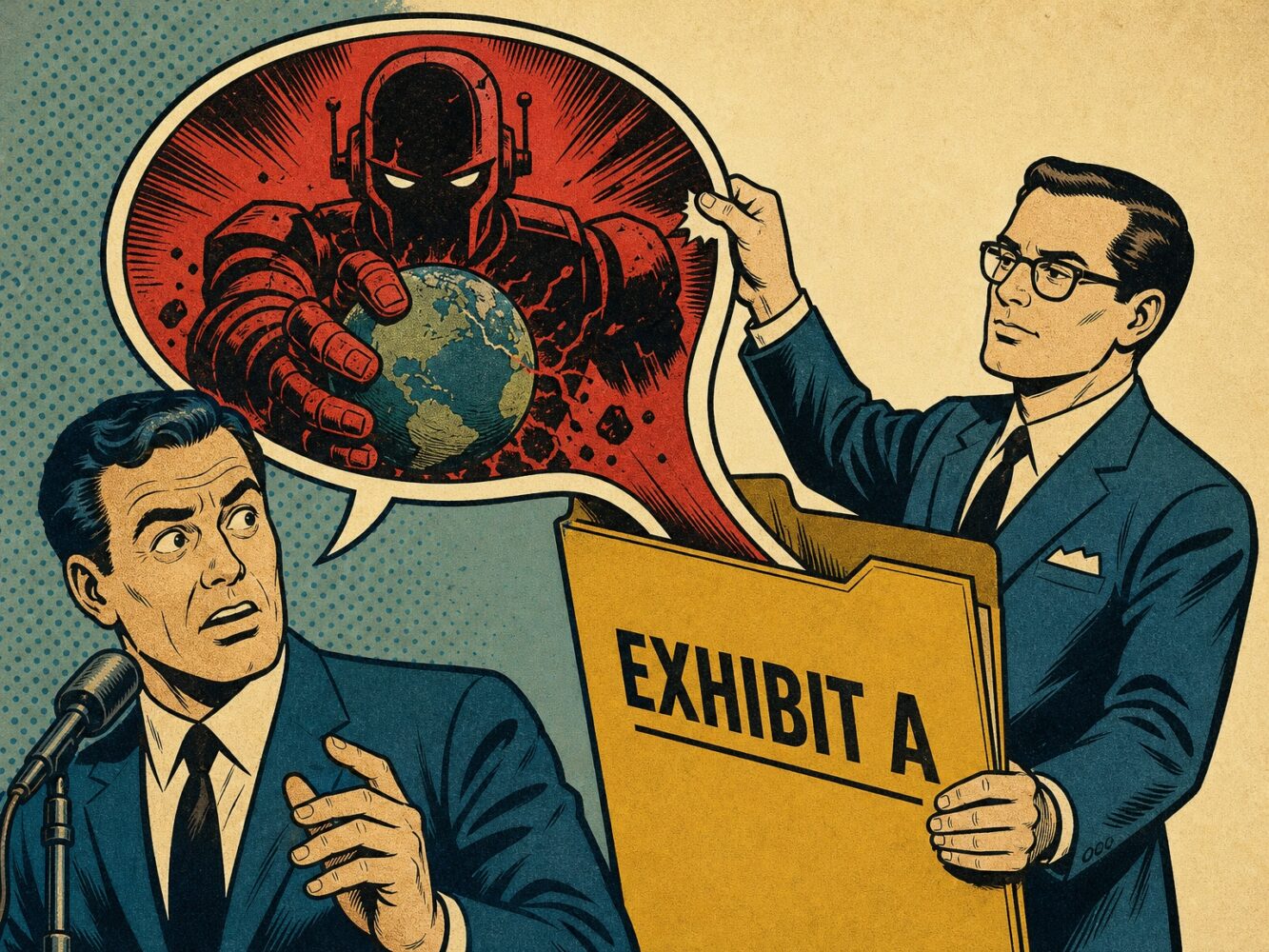
‘Market Power in Antitrust: Economic Analysis after Kodak,’ by Benjamin Klein
In 1992, the U.S. Supreme Court held in Eastman Kodak Co. v. Image Technical Services that a firm without market power in photocopiers might still possess market power in photocopier parts and service. The Court’s logic turned on opportunistic hold-up: Kodak could profit by trading short-run exploitation of locked-in customers for long-run losses in equipment ... ‘Market Power in Antitrust: Economic Analysis after Kodak,’ by Benjamin Klein
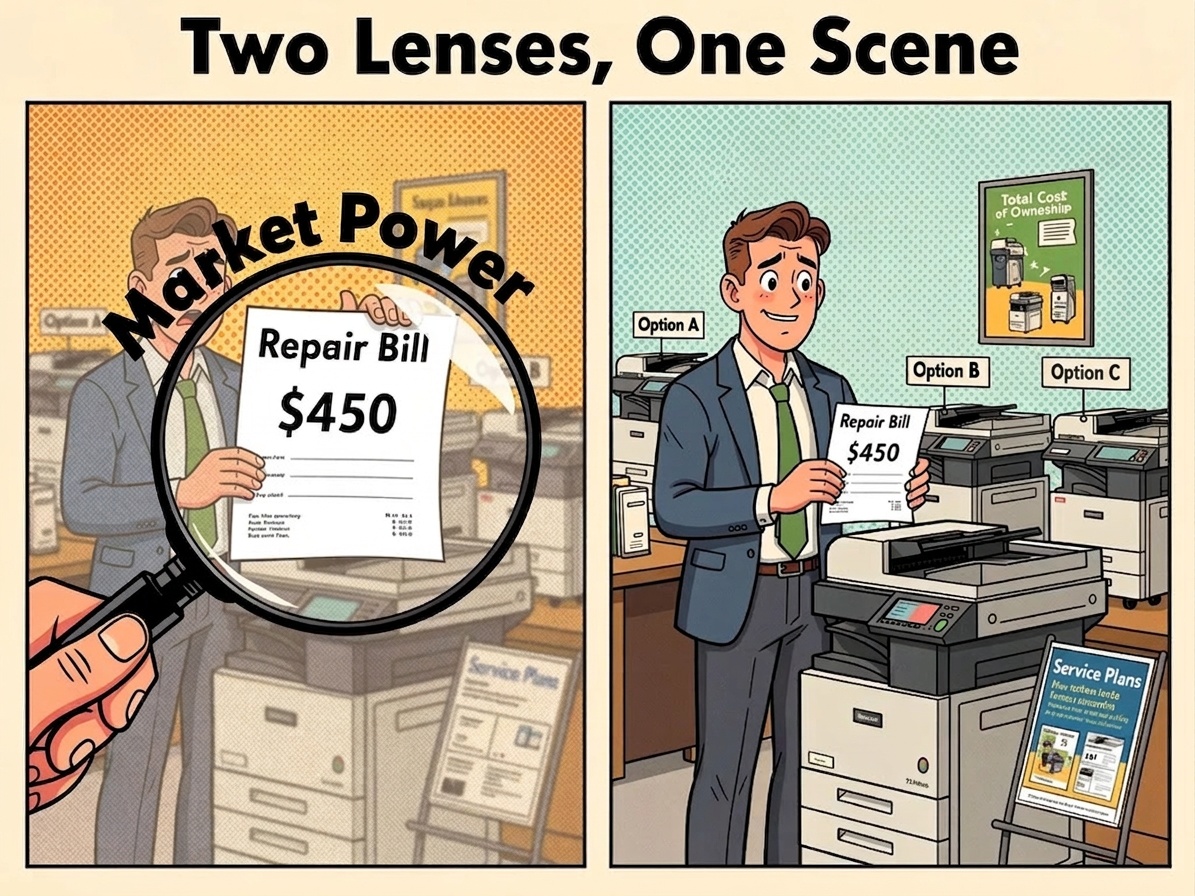
The Myth of the Unwanted Internet
In a recent podcast, New York Times journalist Ezra Klein hosted lawyer Tim Wu and writer Cory Doctorow for a conversation titled “We Didn’t Ask for This Internet.” They ran through a familiar bill of indictment against the modern internet: surveillance, manipulation, algorithmic pricing, the squeezing of creators, spam, fraud, and the dehumanization of work. ... The Myth of the Unwanted Internet
‘The Law Merchant,’ by Milgrom, North, & Weingast
In “The Role of Institutions in the Revival of Trade: The Law Merchant, Private Judges and the Champagne Fairs,” Paul Milgrom, Douglass C. North, and Barry R. Weingast take as their starting point a circumstance unusual for legal work: circumstances where effective enforcement does not exist. Their motivating example is the “law merchant” or lex ... ‘The Law Merchant,’ by Milgrom, North, & Weingast
The Government Enters the Data-Sharing Game
The U.S. Justice Department (DOJ) recently announced a proposed settlement with RealPage Inc. that would strictly prohibit the company from using competitors’ nonpublic data in its rental-pricing software. Curiously, that remedy is nearly the precise opposite of the September order from the U.S. District Court for the District of Columbia in a suit the DOJ ... The Government Enters the Data-Sharing Game

Does ‘Open Finance’ Promote Competition or Facilitate Free Riding?
Financial technology, or so-called “fintech,” is disrupting the financial sector, and that’s a good thing. Fintech services are making finance more digital and more user-friendly. This, in turn, has led to reduced transactions costs and increased levels of competition, innovation, and financial inclusion. Alas, the emergence of fintech has also been accompanied by a rising ... Does ‘Open Finance’ Promote Competition or Facilitate Free Riding?
After the FTX Crash, What’s Next for Crypto?
For many observers, the collapse of the crypto exchange FTX understandably raises questions about the future of the crypto economy, or even of public blockchains as a technology. The topic is high on the agenda of the U.S. Congress this week, with the House Financial Services Committee set for a Dec. 13 hearing with FTX ... After the FTX Crash, What’s Next for Crypto?
Imposed Final Offer Arbitration: Price Regulation by Any Other Name
“Just when I thought I was out, they pull me back in!” says Al Pacino’s character, Michael Corleone, in Godfather III. That’s how Facebook and Google must feel about S. 673, the Journalism Competition and Preservation Act (JCPA). Gus Hurwitz called the bill dead in September. Then it passed the Senate Judiciary Committee. Now, there ... Imposed Final Offer Arbitration: Price Regulation by Any Other Name

Conflict of Interest in Prosecuting Police Officers: Examining the Incentives Facing District Attorneys
High-profile cases like those of Michael Brown in Ferguson, Missouri, and Breonna Taylor in Louisville, Kentucky, have garnered attention from the media and the academy alike about decisions by grand juries not to charge police officers with homicide. While much of this focus centers on alleged racial bias on the part of police officers and ... Conflict of Interest in Prosecuting Police Officers: Examining the Incentives Facing District Attorneys

How Uber uses innovative management tactics to incentivize its drivers: A critical commentary on Noam Scheiber’s “How Uber Uses Psychological Tricks to Push Its Drivers’ Buttons”
In a recent long-form article in the New York Times, reporter Noam Scheiber set out to detail some of the ways Uber (and similar companies, but mainly Uber) are engaged in “an extraordinary experiment in behavioral science to subtly entice an independent work force to maximize its growth.” That characterization seems innocuous enough, but it is ... How Uber uses innovative management tactics to incentivize its drivers: A critical commentary on Noam Scheiber’s “How Uber Uses Psychological Tricks to Push Its Drivers’ Buttons”
Patents and mergers
How should patents be taken into consideration in merger analysis? When does the combining of patent portfolios lead to anticompetitive concerns? Two principles should guide these inquiries. First, as the Supreme Court held in its 2006 decision Independent Ink, ownership of a patent does not confer market power. This ruling came in the context of ... Patents and mergers