Showing archive for: “Corporate Finance: Governance Corporate Control & Organization”
‘Production, Information Costs, and Economic Organization,’ by Armen Alchian & Harold Demsetz
In “Production, Information Costs, and Economic Organization,” Armen Alchian and Harold Demsetz ask when joint production works better inside a firm than across markets, and what form that firm takes. Their answers turn on a measurement problem: When people produce together, total output doesn’t reveal what each person contributed. Measuring individual contributions is costly, and ... ‘Production, Information Costs, and Economic Organization,’ by Armen Alchian & Harold Demsetz

How to Profit From a Cartel Without Joining One
Adam Smith warned that people in the same trade rarely meet without the conversation turning to a scheme to raise prices. Antitrust enforcers on both sides of the Atlantic now suspect they can skip the meeting—a shared shareholder may do the job. In May 2025, the U.S. Justice Department (DOJ) and Federal Trade Commission (FTC) ... How to Profit From a Cartel Without Joining One

The Fatal Conceit Gets a GPU Cluster: Bernie Sanders’ Plan to Socialize AI
The American A.I. Sovereign Wealth Fund Act rests on a sweeping claim about the ownership of value created by artificial intelligence. Because AI models are trained on data generated by the public, the bill treats the resulting gains as a public resource subject to state control and redistribution. Sen. Bernie Sanders’ (I-Vt.) proposal would require ... The Fatal Conceit Gets a GPU Cluster: Bernie Sanders’ Plan to Socialize AI
Don’t Put the Government on the Cap Table
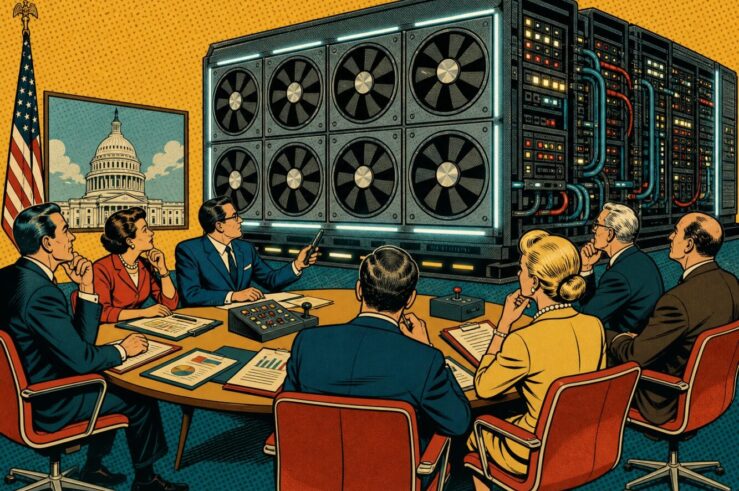
When Washington offers to “share the upside,” check the fine print. With artificial intelligence, the proposed bargain is not just that taxpayers might get a slice of the next great American industry. It is that the federal government would become part owner of the companies that increasingly shape what Americans ask, read, write, and believe. ... Don’t Put the Government on the Cap Table
SpaceX and the New Geography of Corporate Governance
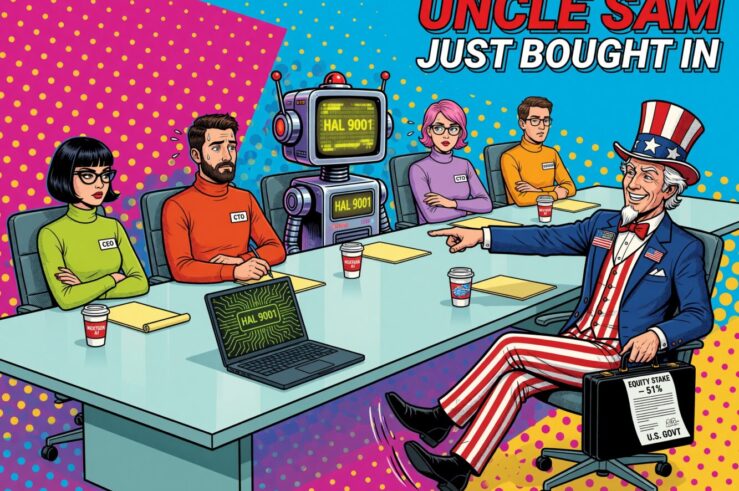
SpaceX may soon ask public investors to buy a piece of the future. The fine print may ask them to buy something else, too: a theory of corporate governance. The company’s reported initial public offering (IPO) has already drawn significant concern from institutional investors and corporate-governance observers. That concern is understandable. SpaceX reportedly seeks to ... SpaceX and the New Geography of Corporate Governance

‘Uncertainty, Evolution, and Economic Theory,’ by Armen Alchian
One of the most persistent criticisms of law & economics is that it rests on unrealistic assumptions. Economic models often assume firms maximize profits, investors respond rationally to incentives, and market participants systematically adjust their behavior in predictable ways. Critics frequently point to these assumptions as evidence that economic analysis is detached from reality. Real ... ‘Uncertainty, Evolution, and Economic Theory,’ by Armen Alchian
How a Bad Presumption Became Too Useful to Kill
The Philadelphia National Bank (PNB) presumption refuses to die. Long criticized and widely viewed as bad policy, it survives today in slightly attenuated form, and there is no sign that Trump-appointed antitrust enforcers plan to bury it. If anything, the 2023 Merger Guidelines, still in force, double down on the presumption more than their predecessors. ... How a Bad Presumption Became Too Useful to Kill

Intel and US Government Investments in American Companies
Last month’s announcement that the U.S. government had obtained a 10% equity stake in U.S. semiconductor giant Intel raises big questions about the government’s role in the market economy. The government historically has invested in (and sometimes briefly taken over) firms in key sectors in response to national crises—most recently, the 2008 financial crisis and the COVID-19 pandemic. Such investments ... Intel and US Government Investments in American Companies

Warner Bros Discovery: We Have Another SpinCo
Warner Bros. Discovery announced yesterday it will split into two separate companies, following Comcast’s similar move to spin off its cable networks into a new entity called Versant. (Laugh all you want at Versant’s name, it’s better than Tronc or Monday.) To those who haven’t followed the sector’s challenges, the Warners and Comcast decisions might ... Warner Bros Discovery: We Have Another SpinCo

Broadband Deployment, Pole Attachments, & the Competition Economics of Rural-Electric Co-ops
In our recent issue brief, Geoffrey Manne, Kristian Stout, and I considered the antitrust economics of state-owned enterprises—specifically the local power companies (LPCs) that are government-owned under the authority of the Tennessee Valley Authority (TVA). While we noted that electricity cooperatives (co-ops) do not receive antitrust immunities and could therefore be subject to antitrust enforcement, we ... Broadband Deployment, Pole Attachments, & the Competition Economics of Rural-Electric Co-ops

Executive Compensation Symposium This Friday at Case Western’s Center for Business Law and Regulation
This coming Friday (Oct. 12), the Center for Business Law and Regulation at Case Western Law School will host what promises to be a terrific symposium on executive compensation. Presenters include TOTM alumnus Todd Henderson (Chicago Law), Jill Fisch (Penn Law), Jesse Fried (Harvard Law), David Walker (Boston U Law), David Larcker (Stanford Business), Stephen L. Brown (TIAA-CREF), Paul Hodgson ... Executive Compensation Symposium This Friday at Case Western’s Center for Business Law and Regulation

Contemplating Disclosure-Based Insider Trading Regulation
TOTM friend Stephen Bainbridge is editing a new book on insider trading. He kindly invited me to contribute a chapter, which I’ve now posted to SSRN (download here). In the chapter, I consider whether a disclosure-based approach might be the best way to regulate insider trading. As law and economics scholars have long recognized, informed stock trading may create both harms and benefits ... Contemplating Disclosure-Based Insider Trading Regulation