Showing archive for: “IO: Theory”
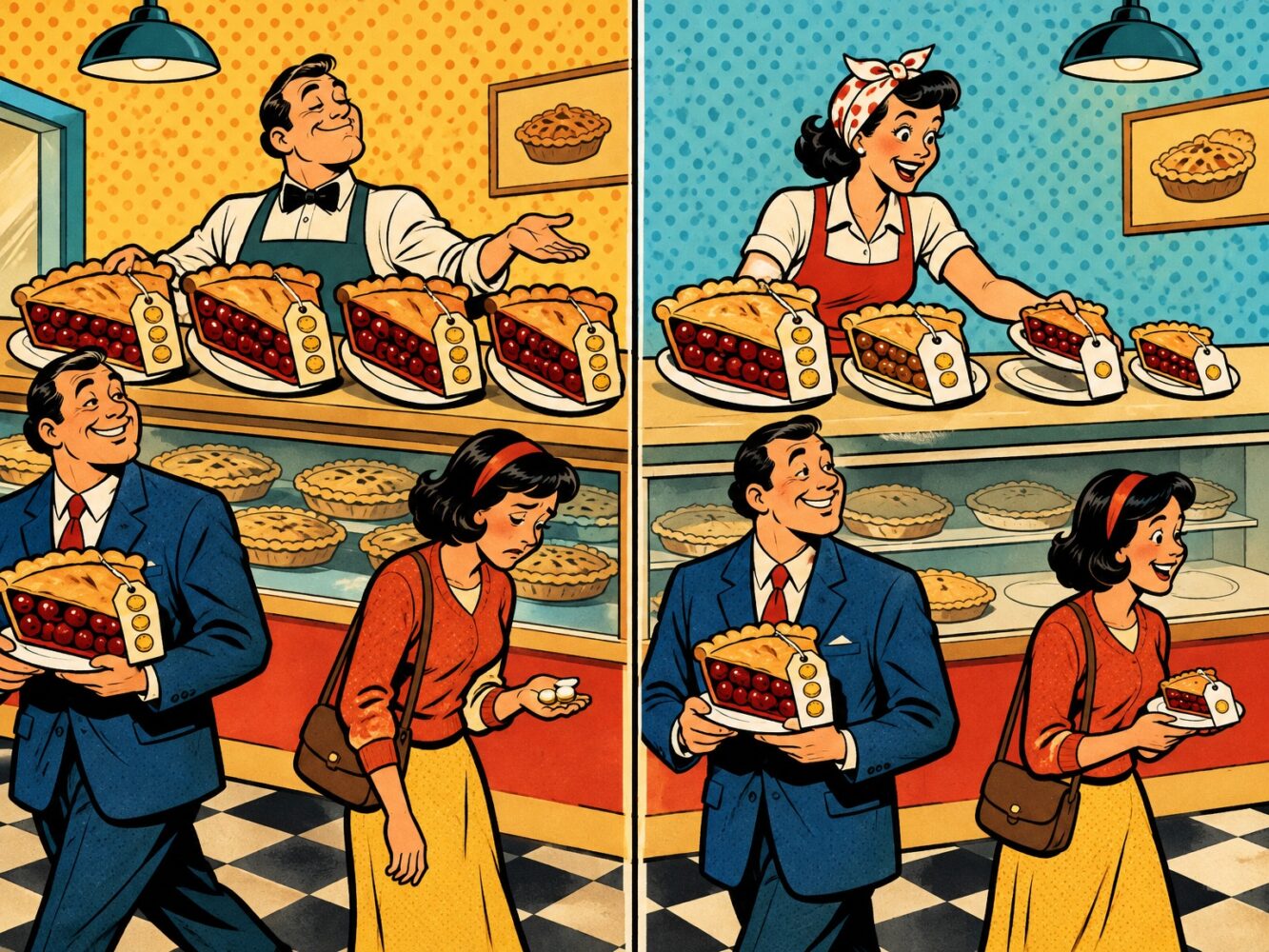
The Price of Playing Fair: How Charging Everyone the Same Can Leave Consumers Worse Off
Imagine you have a business that earns zero economic profit. It exactly covers its costs, including the return needed to attract investors, but nothing more. Is this the end state of competition? Is there anything left for competition to do? Sure. If another company comes along with lower costs, it can drive prices down. That’s ... The Price of Playing Fair: How Charging Everyone the Same Can Leave Consumers Worse Off
How to Profit From a Cartel Without Joining One
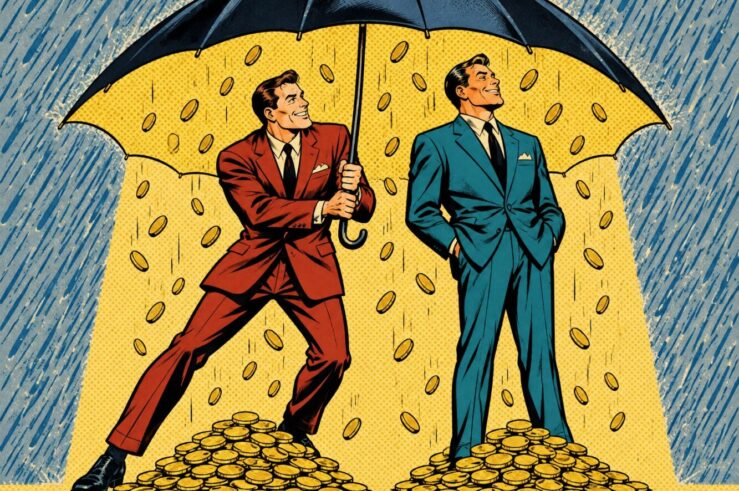
Adam Smith warned that people in the same trade rarely meet without the conversation turning to a scheme to raise prices. Antitrust enforcers on both sides of the Atlantic now suspect they can skip the meeting—a shared shareholder may do the job. In May 2025, the U.S. Justice Department (DOJ) and Federal Trade Commission (FTC) ... How to Profit From a Cartel Without Joining One
Reserve Judgment: The FTC Takes on Amazon’s Ad Auctions
The price to beat in Amazon’s advertising auctions may not have come from another advertiser at all, according to a lawsuit filed Aug. 31 by the Federal Trade Commission (FTC). In the complaint, the FTC alleges that Amazon quietly set the price itself, promising one pricing rule and using another. That allegation could support a ... Reserve Judgment: The FTC Takes on Amazon’s Ad Auctions
‘Uncertainty, Evolution, and Economic Theory,’ by Armen Alchian
One of the most persistent criticisms of law & economics is that it rests on unrealistic assumptions. Economic models often assume firms maximize profits, investors respond rationally to incentives, and market participants systematically adjust their behavior in predictable ways. Critics frequently point to these assumptions as evidence that economic analysis is detached from reality. Real ... ‘Uncertainty, Evolution, and Economic Theory,’ by Armen Alchian
In Space, No One Can See Your HHI
Two rocket companies walk into an antitrust review. They leave as a de facto monopoly. And somehow, the punchline may be that this was good for consumers, taxpayers, and maybe even competition. A little context. In 2006, Boeing and Lockheed Martin combined their launch divisions into a joint venture called United Launch Alliance (ULA). That’s ... In Space, No One Can See Your HHI

The Waterbed Effect Doesn’t Hold Water
A familiar concern in antitrust-adjacent debates goes like this: when a company such as Walmart grows large enough, it can strong-arm suppliers into steep discounts. Suppliers, in turn, recoup those lost margins by charging smaller grocery stores more. Those smaller stores raise prices. The big chain’s gains come at everyone else’s expense—prices fall on one ... The Waterbed Effect Doesn’t Hold Water

‘Market Power in Antitrust: Economic Analysis after Kodak,’ by Benjamin Klein
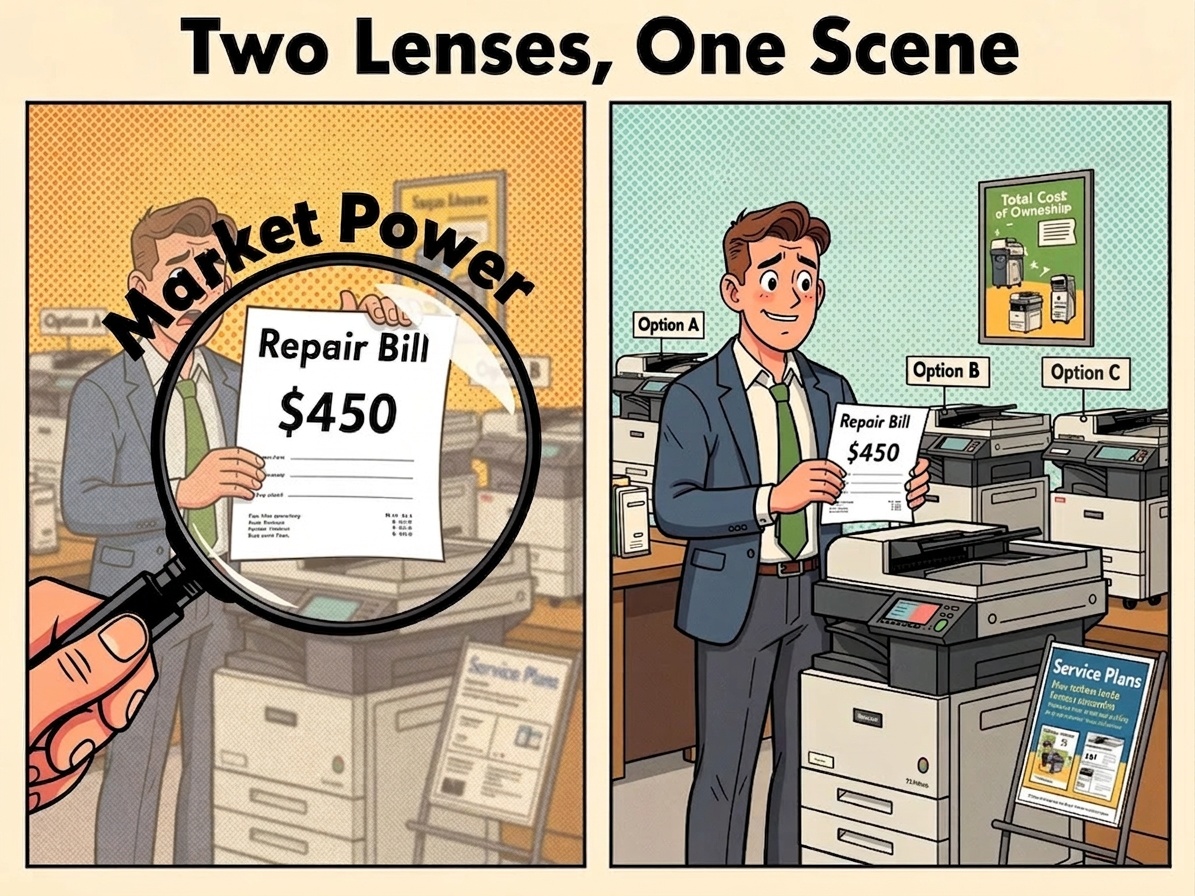
In 1992, the U.S. Supreme Court held in Eastman Kodak Co. v. Image Technical Services that a firm without market power in photocopiers might still possess market power in photocopier parts and service. The Court’s logic turned on opportunistic hold-up: Kodak could profit by trading short-run exploitation of locked-in customers for long-run losses in equipment ... ‘Market Power in Antitrust: Economic Analysis after Kodak,’ by Benjamin Klein
‘Market Power in Antitrust Cases,’ by William M. Landes and Richard A. Posner
William M. Landes and Richard A. Posner’s 1981 Harvard Law Review article “Market Power in Antitrust Cases” is a true classic. Showing the value of interdisciplinary work within the law & economics tradition, it brought real clarity to what “market power” means and how courts should assess it—cutting through vague labels like “monopoly power” and ... ‘Market Power in Antitrust Cases,’ by William M. Landes and Richard A. Posner
‘The Law Merchant,’ by Milgrom, North, & Weingast
In “The Role of Institutions in the Revival of Trade: The Law Merchant, Private Judges and the Champagne Fairs,” Paul Milgrom, Douglass C. North, and Barry R. Weingast take as their starting point a circumstance unusual for legal work: circumstances where effective enforcement does not exist. Their motivating example is the “law merchant” or lex ... ‘The Law Merchant,’ by Milgrom, North, & Weingast
Instacart Didn’t Read Your Mind. It Ran an A/B Test.
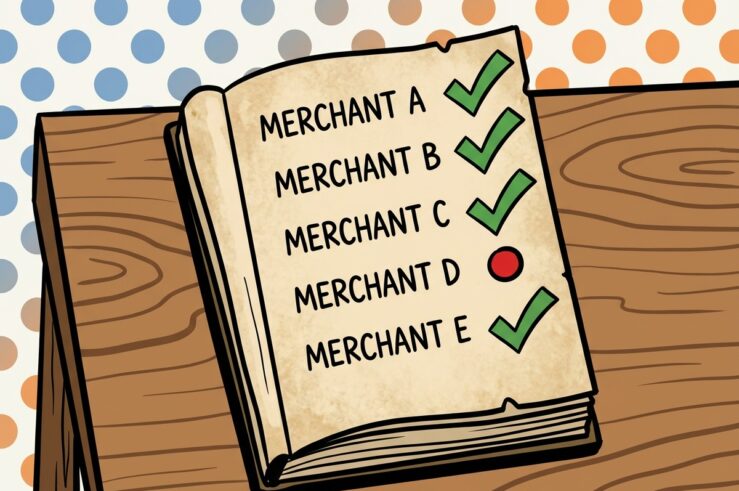
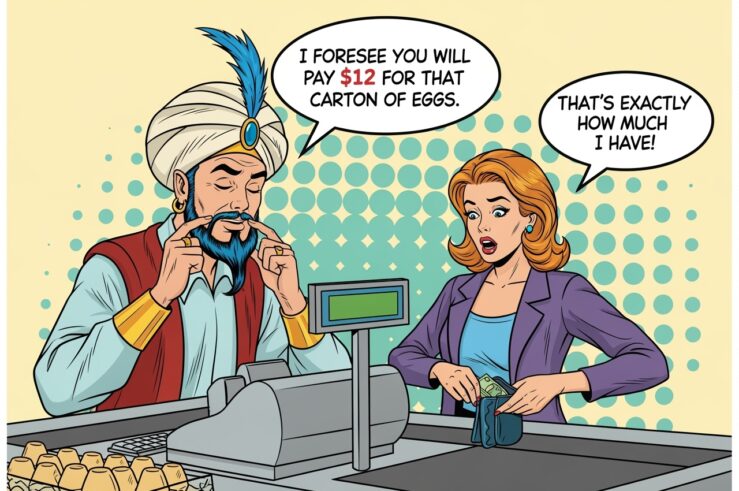
On a Thursday in early September, more than 40 strangers logged into Instacart to buy eggs and test a hypothesis. They all selected the same store, the same brand, and the same pickup option. The only difference was the price they were offered: $3.99 for some, $4.79 for others. We are, of course, supposed to ... Instacart Didn’t Read Your Mind. It Ran an A/B Test.
Nobel Committee Rewards Explorations of Why Growth Happens
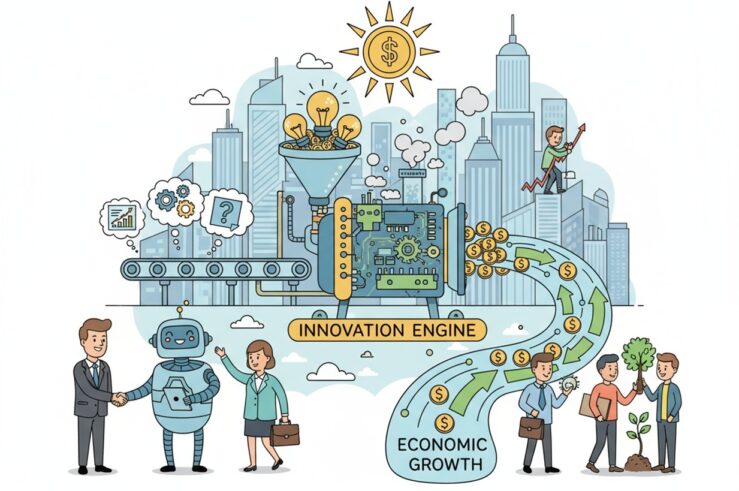
There are years when the Royal Swedish Academy of Sciences’ selection for the Nobel Memorial Prize in Economic Sciences is good, years when it is bad, and years when it is outstanding. This year is outstanding. This is the prize I’ve been waiting for. Not because I predicted it or had money riding on it, ... Nobel Committee Rewards Explorations of Why Growth Happens
‘Optimal Departures from Marginal Cost Pricing’ by William J. Baumol & David F. Bradford
William Baumol and David Bradford’s 1970 article “Optimal Departures from Marginal Cost Pricing” is a cornerstone in the economics of public utility regulation. While it appeared in the American Economic Review as a work of formal economic theory—complete with equations and proofs—it also has clear significance for law & economics. Baumol and Bradford demonstrate how ... ‘Optimal Departures from Marginal Cost Pricing’ by William J. Baumol & David F. Bradford