Showing archive for: “Law & Positive Political Theory”
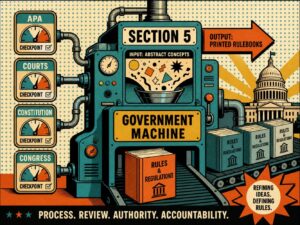
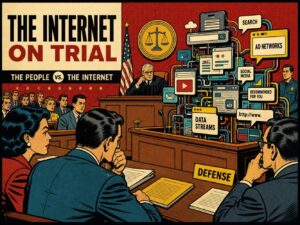
‘The Logic of Political Survival,’ by Bruce Bueno de Mesquita, Alastair Smith, Randolph M. Siverson & James D. Morrow
Since the COVID-19 pandemic and the political upheavals that followed, concerns have grown that many Western democracies face authoritarian pressure and are becoming less democratic. This shift has renewed interest in one of political science’s most influential frameworks for understanding democratic and nondemocratic rule: Selectorate Theory, developed by Bruce Bueno de Mesquita, Alastair Smith, Randolph ... ‘The Logic of Political Survival,’ by Bruce Bueno de Mesquita, Alastair Smith, Randolph M. Siverson & James D. Morrow
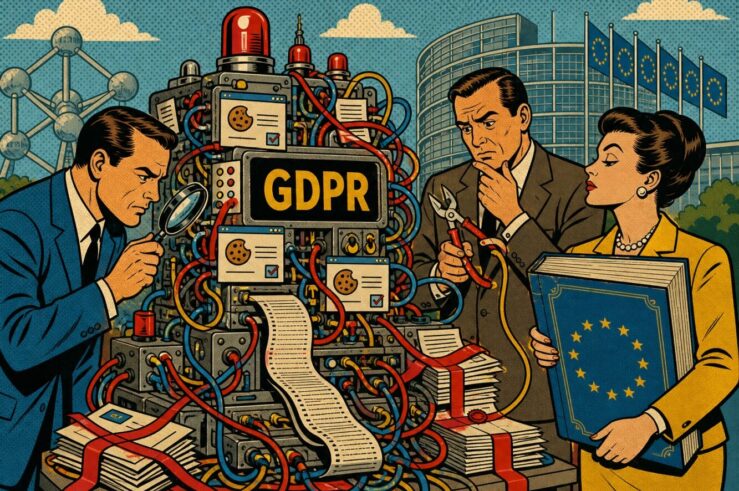
Brussels Tries to Fix the GDPR Without Making It Worse
Brussels has spent years proving that the easiest way to “fix” the General Data Protection Regulation (GDPR) is to give more power to the institutions that made it unworkable. The Digital Omnibus initially looked ready to continue that tradition. Now, somewhat improbably, several EU governments appear determined to try actual reform instead. Ireland assumed the ... Brussels Tries to Fix the GDPR Without Making It Worse
‘The Law Merchant,’ by Milgrom, North, & Weingast
In “The Role of Institutions in the Revival of Trade: The Law Merchant, Private Judges and the Champagne Fairs,” Paul Milgrom, Douglass C. North, and Barry R. Weingast take as their starting point a circumstance unusual for legal work: circumstances where effective enforcement does not exist. Their motivating example is the “law merchant” or lex ... ‘The Law Merchant,’ by Milgrom, North, & Weingast
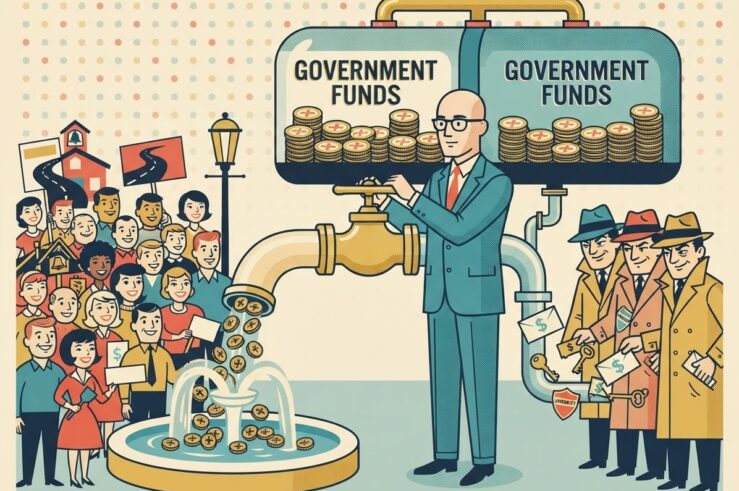
‘The Integration of Tax and Spending Programs,’ by David Weisbach & Jacob Nussim
David Weisbach and Jacob Nussim’s 2004 paper “The Integration of Tax and Spending Programs” marked an important law & economics contribution to the tax-policy literature. The paper argues that, given a particular policy, the part of the government best suited to implement that policy should be tasked with doing so. Government Program Implementation Choices Weisbach ... ‘The Integration of Tax and Spending Programs,’ by David Weisbach & Jacob Nussim

Why No One Likes Land Taxes
Economists and [insert basically every other group of people] often don’t agree. Take, for instance, the recent discussion of price controls. The headline of this opinion piece on the subject in The New York Times literally begins with “Economists Hate This Idea.” Yet voters aren’t so skeptical. (I’m not ready to say the idea has ... Why No One Likes Land Taxes
The EU’s GDPR ‘Fix’ Misses the Point Entirely
The European Union has just agreed to new procedural rules for enforcement of the General Data Protection Regulation (GDPR), touting faster investigation deadlines and streamlined cooperation between data-protection authorities. But celebrating 15-month investigation timelines as progress reveals just how far we’ve strayed from reasonable regulatory practice. This “steroids shot” for GDPR enforcement, as Politico calls ... The EU’s GDPR ‘Fix’ Misses the Point Entirely
Termination Tuesday: A Quasi-Comprehensive, Quasi-Definitive Discussion of the FTC and Humphrey’s Executor
Author’s Note: Sometimes “quasi” means “sort of” or, as Merriam-Webster’s would have it, “having some resemblance usually by possession of certain attributes.” And sometimes, “some resemblance” means “not very much.” On March 18, President Donald Trump fired—or purported to fire—the two Democratic members of the Federal Trade Commission (FTC): Alvaro Bedoya and Rebecca Slaughter. Bedoya ... Termination Tuesday: A Quasi-Comprehensive, Quasi-Definitive Discussion of the FTC and Humphrey’s Executor

A Reflection on Commissioner Pai, Chairman Pai, and Public Service
Much of this symposium celebrates Ajit’s contributions as chairman of the Federal Communications Commission and his accomplishments and leadership in that role. And rightly so. But Commissioner Pai, not just Chairman Pai, should also be recognized. I first met Ajit when we were both minority commissioners at our respective agencies: the FCC and Federal Trade ... A Reflection on Commissioner Pai, Chairman Pai, and Public Service
Conflict of Interest in Prosecuting Police Officers: Examining the Incentives Facing District Attorneys
High-profile cases like those of Michael Brown in Ferguson, Missouri, and Breonna Taylor in Louisville, Kentucky, have garnered attention from the media and the academy alike about decisions by grand juries not to charge police officers with homicide. While much of this focus centers on alleged racial bias on the part of police officers and ... Conflict of Interest in Prosecuting Police Officers: Examining the Incentives Facing District Attorneys

Whole Foods? Seriously? Why Are We Talking About Whole Foods?
So why this deal, in this symposium, and why now? The best substantive reason I could think of is admittedly one that I personally find important. As I said, I think we should take it much more seriously as a general matter, especially in highly dynamic contexts like Silicon Valley. There has been a history of arguably pre-emptive, market-occupying vertical and conglomerate acquisitions, by big firms of smaller ones that are technologically or otherwise disruptive. The idea is that the big firms sit back and wait as some new market develops in some adjacent sector. When that new market ripens to the point of real promise, the big firm buys some significant incumbent player. The aim is not. just to facilitate its own benevolent, wholesome entry, but to set up hopefully prohibitive challenges to other de novo entrants. Love it or leave it, that theory plausibly characterizes lots and lots of acquisitions in recent decades that secured easy antitrust approval, precisely because they weren’t obviously, presently horizontal. Many people think that is true of some of Amazon’s many acquisitions, like its notoriously aggressive, near-hostile takeover of Diapers.com.
Amazon/Whole Foods: What Me Worry?
Brandeis is back, with today’s neo-Brandeisians reflexively opposing virtually all mergers involving large firms. For them, industry concentration has grown to crisis proportions and breaking up big companies should be the animating goal not just of antitrust policy but of U.S. economic policy generally. The key to understanding the neo-Brandeisian opposition to the Whole Foods/Amazon mergers is that it has nothing to do with consumer welfare, and everything to do with a large firm animus. Sabeel Rahman, a Roosevelt Institute scholar, concedes that big firms give us higher productivity, and hence lower prices, but he dismisses the value of that. He writes, “If consumer prices are our only concern, it is hard to see how Amazon, Comcast, and companies such as Uber need regulation.” And this gets to the key point regarding most of the opposition to the merger: it had nothing to do with concerns about monopolistic effects on economic efficiency or consumer prices. It had everything to do with opposition to big firm for the sole reason that they are big.
More Bailout Fallout: Non-buyer’s Remorse
An interesting story in the WSJ Online today about American International Group (AIG)’s use of a standard tax write-off and the political firestorm it is creating…all because the Washington establishment thought it could hide behind semantics during the bailout era. The benefits at issue were accrued by AIG as it amassed record losses amid the ... More Bailout Fallout: Non-buyer’s Remorse