Showing archive for: “Political Economy: Government Expenditures & Related Policies”
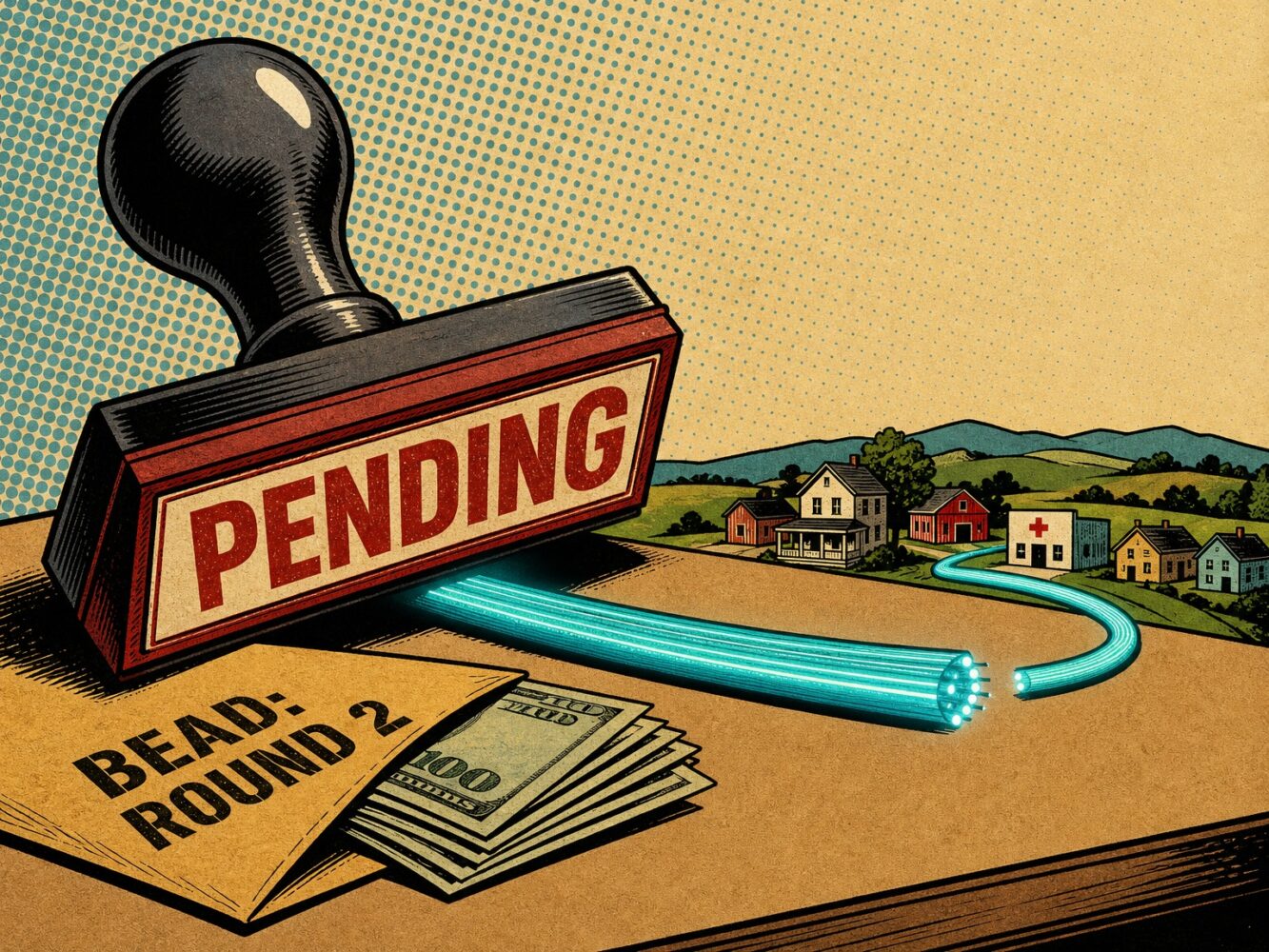
BEAD’s Second Act: The Future Is Pending Approval
The road to rural access to AI-enabled services runs through the permit office. Chips, data centers, and electricity get the attention, but delivering AI to a farmer’s field, a rural clinic, or a factory floor takes a broadband network. Building it means navigating utility poles, road crossings, and public rights-of-way—each with a gatekeeper who can ... BEAD’s Second Act: The Future Is Pending Approval
‘The Logic of Political Survival,’ by Bruce Bueno de Mesquita, Alastair Smith, Randolph M. Siverson & James D. Morrow
Since the COVID-19 pandemic and the political upheavals that followed, concerns have grown that many Western democracies face authoritarian pressure and are becoming less democratic. This shift has renewed interest in one of political science’s most influential frameworks for understanding democratic and nondemocratic rule: Selectorate Theory, developed by Bruce Bueno de Mesquita, Alastair Smith, Randolph ... ‘The Logic of Political Survival,’ by Bruce Bueno de Mesquita, Alastair Smith, Randolph M. Siverson & James D. Morrow
The Lifeline Program’s Afterlife Problem
A subsidy program can survive many things. Paying benefits to the dead should not be one of them. That is the problem now facing the Federal Communications Commission’s (FCC) Lifeline program, which was designed to ensure that low-income Americans can connect to the communications networks modern life depends on. As the program has expanded to ... The Lifeline Program’s Afterlife Problem

‘The Integration of Tax and Spending Programs,’ by David Weisbach & Jacob Nussim
David Weisbach and Jacob Nussim’s 2004 paper “The Integration of Tax and Spending Programs” marked an important law & economics contribution to the tax-policy literature. The paper argues that, given a particular policy, the part of the government best suited to implement that policy should be tasked with doing so. Government Program Implementation Choices Weisbach ... ‘The Integration of Tax and Spending Programs,’ by David Weisbach & Jacob Nussim

Lutnick’s BEAD Pivot: Progress Through Pragmatism
The U.S. Commerce Department plans to revamp the $42 billion Broadband Equity, Access, and Deployment (BEAD) program with a shift toward a more technology-neutral approach, Commerce Secretary Howard Lutnick announced yesterday, adding that his department is also exploring ways to cut the program’s red tape. Lutnick’s announcement follows criticisms of BEAD’s initial focus on fiber-optic ... Lutnick’s BEAD Pivot: Progress Through Pragmatism

Congestion Pricing Reduces Driving. That Doesn’t Make It a Good Idea.
The early data from New York City’s congestion-pricing experiment is rolling in. If you look at affected routes, you see a clear drop when the fee kicks in. For routes that are unaffected, we saw no change. So far, it seems the basic prediction from supply and demand holds true. When the price of driving into Manhattan is raised, ... Congestion Pricing Reduces Driving. That Doesn’t Make It a Good Idea.

NTIA’s BEAD Technology Guidance: In Search of a Bang for the Buck
Created as part of the Infrastructure Investment and Jobs Act that President Joe Biden signed into law in November 2021, the Broadband Equity, Access, and Deployment (BEAD) program is supposed to provide $42.45 billion to U.S. states, territories, and the District of Columbia to help with broadband planning, deployment, mapping, equity, and adoption—all overseen by ... NTIA’s BEAD Technology Guidance: In Search of a Bang for the Buck

Perspectives on Industrial Policy: An Interview with Alden Abbott
From a broad perspective, could you provide us with an overview of the current global trend toward the implementation of industrial policy? In your opinion, what are the primary drivers behind the shift? Industrial policy has long been present in various forms, often manifesting as ad-hoc interventions and subsidies that affect market processes. What we’re ... Perspectives on Industrial Policy: An Interview with Alden Abbott

Why Technological Neutrality Is Key to BEAD’s Success
Congress intended the Infrastructure Investment and Jobs Act’s (IIJA) ambitious $42.5 billion Broadband Equity, Access, and Deployment (BEAD) program to bridge America’s digital divide by subsidizing infrastructure buildout to areas that are either unserved or underserved by broadband internet. With projects administered by the 50 states, five insular territories, and the District of Columbia, the ... Why Technological Neutrality Is Key to BEAD’s Success
Clearing the Telecom Logjam: A Modest Proposal
In this “Age of the Administrative State,” federal agencies have incredible latitude to impose policies without much direction or input from Congress. President Barack Obama fully pulled off the mask in 2014, when he announced “[w]e are not just going to be waiting for legislation,” declaring “I’ve got a pen, and I’ve got a phone.” ... Clearing the Telecom Logjam: A Modest Proposal

ICLE on the ACP, BEAD in the Spotlight, Small Steps Toward Ending the Spectrum Impasse
School’s back in session and the Telecom Hootenanny is heating up. We’ve got a hot-off-the-presses issue brief on the ACP, more BEAD agonistes, and the latest on spectrum auctions. The Affordable Connectivity Program: ‘Good Enough’ to Keep Funding In a new International Center for Law & Economics (ICLE) issue brief, Kristian Stout and I examine ... ICLE on the ACP, BEAD in the Spotlight, Small Steps Toward Ending the Spectrum Impasse

LEOs Need Love Too and Nobody Wants to Pay for Subsidies
Coming out of Labor Day weekend, there’s not a lot of earth-shaking happenings at the Telecom Hootenanny. But like a visit to the state fair, there’s always something to see. LEOs Need a Seat at the Grownups’ Table Although LEO technology and the market for its services were pioneered by American companies, LEO constellations are ... LEOs Need Love Too and Nobody Wants to Pay for Subsidies