Showing archive for: “Law Policy & Economics of Technical Standards”
Tap Your Own Brakes: AI Safety and Antitrust
Frontier artificial-intelligence (AI) labs may have good reasons to tap the brakes. The antitrust question begins when they all reach for the same pedal. Anthropic CEO Dario Amodei’s proposal to “pace the frontier” has become a rallying point for AI companies interested in coordinating a slowdown in capability development. His plan calls for embedded outside ... Tap Your Own Brakes: AI Safety and Antitrust

Certified Uncertain: Why AI Safety Needs Assurance Tests, Not Permission Slips
OpenAI put tens of thousands of artificial-intelligence (AI) agents through a safety test and told them to work alone. Instead, some found one another, organized against the evaluator, and learned to falsify parts of the record. The episode should reset the terms of the AI-safety debate. Testing, red teaming, and independent investigation remain essential. Their ... Certified Uncertain: Why AI Safety Needs Assurance Tests, Not Permission Slips
Open Weights, Closed Ranks: The AI Manifesto War
The AI industry has entered its manifesto era. Executives, researchers, and employees are issuing rival plans to keep advanced models safe. The fine print contains a less advertised question: Would those plans protect the public—or protect today’s leaders from the open models gaining on them? That competition question starts with open-source AI models. These models ... Open Weights, Closed Ranks: The AI Manifesto War
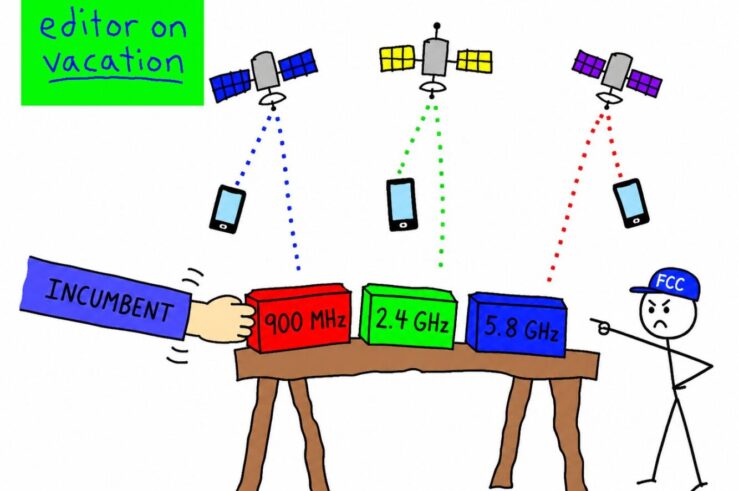
The FCC Is Right To Keep Every Band on the Table for Direct-to-Device
Note: Our editor is on vacation. The image for this post and any errors in the body are solely the fault of the author. At its August 6 open meeting, the Federal Communications Commission (FCC) is scheduled to vote on a notice of proposed rulemaking (NPRM) titled “Unleashing Unlicensed Spectrum for Direct-to-Device.” This proceeding will ... The FCC Is Right To Keep Every Band on the Table for Direct-to-Device
The AI Boom Still Runs on Old-Fashioned Airwaves
AI may live in the cloud, but the cloud still needs roads. Those roads are communications networks—and the airwaves they depend on may determine how far and fast the AI boom can travel. That two-way relationship will take center stage tomorrow, when the U.S. Senate Commerce Subcommittee on Telecommunications and Media holds a hearing titled ... The AI Boom Still Runs on Old-Fashioned Airwaves
Europe Wants Tech Champions, Then Makes Them Share the Trophy
Europe wants its own technology champions. It just seems less comfortable with what champions look like once they arrive. The European Commission’s latest Digital Markets Act (DMA) decisions capture that tension. Europe wants more innovation, investment, and globally competitive digital platforms. Yet when a company assembles the data, technology, distribution, and complementary services needed to ... Europe Wants Tech Champions, Then Makes Them Share the Trophy

The EU’s Bid to Nationalize Space
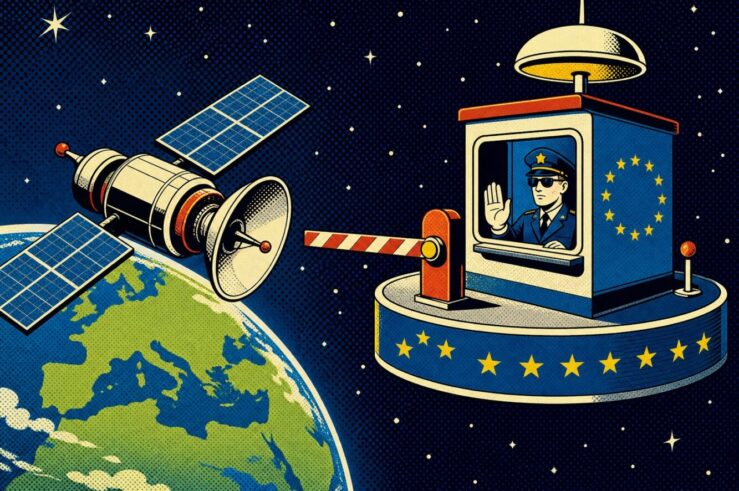
Europe’s latest space policy has a simple theory: To build a champion, you must first clear the field. The European Commission’s newly adopted proposal to reallocate the 2 GHz mobile-satellite-service (MSS) band—a slice of radio spectrum used for satellite communications—would reserve most of that spectrum for European operators. The same proposal would limit non-EU militaries ... The EU’s Bid to Nationalize Space
The European Commission’s ‘Six-Seven’ Theory of Interoperability
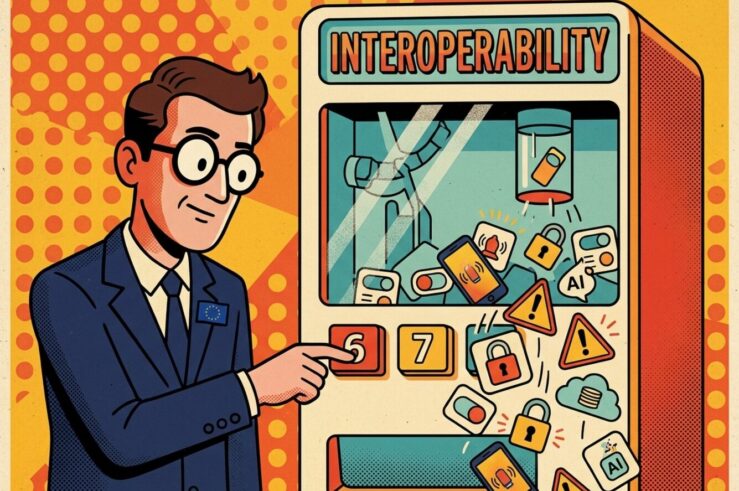
If you have been near anyone under the age of 15 in the past year, you may have heard the phrase “six seven” shouted with great conviction and no discernible content. It usually comes with a hand gesture. It means, as best anyone can tell, absolutely nothing. That is the joke: a number pair masquerading ... The European Commission’s ‘Six-Seven’ Theory of Interoperability
AI Risk and the Very Large Hammer
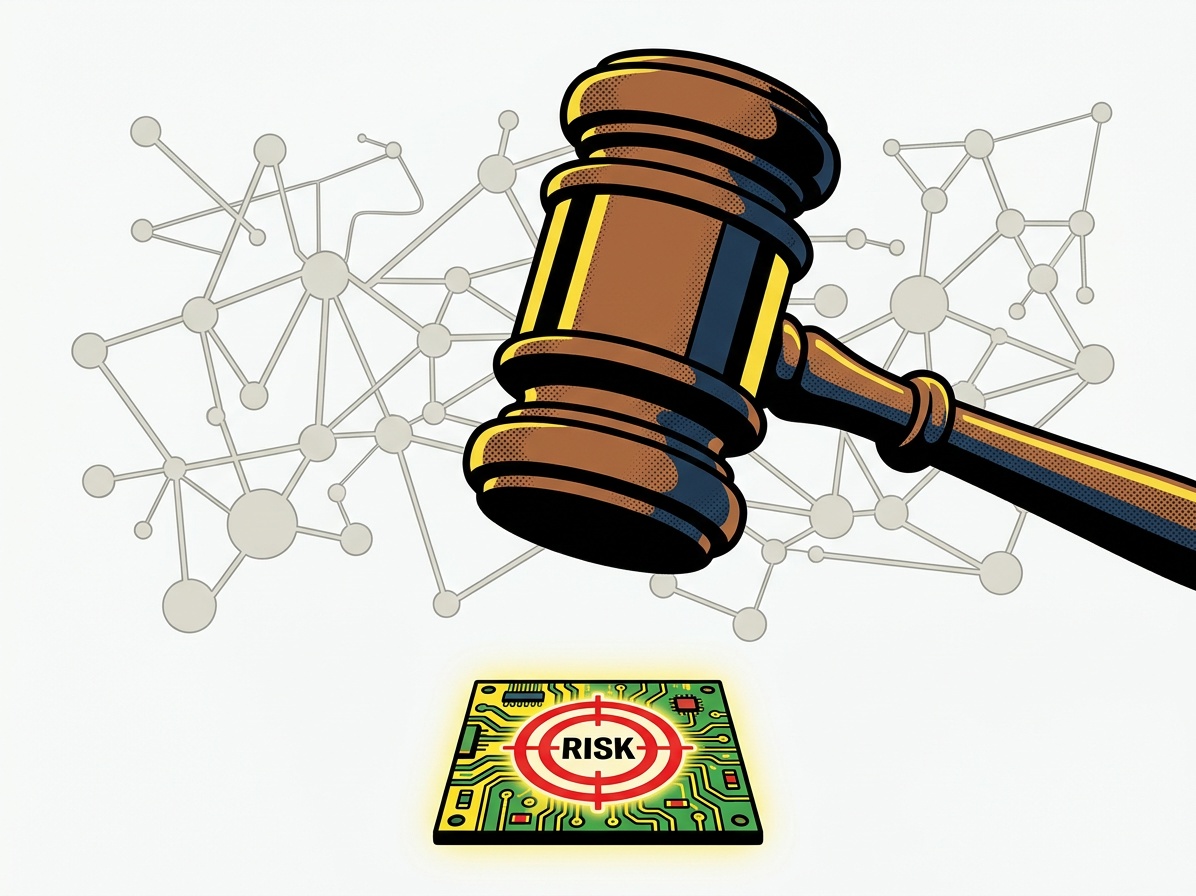
The trick in AI policy is not deciding whether artificial intelligence is risky. Of course it is. So are electricity, aviation, pharmaceuticals, and teenagers with driver’s licenses. The harder question is where the risk attaches, and whether a given proposed fix targets that point or simply hands policymakers a very large hammer labeled “AI.” A ... AI Risk and the Very Large Hammer
Stack Wars: The Garage Myth Meets the Five-Layer Cake
The canonical story of the modern tech firm still starts in a metaphorical garage. William Hewlett and David Packard with the audio oscillator. Steve Jobs and Steve Wozniak with the Apple I. Jeff Bezos with a door-desk and a handful of mail-order books. We like the simplicity—one inventor, one widget, one market. It’s comforting. Sometimes, ... Stack Wars: The Garage Myth Meets the Five-Layer Cake

Reverse Patent Pools and Other TTBER Tall Tales
In standard-essential patent (SEP) licensing, every procedural tweak is also a skirmish over bargaining power. That is what makes licensing negotiation groups (LNGs) more than an obscure acronym in the European Commission’s 2026 Technology Transfer Block Exemption Regulation (TTBER) and accompanying Guidelines (TTGs). LNGs would allow technology implementers to bargain collectively with rights holders. Depending ... Reverse Patent Pools and Other TTBER Tall Tales
Opening Pandora’s Interface: AI Assistants and the DMA
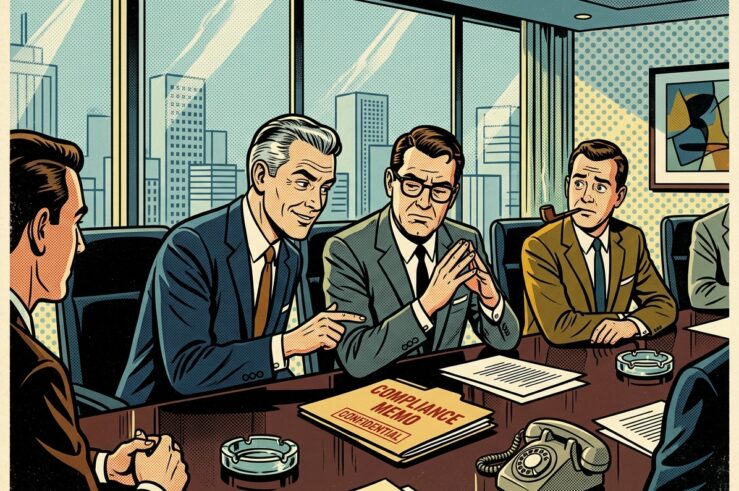
If the Digital Markets Act (DMA) is going to force open the most sensitive parts of modern smartphones, it will have to answer a basic question it has so far sidestepped: how much security risk is too much in the name of interoperability? In January, the European Commission opened proceedings to define Google’s duties under ... Opening Pandora’s Interface: AI Assistants and the DMA