Showing archive for: “Agricultural & Natural Resource Economics”
How to Profit From a Cartel Without Joining One
Adam Smith warned that people in the same trade rarely meet without the conversation turning to a scheme to raise prices. Antitrust enforcers on both sides of the Atlantic now suspect they can skip the meeting—a shared shareholder may do the job. In May 2025, the U.S. Justice Department (DOJ) and Federal Trade Commission (FTC) ... How to Profit From a Cartel Without Joining One

Nothing Runs Like a Deere You Can Repair
Farmers have won the right to repair—at least, if they own John Deere equipment. In July, the Federal Trade Commission (FTC) announced a settlement requiring Deere to give farmers and independent repair shops access to the software, manuals, and other resources needed to fix its products. The settlement sensibly balances consumers’ immediate interest in affordable ... Nothing Runs Like a Deere You Can Repair

Trump Fisheries Order May Be a First Step Toward Global Reforms
The U.S. fisheries sector is the beneficiary of an April 17 executive order from President Donald Trump. The order’s implementation could result in reduced regulatory burdens and a procompetitive, economically efficient expansions of U.S. fisheries output. It might also inspire U.S. consideration of additional efforts to improve global fisheries management. The Fisheries Executive Order Overregulation ... Trump Fisheries Order May Be a First Step Toward Global Reforms

Stop Blaming Rising Egg Prices on Market Power
Egg prices are in the news again. Policy responses will likely follow. But not all policy responses make sense. Commissioner Alvaro Bedoya of the Federal Trade Commission (FTC) recently highlighted empty egg shelves and skyrocketing prices, calling for an investigation into potential market manipulation. While his concerns about the egg industry’s supply chain deserve attention, basic ... Stop Blaming Rising Egg Prices on Market Power

Crusade Against ‘Big Meat’ Is Latest Example of Misguided Effort to Use Antitrust as Anti-Inflation Tool
As a new year dawns, the Biden administration remains fixated on illogical, counterproductive “big is bad” nostrums. Noted economist and former Clinton Treasury Secretary Larry Summers correctly stressed recently that using antitrust to fight inflation represents “science denial,” tweeting that: There is no basis in economics for expecting increases in demand to systematically larger price ... Crusade Against ‘Big Meat’ Is Latest Example of Misguided Effort to Use Antitrust as Anti-Inflation Tool
Efficient Cartels and the Public Interest Defence – Do They Exist?
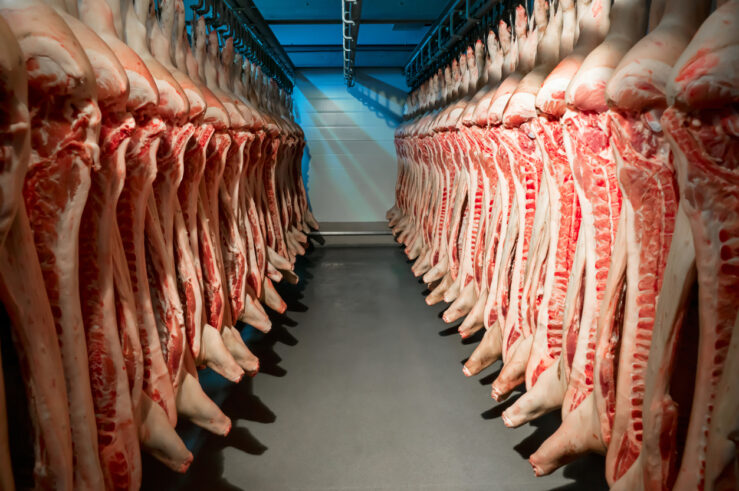
The concept of a “good” or “efficient” cartel is generally regarded by competition authorities as an oxymoron. A cartel is seen as the worst type of antitrust violation and one that warrants zero tolerance. Agreements between competitors to raise prices and share the market are assumed unambiguously to reduce economic welfare. As such, even if ... Efficient Cartels and the Public Interest Defence – Do They Exist?

Ag-biotech merger symposium wrap-up
On Thursday, March 30, Friday March 31, and Monday April 3, Truth on the Market and the International Center for Law and Economics presented a blog symposium — Agricultural and Biotech Mergers: Implications for Antitrust Law and Economics in Innovative Industries — discussing three proposed agricultural/biotech industry mergers awaiting judgment by antitrust authorities around the globe. These proposed ... Ag-biotech merger symposium wrap-up
Innovation as a shield and a club in the agribusiness mergers
People need to eat. All else equal, the more food that can be produced from an acre of land, the better off they’ll be. Of course, people want to pay as little as possible for their food to boot. At heart, the antitrust analysis of the pending agribusiness mergers requires a simple assessment of their ... Innovation as a shield and a club in the agribusiness mergers
Innovation-driven market structure in the ag-biotech industry
Dynamic versus static competition Ever since David Teece and coauthors began writing about antitrust and innovation in high-tech industries in the 1980s, we’ve understood that traditional, price-based antitrust analysis is not intrinsically well-suited for assessing merger policy in these markets. For high-tech industries, performance, not price, is paramount — which means that innovation is key: ... Innovation-driven market structure in the ag-biotech industry
Antitrust review of ag-biotech mergers: Appropriability versus cannibalization
This symposium offers a good opportunity to look again into the complex relation between concentration and innovation in antitrust policy. Whilst the details of the EC decision in Dow/Dupont remain unknown, the press release suggests that the issue of “incentives to innovate” was central to the review. Contrary to what had leaked in the antitrust ... Antitrust review of ag-biotech mergers: Appropriability versus cannibalization
Effects of gene editing on ag-biotech antitrust
Commenting on Microsoft’s antitrust suit 18 years ago, Milton Friedman said the following: Your industry, the computer industry, moves so much more rapidly than the legal process, that by the time this suit is over, who knows what the shape of the industry will be. Though the legal process seems to be moving quickly in ... Effects of gene editing on ag-biotech antitrust
Mergers, innovation, and agricultural biotechnology: Putting the squeeze on growers and consumers?
Innovation Competition in the Spotlight Innovation is more and more in the spotlight as questions grow about concentration and declining competition in the U.S. economy. These questions come not only from advocates for more vigorous competition enforcement but also, increasingly, from those who adhere to the school of thought that consolidation tends to generate procompetitive ... Mergers, innovation, and agricultural biotechnology: Putting the squeeze on growers and consumers?