Showing archive for: “Energy Policy & Economics”
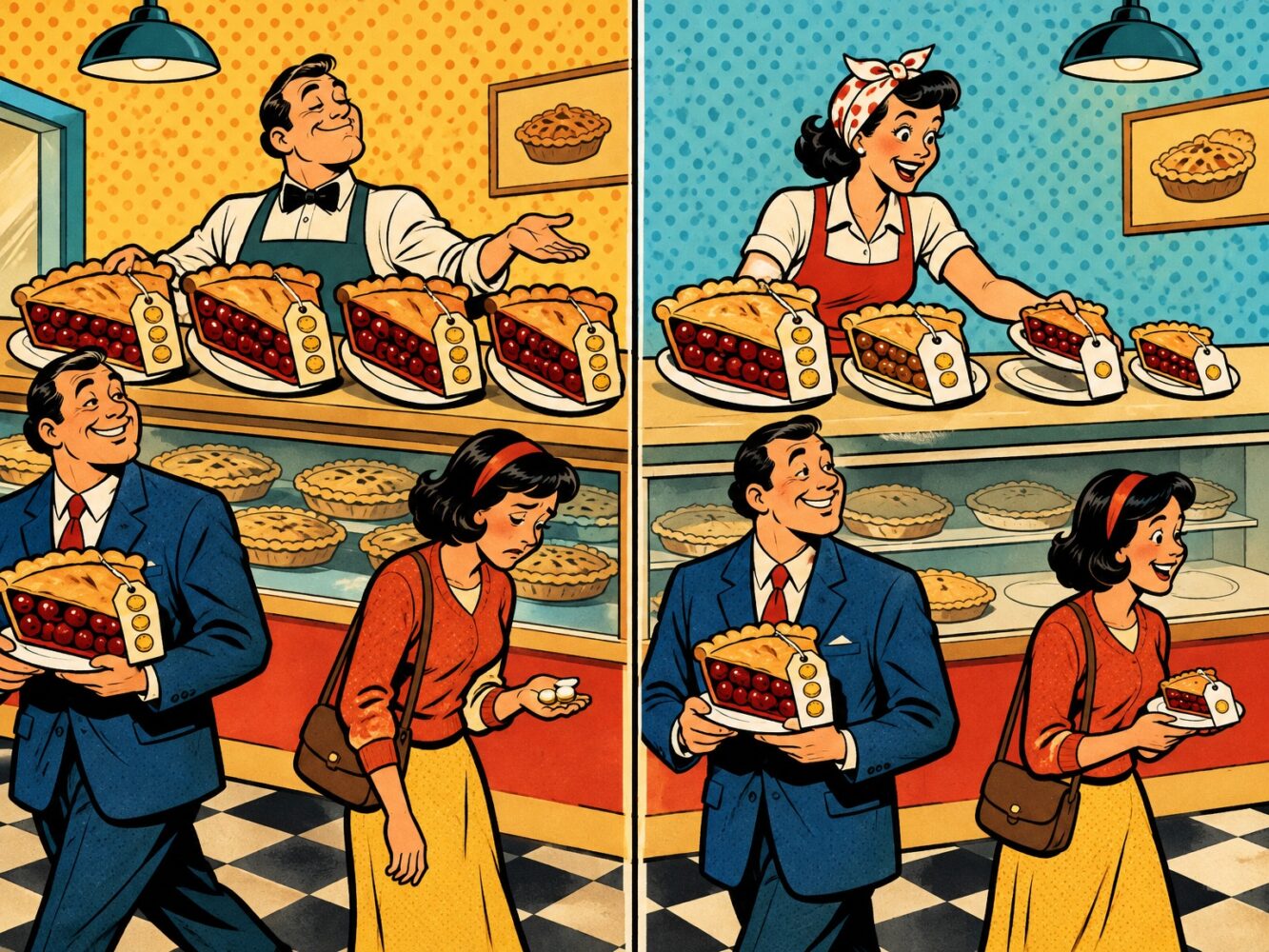
The Price of Playing Fair: How Charging Everyone the Same Can Leave Consumers Worse Off
Imagine you have a business that earns zero economic profit. It exactly covers its costs, including the return needed to attract investors, but nothing more. Is this the end state of competition? Is there anything left for competition to do? Sure. If another company comes along with lower costs, it can drive prices down. That’s ... The Price of Playing Fair: How Charging Everyone the Same Can Leave Consumers Worse Off
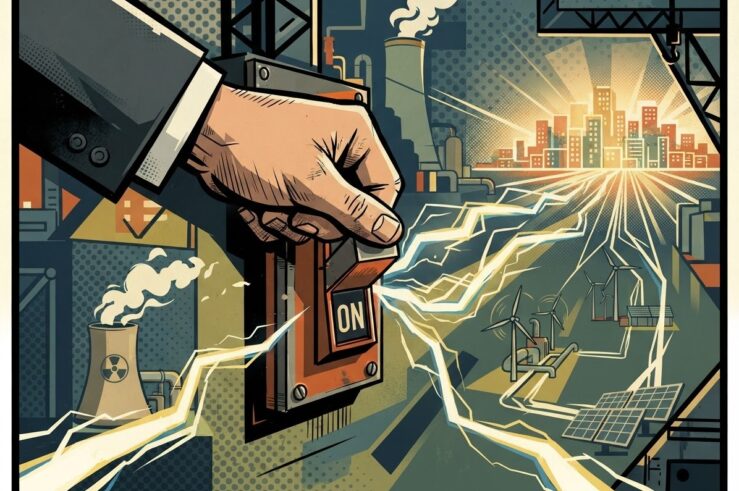
The EPA Takes Its Thumb Off the Power Switch
Power-plant rules do more than regulate pollution. They can also regulate competitors out of the market. That is the overlooked significance of the Environmental Protection Agency’s (EPA) recent repeal of most Biden administration greenhouse-gas standards for power plants. The move is an environmental-policy reversal and also a competition-policy reform. The final rule is only a ... The EPA Takes Its Thumb Off the Power Switch
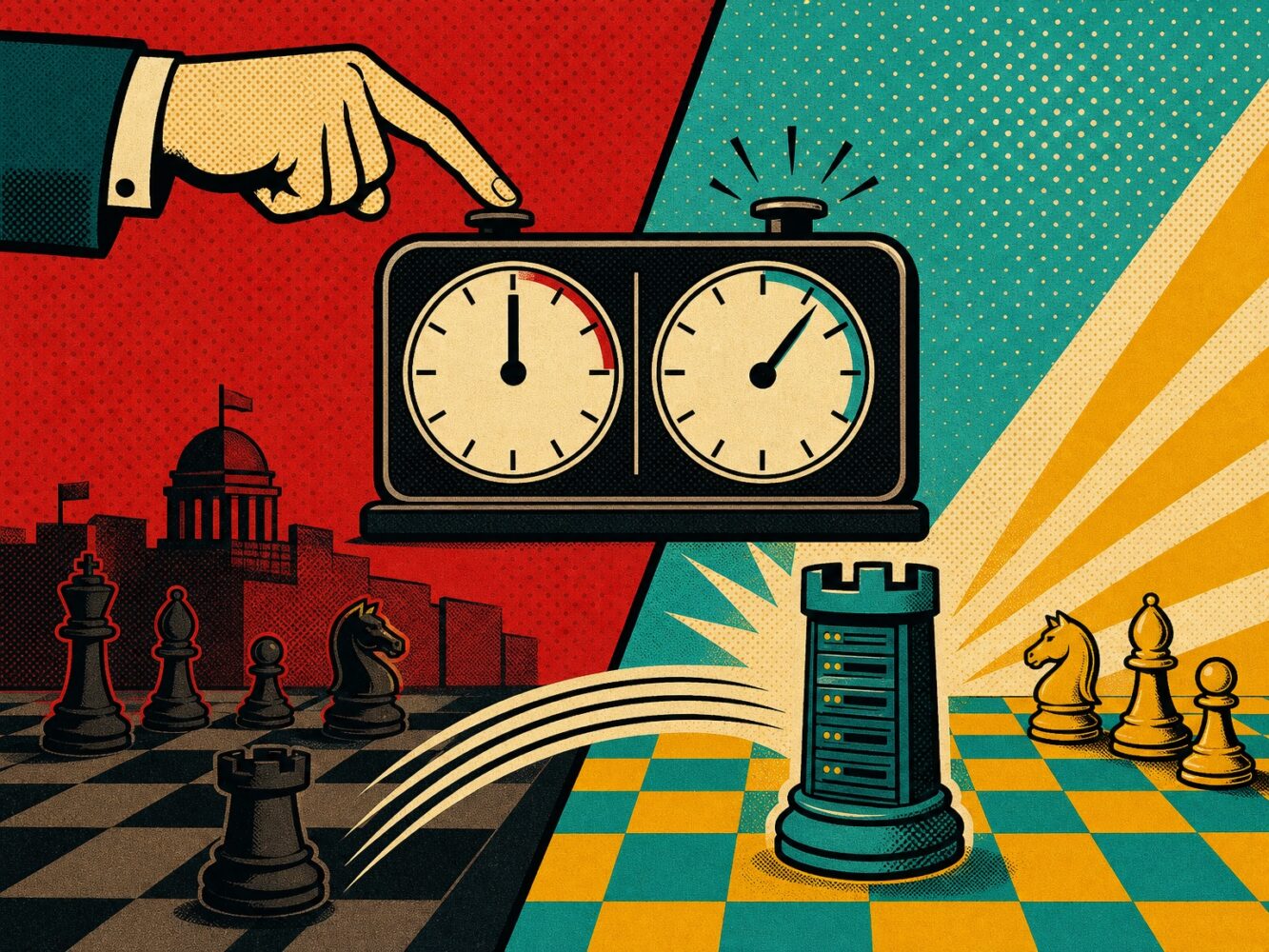
The Data Center Chessboard Has No Pause Button
The whole country ostensibly wants America to win the artificial intelligence (AI) race. A striking number, however, would prefer someone else’s town to host the data centers, power plants, transmission lines, and cooling systems required to run it. Adam Smith knew the type. In “The Theory of Moral Sentiments,” he warned against the “man of ... The Data Center Chessboard Has No Pause Button
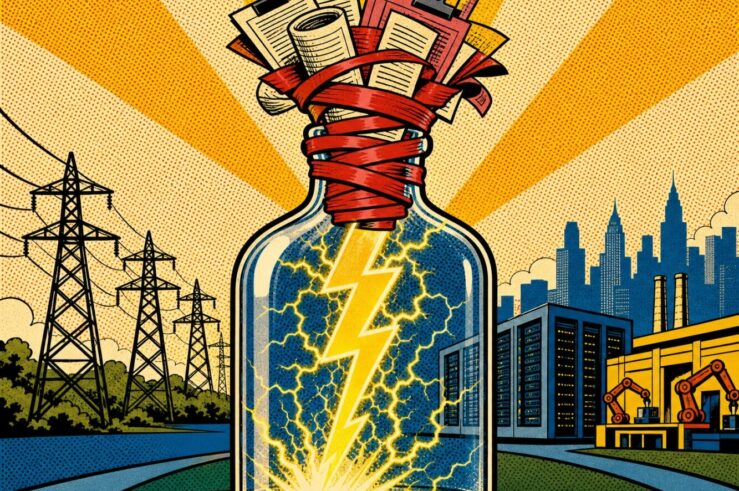
Lightning in a Bottleneck: How Regulatory Gridlock Is Choking America’s Energy Boom
America’s power grid has plenty of new customers and no shortage of new ideas. What it lacks is a regulatory system capable of connecting the two. Artificial intelligence data centers, advanced manufacturing, and cryptocurrency operations are driving electricity demand sharply higher. Yet the rules for connecting new power sources and major users remain slow, fragmented, ... Lightning in a Bottleneck: How Regulatory Gridlock Is Choking America’s Energy Boom
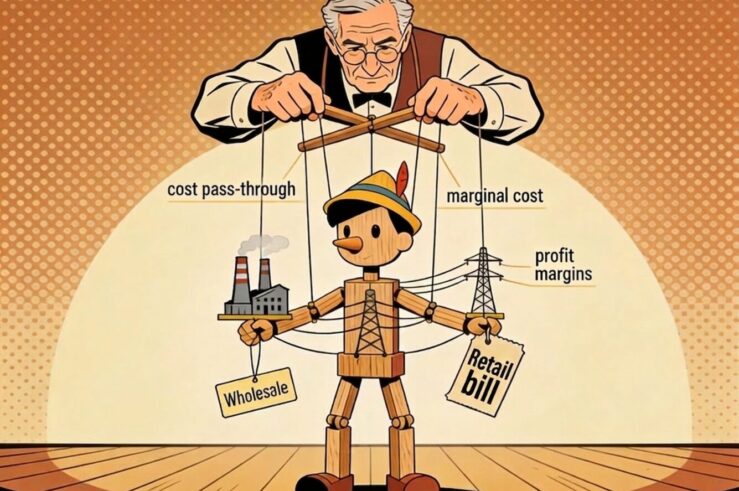
The Price of Watching Prices: Italy’s Slow Slide from Markets to Management
If regulators could make markets behave simply by watching them more closely, Italy would be about to crack the code. Instead, the Italian government’s latest energy measures suggest something else: when prices rise, the instinct is not just to subsidize costs, but to supervise how those costs flow through the system—down to how firms bid, ... The Price of Watching Prices: Italy’s Slow Slide from Markets to Management
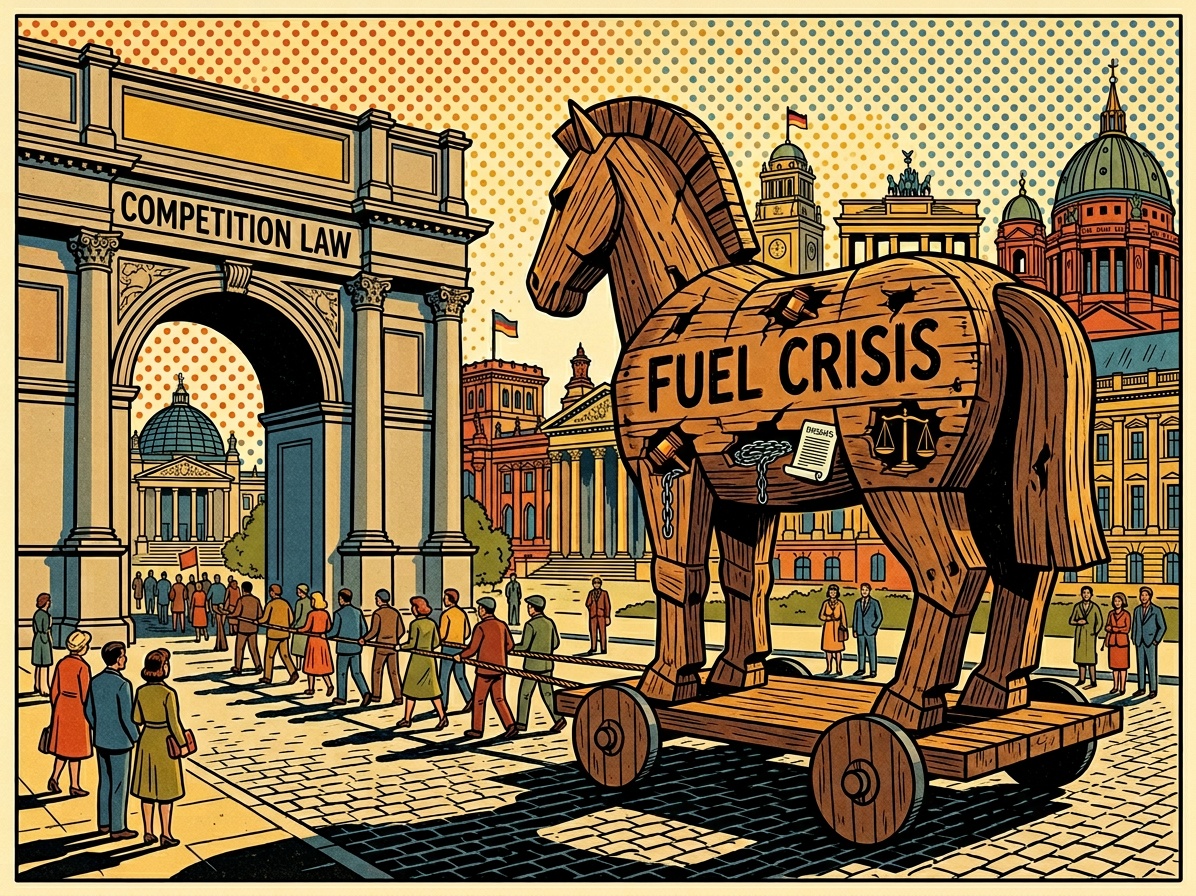
Crisis Opportunism: Germany’s Turn to Antitrust Without Limits
Geopolitical shocks rarely just move markets. They move policy—and not always in good ways. Fuel prices are climbing sharply across Europe following military escalation in the Middle East and disrupted shipping through the Strait of Hormuz. The political demand for “something to be done” can be nearly irresistible. In Germany, several major political groups have ... Crisis Opportunism: Germany’s Turn to Antitrust Without Limits
‘Optimal Departures from Marginal Cost Pricing’ by William J. Baumol & David F. Bradford
William Baumol and David Bradford’s 1970 article “Optimal Departures from Marginal Cost Pricing” is a cornerstone in the economics of public utility regulation. While it appeared in the American Economic Review as a work of formal economic theory—complete with equations and proofs—it also has clear significance for law & economics. Baumol and Bradford demonstrate how ... ‘Optimal Departures from Marginal Cost Pricing’ by William J. Baumol & David F. Bradford

Reversing the EU Economic Slowdown: Implications for the United States
The European Union is on a 20-year economic losing streak. A new research study shows that the EU’s economic slowdown relative to other areas of the developed world is due to bad government policies that can be cured. Reversal of these policies requires political will, as it would involve the shrinking of the size of ... Reversing the EU Economic Slowdown: Implications for the United States

New York’s Failed Economic Case for Price-Gouging Enforcement
A major winter storm across northern New York State in January 1998 snapped power lines and left thousands without electricity, as temperatures plunged. In the small town of Chazy, just south of the Canadian border, a local hardware store stepped up. Chazy Hardware had just one generator on hand, but it managed to locate 54 ... New York’s Failed Economic Case for Price-Gouging Enforcement

Trump Tariffs in a Broader Policy Context
The possible ramifications of President Donald Trump’s tariffs are drawing headlines. Tariffs are a linchpin in the expansive Trump “America First Trade Policy” that aims to reshape U.S. trade relations. Even more broadly, other Trump administration initiatives—including tax, energy, and regulatory policies—also will have a major impact on American economic performance. The economic case for implementing those ... Trump Tariffs in a Broader Policy Context

What Transmission Markets Can Learn from the FCC’s Pole-Attachment Problem
Large portions of the country are expected to face a growing threat of widespread electricity blackouts in the coming years. For example, the Western Electricity Coordinating Council—the regional entity charged with overseeing the Western Interconnection grid that covers most of the Western United States and Canada—estimates that the subregion consisting of Colorado, Utah, Nevada, and ... What Transmission Markets Can Learn from the FCC’s Pole-Attachment Problem
Command and control in California. Shocking.
In a move stupider even than Chicago’s foie gras and trans fat bans (on which see Thom here), California appears to be set to ban . . . wait for it . . . big TVs. Environmentalists, those growing enemies of freedom and common sense everywhere, are pushing the ban because large-screen TVs use a ... Command and control in California. Shocking.