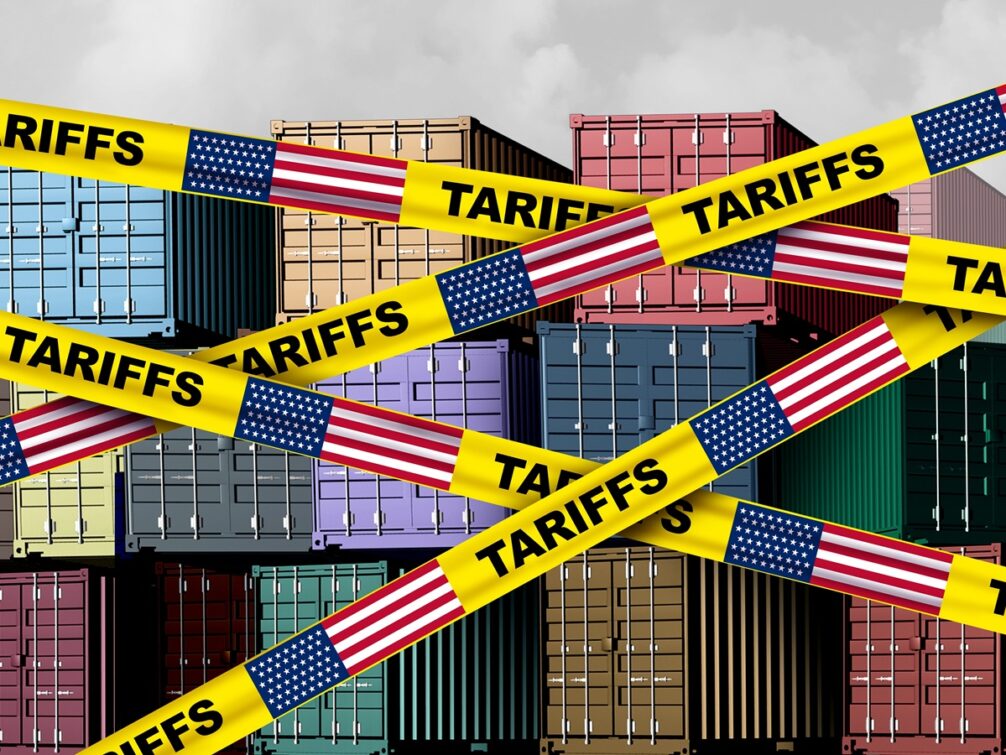
The possible ramifications of President Donald Trump’s tariffs are drawing headlines. Tariffs are a linchpin in the expansive Trump “America First Trade Policy” that aims to reshape U.S. trade relations. Even more broadly, other Trump administration initiatives—including tax, energy, and regulatory policies—also will have a major impact on American economic performance.
The economic case for implementing those other policies is more straightforward than the case for tariffs.
Tariffs and US Trade Policy
The America First Trade Policy (AFTP) was described in an April 1 White House report that “presents comprehensive recommendations covering the full scope of trade policies and challenges, from market access and the de minimis duty exemption to export controls and outbound investment restrictions.”
The report highlights “the magnitude and urgency of the economic and national security threat posed by the large and persistent trade deficit[,]” which it claims “demonstrates a fundamental unfairness and lack of reciprocity in how the United States is treated by its trading partners.”
The AFTP is “organized into three main pillars: (1) Addressing Unfair and Unbalanced Trade, (2) Economic and Trade Relations with the People’s Republic of China, and (3) Additional Economic Security measures, which includes reviews of export control programs, outbound investment, and other national security policies.”
The longevity of specific Trump tariffs may depend upon the responses of businesses and foreign governments.
Trump hopes that companies may have incentive to move manufacturing operations to the United States (though this likely would not happen overnight and could involve complications).
The Trump administration is touting foreign nations’ interest in negotiations to avoid high tariffs. For example, on April 7, European Commission “President Ursula von der Leyen said . . . that the [EU] bloc has offered a ‘zero-for-zero tariff’ trade arrangement on industrial goods with the United States in a bid to avoid a full-on trade war.” Also on April 7, Forbes reported that a number of other U.S. trading partners are looking to negotiate on tariff reductions. Another April 7 news report, however, stated that the EU plans to assess 25% counter-tariffs.
The tariff and trade picture for now is highly fluid and the actual effects of the AFTP will not be known for some time.
White House Economic Council Director Kevin Hassett has defended the tariffs, stating that the president is “doubling down on something that he knows works. And he’s going to continue to do that.” In contrast, various prominent economists have raised the concern that “the tariffs have the potential to destabilize global markets, disrupt trade and ultimately backfire by increasing costs for U.S. businesses and consumers.”
Beyond Tariffs – The Big Picture
Trade policy comprises only one element (though an important one) in the Trump economic program. Among other key elements of the program are tax legislation, regulatory reform, and energy policy. Those three areas also interact with trade.
Tax Legislation
In his March 2025 joint address to Congress, Trump called for legislation to make permanent his 2017 income-tax cuts; to eliminate federal taxes on tips, overtime, and Social Security benefits; and to provide tax cuts for domestic production and manufacturing, including 100% expensing (immediate write-offs). The extent to which the president’s proposals will be enacted into law depends on the terms of “budget reconciliation” legislation that will be voted on later this year.
Two nonpartisan economic research institutes—the Growth Commission and the Tax Foundation—found that the 2017 tax cuts raised per-capita GDP, boosted capital investment, and lowered average individual tax burdens. The actual economic effects of the new Trump tax program, however, cannot be assessed until budget reconciliation is passed.
An April 5 Forbes article noted that Trump’s “tariffs could help clear the way for bigger tax cuts as Congress eyes a potential revenue windfall.” In a similar vein, White House Senior Counselor for Trade and Manufacturing Peter Navarro asserted April 7 that tariffs could raise revenues, and thereby support large tax cuts. Whether tariffs will be retained in a form that raises substantial revenues remains to be seen.
Expanded Energy Production
In his joint address to Congress, Trump also emphasized expanded market-based domestic energy production as a key element of his economic growth and anti-inflation program. (This approach gibes with the views of the Growth Commission on energy.) Citing his declaration of a national energy emergency, he focused on:
- regulatory changes to authorize new oil and gas production;
- expanding domestic production of critical minerals and rare earths; and
- building a gigantic natural gas pipeline in Alaska—among the largest in the world—where Japan, South Korea, and other nations would be U.S. partners, with investments of trillions of dollars each.
New domestic and foreign energy projects, coupled with the Jan. 21 lifting of the Biden administration’s ban on liquid-natural-gas exports, hold out the prospect for economically beneficial cooperation with foreign nations that desire lower-cost natural gas. This “energy carrot,” plus the prospect of profitable joint energy projects, might provide the United States leverage to lower foreign nations’ trade barriers that prompted higher U.S. tariffs.
Regulatory Reform
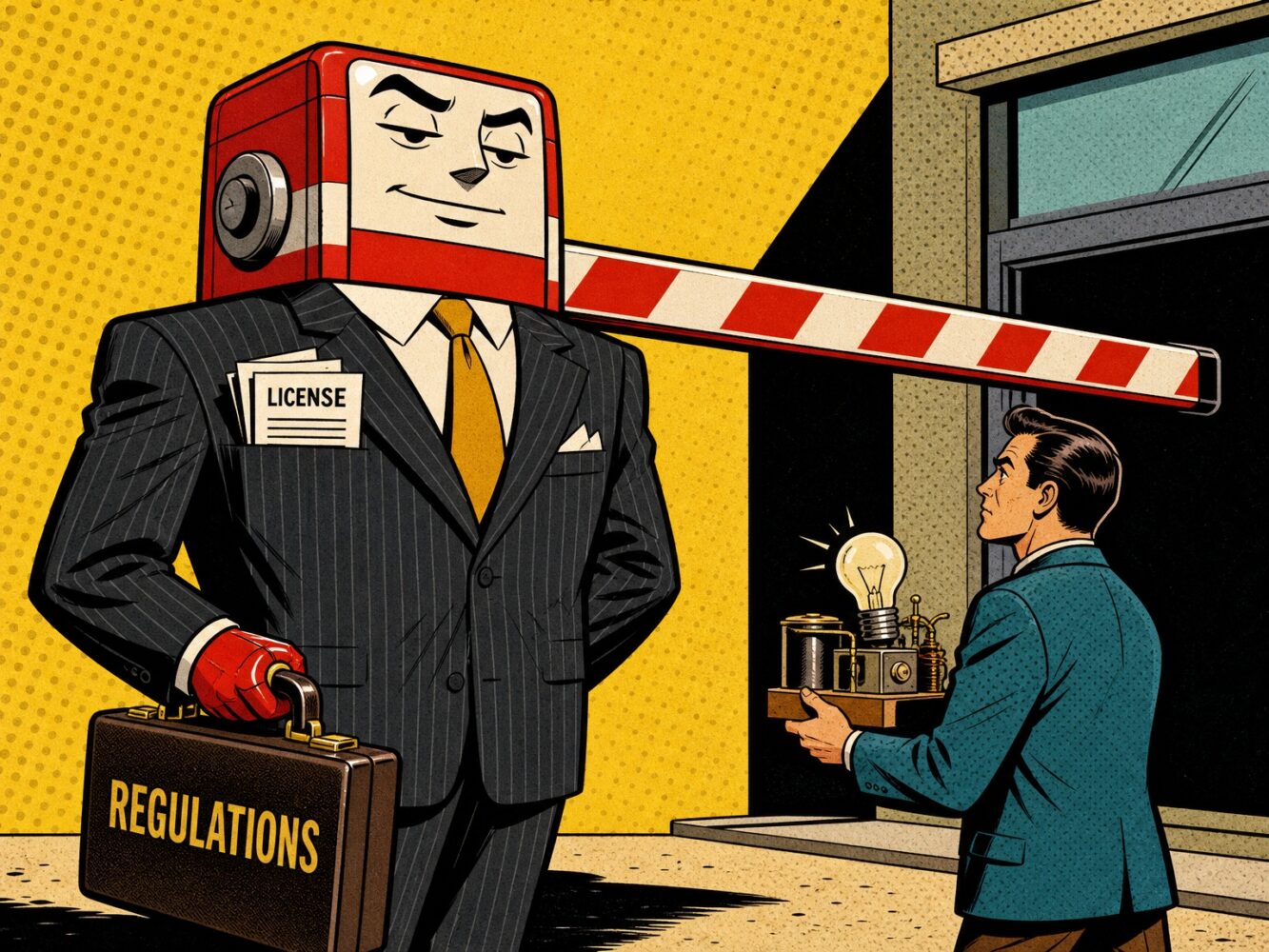
Trump has aggressively advanced regulatory-reform efforts through multiple executive orders. These orders call for dramatically eliminating regulations (rescinding 10 old rules for every new rule), expanding regulatory review to cover independent agencies, making cost-benefit analysis more rigorous, and eliminating excessive regulatory requirements attributable to prior administrations.
The deregulatory nature of Trump’s regulatory-reform efforts could substantially reduce excessive costs throughout the federal regulatory system, affecting such areas as energy, the environment, and natural-resources development, among others. Significantly, studies by leading economists found that regulatory reforms during the first Trump administration generated major economic gains, such as conferring tens of thousands of dollars in benefits per U.S. household.
Three 2024 U.S. Supreme Court decisions make it easier to justify paring back intrusive regulatory constraints that are based on vague and overly broad agency rules. This legal change should strengthen the second Trump administration’s regulatory-reform hand.
A dramatic reduction in excess U.S. regulatory burdens could entice foreign firms to enter the U.S. market. That could, in turn, give U.S. trade negotiators leverage to push for the elimination of foreign negotiating partners’ excess regulatory burdens. An agreement with willing nations to phase out such “anticompetitive market distortions” might pave the way to reduce or zero out tariffs by both the U.S. and its foreign counterparts. A U.S.-led “coalition of the willing” might also agree on joint tariffs to be imposed on China to counteract its high ACMDs.
Notably, the Growth Commission argued in February that “if the new administration takes targeted action on unfair trade practices and reciprocal tariffs, this could lead to a reduction in [anticompetitive market distortions] . . . across the board and stronger GDP per capita growth both in the U.S. economy and abroad.”
The Tariff Outlook Is Cloudy
The net economic impact of new U.S. tariffs remains far from clear; the jury will be out for some time.
Tariffs might encourage reductions in foreign trade barriers and bring some new industrial capacity into the United States. They might provide some leverage to help implement non-tariff Trump economic policies. Nevertheless, tariffs might also impose large economic costs that reduce the net benefits of other Trump economic initiatives.
Tariff uncertainties abound. The economic case for Trump tax reform, regulatory reform, and energy initiatives is clearer and more straightforward.