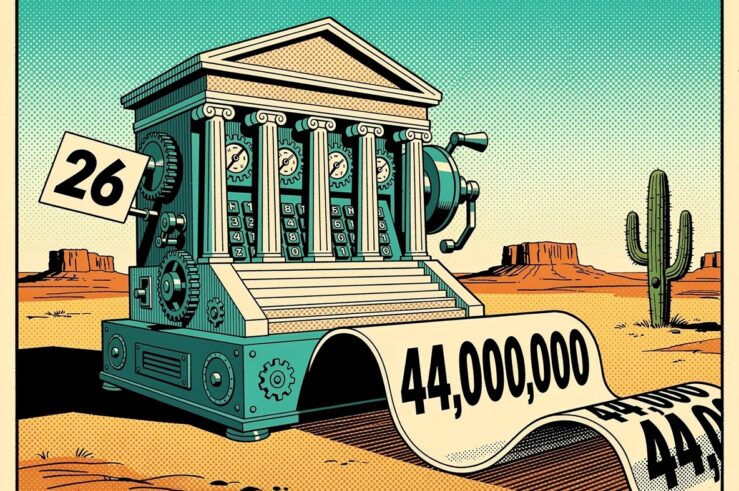
Well, you’ve gotta hand it to President Donald Trump. Trade policy is the topic du jour, with tariffs and tariff threats grabbing most of the headlines. When Trump announced 25% tariffs on steel and aluminum imports, my neighbor rushed out to replace her refrigerator, fearing rising prices.
The small slice of the population with a “Principles of Economics” textbook on their bookshelf looked up the chapter on tariffs, read a few paragraphs, shut the book, and mumbled, “Yup, tariffs are bad.” The larger slice of the country that gets their economics from cable news either likewise got this version of the story or else another version that explains how tariffs are a key strategy in 4-D chess that can unleash unheard-of prosperity. Which story you get depends on what channel your TV is stuck on.
Step away from the textbooks and TV, and you’ll see that some big-time policymakers are rethinking not just tariffs, but overall trade policy—namely non-tariff trade barriers. Most notably, Mario Draghi, former president of the European Central Bank and former prime minister of Italy, recently wrote in the Financial Times:
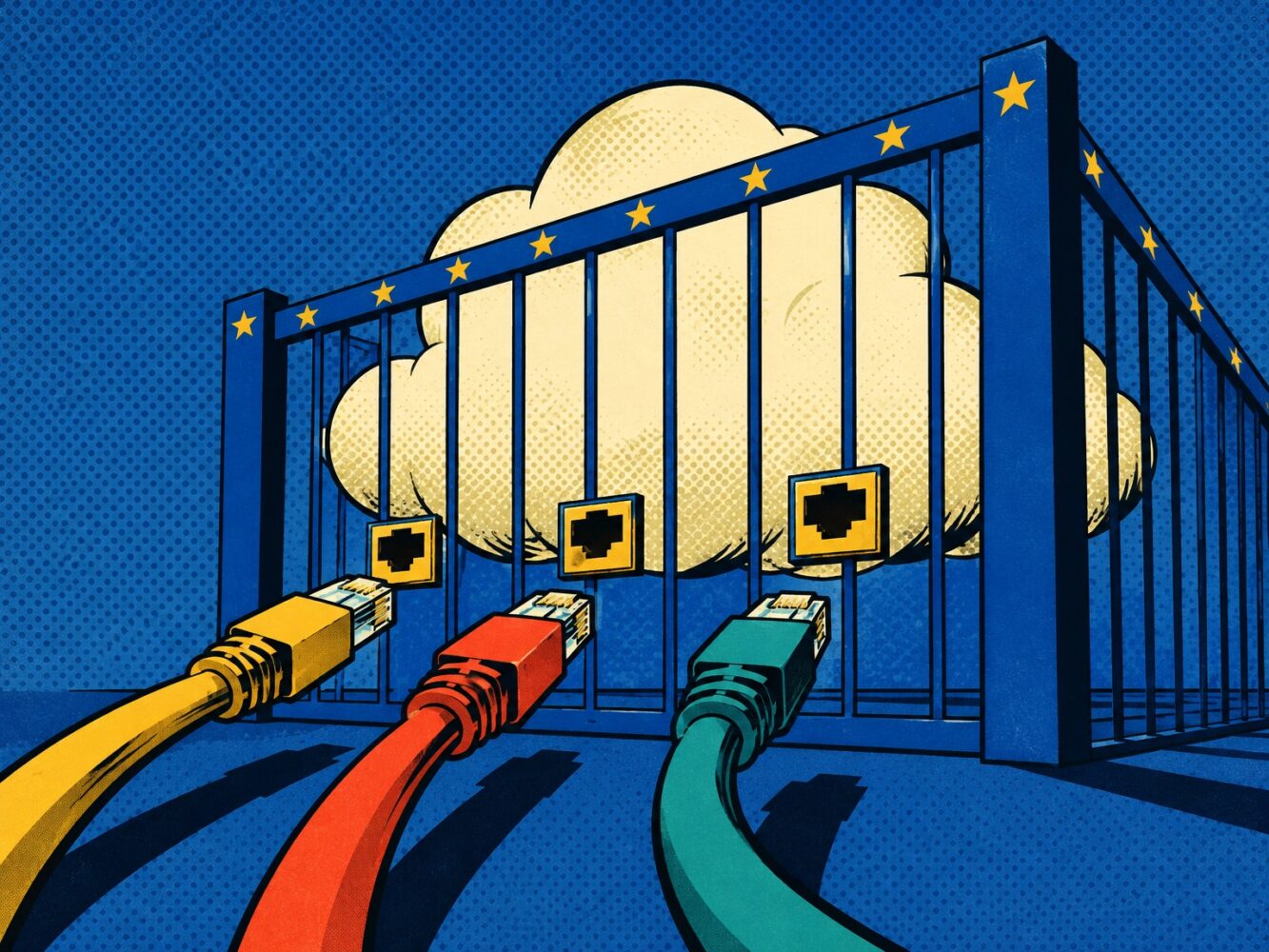
The IMF estimates that Europe’s internal barriers are equivalent to a tariff of 45 per cent for manufacturing and 110 per cent for services. These effectively shrink the market in which European companies operate: trade across EU countries is less than half the level of trade across US states. And as activity shifts more towards services, their overall drag on growth becomes worse.
Non-tariff barriers (NTBs) include a wide range of regulatory, administrative, and procedural measures that governments use to influence trade flows, without relying on direct tariffs. NTBs include quotas, licensing regimes, technical standards, sanitary regulations, local-content requirements, and customs procedures.
The proliferation of NTBs has accelerated even as global tariffs have declined under multilateral agreements, like those administered by the World Trade Organization (WTO). Some of these NTBs are inadvertent side effects of measures taken to address legitimate public policy objectives (e.g., environmental protection, consumer safety). But many—perhaps most, including many that also seek to address ostensibly legitimate public—policy goals—are driven by the goal of protectionism.
NTBs highlight the tension between economic efficiency, political expediency, and rent seeking, and they require candid, nuanced analysis of their welfare effects, institutional design, and susceptibility to political capture.
They also touch many parts of daily life. Your cup of imported coffee may be subject to U.S. Food and Drug Administration (FDA) rules that mandate fumigation for hypothetical pest risks. The sugar you put in your coffee is subject to long-running sugar quotas, making U.S. sugar prices nearly double those elsewhere. You probably drive a car that is larger and more expensive than you’d like, because U.S. automobile standards are expressly designed to be inconsistent with those that apply in the rest of the world, limiting the availability of smaller, less-expensive imports. You pay more in taxes to pay for infrastructure (or just get less infrastructure overall) because of federal “Buy American” rules.
It’s not just American businesses and consumers who face NTBs. Just about every country in the world imposes them.
The Law & Economics of NTBs
Under the public interest theory of regulation, NTBs are often justified as needed to correct some alleged market failure, such as negative externalities or information asymmetries. For example, it’s argued that the United States bans the importation of mahogany in order to reduce widespread illegal logging and unsustainable harvesting practices that threaten the survival of mahogany trees in their native habitats. The country’s strict “Made in USA” labeling regulations are deemed necessary to ensure consumers that, if they bought a product that said it was made domestically, then nearly all of that product was made in the United States.
I noted that negative externalities—such as pollution, environmental degradation, or poor labor conditions—may be invoked to justify NTBs. But shouting “externality” is not a magic incantation that makes NTBs an appropriate policy response to any externality. In practice, domestic policies intended to address an externality often morph into NTBs, especially when the policies focus on how a product is made, rather than on what the product is.
Imagine that a product from the imaginary country of Cleantopia is indistinguishable from one made in the equally imaginary country of Dirtyvania in terms of its final form (e.g., a steel beam) but Dirtyvania’s production process emits more pollution than Cleantopia’s. A law mandating that any steel beams sold in Cleantopia must be produced using Cleantopia’s process amounts to an NTB limiting trade with Dirtyvania.
When a market failure cannot be identified, proponents of NTBs often fall back on national security or industrial-policy justifications. For example, the Jones Act restricts the waterborne transport of cargo within the United States to U.S.-flagged, U.S.-crewed, U.S.-owned, and U.S.-built vessels. The law was meant to bolster the U.S. maritime sector and create a ready labor pool from which the military could draw when needed.
While NTBs are often justified on grounds that they achieve a legitimate policy objective, they are nearly always fundamentally protectionist. Under the public choice theory of regulation, concentrated interest groups exploit regulatory processes to extract rents, imposing deadweight losses on the economy through reduced competition and higher consumer prices.
On this view, NTBs are seen as a form of rent seeking, with alleged market failure or national security and public-health concerns serving as a fig leaf. The U.S. sugar-quota program literally is a textbook example of such rent seeking, as explained in Paul Krugman and Robin Wells’s textbook “Economics”:
An example is trade protection for sugar: the United States has an import quota on sugar, which on average leads to a domestic price about twice the world price. This quota is difficult to rationalize in terms of any economic argument. However, consumers rarely complain about the quota because they are unaware that it exists: because no individual consumer buys large amounts of sugar, the cost of the quota is only a few dollars per family each year, not enough to attract notice. But there are only a few thousand sugar growers in the United States. They are very aware of the benefits they receive from the quota and make sure that their representatives in Congress are also aware of their interest in the matter. [Emphasis added.]
Rather than fostering a vibrant U.S. maritime sector, the Cato Institute finds that the Jones Act has gutted the U.S. shipbuilding industry and driven up the costs of transporting seaborne goods bought by U.S. businesses and consumers. Nevertheless, the American Maritime Partnership—a coalition of vessel owners and operators, shipboard and shoreside workers, shipbuilders and repair yards, equipment manufacturers and vendors, dredging and marine-construction contractors, maritime trade associations, and national-security organizations—continues to offer full-throated support for the law.
It Always Ends in Regulatory Capture
Regardless of the stated justifications for NTBs, left in place long enough, an entrenched group of the rules’ beneficiaries will lobby to keep or expand the barriers. This is the well-known concept of regulatory capture, in which the agencies that regulate an industry act to advance the industry’s interests, rather than the public good.
The U.S. sugar quota and the Jones Act have existed for generations. Despite mounting evidence that these NTBs harm U.S. businesses and consumers, little serious legislative effort has been made to remove these barriers. While proponents of these protectionist policies make up a small slice of the electorate, they have acquired pockets so deep that they can derail any attempt to halt the gravy train.
Sanitary and phytosanitary (SPS) measures, technical standards, and labeling requirements—often intended to serve legitimate public-health or safety goals—can also be manipulated to protect domestic industries from foreign competition.
For example, the United States and European Union were engaged in a long-running dispute regarding the EU’s 1989 ban on hormone-treated beef. The United States criticized the ban as unscientific and protectionist. While the EU claimed the ban protected consumers, critics argued they reflected the influence of European agricultural interests, who sought to shield local producers from competitive U.S. exports. After 20 years, the matter was resolved with the EU establishing a quota on non-treated beef imports.
The divergence in U.S. and EU regulatory frameworks further illustrates how institutional structures may enable capture. The EU’s precautionary principle emphasizes pre-market approval for ingredients and contaminants, while the U.S. relies more on post-market enforcement, as seen in the FDA’s Food Safety Modernization Act. These differences create friction, such as the EU’s rejection of U.S. nuts over aflatoxin limits, or U.S. import alerts targeting EU cheeses for nitrate levels.
While both systems claim scientific rigor, the persistence of such disputes suggests that domestic industries exploit regulatory complexity to maintain market advantages. For instance, U.S. poultry producers have opposed the United Kingdom’s ban on chlorine-washed chicken, arguing that the practice is safe and that U.K. rules unfairly favor local producers.
Efforts to address NTBs, such as the Transatlantic Trade and Investment Partnership (TTIP), highlight the tension between regulatory coherence and industry influence. The TTIP aimed to harmonize U.S.-EU standards but faced resistance from sectors that feared losing regulatory autonomy. For example, U.S. proposals to streamline testing and certification processes for industrial goods were seen as a way to benefit U.S. firms competing in EU markets. At the same time, the EU demands for geographic indications (e.g., “Champagne”) were seen as a way to protect niche agricultural producers. The first Trump administration halted TTIP negotiations, with the European Commission declaring soon thereafter that the discussions were “obsolete and no longer relevant.”
Last week, Trump announced a new tariff policy, which was outlined in a presidential memorandum entitled the “Fair and Reciprocal Plan.” The memo directs key trade and economic U.S. government agencies to take action against trading partners that impose tariffs, taxes, NTBs, or other restrictions on U.S. goods and services.
Trump’s approach to trade has been derided as little more than a tit-for-tat policy, but it also involves a dash of realpolitik. The threat of tariffs can be used to extract other policy concessions—such as Trump’s tariff threat to encourage Colombia to accept military flights carrying deportees as part of his immigration crackdown. That’s the stick, but there’s also a carrot. Once tariffs or NTBs are in place, the promise of removing these trade barriers can be dangled to extract additional concessions.
As I noted earlier, however, if NTBs are in place long enough, an ecosystem of entrenched beneficiaries may make it harder to remove the barriers.
Non-tariff barriers represent a dual-edged sword in global trade policy. They may be useful to address potential market failures, but they are also prone to be captured by protectionist interests. An optimal NTB design requires recognizing that the claimed benefits of improved consumer protection, national security, and public health and safety may come at significant financial cost, and reduced consumer choice.