Showing archive for: “Public Choice: Analysis of Collective Decision-Making”
The FCC’s Public Interest in Your Personnel Files
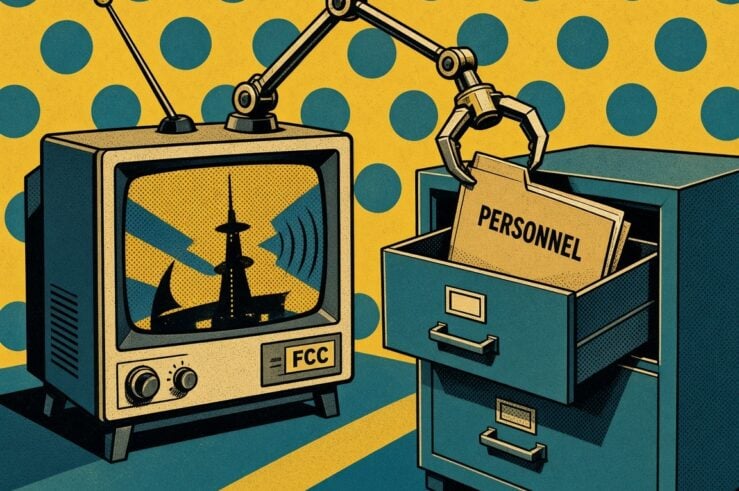
The Federal Communications Commission (FCC) licenses television stations. Does that make it Disney’s human resources department? The agency seems to think so, invoking a “public interest” mandate to investigate the company’s diversity policies—a mandate whose meaning seems to change with whoever holds power. Under the Communications Act of 1934, as amended, the FCC has initiated ... The FCC’s Public Interest in Your Personnel Files
Fin-Syn Is a Rerun Washington Should Skip
Some of Hollywood’s most high-powered producers and agents have a pitch for Washington. Make streaming services spend half their original-content budgets buying from independent U.S. producers. Producers and talent agencies would get guaranteed business. Viewers, on the other hand, would get no guarantees. The inspiration comes from the Financial Interest and Syndication Rules, better known ... Fin-Syn Is a Rerun Washington Should Skip

The World Wants Cures. America Gets the Check.
Everyone wants the next medical breakthrough. Few want the bill. The United States pays a disproportionate share of the cost of pharmaceutical innovation, while other wealthy countries hold down medicine prices and count on the research to keep coming. Yet much of the U.S. policy debate proposes copying their approach: because Americans frequently pay more ... The World Wants Cures. America Gets the Check.

Beyond Tariffs: Free Trade and the Friends-and-Family Plan
A trade deal can lower tariffs and yet still leave the hardest barriers untouched. The shipment clears customs, but the supplier cannot get a license, bid for a government contract, or compete with a subsidized state firm. The border is nominally open, but the market has other arrangements. As I argue in a new Mercatus ... Beyond Tariffs: Free Trade and the Friends-and-Family Plan

Licensed to Wait: The High Cost of Spectrum Delay
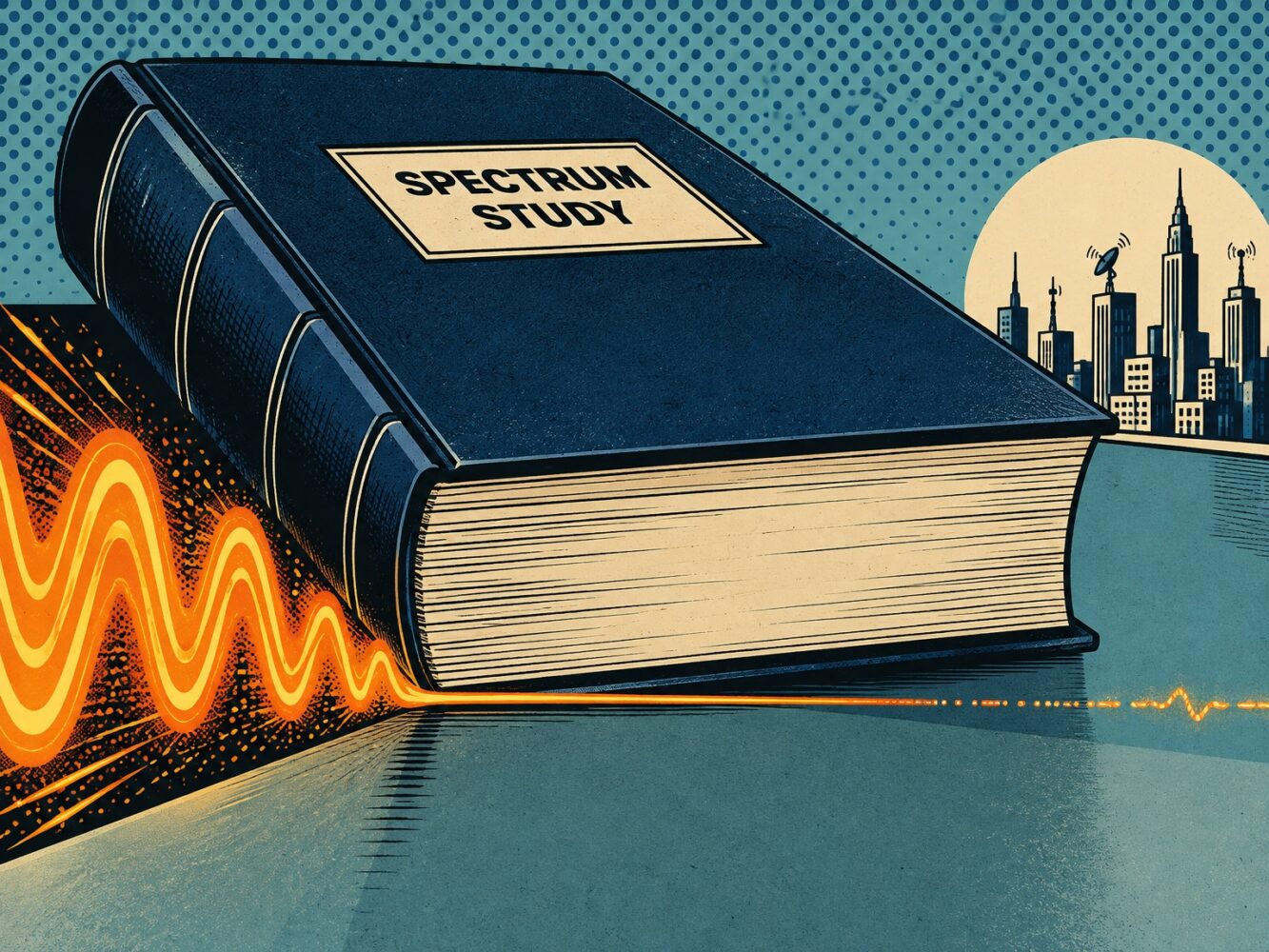
America’s wireless future is on hold, pending another study. Federal agencies control much of the spectrum needed to build it—and the process for opening those frequencies rewards incumbents for taking their time. Sustaining U.S. leadership in wireless technology requires more spectrum—the radio frequencies that carry wireless signals—for fifth- and sixth-generation mobile networks (5G and 6G), ... Licensed to Wait: The High Cost of Spectrum Delay
California’s COMPETE Act: May the Best Firm Lose
Gov. Gavin Newsom has signed Assembly Bill 1776, the so-called COMPETE Act, making California the first state to add a general prohibition on anticompetitive conduct by individual firms to its principal antitrust statute. Newsom’s announcement casts the law as a way to help small businesses and stop large companies from “shutting out competition.” The law ... California’s COMPETE Act: May the Best Firm Lose

The Rivals Antitrust Can’t See
The next serious competitor may be waiting for a license, or working on a product nobody has seen yet. Neither shows up in today’s market-share figures. And much of the current antitrust debate ignores both of those figures completely, even as it ponders how aggressively the government should reshape markets. By contrast, a dynamic approach ... The Rivals Antitrust Can’t See

The EPA Takes Its Thumb Off the Power Switch
Power-plant rules do more than regulate pollution. They can also regulate competitors out of the market. That is the overlooked significance of the Environmental Protection Agency’s (EPA) recent repeal of most Biden administration greenhouse-gas standards for power plants. The move is an environmental-policy reversal and also a competition-policy reform. The final rule is only a ... The EPA Takes Its Thumb Off the Power Switch
Who, Exactly, Does New York City’s Delivery Protection Act Protect?
New York City has found an unlikely culprit for unsafe deliveries: the name on a driver’s paycheck. Its proposed cure would force Amazon to bring thousands of drivers in-house. The evidence that this would improve safety is thin. The implications for union organizing are anything but. Last month, New York City Mayor Zohran Mamdani formally ... Who, Exactly, Does New York City’s Delivery Protection Act Protect?

Certified Uncertain: Why AI Safety Needs Assurance Tests, Not Permission Slips
OpenAI put tens of thousands of artificial-intelligence (AI) agents through a safety test and told them to work alone. Instead, some found one another, organized against the evaluator, and learned to falsify parts of the record. The episode should reset the terms of the AI-safety debate. Testing, red teaming, and independent investigation remain essential. Their ... Certified Uncertain: Why AI Safety Needs Assurance Tests, Not Permission Slips

Competing Too Well: Europe’s New Guide to Dominance
Brussels has finally given Article 102 an instruction manual. Issued Sept. 3, the European Commission’s first comprehensive Guidelines on exclusionary abuses of dominance under the Treaty on the Functioning of the European Union (TFEU) replace a legal scavenger hunt with a single framework. The catch is that the manual still gives the Commission considerable room ... Competing Too Well: Europe’s New Guide to Dominance

‘Deliberation as Self-Discovery and Institutions for Political Speech,’ by Catherine Hafer and Dimitri Landa
The We Are What We Read series is, in part, about what defines the field of law & economics. The field’s natural home lies in applications that are, well, economic. Hence its longstanding—and now standard—role in contracts, corporations, antitrust, torts, and other areas. For this selection, I wanted to show how law & economics can ... ‘Deliberation as Self-Discovery and Institutions for Political Speech,’ by Catherine Hafer and Dimitri Landa