Showing archive for: “Public Economics: Taxation Subsidies & Revenue”
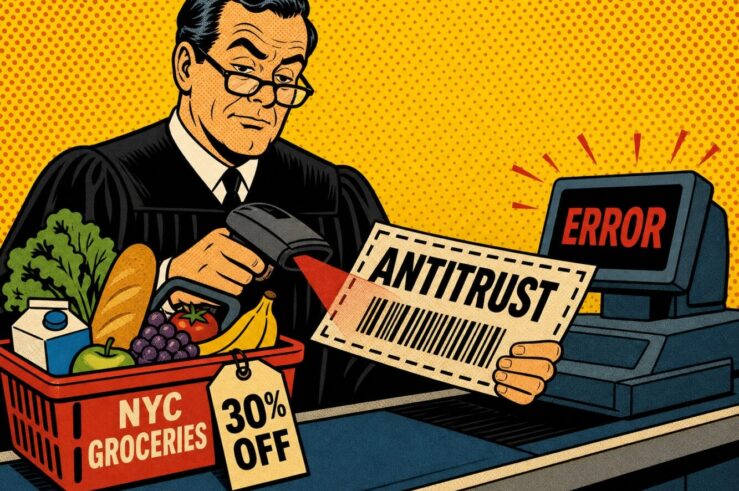
Checkout Error: A Bad Grocery Plan Meets a Weak Antitrust Case
I’ve criticized plenty of private antitrust cases. This may be the first in which the plaintiffs sued to stop a genuinely bad idea—and I still think they should lose. That is the odd posture of the antitrust challenge to Mayor Zohran Mamdani’s plan for subsidized grocery stores in New York City. On Sept. 9, the ... Checkout Error: A Bad Grocery Plan Meets a Weak Antitrust Case
‘The Logic of Political Survival,’ by Bruce Bueno de Mesquita, Alastair Smith, Randolph M. Siverson & James D. Morrow
Since the COVID-19 pandemic and the political upheavals that followed, concerns have grown that many Western democracies face authoritarian pressure and are becoming less democratic. This shift has renewed interest in one of political science’s most influential frameworks for understanding democratic and nondemocratic rule: Selectorate Theory, developed by Bruce Bueno de Mesquita, Alastair Smith, Randolph ... ‘The Logic of Political Survival,’ by Bruce Bueno de Mesquita, Alastair Smith, Randolph M. Siverson & James D. Morrow
Much Ado About No News: Australia’s Latest Plan to Make Platforms Pay
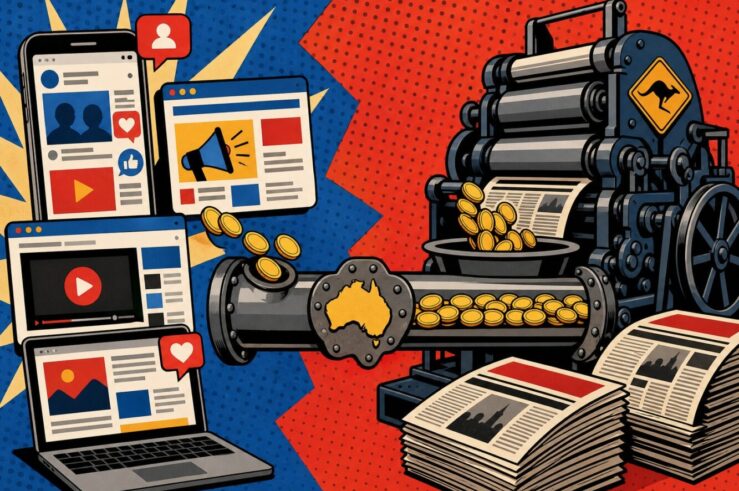
Australia’s latest plan to make digital platforms pay for journalism has an unusual feature. A platform can owe money even if it carries no journalism at all. The government calls this an “incentive.” On Aug. 3, the Australian government finalized legislation establishing the News Bargaining Incentive (NBI). The government first proposed the NBI in December ... Much Ado About No News: Australia’s Latest Plan to Make Platforms Pay
The Lifeline Program’s Afterlife Problem
A subsidy program can survive many things. Paying benefits to the dead should not be one of them. That is the problem now facing the Federal Communications Commission’s (FCC) Lifeline program, which was designed to ensure that low-income Americans can connect to the communications networks modern life depends on. As the program has expanded to ... The Lifeline Program’s Afterlife Problem
The Price of Watching Prices: Italy’s Slow Slide from Markets to Management
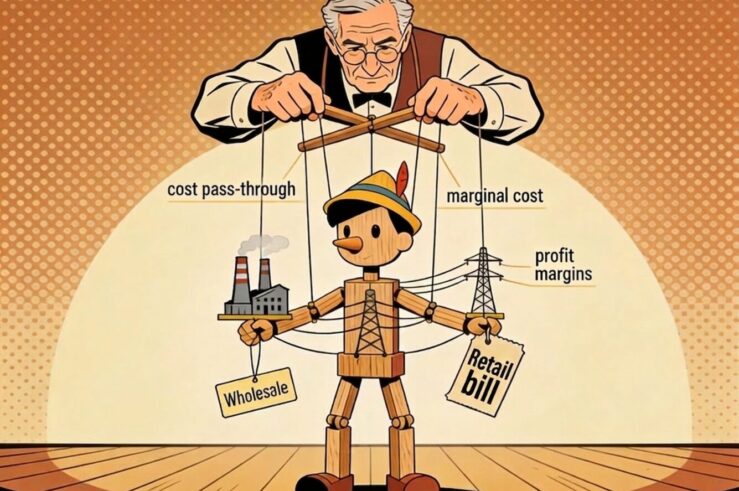
If regulators could make markets behave simply by watching them more closely, Italy would be about to crack the code. Instead, the Italian government’s latest energy measures suggest something else: when prices rise, the instinct is not just to subsidize costs, but to supervise how those costs flow through the system—down to how firms bid, ... The Price of Watching Prices: Italy’s Slow Slide from Markets to Management
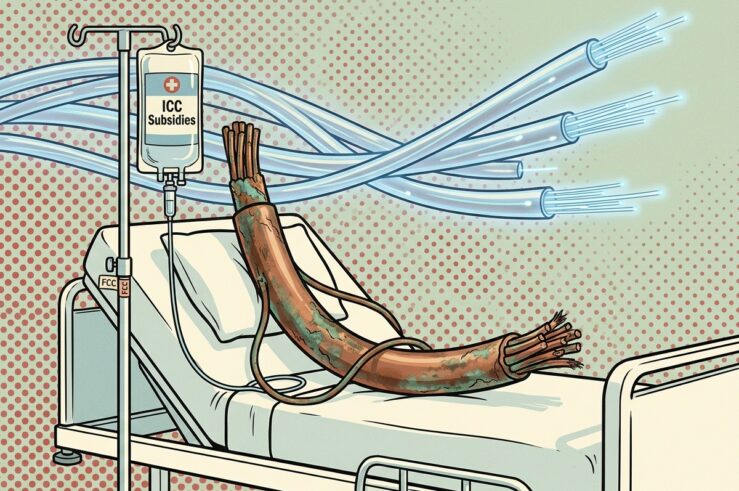
Subsidizing Obsolescence: How FCC Rules Keep Copper Alive
The Federal Communications Commission (FCC) is close to finishing a long-running transition away from legacy telecom regulation—but outdated rules still pay carriers to stay in the past. Last month, the FCC adopted a notice of proposed rulemaking (NPRM) to eliminate payments to legacy telecommunications carriers that have not upgraded to networks based on internet protocols ... Subsidizing Obsolescence: How FCC Rules Keep Copper Alive
Europe Can’t Decouple Its Way to Power
Europe is experiencing a bout of geopolitical vertigo. With Donald Trump having once again floated the purchase of Greenland and threatened tariffs against his European allies, the transatlantic relationship looks more fragile than at any point in recent memory. NATO may yet survive the strain, but hoping for a return to predictability is no longer ... Europe Can’t Decouple Its Way to Power

Rules Down, Rockets Up: The Year Telecom Policy Hit Reset
The Federal Communications Commission (FCC) and National Telecommunications and Information Administration (NTIA) have had a busy year on numerous fronts, but perhaps none more important than their work on broadband deployment and adoption. At the FCC, Chairman Brendan Carr made his “Build America” agenda a key agency priority, while the NTIA implemented a variety of ... Rules Down, Rockets Up: The Year Telecom Policy Hit Reset

‘The Integration of Tax and Spending Programs,’ by David Weisbach & Jacob Nussim
David Weisbach and Jacob Nussim’s 2004 paper “The Integration of Tax and Spending Programs” marked an important law & economics contribution to the tax-policy literature. The paper argues that, given a particular policy, the part of the government best suited to implement that policy should be tasked with doing so. Government Program Implementation Choices Weisbach ... ‘The Integration of Tax and Spending Programs,’ by David Weisbach & Jacob Nussim

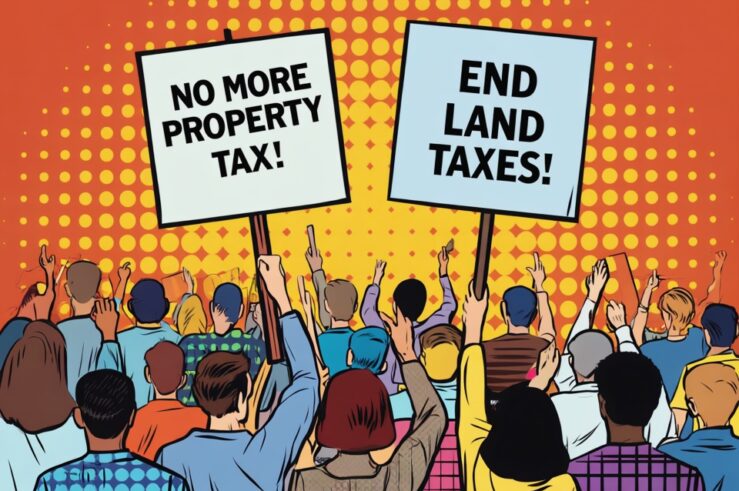
Why No One Likes Land Taxes
Economists and [insert basically every other group of people] often don’t agree. Take, for instance, the recent discussion of price controls. The headline of this opinion piece on the subject in The New York Times literally begins with “Economists Hate This Idea.” Yet voters aren’t so skeptical. (I’m not ready to say the idea has ... Why No One Likes Land Taxes
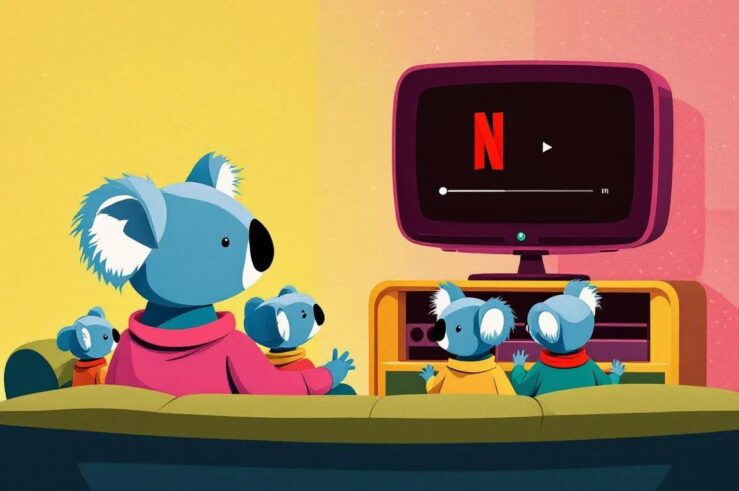
Troubling Content Quotas Down Under
The Australian Content Requirements for Subscription Video on Demand Bill 2025 (ACO Bill), introduced earlier this month in the Parliament of Australia, would require large video-streaming platforms to spend either 10% of their Australian expenditures or 7.5% of their Australian revenues on locally produced original programs. While framed as a cultural measure, the bill functions ... Troubling Content Quotas Down Under
Digital Sovereignty: Sound Policy or Another European Luxury Belief?
In what may be the perfect expression of Europe’s current strategic priorities, the European Union will convene a “Summit on European Digital Sovereignty” tomorrow in Berlin. The choice to hold a “digital sovereignty” summit, rather than a “competitiveness” summit or a “technology of tomorrow summit,” arguably says a great deal. Alas, this notion that the ... Digital Sovereignty: Sound Policy or Another European Luxury Belief?