Olivia Rodrigo has released a Christmas song, and listeners have promptly taken up the seasonal task of deciding whether somebody should sue.
“Take Me Home (4 Christmas)” recalls the Waitresses’ “Christmas Wrapping,” prompting accusations of plagiarism. Chris Butler, who wrote the older song, has complicated matters by liking the new one.
That seems like a promising arrangement. Rodrigo acknowledges an influence, Butler gets appreciation, and listeners get another “bop,” as I believe the kids are calling it these days. American copyright law should let everyone enjoy that outcome. The songs do share conversational vocals and a festive new-wave feel, but their melodies, lyrics, and chord sequences differ significantly.
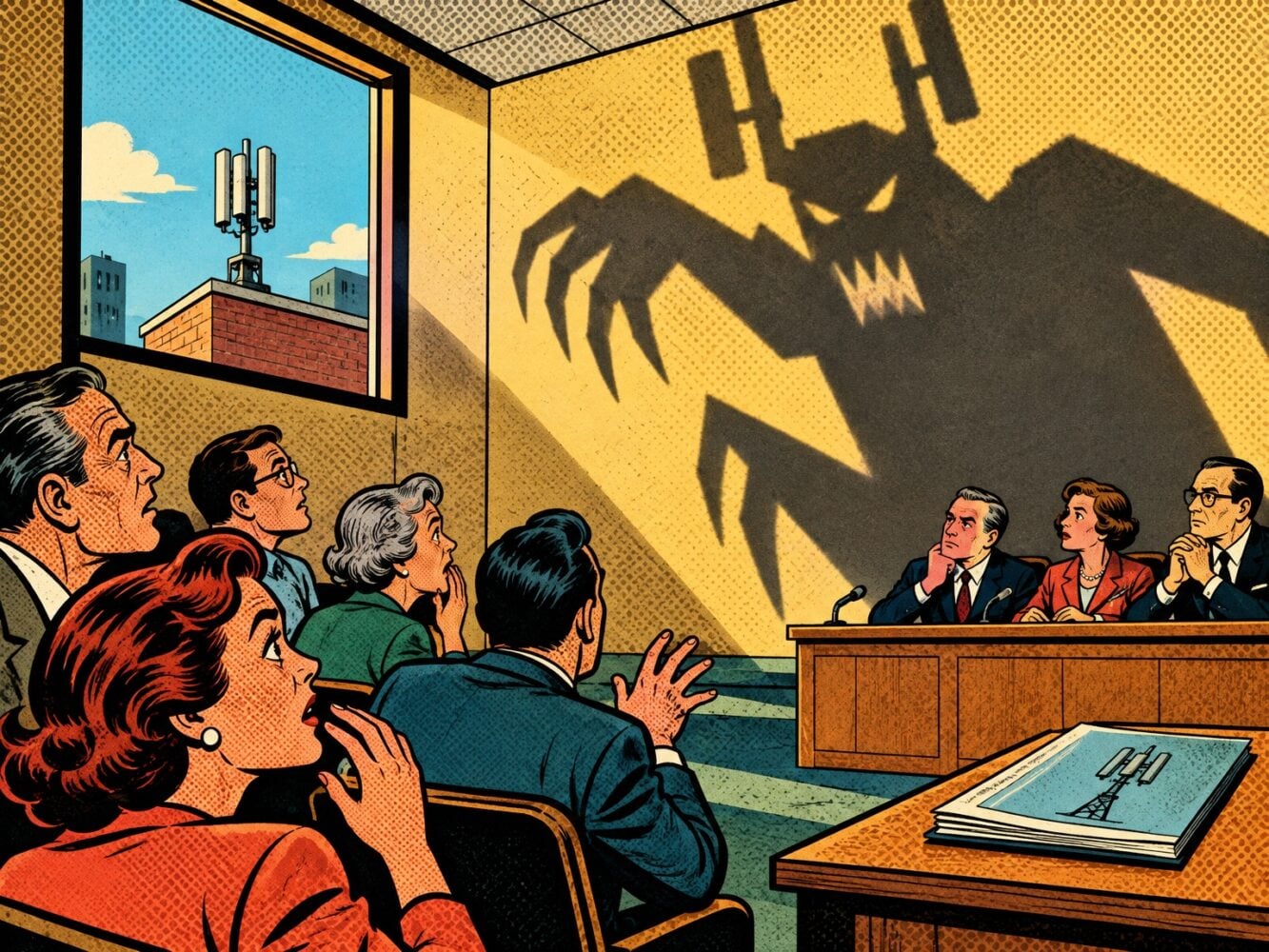
But then there’s the multimillion-dollar “Blurred Lines” judgment, which made borrowing a musical style feel rather risky, despite the appeals court’s assurance that nobody owned one. Later rulings offer some comfort, but “you’ll probably win” sounds less reassuring with an estimate for legal fees attached. A friendly email starts to look like a sensible addition to the recording budget.
Rodrigo’s own friendly email initially landed in Butler’s “surely this is fake” folder. Roughly two months before the release, she emailed Butler, praised his band, and invited him to hear her Christmas song. Once he established that she was the real article, he replied enthusiastically, praised her songwriting and arrangements, and eventually met her backstage in Columbus, Ohio. MusicRadar describes an exchange with considerably more mutual admiration than the average cease-and-desist letter.
Butler later addressed the infringement question directly. Responding to demands for a songwriting credit, he wrote:
Can’t © a “vibe”. Her song has no copy of “CW”s melody/chord progression/nothing to justify a claim.
The man whose work supposedly needs defending has thus declined the internet’s generous offer to be offended on his behalf.
The Ghost of Christmas Riffs Past
The Waitresses first released “Christmas Wrapping” in 1981 on ZE Records’ compilation A Christmas Record. It started modestly but became a holiday-radio staple and a fixture of Christmas compilations. It missed the Billboard Hot 100 in the United States, while in Britain, it peaked at No. 45 in December 1982. But that hardly captures its staying power. It returned to the British singles chart repeatedly decades later, reaching No. 46 in January 2019 and appearing again during the 2025 Christmas season.
The song’s origins also complicate any theory of musical purity. Butler assembled it from unused riffs—short musical phrases he’d set aside. Bassist Tracy Wormworth cited Bernard Edwards’ bass line on Chic’s “Good Times” as an inspiration. The song now fueling accusations that Rodrigo borrowed too much thus itself grew out of recycling, influence, and invention.
Still, the resemblance deserves an explanation. MusicRadar points to a shared 1980s new-wave groove and speech-like vocals on the verses. Both songs pair festive subject matter with the resigned attitude of someone who’s endured an actual holiday gathering. Rodrigo’s narrator wants her boyfriend to show commitment by taking her to his parents’ house. The Waitresses’ narrator recounts a year of missed romantic connections before an unexpected Christmas reunion. Both thus concern…Christmas logistics and imperfect romance?
But a singer can borrow a predecessor’s conversational delivery while singing a different melody over different chords. A closer musical comparison helps separate mood from mechanics. Here’s a simplified comparison, drawing on transcriptions from a few online guitar-tab sites:

“Mixolydian mode” sounds intimidating, but here it means changing just one note in the familiar A-major scale—lowering G-sharp to G-natural. Rodrigo’s G chord uses that same G-natural, so the songs do share some musical building blocks. The order of the chords matters, too. Writing Rodrigo’s chords as A–F-sharp minor–G–D–E suggests that the verse repeats those five chords in that order. Her chord chart actually shows a more varied pattern.
Hooktheory also identifies suspended chords in the Waitresses’ arrangement. These swap out one note, leaving the chord sounding neither clearly major nor clearly minor. That gives the music a more open, unresolved feel and helps explain its distinctive sound. But even “sophisticated” chords remain available for other musicians to use, just as Rodrigo’s use of familiar chords doesn’t mean she copied someone else’s song.
These chord charts suggest that the songs use different chord sequences to create a similar mood. They help explain how the songs can sound alike without sharing the same musical structure. That’s useful context, but it doesn’t actually settle whether one infringes the other’s copyright.
A Vibe Is a Terrible Property Line
As the U.S. Copyright Office explains, copyright separately protects a song’s music and lyrics and any recording of them. The BBC reports that Rodrigo’s song neither samples nor interpolates Butler’s music and confirmed that he receives no songwriting credit. Just to define the terms here, sampling reuses recorded audio, while interpolation recreates borrowed musical material in a new performance. Neither appears to explain the resemblance here.
So, to recap: Butler has identified no copied melody, and the songs use different lyrics and chord sequences. That supports the view that Rodrigo borrowed a style without copying protected musical material.
But the analysis doesn’t end with melody, lyrics, and chords. As the “Blurred Lines” appeal recognized, copyright can protect an original combination of musical elements even when the individual ingredients don’t qualify. Changing the chords won’t excuse copying a protected instrumental passage, just as sharing an ordinary chord progression won’t establish infringement.
That leaves the central difficulty. When does the combination become a distinctive, protectable expression, and when does it simply draw on a genre’s familiar ingredients? Give one songwriter ownership of conversational singing over festive new-wave rock, and everyone who follows will need permission to join the holiday party.
Have Yourself a Litigious Little Christmas
The “Blurred Lines” case illustrates why a familiar sound can make songwriters nervous. In 2015, a jury found that Robin Thicke and Pharrell Williams’ 2013 hit infringed the copyright in Marvin Gaye’s 1977 hit “Got to Give It Up.” In 2018, the 9th U.S. Circuit Court of Appeals largely upheld a judgment awarding Gaye’s heirs more than $5 million and a share of future royalties.
The 9th Circuit judges sharply disagreed about what that outcome meant. Dissenting Judge Jacqueline Nguyen argued that the songs differed in melody, harmony, and rhythm, and that the decision effectively gave Gaye’s heirs ownership of a musical style. The majority denied protecting a style or groove and stressed that its role was limited to reviewing the trial for legal error, with substantial deference to the jury’s findings. Williams v. Gaye thus left songwriters with a multimillion-dollar warning and a nominal assurance that musical style remained free to borrow. They could be forgiven for remembering the warning a bit more clearly than the assurance.
Intellectual property attorney Edwin McPherson argues that the songs shared no melodic phrases, lyrics, or matching chord sequences, and reads the verdict as punishment for their similar feel. Composer Richard Niles likewise warned that the result expanded infringement beyond the criteria musicians expected.
Duke University copyright scholar Jennifer Jenkins explains why that concern matters. Musicians draw on shared conventions and a limited musical vocabulary. Asking jurors to compare two songs’ overall impressions risks letting familiar, unprotectable ingredients determine liability, when those conventions may be precisely what makes one song evoke another.
Later decisions do offer some reassurance. In 2020, the 9th Circuit upheld Led Zeppelin’s victory against a claim that the opening of “Stairway to Heaven” copied Spirit’s “Taurus.” In Skidmore v. Led Zeppelin, the court also scrapped a rule that made similarity easier to establish when strong evidence showed that a musician had access to the earlier song. Knowing someone else’s music thus doesn’t lower the threshold for proving infringement.
In 2022, the court reinforced another limit. Gray v. Hudson concerned a claim that Katy Perry’s “Dark Horse” copied a repeating instrumental phrase from “Joyful Noise,” a song by Christian hip-hop artist Marcus Gray, known as Flame, and his collaborators. A jury found infringement, but the trial judge set aside the verdict, and the appeals court agreed. The shared features consisted of commonplace musical elements, and their combination wasn’t original enough to qualify for protection. Resemblance alone couldn’t turn those building blocks into private property.
A District of Columbia Bar discussion, featuring the Gaye family’s musicologist, likewise described these decisions as a retreat from the broader implications of “Blurred Lines.” Copyright still protects original combinations of musical elements, but a claimant must identify what makes the shared combination original.
Rodrigo would therefore have substantial grounds to resist a claim based on resemblance alone. Predicting a hypothetical lawsuit’s outcome would, of course, require knowing who owns the relevant rights, which passages they claim Rodrigo copied, and what the evidence shows. “Blurred Lines” gives songwriters reason to worry about litigation, but it wouldn’t give Butler (or anyone else with a theoretical claim) any kind of automatic victory.
All I Want for Christmas Is Legal Clarity
Even a songwriter with a strong legal defense has to consider what a lawsuit could cost. Legal bills, the chance of losing, and the disruption of a dispute can make releasing a song seem too risky. Unclear copyright rules can therefore keep lawful music off the market without anyone ever going to court.
Rodrigo’s decision to contact Butler looks sensible in that light. His blessing builds goodwill, though her lawyers would probably caution that an artist liking your song isn’t quite the same thing as a licensing agreement. Still, the exchange offers a quaint alternative to treating every audible influence as an unpaid invoice. A younger musician acknowledges a predecessor. The predecessor takes the compliment. Everyone gets to hear the music, despite the alarming shortage of billable hours.
Copyright should make that easier. Christmas already involves enough people demanding receipts.