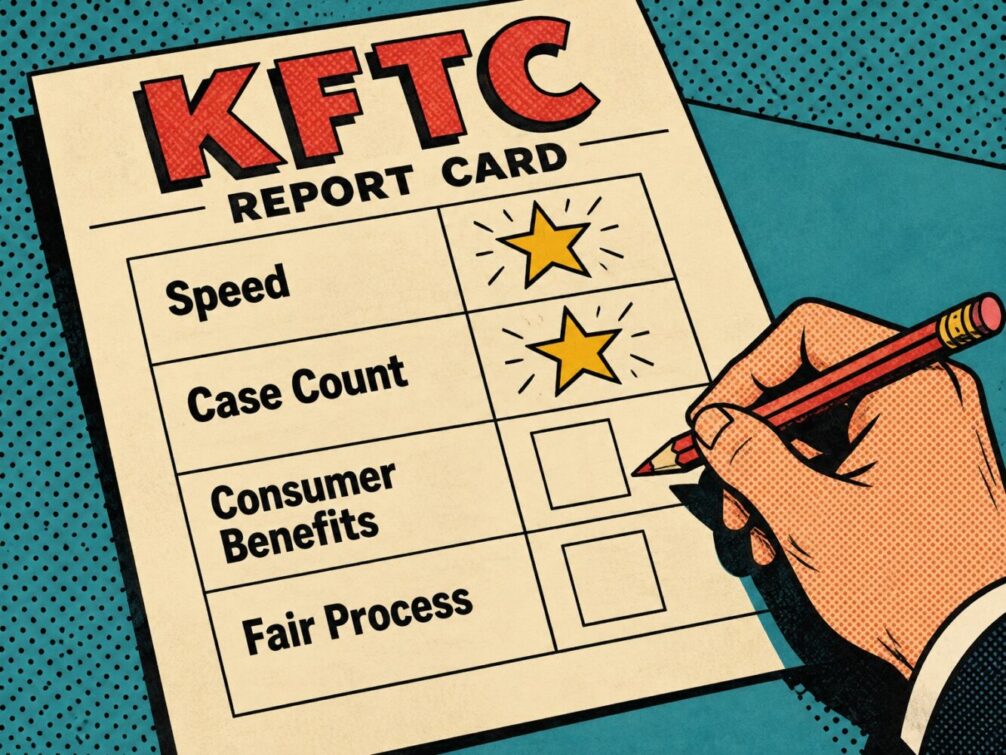
The Korea Fair Trade Commission (KFTC) keeps getting high marks. Consumers are entitled to ask what’s being graded.
The agency has earned a “Very Good” assessment in Global Competition Review’s (GCR) annual competition-authority ratings for 13 consecutive years. The latest assessment, based on its 2025 performance, praised its increased cartel decisions, shorter investigations, and merger remedies—conditions imposed on deals—in digital markets. But did those decisions benefit consumers? Did the agency enforce the law evenhandedly and give firms a fair chance to challenge its evidence?
Those questions drive critiques by market-oriented law & economics scholars and policy organizations. They raise concerns about the KFTC’s proposed expansion of merger review, digital rules aimed at preventing hypothetical harms, its treatment of foreign firms, and longstanding limits on access to evidence. Each bears on whether enforcement protects competition, encourages innovation, and treats firms fairly.
The KFTC has legitimate responsibilities, and some investigations have involved serious allegations. An agency can be capable and internationally respected while applying overly aggressive legal standards or hampering firms’ defense. South Korea’s competition policy should earn its marks through sound, fair decisions that protect consumers. Closing files is the easier test.
What the Ratings Measure
The Asia Business Daily reported that the KFTC earned 4.5 stars in GCR’s 2026 rating, tying with the Australian, French, and Brazilian authorities for third place among 28 jurisdictions. The agency decided 174 cartel cases in 2025, up from 83 a year earlier, while average investigation time fell from 184 to 131 days. The report also praised corrective measures in the Gmarket–AliExpress and Tving–Wavve deals.
Those figures need context. Faster investigations can improve efficiency or leave firms scrambling to examine evidence and answer shifting allegations. More cases can reflect better cartel detection or a lower threshold for enforcement. Merger remedies can protect consumers or burden deals that would improve products and strengthen competition. Assessing those outcomes requires examining the agency’s reasoning and whether firms received a fair hearing. William Kovacic, then chairman of the Federal Trade Commission (FTC), offered a useful template in his 2009 assessment of the agency’s first century.
According to The Asia Business Daily, GCR combines agency-submitted information on enforcement, staffing, and budgets with assessments from lawyers and academics. That offers a useful picture of an agency’s activity and professional reputation. Establishing whether its decisions benefited consumers and respected firms’ defense rights requires a closer look.
The Risks of Precautionary Platform Regulation
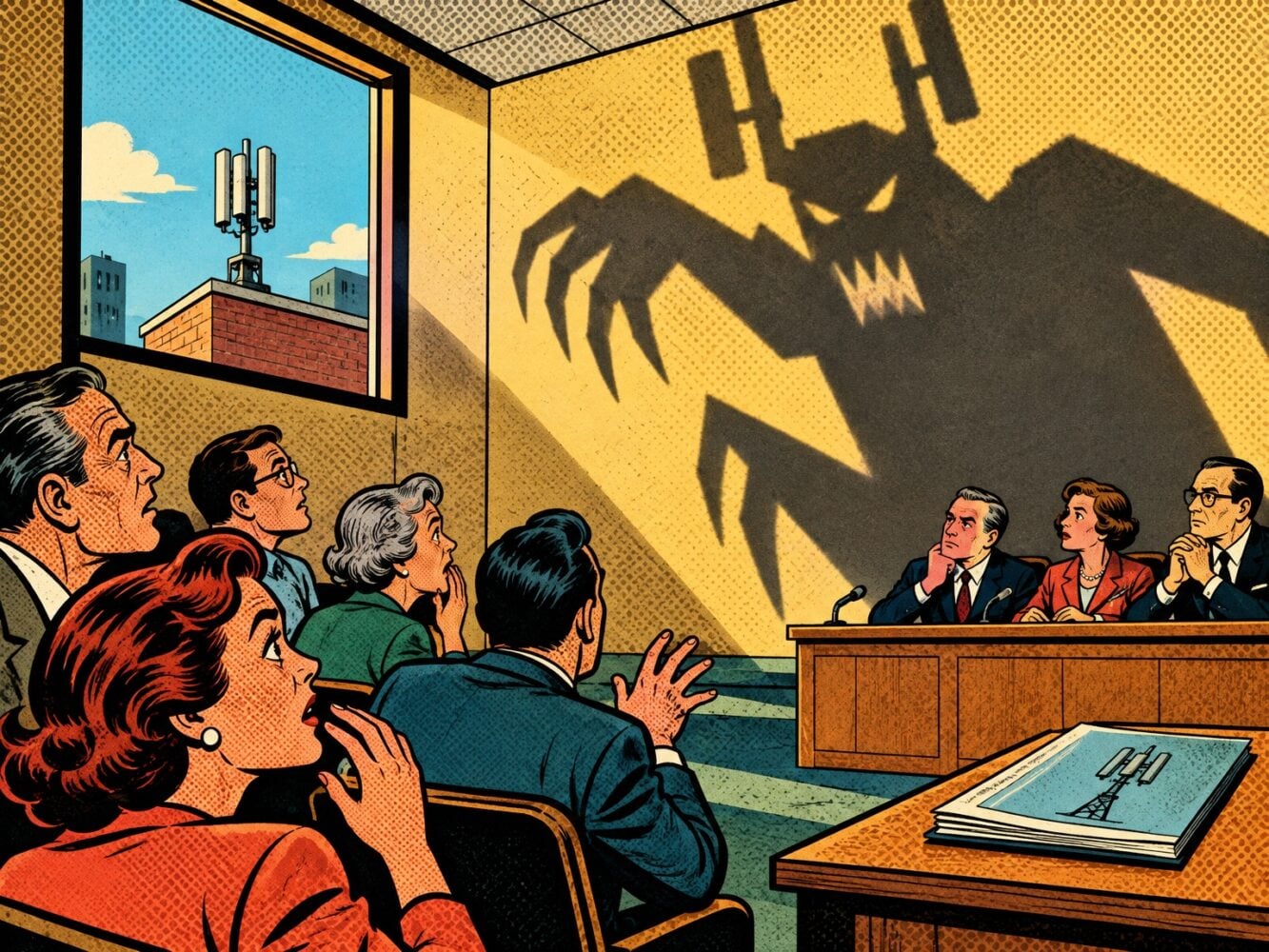
The stakes are highest in digital markets, where the KFTC has considered special duties for large platforms without first establishing harm to competition. Proposals have ranged from rules resembling the European Union’s Digital Markets Act (DMA) to amendments to Korea’s Monopoly Regulation and Fair Trade Act (MRFTA). Both risk substituting presumptions based on size, market position, or business model for evidence about actual conduct.
An analysis in Truth on the Market welcomed the KFTC’s 2024 retreat from a DMA-style ex ante regime—rules restricting conduct before harm occurs. But it warned that presuming large platforms dominant could bring similar risks into existing competition law. Size may reflect a better service or success connecting buyers and sellers. It doesn’t establish that a practice harms consumers or that a regulatory fix would help them.
Digital markets make those judgments especially difficult. Competition can emerge from related products and new technologies. Practices that appear to exclude rivals may support investment in quality, security, interoperability—the ability of different systems to work together—or new business models. Enforcers must test how a practice could harm consumers against the evidence, its potential benefits, and likely market responses.
This is the familiar error-cost problem. Enforcers can miss harmful conduct, allowing it to persist, or condemn beneficial conduct, discouraging experimentation and investment. In fast-changing markets, rules that too readily predict harm can suppress the rivalry competition law aims to protect. In its 2023 comments on proposed merger-review amendments, the International Center for Law & Economics (ICLE) argued that evidence that some acquisitions may harm competition doesn’t justify broadly lowering review thresholds or presuming more mergers harmful. Policymakers must weigh the harm an intervention could prevent against the innovation, efficiencies, and better services it could block.
Platform-specific laws promise earlier intervention and simpler administration, but broad prohibitions can block beneficial practices, impose compliance costs, and invite complaints from rivals seeking regulatory advantage. The Information Technology and Innovation Foundation (ITIF), in its discussion of Korea’s competition-policy debate, warns that overlapping laws and shifting standards compound business uncertainty. Does Korea need more regulation, or better application of existing law?
The continued push for presumptions and special duties suggests that precautionary intervention retains its appeal. As one of us, Alden Abbott, has argued in Truth on the Market, possible future harm can become a justification for restrictions whose expected benefits don’t outweigh their costs. Innovation belongs at the center of that calculation. Consumers lose when regulation discourages it.
Acqui-Hires and the Limits of Merger Review
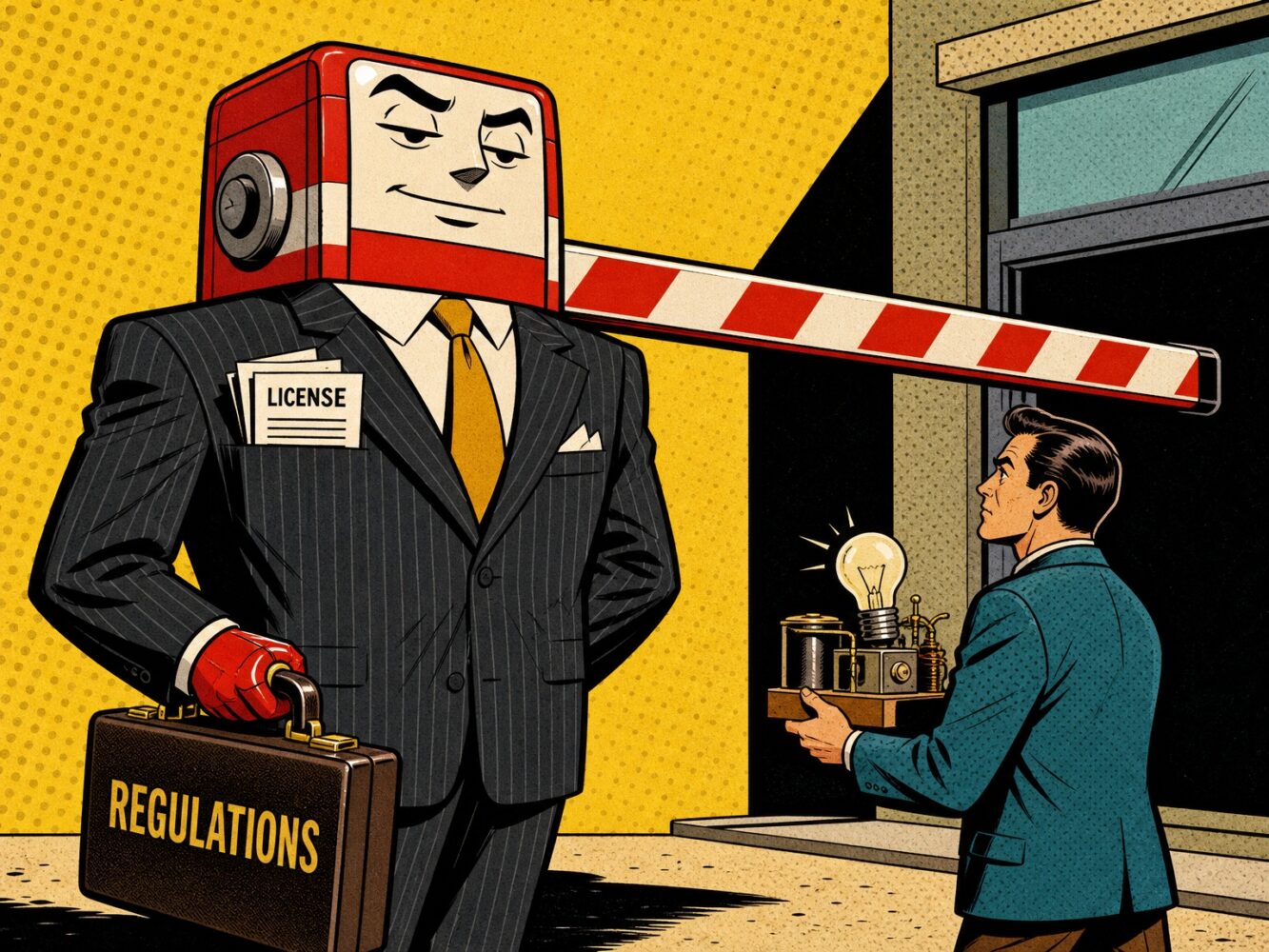
The KFTC’s proposed treatment of acqui-hires—deals centered on hiring another company’s team—shows how expansive rules can reach ordinary business activity. In September 2026, the agency proposed treating some coordinated transfers of key personnel, often paired with technology licenses, as business combinations requiring merger notification. Parties shouldn’t escape review by disguising an acquisition as hiring. The challenge is distinguishing those deals from ordinary recruitment and licensing.
ICLE’s comments to the KFTC accept the principle that a transaction’s substance should govern its treatment but argue that the draft sweeps too broadly. It would treat organized teams and their knowledge as part of a business and count various payments toward the price threshold triggering notification. That could pull ordinary hiring and licensing into merger review. But employees control their own skills and knowledge. They can reject offers, leave later, or join rivals. Existing rules already cover transfers of software and patents, while trade-secret law directly addresses stolen confidential information.
Acqui-hires can help startup founders and investors recover value when a business plan fails, give employees resources to keep developing technology, and move talent where it’s more productive. Deals that strip viable competitors of their assets may warrant scrutiny, but treating team hiring as a business acquisition can discourage investment, recruitment, and licensing—even when the startup remains active and its technology remains available to others.
Notification itself carries costs. Firms must determine whether an unclear definition covers their deal, gather information, await clearance, and risk delay or enforcement. Those burdens weigh especially heavily on smaller companies and time-sensitive technology deals. A sound rule would target transfers of assets or control that could plausibly eliminate a source of competition, clearly exempt ordinary recruitment and nonexclusive licensing, and avoid treating price as proof of harm. Employees don’t become company property when they accept an offer.
Due Process and Access to Evidence
Due process helps competition authorities get the economics right. Investigations turn on complex facts, economic analysis, and judgments about business strategy. Firms need to be able to understand and challenge the evidence and allegations against them. Their defense can expose errors that would otherwise harm consumers.
In 2019, the Office of the U.S. Trade Representative (USTR) requested consultations under the U.S.-Korea Free Trade Agreement over KFTC hearing procedures that, in the U.S. government’s view, denied firms a reasonable chance to review and rebut evidence. Its announcement invoked the agreement’s competition chapter and singled out access to evidence. These objections predate the current debate over digital policy and American firms.
More recently, a National Bureau of Asian Research (NBR) study based on interviews with U.S. firms investigated by the KFTC reported limited access to evidence, broad information demands, aggressive tactics, shifting investigative focus, and unclear allegations. The interviews aren’t a representative sample of KFTC cases and don’t establish discrimination. But they warrant a transparent response, particularly given firms’ reports that the cumulative burden affects
The Organisation for Economic Co-operation and Development (OECD) offers a useful benchmark in its Recommendation on Transparency and Procedural Fairness in Competition Law Enforcement. Agencies should make procedures clear, keep information requests proportionate, treat comparable firms consistently, and allow meaningful challenges to evidence. Confidentiality needn’t prevent that access. Agencies can restrict sensitive material to outside lawyers, require confidentiality agreements, or redact specific details while preserving enough information for a defense.
The KFTC defends its commitment to due process, and recent reporting quotes its chair promising enforcement consistent with those principles. That assurance deserves consideration alongside the criticism. The test is whether firms receive clear allegations, access to evidence, reasonable investigative demands, and independent review of liability and penalties. An enforcement rating can’t answer that.
The Treatment of U.S. Technology Companies
Does the KFTC treat U.S. technology companies more harshly than Korean firms? Cases against Qualcomm, Google, and Coupang don’t, by themselves, show that the KFTC singles out U.S. firms for harsher treatment. Large firms naturally attract scrutiny, and courts have upheld some KFTC decisions in whole or in part. ITIF acknowledges that enforcement statistics can’t establish discriminatory intent, but reports that major U.S. technology companies bear a disproportionate share of financial penalties. The question is whether differences in conduct and business activity explain that disparity.
The Computer & Communications Industry Association (CCIA), in an analysis of published KFTC decisions, says U.S. companies faced penalties at several times the rate imposed on Korean firms, even after adjusting for estimated business activity and other factors. The KFTC disputes that finding, citing firm size, statutory penalty limits, and how it calculates relevant sales. Independent researchers need access to the methods and data to assess those competing claims.
NBR’s interviews add accounts of unpredictable enforcement that firms perceive as favoring domestic industrial-policy priorities. Firms have incentives to present their cases favorably, and their perceptions can’t establish agency motives. Still, reports of opaque procedures alongside a disputed penalty disparity warrant further inquiry.
Korean consumers and small businesses could also pay a price. Selective or unpredictable enforcement can discourage foreign firms from investing in Korea or offering services there, reducing choice and weakening confidence in the rule of law. Restrictions on platforms can also lower service quality and make it more expensive for small businesses to reach customers.
NBR’s analysis of the proposed Online Platform Fairness Bill warns that the bill would give the KFTC greater control over everyday platform decisions without showing what market problem requires intervention. Broad powers with weak procedural safeguards could make operating in Korea harder for foreign firms, creating a nontariff barrier—a trade restriction imposed through regulation rather than import duties.
Co-author Shanker Singham, chairman and president of the Competere Foundation, estimates in a report for the foundation that Korea’s competition policies and proposed digital platform regulations could cause losses over a decade of roughly $469 billion for Korea and $525 billion for the United States. Those figures depend on assumptions about which policies take effect and how businesses and markets respond. They illustrate possible outcomes rather than firm predictions, and their assumptions deserve scrutiny. The concern is that policies discouraging entry, investment, and cross-border services also hurt consumers and businesses that rely on those services.
Measuring Success by Consumer Outcomes
The KFTC’s favorable GCR rating and the free-market critiques can both have merit. Expertise and effective cartel enforcement deserve recognition. They also give the agency a strong foundation for improving transparency, testing its interventions against consumer outcomes, and resisting presumptions of harm based on size or deal structure.
Korea should judge enforcement by whether it identifies harm to competition, distinguishes harm to rivals from harm to consumers, and accounts for efficiencies, innovation, and new entry. Remedies should fit the demonstrated problem. Merger-notification rules should preserve beneficial hiring, licensing, investment, and opportunities to sell startups.
Predictable enforcement requires clear guidance, transparent penalties, proportionate investigative demands, access to evidence, and independent review. Those safeguards support vigorous action against cartels and genuine exclusionary conduct while limiting costly mistakes. The critiques discussed here deserve answers measured against those standards.
A “Very Good” rating is worth celebrating. Consumers still need very good decisions.