Showing archive for: “Philosophy & Methodology of Economics”
‘Production, Information Costs, and Economic Organization,’ by Armen Alchian & Harold Demsetz
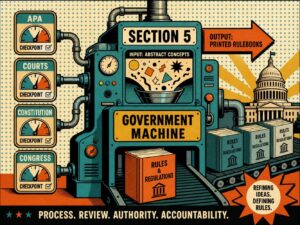
In “Production, Information Costs, and Economic Organization,” Armen Alchian and Harold Demsetz ask when joint production works better inside a firm than across markets, and what form that firm takes. Their answers turn on a measurement problem: When people produce together, total output doesn’t reveal what each person contributed. Measuring individual contributions is costly, and ... ‘Production, Information Costs, and Economic Organization,’ by Armen Alchian & Harold Demsetz
The Halloween Effect and the Premature Burial of Efficient Markets
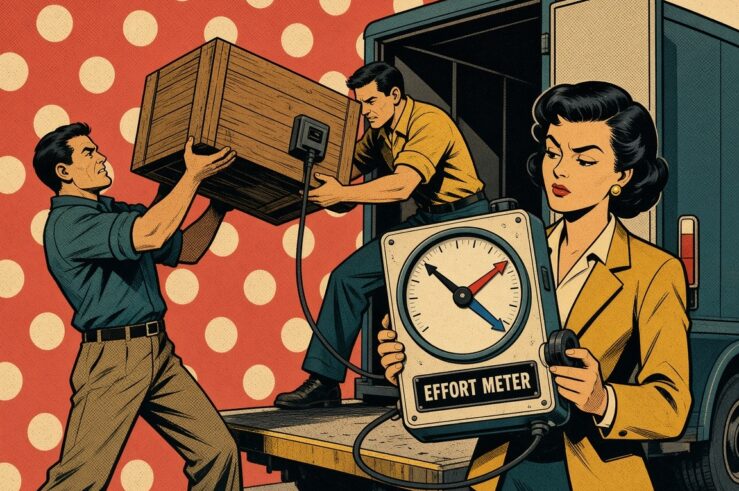
Every October, financial journalism performs a small act of necromancy. Out comes the “Halloween effect,” the finding that stocks tend to earn higher returns from November through April than from May through October. It gives apparent empirical backing to the old stock-market adage “Sell in May and go away.” The implied strategy is simple: Hold ... The Halloween Effect and the Premature Burial of Efficient Markets

‘Contemporary Law and Economics,’ by Adam Chilton, Joshua C. Macey & Mila Versteeg
What does it mean to be a law & economics (L&E) scholar? It can’t require a Ph.D. in economics. Richard Posner doesn’t have one. He didn’t even major in economics as an undergraduate, preferring English—as did his Chicago colleagues Douglas Baird and Diane Wood. It can’t require a law degree, either, or Ronald Coase, William ... ‘Contemporary Law and Economics,’ by Adam Chilton, Joshua C. Macey & Mila Versteeg
A Nobel Prize for Thinking Ahead: Hall and Woodford’s Great Expectations
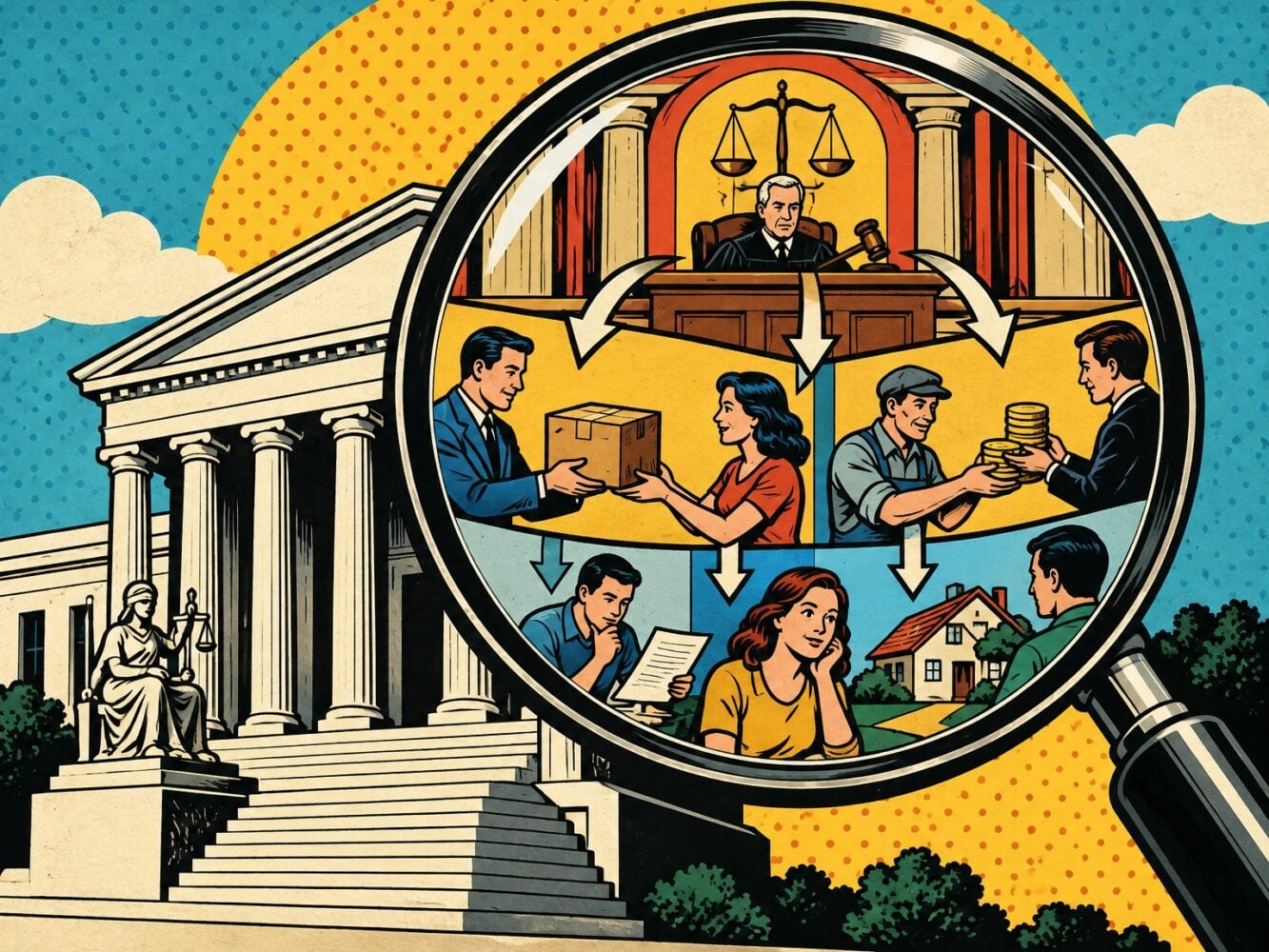
Suppose you get a $1,000 payment. How much do you spend? Before answering, we’d want to know a few things: Is this a one-time payment? The first of many? Can you borrow? Do you already have savings? This year’s Nobel Prize in economics went to Robert Hall and Michael Woodford for providing the theory to ... A Nobel Prize for Thinking Ahead: Hall and Woodford’s Great Expectations

‘The Use of Knowledge in Society,’ by Friedrich A. Hayek
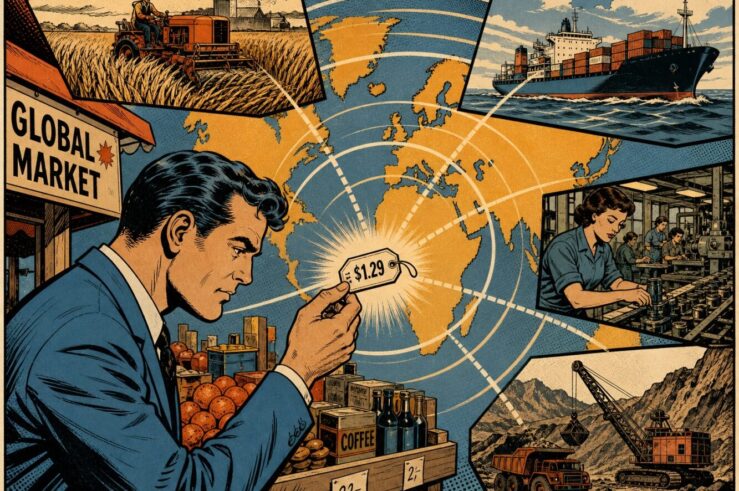
The wealth and technological sophistication of modern society are readily apparent. Less visible, but no less remarkable, is its ability to coordinate the actions of billions of people who know almost nothing about one another’s circumstances. Every day we make decisions without possessing most of the information on which those decisions ultimately depend. We purchase ... ‘The Use of Knowledge in Society,’ by Friedrich A. Hayek
‘Deliberation as Self-Discovery and Institutions for Political Speech,’ by Catherine Hafer and Dimitri Landa
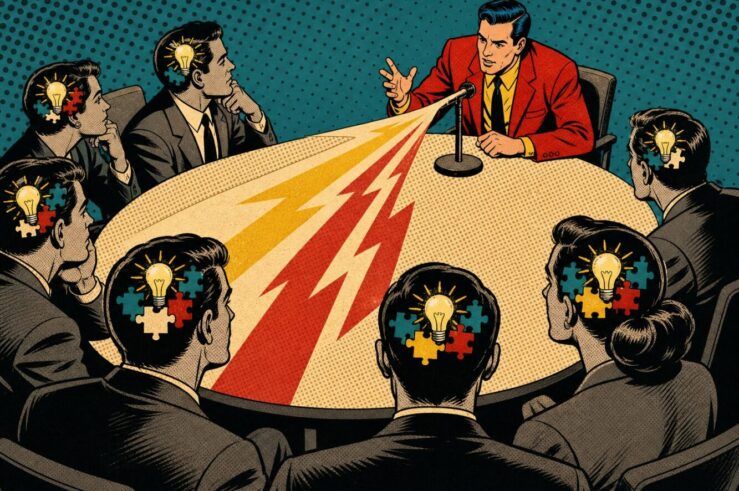
The We Are What We Read series is, in part, about what defines the field of law & economics. The field’s natural home lies in applications that are, well, economic. Hence its longstanding—and now standard—role in contracts, corporations, antitrust, torts, and other areas. For this selection, I wanted to show how law & economics can ... ‘Deliberation as Self-Discovery and Institutions for Political Speech,’ by Catherine Hafer and Dimitri Landa
Fit for Purpose, Unfit for Review: Why the DMA’s First Evaluation Could Never Find Failure
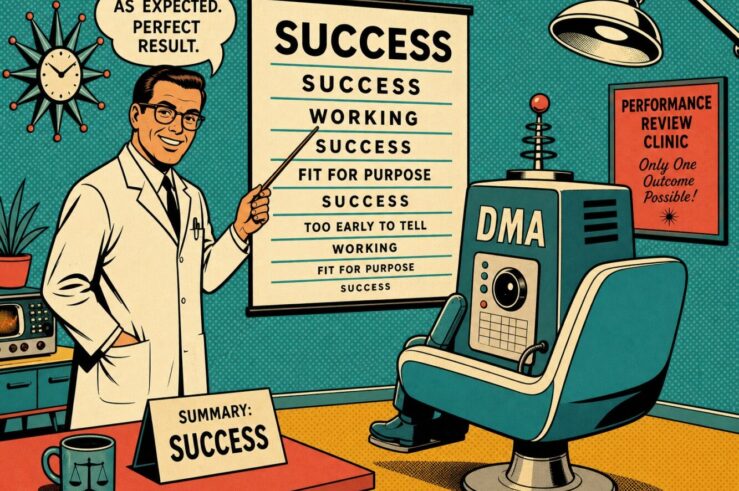
The first review of the Digital Markets Act (DMA) reads less like an evaluation than a wellness check performed by the patient’s proud parent. The pulse is strong. The color is good. Any lingering symptoms? Too early to tell. On April 28, 2026, the European Commission published the review required under Article 53 and declared ... Fit for Purpose, Unfit for Review: Why the DMA’s First Evaluation Could Never Find Failure
If at First Consumers Don’t Switch, Regulate Again
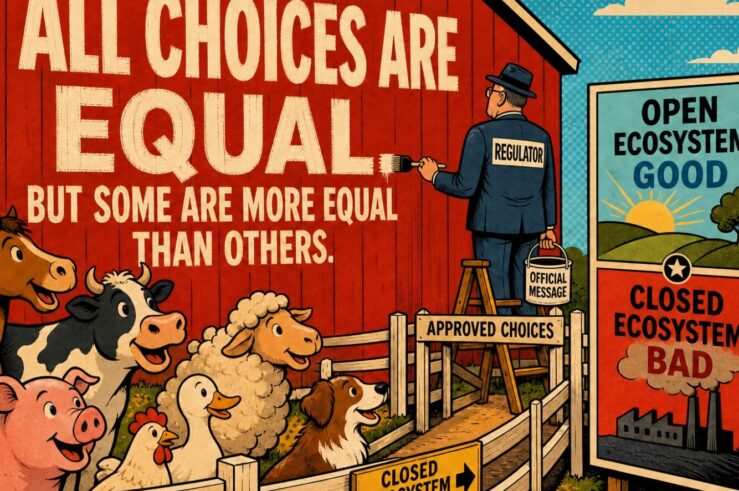
Under the Digital Markets Act (DMA), consumers are apparently sovereign—right up until they choose the wrong thing. When Mozilla reports that Firefox is now selected through a DMA browser-choice screen once every 10 seconds—more than 6 million selections in total, with daily active iOS users 113% higher in the European Union than they would have ... If at First Consumers Don’t Switch, Regulate Again
‘Uncertainty, Evolution, and Economic Theory,’ by Armen Alchian
One of the most persistent criticisms of law & economics is that it rests on unrealistic assumptions. Economic models often assume firms maximize profits, investors respond rationally to incentives, and market participants systematically adjust their behavior in predictable ways. Critics frequently point to these assumptions as evidence that economic analysis is detached from reality. Real ... ‘Uncertainty, Evolution, and Economic Theory,’ by Armen Alchian

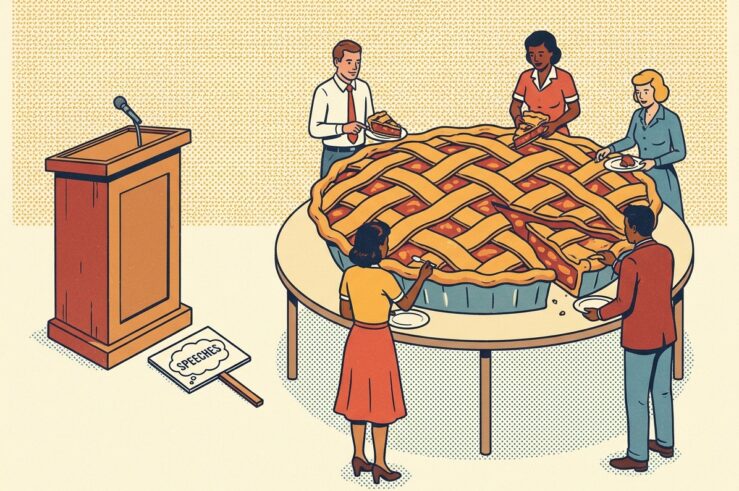
Grow the Pie, Skip the Sermon
In a recent Substack essay, “The progress movement needs a better theory of progress,” Brink Lindsey argues that the progress movement has settled for too thin a vision. It focuses on wealth creation and technological advance, he says, when it should adopt a “fuller conception of progress”—one that promotes “spiritual welfare” and thicker accounts of ... Grow the Pie, Skip the Sermon
‘Market Power in Antitrust: Economic Analysis after Kodak,’ by Benjamin Klein
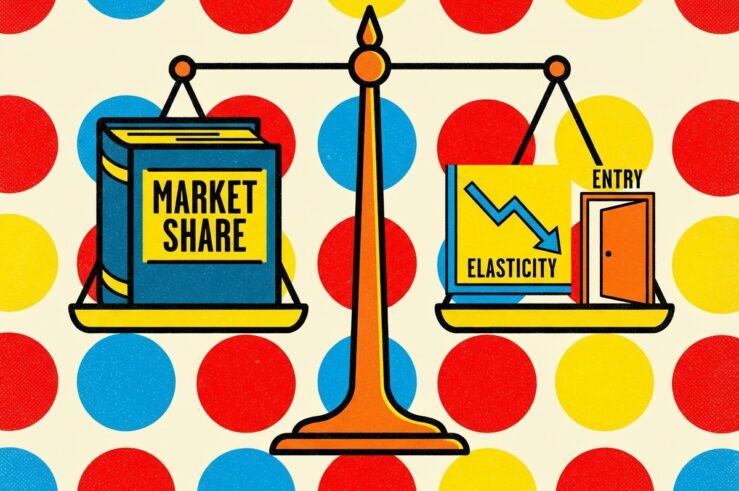
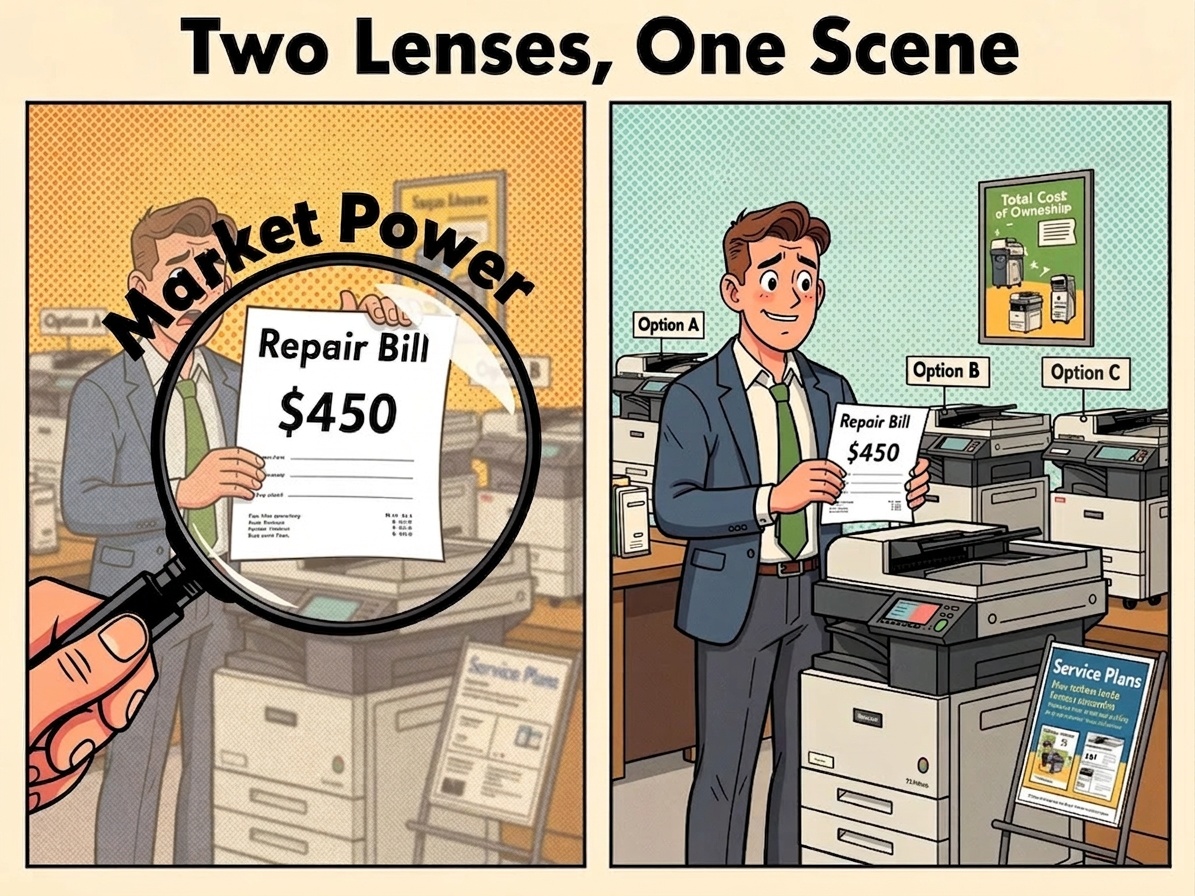
In 1992, the U.S. Supreme Court held in Eastman Kodak Co. v. Image Technical Services that a firm without market power in photocopiers might still possess market power in photocopier parts and service. The Court’s logic turned on opportunistic hold-up: Kodak could profit by trading short-run exploitation of locked-in customers for long-run losses in equipment ... ‘Market Power in Antitrust: Economic Analysis after Kodak,’ by Benjamin Klein
‘Market Power in Antitrust Cases,’ by William M. Landes and Richard A. Posner
William M. Landes and Richard A. Posner’s 1981 Harvard Law Review article “Market Power in Antitrust Cases” is a true classic. Showing the value of interdisciplinary work within the law & economics tradition, it brought real clarity to what “market power” means and how courts should assess it—cutting through vague labels like “monopoly power” and ... ‘Market Power in Antitrust Cases,’ by William M. Landes and Richard A. Posner