Showing archive for: “Empirical Legal Studies”
‘Contemporary Law and Economics,’ by Adam Chilton, Joshua C. Macey & Mila Versteeg
What does it mean to be a law & economics (L&E) scholar? It can’t require a Ph.D. in economics. Richard Posner doesn’t have one. He didn’t even major in economics as an undergraduate, preferring English—as did his Chicago colleagues Douglas Baird and Diane Wood. It can’t require a law degree, either, or Ronald Coase, William ... ‘Contemporary Law and Economics,’ by Adam Chilton, Joshua C. Macey & Mila Versteeg
We Measured Europe’s Browser Revolution. Bring a Magnifying Glass.
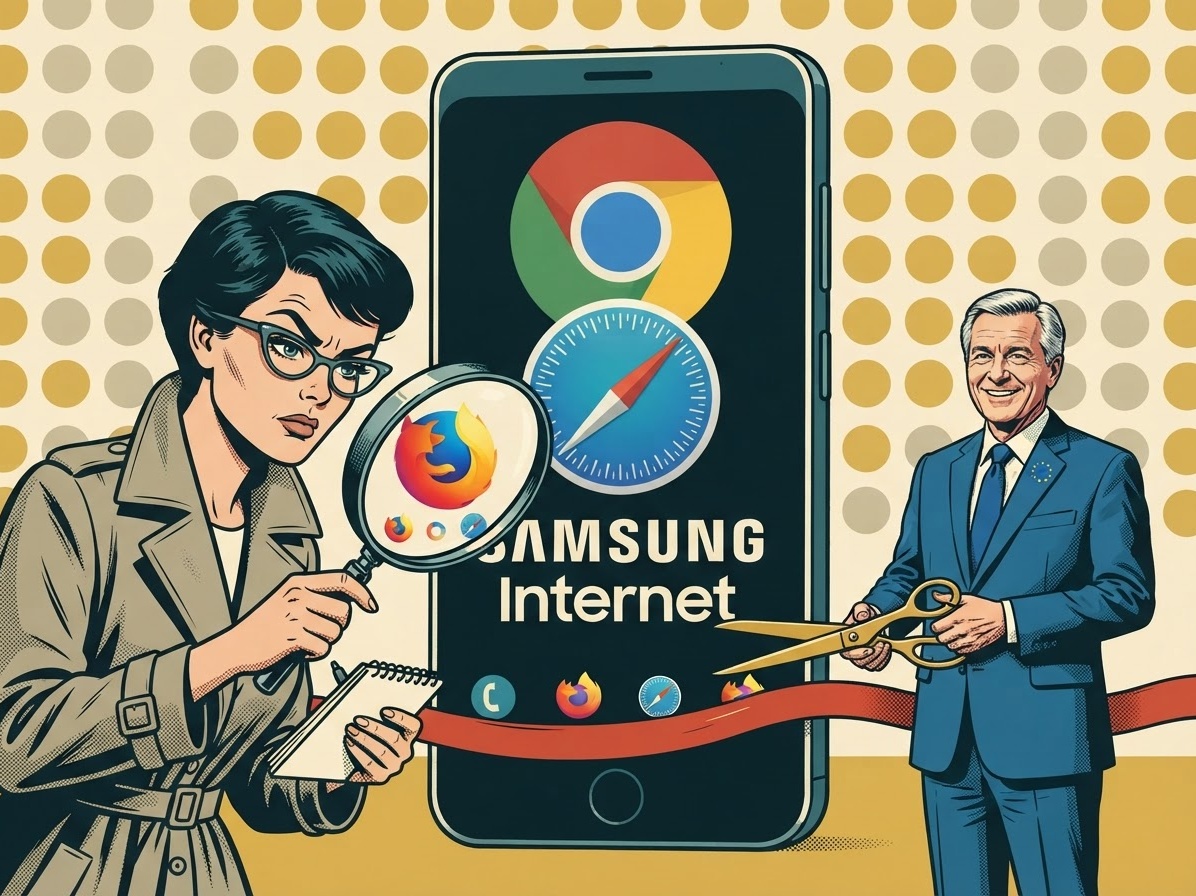
Europe’s browser revolution appears to have left most browsers exactly where it found them. The European Commission is celebrating a “surge” in alternatives. The browsing data suggest a ripple. In April, the Commission reviewed the Digital Markets Act (DMA) and pronounced it “fit for purpose.” “Alternative browsers and search engines are being increasingly chosen by ... We Measured Europe’s Browser Revolution. Bring a Magnifying Glass.
Regulating the Tool or the Trouble? A Survey of State AI Bills
Debates about federal preemption in artificial-intelligence (AI) policy often pose a stark choice: Congress adopts a national framework and states lose the ability to police harmful conduct, or states retain broad authority and businesses face a 50-state compliance patchwork that chills innovation. Our review of state AI bills suggests the debate is aimed at the ... Regulating the Tool or the Trouble? A Survey of State AI Bills

The Invisible Hand Screws Up Your Regression
You’ve probably heard the claim: “Chinese imports destroyed millions of American manufacturing jobs.” Most likely, that number comes from the famous “China Shock” research by David Autor, David Dorn, and Gordon Hanson. It’s become a fixture in trade debates. In that original paper, Autor, Dorn, and Hanson compared regions with different exposure to Chinese import competition. ... The Invisible Hand Screws Up Your Regression

Chairman Pai’s Organizational Legacy
One significant aspect of Chairman Ajit Pai’s legacy is not a policy change, but an organizational one: establishment of the Federal Communications Commission’s (FCC’s) Office of Economics and Analytics (OEA) in 2018. Prior to OEA, most of the FCC’s economists were assigned to the various policy bureaus, such as Wireless, Wireline Competition, Public Safety, Media, ... Chairman Pai’s Organizational Legacy
Private Antitrust: What Hipsters Can Learn from Hulk Hogan
Antitrust populists have a long list of complaints about competition policy, including: laws aren’t broad enough or tough enough, enforcers are lax, and judges tend to favor defendants over plaintiffs or government agencies. The populist push got a bump with the New York Times coverage of Lina Khan’s “Amazon’s Antitrust Paradox” in which she advocated ... Private Antitrust: What Hipsters Can Learn from Hulk Hogan

Is European Competition Law Protectionist? Unpacking the Commission’s Unflattering Track Record
Last month, the European Commission slapped another fine upon Google for infringing European competition rules (€1.49 billion this time). This brings Google’s contribution to the EU budget to a dizzying total of €8.25 billion (to put this into perspective, the total EU budget for 2019 is €165.8 billion). Given this massive number, and the geographic ... Is European Competition Law Protectionist? Unpacking the Commission’s Unflattering Track Record
Our amicus brief supporting en banc review of the court’s Open Internet Order decision
Last week the International Center for Law & Economics and I filed an amicus brief in the DC Circuit in support of en banc review of the court’s decision to uphold the FCC’s 2015 Open Internet Order. In our previous amicus brief before the panel that initially reviewed the OIO, we argued, among other things, that In order to justify ... Our amicus brief supporting en banc review of the court’s Open Internet Order decision
New Paper on SSOs, SEP and Antitrust by Joanna Tsai & Joshua Wright
An important new paper was recently posted to SSRN by Commissioner Joshua Wright and Joanna Tsai. It addresses a very hot topic in the innovation industries: the role of patented innovation in standard setting organizations (SSO), what are known as standard essential patents (SEP), and whether the nature of the contractual commitment that adheres to a ... New Paper on SSOs, SEP and Antitrust by Joanna Tsai & Joshua Wright
Good News for the SEC? Bad News for Markets
The Securities and Exchange Commission (SEC) recently scored a significant win against a Maryland banker accused of naked short-selling. What may be good news for the SEC is bad news for the market, as the SEC will now be more likely to persecute other alleged offenders of naked short-selling restrictions. “Naked” short selling is when ... Good News for the SEC? Bad News for Markets
The SHIELD Act: When Bad Economic Studies Make Bad Laws
Earlier this month, Representatives Peter DeFazio and Jason Chaffetz picked up the gauntlet from President Obama’s comments on February 14 at a Google-sponsored Internet Q&A on Google+ that “our efforts at patent reform only went about halfway to where we need to go” and that he would like “to see if we can build some ... The SHIELD Act: When Bad Economic Studies Make Bad Laws
ITC Patent Cases Dramatically Drop, or Another Patent Litigation Myth Bites the Dust
The claim that there is a “patent litigation explosion” is a myth, but there’s a related patent litigation myth that has proven cantankerously resilient in the patent policy debates — there’s an “explosion” of patent-owners racing to the International Trade Commission (ITC) who are obtaining exclusion orders against infringers. Well, this argument has crashed and ... ITC Patent Cases Dramatically Drop, or Another Patent Litigation Myth Bites the Dust