Showing archive for: “Microeconomics: Search; Learning; Information Costs & Specific Knowledge; Expectation & Speculation”
A Nobel Prize for Thinking Ahead: Hall and Woodford’s Great Expectations
Suppose you get a $1,000 payment. How much do you spend? Before answering, we’d want to know a few things: Is this a one-time payment? The first of many? Can you borrow? Do you already have savings? This year’s Nobel Prize in economics went to Robert Hall and Michael Woodford for providing the theory to ... A Nobel Prize for Thinking Ahead: Hall and Woodford’s Great Expectations

Location, Location, Litigation: The Antitrust Fight Over Private Listings
In the late 1800s, real estate agents gathered at local associations to exchange information about the homes they were trying to sell. The intuitive logic was that the best way to make a sale was to spread the word. The real estate market has evolved considerably since then, but buyers and sellers, typically through their ... Location, Location, Litigation: The Antitrust Fight Over Private Listings

‘Uncertainty, Evolution, and Economic Theory,’ by Armen Alchian
One of the most persistent criticisms of law & economics is that it rests on unrealistic assumptions. Economic models often assume firms maximize profits, investors respond rationally to incentives, and market participants systematically adjust their behavior in predictable ways. Critics frequently point to these assumptions as evidence that economic analysis is detached from reality. Real ... ‘Uncertainty, Evolution, and Economic Theory,’ by Armen Alchian

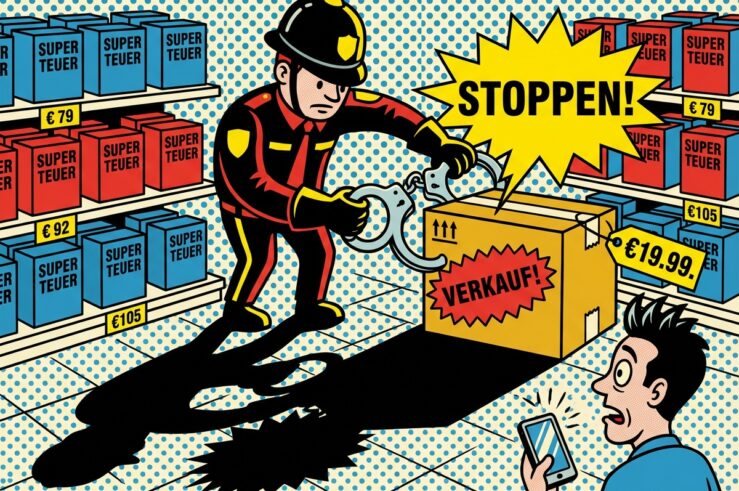
Germany’s War on the Bargain
Germany’s competition watchdog has turned a familiar retail feature into an antitrust offense. In a recent decision, the German Federal Cartel Office (FCO) effectively faulted Amazon for showing shoppers only “price-competitive” offers on its German site. At first glance, the case looks narrow—a dispute over the mechanics of the “Buy Box,” reminiscent of European actions ... Germany’s War on the Bargain
Netflix, WBD, and the Myth of the Streaming Monopoly
The proposed acquisition of Warner Bros. Discovery (WBD) assets by Netflix is already being cast as a landmark antitrust “test case.” If past deals are any guide, the critiques will follow a familiar script: narrow market definitions, selective data points, and headline-friendly market-share claims designed to trigger alarm. Yet in a video ecosystem defined by ... Netflix, WBD, and the Myth of the Streaming Monopoly

‘The Law Merchant,’ by Milgrom, North, & Weingast
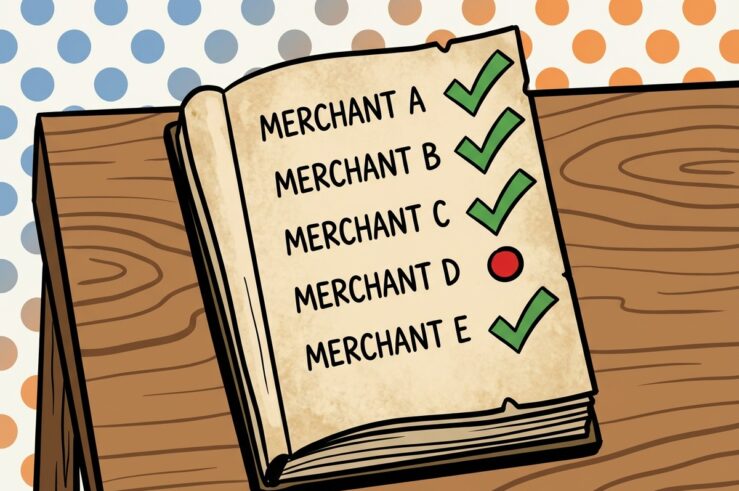
In “The Role of Institutions in the Revival of Trade: The Law Merchant, Private Judges and the Champagne Fairs,” Paul Milgrom, Douglass C. North, and Barry R. Weingast take as their starting point a circumstance unusual for legal work: circumstances where effective enforcement does not exist. Their motivating example is the “law merchant” or lex ... ‘The Law Merchant,’ by Milgrom, North, & Weingast
The Paradox of Choice Meets the Information Age
Barry Schwartz’s seminal work “The Paradox of Choice” has received substantial attention since its publication nearly 20 years ago. In it, Schwartz argued that, faced with an ever-increasing plethora of products to choose from, consumers often feel overwhelmed and seek to limit the number of choices they must make. In today’s online digital economy, a ... The Paradox of Choice Meets the Information Age

There is No Cure for Government Incompetence
The pandemic is serious. COVID-19 will overwhelm our hospitals. It might break our entire healthcare system. To keep the number of deaths in the low hundreds of thousands, a study from Imperial College London finds, we will have to shutter much of our economy for months. Small wonder the markets have lost a third of ... There is No Cure for Government Incompetence

Why Data Is Not the New Oil
“Data is the new oil,” said Jaron Lanier in a recent op-ed for The New York Times. Lanier’s use of this metaphor is only the latest instance of what has become the dumbest meme in tech policy. As the digital economy becomes more prominent in our lives, it is not unreasonable to seek to understand ... Why Data Is Not the New Oil
The Washington Post editorial board understands online competition better than the European Commission does
Last week the editorial board of the Washington Post penned an excellent editorial responding to the European Commission’s announcement of its decision in its Google Shopping investigation. Here’s the key language from the editorial: Whether the demise of any of [the complaining comparison shopping sites] is specifically traceable to Google, however, is not so clear. ... The Washington Post editorial board understands online competition better than the European Commission does
Understanding ownership and property in the Digital Age
What does it mean to “own” something? A simple question (with a complicated answer, of course) that, astonishingly, goes unasked in a recent article in the Pennsylvania Law Review entitled, What We Buy When We “Buy Now,” by Aaron Perzanowski and Chris Hoofnagle (hereafter “P&H”). But how can we reasonably answer the question they pose ... Understanding ownership and property in the Digital Age
Macey Throws Some Cold Water on the CFPB’s New Mortgage Disclosures
In the WSJ, Professor Macey takes measure of the CFPB’s new mortgage disclosures and finds them lacking: The CFPB is proposing to revise the old forms into a new Loan Estimate Form and Closing Disclosure Form. The old loan form had been five pages; according to the agency website, the new one is three. The ... Macey Throws Some Cold Water on the CFPB’s New Mortgage Disclosures