Showing archive for: “U.S. Constitutional Law: Separation of Powers & Federalism”
Antitrust’s State of Prey: The Hawks Go Local
For antitrust doves—those of us who think antitrust works best with a restrained approach to policing competition—the U.S. midterm results look, at first glance, like a triumph for the hawks. Democrats have won control of both chambers of Congress, with at least 54 Senate seats and potentially their largest House majority in nearly two decades. ... Antitrust’s State of Prey: The Hawks Go Local

California’s COMPETE Act: May the Best Firm Lose
Gov. Gavin Newsom has signed Assembly Bill 1776, the so-called COMPETE Act, making California the first state to add a general prohibition on anticompetitive conduct by individual firms to its principal antitrust statute. Newsom’s announcement casts the law as a way to help small businesses and stop large companies from “shutting out competition.” The law ... California’s COMPETE Act: May the Best Firm Lose

Checkout Error: A Bad Grocery Plan Meets a Weak Antitrust Case
I’ve criticized plenty of private antitrust cases. This may be the first in which the plaintiffs sued to stop a genuinely bad idea—and I still think they should lose. That is the odd posture of the antitrust challenge to Mayor Zohran Mamdani’s plan for subsidized grocery stores in New York City. On Sept. 9, the ... Checkout Error: A Bad Grocery Plan Meets a Weak Antitrust Case

Fiber Freeze: How Maple Grove Made a Cable Franchise the Price of Broadband
The Federal Communications Commission’s (FCC) Build America Agenda rests on a simple premise: Stop making it so hard to build. Federal and state policymakers have spent years reducing permitting delays, resolving pole-attachment disputes, and easing access to public rights-of-way—the public corridors used for infrastructure such as roads, utility poles, and fiber lines. These obstacles slow ... Fiber Freeze: How Maple Grove Made a Cable Franchise the Price of Broadband

Too Many Cooks Spoil the Settlement
In American antitrust, clearing the federal gate increasingly means arriving at the state turnstiles. State attorneys general play a valuable role when harms are local or federal investigators miss key facts. But serial challenges to nationally integrated conduct turn that safeguard into a standing invitation to relitigate. The result is a system in which no ... Too Many Cooks Spoil the Settlement

The FTC’s AI Accuracy Statement Needs a Fact Check
A policy statement about accuracy should, at minimum, be precise. The Federal Trade Commission’s (FTC) Proposed Policy Statement Concerning the Suppression of Accuracy in Artificial Intelligence Systems (AI Policy Statement) struggles with that assignment. The International Center for Law & Economics (ICLE) submitted comments in response to the FTC’s request for input, and this post ... The FTC’s AI Accuracy Statement Needs a Fact Check

New Jersey’s War on Pricing Software Won’t Build More Apartments
When rents rise, blaming the algorithm is easier than building apartments. New Jersey has chosen the easier target. On July 20, Gov. Mikie Sherrill signed the Forbidding the Algorithmic Inflation of Rent Act, or FAIR Act, declaring that landlords who use shared pricing tools are engaging in “collusion by algorithm.” The phrase is built for ... New Jersey’s War on Pricing Software Won’t Build More Apartments

A Patent, a Blood Test, and 20 Years of Waiting
A blood test now helps doctors decide, in about 15 minutes, whether a patient with a suspected brain injury needs a CT scan. It took about 20 years to get there. That gap between scientific promise and clinical use tells us more about American innovation policy than most congressional hearings ever will. At one such ... A Patent, a Blood Test, and 20 Years of Waiting

The State That Wouldn’t Hang Up: California’s Fight to Keep the Old Phone Network Alive
In 1877, Thomas Doolittle strung the first hard-drawn copper telephone wire in Ansonia, Connecticut, replacing the iron lines that had carried Alexander Graham Bell’s earliest calls. Nearly 150 years later, most of the country is finally retiring the last copper in its telephone networks, replacing it with fiber-optic cable and wireless connectivity. California, naturally, has ... The State That Wouldn’t Hang Up: California’s Fight to Keep the Old Phone Network Alive

Much Ado About Removal: The Supreme Court, the FTC, and the End of Independent-ish Agencies
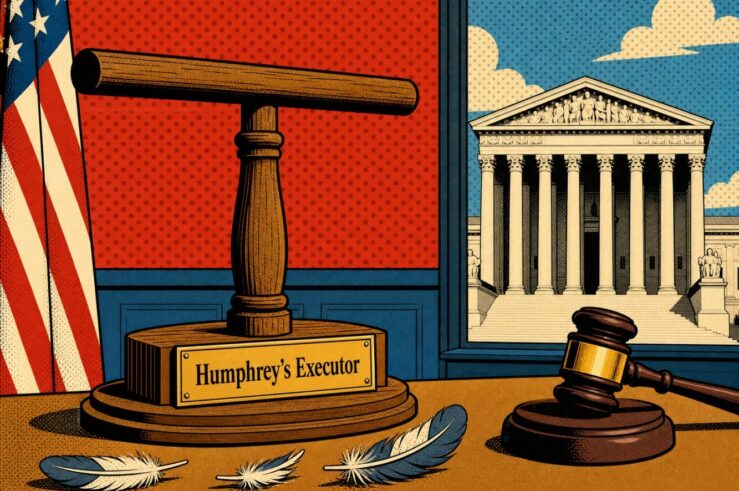
For roughly 90 years, Humphrey’s Executor had been the constitutional law equivalent of a load-bearing antique: an awkward, if still functioning, architectural kludge, much admired in certain circles, but increasingly hard to rationalize. Earlier this week, finally, the U.S. Supreme Court replaced it. In Trump v. Slaughter, the Court overruled that 1935 opinion. The president ... Much Ado About Removal: The Supreme Court, the FTC, and the End of Independent-ish Agencies
The Roswell Loophole: How to Stop Wireless Deployment One Permit at a Time
A city does not need to hang a “no cell towers allowed” sign to keep wireless service out. It can get there the quieter way: deny one permit, then another, each for reasons that sound local, particular, and perfectly ordinary. The question at the heart of the Telecommunications Act of 1996 is whether federal law ... The Roswell Loophole: How to Stop Wireless Deployment One Permit at a Time

The FCC Wants Final Cut
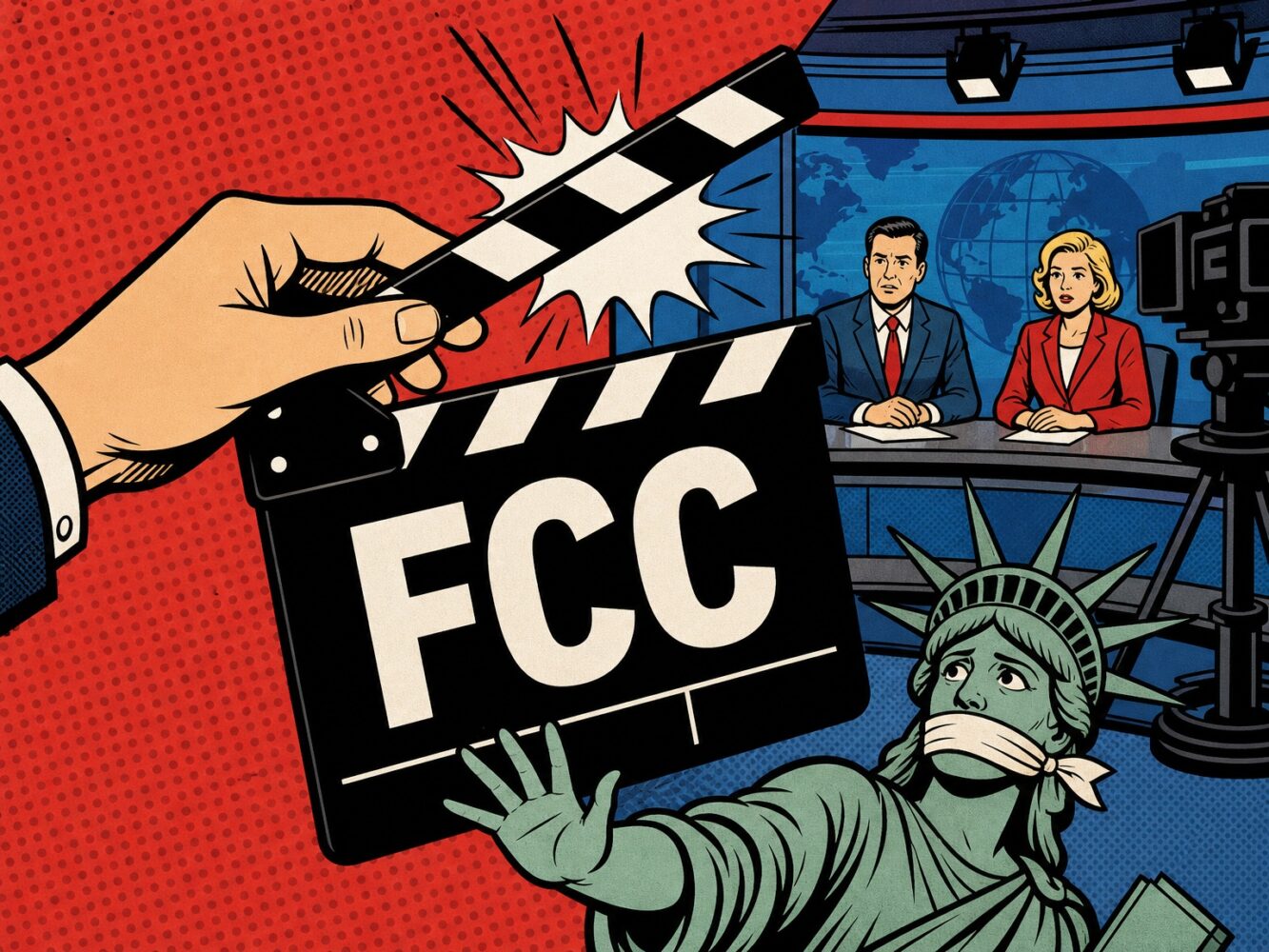
The government does not need to burn books when it can threaten licenses. Why bother with an inquisitor’s bonfire when a regulator’s raised eyebrow can do the trick? That is the modern First Amendment problem. Censorship no longer arrives only as an outright ban. More often, it comes dressed as “oversight,” “public interest,” or “compliance”—all ... The FCC Wants Final Cut