Showing archive for: “U.S. Administrative Law”
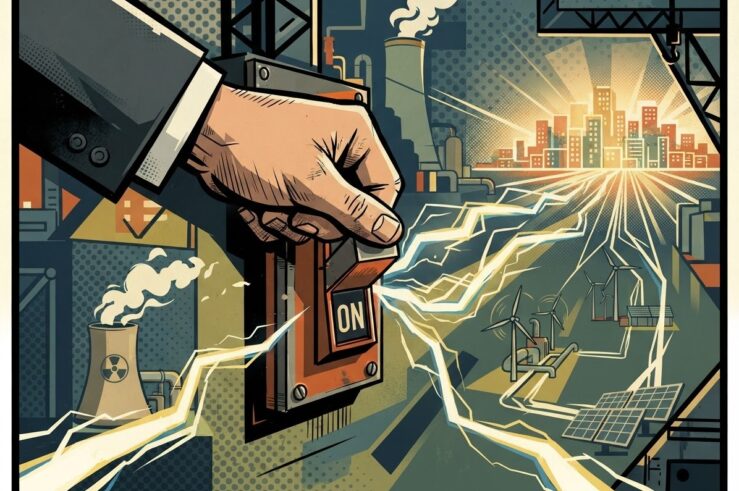
The EPA Takes Its Thumb Off the Power Switch
Power-plant rules do more than regulate pollution. They can also regulate competitors out of the market. That is the overlooked significance of the Environmental Protection Agency’s (EPA) recent repeal of most Biden administration greenhouse-gas standards for power plants. The move is an environmental-policy reversal and also a competition-policy reform. The final rule is only a ... The EPA Takes Its Thumb Off the Power Switch
‘The Use of Knowledge in Society,’ by Friedrich A. Hayek
The wealth and technological sophistication of modern society are readily apparent. Less visible, but no less remarkable, is its ability to coordinate the actions of billions of people who know almost nothing about one another’s circumstances. Every day we make decisions without possessing most of the information on which those decisions ultimately depend. We purchase ... ‘The Use of Knowledge in Society,’ by Friedrich A. Hayek

Fine Print for Every Price: The FTC’s One-Size-Fits-All Guidance
My first post at Truth on the Market—where I called myself a “Refugee from the FTC”—briefly discussed an advance notice of proposed rulemaking (ANPR) published in the Federal Register by the Federal Trade Commission (FTC) under Chair Lina Khan. This one bore the expansive title “Trade Regulation Rule on Commercial Surveillance and Data Security.” I ... Fine Print for Every Price: The FTC’s One-Size-Fits-All Guidance

Fiber Freeze: How Maple Grove Made a Cable Franchise the Price of Broadband
The Federal Communications Commission’s (FCC) Build America Agenda rests on a simple premise: Stop making it so hard to build. Federal and state policymakers have spent years reducing permitting delays, resolving pole-attachment disputes, and easing access to public rights-of-way—the public corridors used for infrastructure such as roads, utility poles, and fiber lines. These obstacles slow ... Fiber Freeze: How Maple Grove Made a Cable Franchise the Price of Broadband

The FCC Is Right To Keep Every Band on the Table for Direct-to-Device
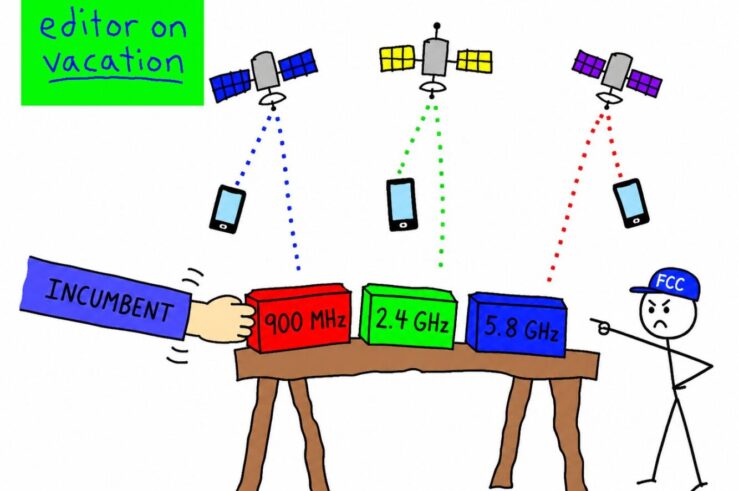
Note: Our editor is on vacation. The image for this post and any errors in the body are solely the fault of the author. At its August 6 open meeting, the Federal Communications Commission (FCC) is scheduled to vote on a notice of proposed rulemaking (NPRM) titled “Unleashing Unlicensed Spectrum for Direct-to-Device.” This proceeding will ... The FCC Is Right To Keep Every Band on the Table for Direct-to-Device
From Google Fines to French Wine: The Trade Case Against the DMA
Brussels has spent two years testing how much regulatory pain Washington will tolerate before reaching for the tariff book. President Donald Trump may have supplied the answer. His threatened Section 301 investigation—a process that allows the United States to retaliate against foreign practices that unfairly burden U.S. commerce—could turn Europe’s digital rulebook into a transatlantic ... From Google Fines to French Wine: The Trade Case Against the DMA

The AI Boom Still Runs on Old-Fashioned Airwaves
AI may live in the cloud, but the cloud still needs roads. Those roads are communications networks—and the airwaves they depend on may determine how far and fast the AI boom can travel. That two-way relationship will take center stage tomorrow, when the U.S. Senate Commerce Subcommittee on Telecommunications and Media holds a hearing titled ... The AI Boom Still Runs on Old-Fashioned Airwaves

Pulling the 39% Thread: Why the FCC Must Fix More Than the Broadcast Cap
The Federal Communications Commission’s (FCC) 39% broadcast-ownership cap is a rule for a three-network world trying to govern a streaming one. Retiring it makes sense. Retiring it by itself does not. For four decades, the FCC has barred any company from owning television stations that collectively reach more than 39% of U.S. television households. The ... Pulling the 39% Thread: Why the FCC Must Fix More Than the Broadcast Cap

The FTC’s AI Accuracy Statement Needs a Fact Check
A policy statement about accuracy should, at minimum, be precise. The Federal Trade Commission’s (FTC) Proposed Policy Statement Concerning the Suppression of Accuracy in Artificial Intelligence Systems (AI Policy Statement) struggles with that assignment. The International Center for Law & Economics (ICLE) submitted comments in response to the FTC’s request for input, and this post ... The FTC’s AI Accuracy Statement Needs a Fact Check

Lightning in a Bottleneck: How Regulatory Gridlock Is Choking America’s Energy Boom
America’s power grid has plenty of new customers and no shortage of new ideas. What it lacks is a regulatory system capable of connecting the two. Artificial intelligence data centers, advanced manufacturing, and cryptocurrency operations are driving electricity demand sharply higher. Yet the rules for connecting new power sources and major users remain slow, fragmented, ... Lightning in a Bottleneck: How Regulatory Gridlock Is Choking America’s Energy Boom

The Cost of Holding Up Broadband
America’s multibillion-dollar broadband push rests on an unglamorous piece of infrastructure: the utility pole. Fiber may carry the future, but first someone has to pay for the wood holding it up. Broadband providers rarely own the poles their networks use. Reaching a new community usually requires attaching equipment to poles owned by a utility or ... The Cost of Holding Up Broadband

The State That Wouldn’t Hang Up: California’s Fight to Keep the Old Phone Network Alive
In 1877, Thomas Doolittle strung the first hard-drawn copper telephone wire in Ansonia, Connecticut, replacing the iron lines that had carried Alexander Graham Bell’s earliest calls. Nearly 150 years later, most of the country is finally retiring the last copper in its telephone networks, replacing it with fiber-optic cable and wireless connectivity. California, naturally, has ... The State That Wouldn’t Hang Up: California’s Fight to Keep the Old Phone Network Alive