Showing archive for: “Entrepreneurship & Law”
Protectionism in Regulatory Clothing: How Governments Keep Markets Closed Without Tariffs
Governments negotiate away tariffs in public, but they can restore much of the protection in the licensing office. A procurement preference, a selective subsidy, or a regulatory exemption can accomplish much the same thing. Trade liberalization has made tariffs easier to see and negotiate away, but governments still have plenty of ways to shelter favored ... Protectionism in Regulatory Clothing: How Governments Keep Markets Closed Without Tariffs
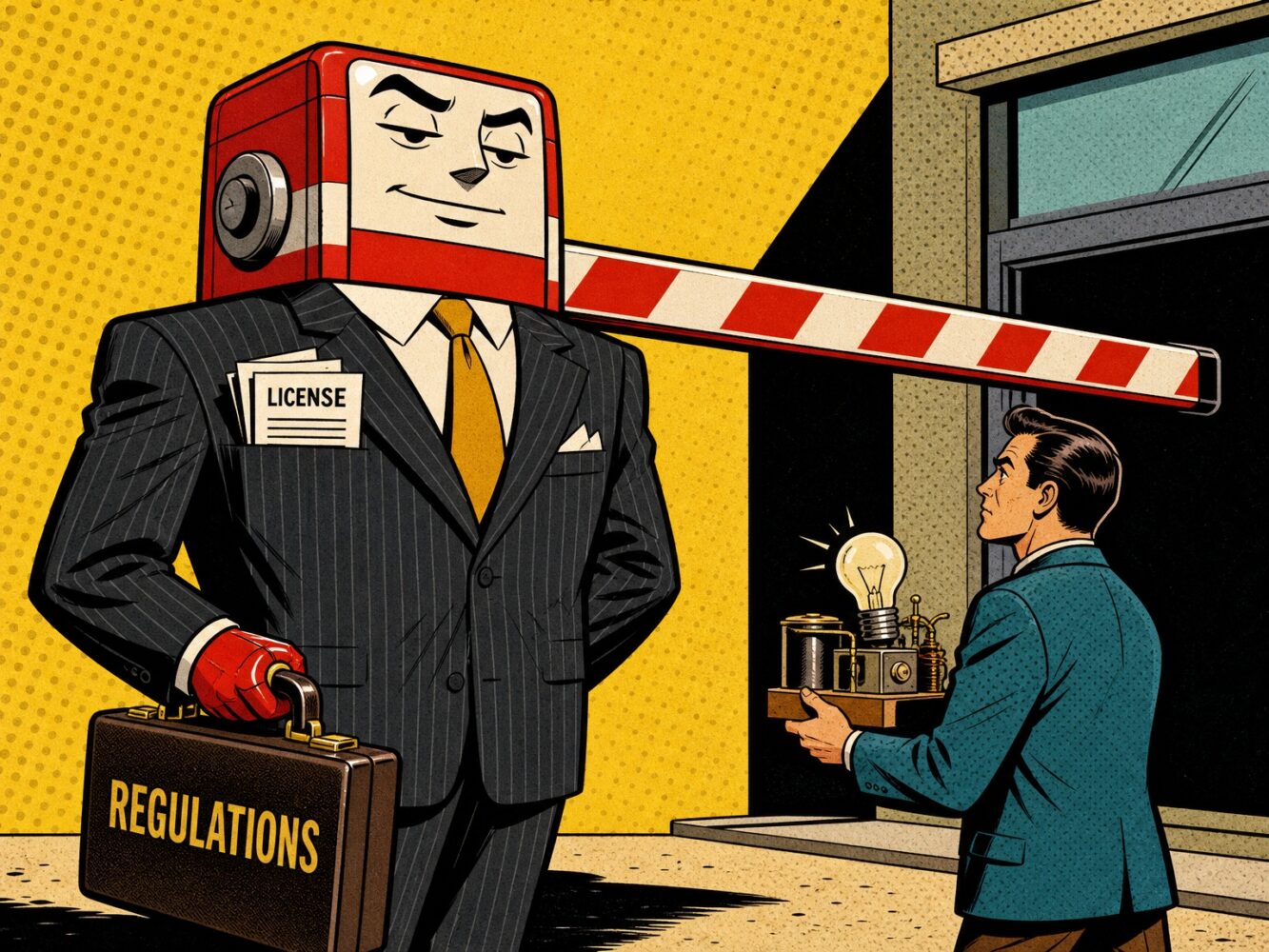
Too Much Order, Too Soon: The Case Against AI Term Sheets
Washington may be closing in on an AI “term sheet.” The industry, meanwhile, is already writing its own rules. Recent commentary suggests U.S. artificial intelligence (AI) policy may be coalescing around a federal framework. A widely discussed Tech Policy Press piece argues that a short “term sheet” emerging from negotiations between the White House and ... Too Much Order, Too Soon: The Case Against AI Term Sheets

A Sensible Federal Framework for AI (If Congress Can Stick to It)
The Trump administration’s newly released national legislative framework for artificial intelligence is, in many respects, a welcome set of guidelines for US regulation of Artificial Intelligence (AI). At a moment when AI policy risks collapsing into either overbroad precaution or fragmented state-level experimentation, the framework instead gestures toward something closer to institutional restraint: a light-touch ... A Sensible Federal Framework for AI (If Congress Can Stick to It)

AI, Entrepreneurialism, and the Next Technological Ecosystem
Debates about artificial intelligence often focus on the technology’s intrinsic qualities, such as its speed, scale, and uncanny ability to generate text or code. But the lesson we should draw from every major technological transition since World War II has been that economic outcomes are not determined by technology alone. The institutional framework surrounding those ... AI, Entrepreneurialism, and the Next Technological Ecosystem

How Fixing Immigration Can Improve Competition and Create Opportunities for the US AI Workforce
The White House’s recently released AI Action Plan aims to secure U.S. dominance in artificial intelligence by abolishing red tape and fostering innovation, AI adoption, infrastructure building, and domestic chip manufacturing. To equip and develop the future AI workforce, it pledges public investments in research labs, manufacturing, and technical training programs, as well as tax incentives for businesses ... How Fixing Immigration Can Improve Competition and Create Opportunities for the US AI Workforce

The AI Legislative Puzzle
With Donald Trump’s victory in this week’s presidential election, the federal government’s approach to the regulation of artificial intelligence (AI) stands at a crucial inflection point. While there may be pressure to rush through AI legislation during Congress’ upcoming lame-duck session, such haste could prove counterproductive for U.S. leadership in AI development. Instead, this transition ... The AI Legislative Puzzle
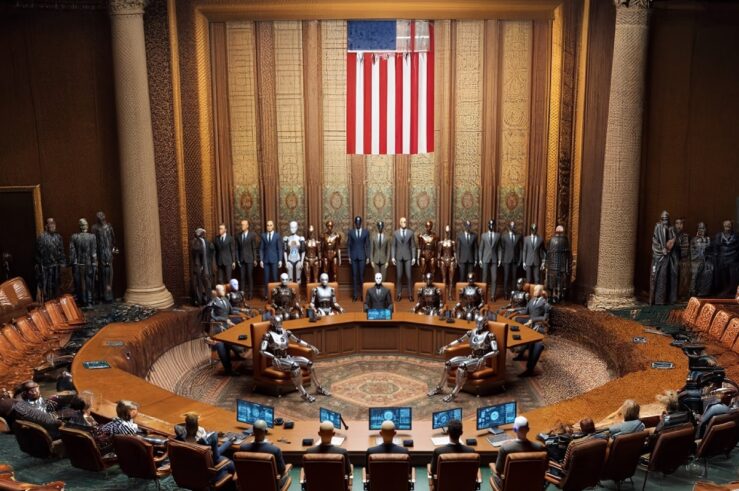
Federal Regulatory Reform Will Benefit All Americans
The next president, whether a Democrat or a Republican, should place a high priority on federal regulatory reform, in order to promote good jobs, vibrant firms, and a stronger American economy. Regulation is, of course, appropriate to address such problems as public health and safety and environmental pollution. But a growing body of scholarship finds ... Federal Regulatory Reform Will Benefit All Americans

Biden’s AI Executive Order Sees Dangers Around Every Virtual Corner
Here in New Jersey, where I live, the day before Halloween is commonly celebrated as “Mischief Night,” an evening of adolescent revelry and light vandalism that typically includes hurling copious quantities of eggs and toilet paper. It is perhaps fitting, therefore, that President Joe Biden chose Oct. 30 to sign a sweeping executive order (EO) ... Biden’s AI Executive Order Sees Dangers Around Every Virtual Corner

Uber and the Mill of Sanssouci
Freedom of enterprise is considered a second-class freedom in Spain, rather than a fundamental right. It is clear that this has been the view not only of successive Spanish governments since the current Constitution was promulgated in 1978, but also of the judges of the Supreme Court of Spain (Tribunal Supremo) and the Constitutional Court ... Uber and the Mill of Sanssouci

Is the FTC Threatening Efficient Franchise Relationships?
Franchising plays a key role in promoting American job creation and economic growth. As explained in Forbes (hyperlinks omitted): Franchising as a business institution is oriented toward reducing economic inefficiencies in commercial relationships. Specifically, economic analysis reveals that it is a potential means for dealing with opportunism and cabining transaction costs in vertical-distribution contracts. In ... Is the FTC Threatening Efficient Franchise Relationships?

The Woman in the High Office
May 2007, Palo Alto The California sun shone warmly on Eric Schmidt’s face as he stepped out of his car and made his way to have dinner at Madera, a chic Palo Alto restaurant. Dining out was a welcome distraction from the endless succession of strategy meetings with the nitpickers of the law department, which ... The Woman in the High Office

More Evidence that the Patent System Promotes Dynamic Competition and Consumer Welfare
The patent system is too often caricatured as involving the grant of “monopolies” that may be used to delay entry and retard competition in key sectors of the economy. The accumulation of allegedly “poor-quality” patents into thickets and portfolios held by “patent trolls” is said by critics to spawn excessive royalty-licensing demands and threatened “holdups” ... More Evidence that the Patent System Promotes Dynamic Competition and Consumer Welfare