Showing archive for: “State & Local Government”
No Signal in My Backyard: How Radiation Fears Block Wireless Networks
Wireless networks have a reception problem that better antennas can’t fix. While decades of research haven’t established harm from radiofrequency (RF) exposure below federal limits, fears about those emissions can still stop an antenna from going up. America’s wireless networks grow one tower, rooftop antenna, and small-cell antenna at a time. Each needs a permit ... No Signal in My Backyard: How Radiation Fears Block Wireless Networks
The New (Mexico) Math: Multiply the Violations and Never Mind the Harm
The big news in the competition-plus space—where competition policy meets broader policy concerns—isn’t an antitrust matter at all. It’s New Mexico’s announcement of its “Historic $25 Billion Penalty Against Facebook” (Meta Platforms). Here’s coverage from The New York Times, The Washington Post, The Wall Street Journal, and, for a bit of local flavor, the Albuquerque ... The New (Mexico) Math: Multiply the Violations and Never Mind the Harm
The Garden State’s War on the Good Deal
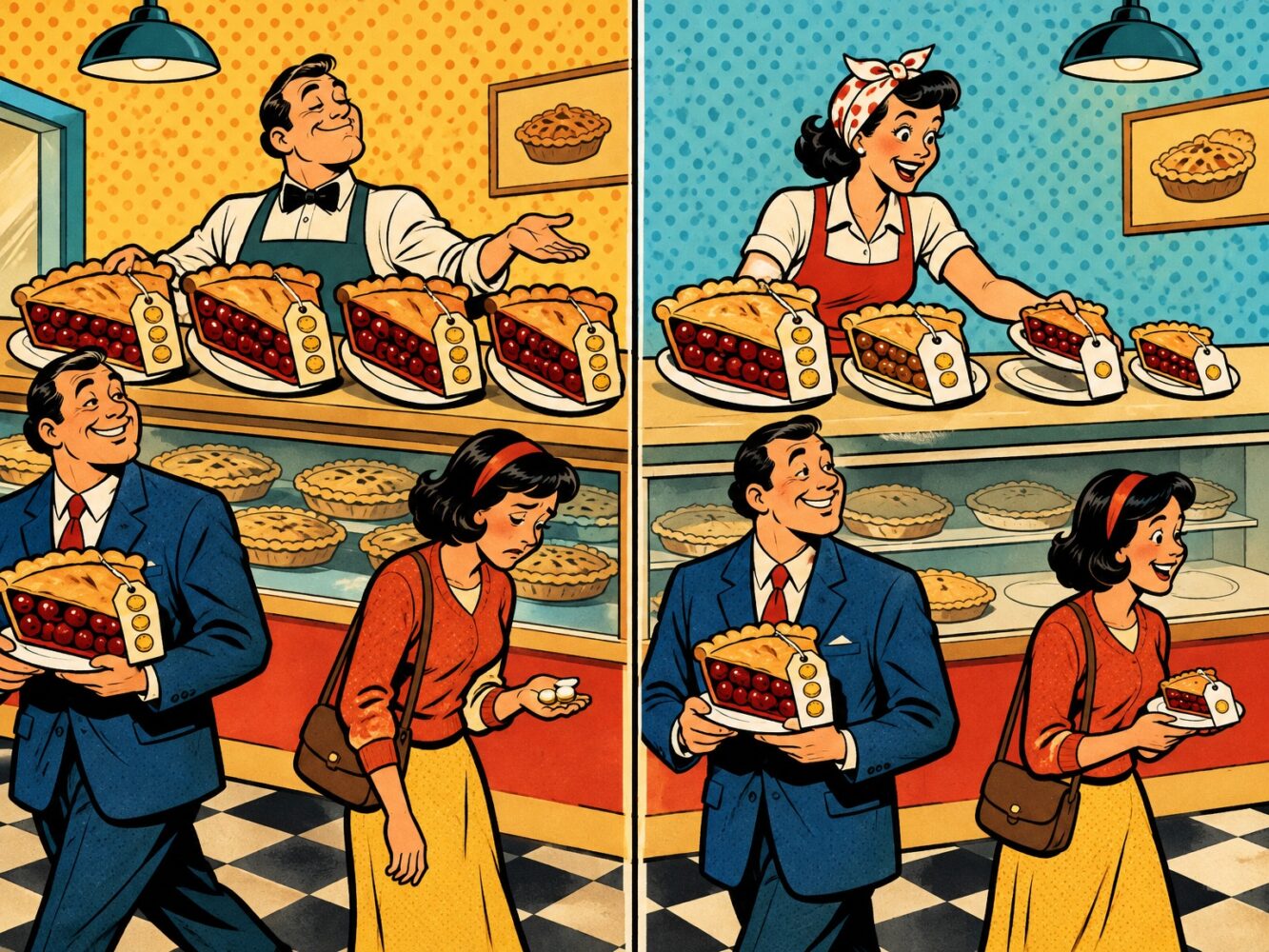
New Jersey lawmakers have found a way to spare small grocers the sting of missing out on a discount: make suppliers think twice about offering one to anybody. If a cereal maker gives Walmart a better deal than a corner market in Newark, a bill before the state’s General Assembly would require the supplier to ... The Garden State’s War on the Good Deal
California’s COMPETE Act: May the Best Firm Lose
Gov. Gavin Newsom has signed Assembly Bill 1776, the so-called COMPETE Act, making California the first state to add a general prohibition on anticompetitive conduct by individual firms to its principal antitrust statute. Newsom’s announcement casts the law as a way to help small businesses and stop large companies from “shutting out competition.” The law ... California’s COMPETE Act: May the Best Firm Lose

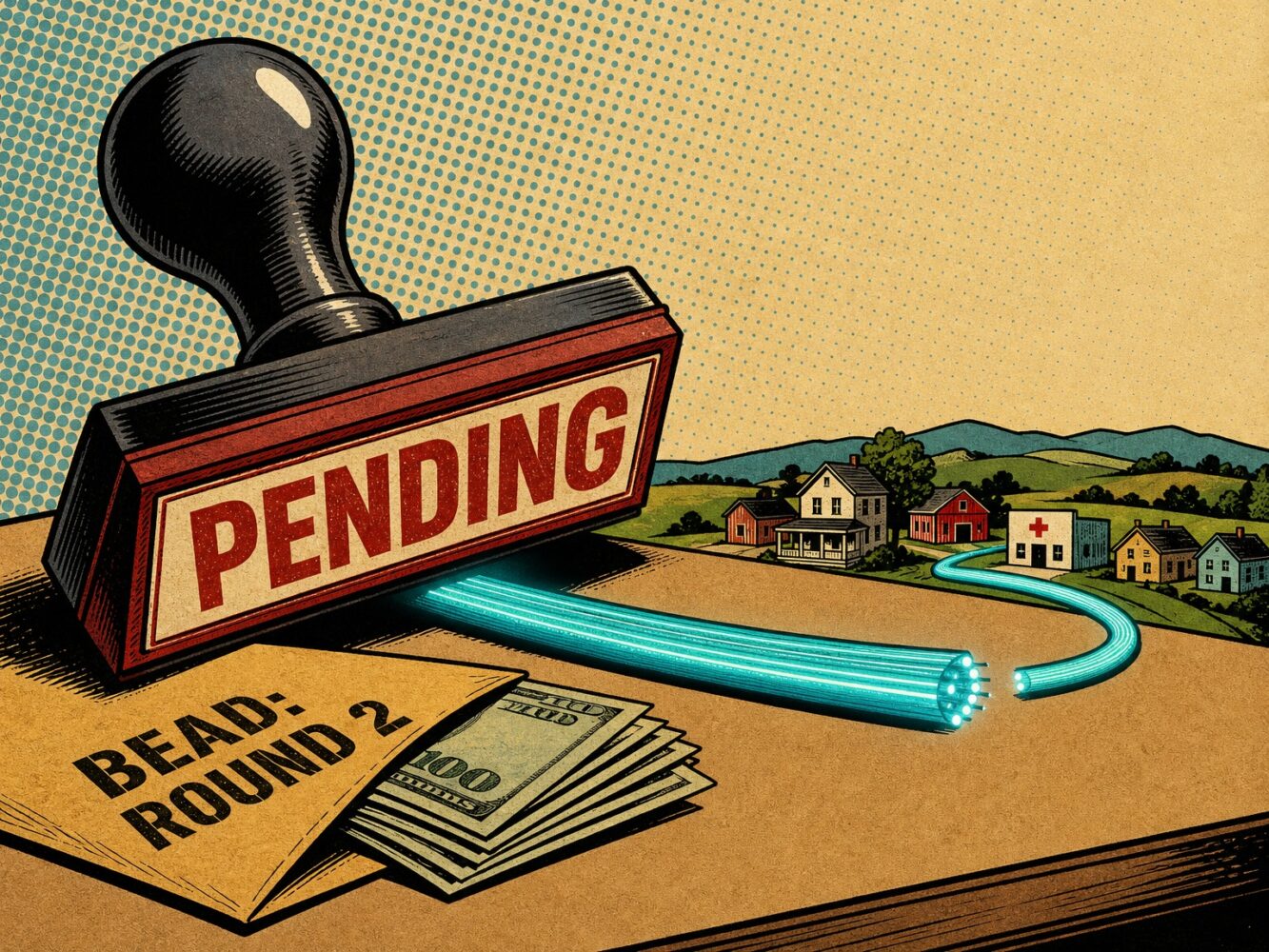
BEAD’s Second Act: The Future Is Pending Approval
The road to rural access to AI-enabled services runs through the permit office. Chips, data centers, and electricity get the attention, but delivering AI to a farmer’s field, a rural clinic, or a factory floor takes a broadband network. Building it means navigating utility poles, road crossings, and public rights-of-way—each with a gatekeeper who can ... BEAD’s Second Act: The Future Is Pending Approval
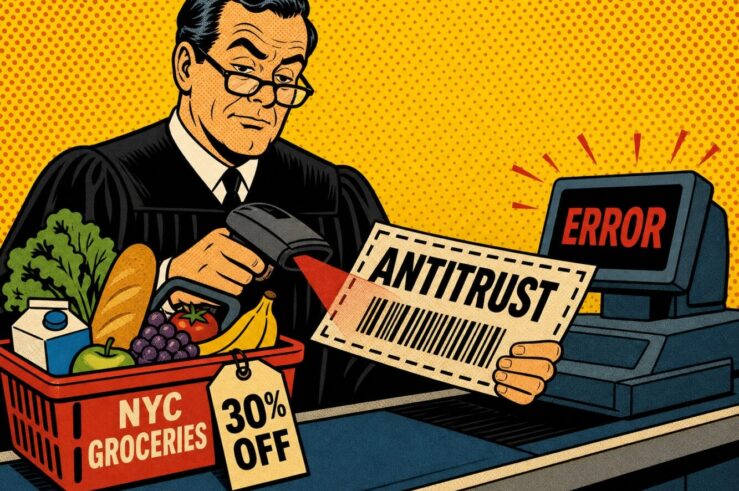
Checkout Error: A Bad Grocery Plan Meets a Weak Antitrust Case
I’ve criticized plenty of private antitrust cases. This may be the first in which the plaintiffs sued to stop a genuinely bad idea—and I still think they should lose. That is the odd posture of the antitrust challenge to Mayor Zohran Mamdani’s plan for subsidized grocery stores in New York City. On Sept. 9, the ... Checkout Error: A Bad Grocery Plan Meets a Weak Antitrust Case
Who, Exactly, Does New York City’s Delivery Protection Act Protect?
New York City has found an unlikely culprit for unsafe deliveries: the name on a driver’s paycheck. Its proposed cure would force Amazon to bring thousands of drivers in-house. The evidence that this would improve safety is thin. The implications for union organizing are anything but. Last month, New York City Mayor Zohran Mamdani formally ... Who, Exactly, Does New York City’s Delivery Protection Act Protect?

Fiber Freeze: How Maple Grove Made a Cable Franchise the Price of Broadband
The Federal Communications Commission’s (FCC) Build America Agenda rests on a simple premise: Stop making it so hard to build. Federal and state policymakers have spent years reducing permitting delays, resolving pole-attachment disputes, and easing access to public rights-of-way—the public corridors used for infrastructure such as roads, utility poles, and fiber lines. These obstacles slow ... Fiber Freeze: How Maple Grove Made a Cable Franchise the Price of Broadband

The Data Center Chessboard Has No Pause Button
The whole country ostensibly wants America to win the artificial intelligence (AI) race. A striking number, however, would prefer someone else’s town to host the data centers, power plants, transmission lines, and cooling systems required to run it. Adam Smith knew the type. In “The Theory of Moral Sentiments,” he warned against the “man of ... The Data Center Chessboard Has No Pause Button

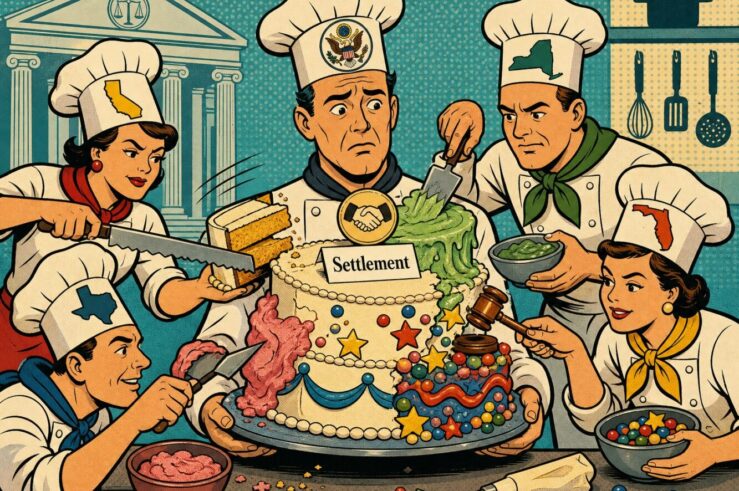
Too Many Cooks Spoil the Settlement
In American antitrust, clearing the federal gate increasingly means arriving at the state turnstiles. State attorneys general play a valuable role when harms are local or federal investigators miss key facts. But serial challenges to nationally integrated conduct turn that safeguard into a standing invitation to relitigate. The result is a system in which no ... Too Many Cooks Spoil the Settlement
New Jersey’s War on Pricing Software Won’t Build More Apartments
When rents rise, blaming the algorithm is easier than building apartments. New Jersey has chosen the easier target. On July 20, Gov. Mikie Sherrill signed the Forbidding the Algorithmic Inflation of Rent Act, or FAIR Act, declaring that landlords who use shared pricing tools are engaging in “collusion by algorithm.” The phrase is built for ... New Jersey’s War on Pricing Software Won’t Build More Apartments

Texas Wants to Check Your App Store Papers
Smartphones are no longer just phones. For kids, they are libraries, newspapers, classrooms, cameras, maps, town squares, and, yes, bottomless distraction machines. Texas Senate Bill 2420 treats access to all of it as something that should first pass through a state-mandated checkpoint. Also known as the App Store Accountability Act, SB 2420 is currently facing ... Texas Wants to Check Your App Store Papers