Showing archive for: “IO: Firm Structure Purpose Organization & Contracting”
Rethinking Competitor Collaboration in the AI Era
The Federal Trade Commission (FTC) and the U.S. Justice Department (DOJ) have opened a joint public inquiry into whether to update antitrust guidance for collaborations among competitors. That’s good news. Modern markets—especially those shaped by artificial intelligence—need clear rules that distinguish genuinely harmful collusion from productive, welfare-enhancing cooperation. No one seriously disputes that naked price-fixing ... Rethinking Competitor Collaboration in the AI Era

Acquihires and Other Antitrust Ghost Stories
Merger-control debates tend to repeat themselves. As new transaction forms emerge, regulators often move quickly to respond before harm becomes irreversible. Over the past decade, this pattern played out in debates over “killer acquisitions,” and earlier, minority shareholdings. Today, a similar dynamic surrounds so-called “acquihires.” Acquihires are transactions aimed primarily at acquiring a firm’s workforce, ... Acquihires and Other Antitrust Ghost Stories
Keeping Titans in Quarantine
Antitrust law once imposed a simple rule on dominant firms: stay in your lane. That idea fell out of favor. Unfortunately, its logic did not. The clearest example comes from midcentury enforcement. In 1956, the U.S. Department of Justice (DOJ) imposed a sweeping antitrust remedy on AT&T. The DOJ consent decree required AT&T’s research arm, ... Keeping Titans in Quarantine
Antitrust Encore: When a Settlement Isn’t the End of the Show
The Live Nation/Ticketmaster antitrust trial now presents a paradox. The U.S. Department of Justice (DOJ) reportedly has settled its claims, yet the litigation continues—with a skeptical judge and 32 state plaintiffs still pressing for a breakup. That unusual posture raises deeper concerns about economics, separation of powers, and the limits of antitrust federalism. U.S. District ... Antitrust Encore: When a Settlement Isn’t the End of the Show

From Discount to Discrimination: The Strange Economics of Anti-Competitive Antitrust
Antitrust has always been a strange regulatory enterprise. Businesses are largely free to engage in various commercial practices involving price, output, product design, distribution, research, and innovation—until they’re not. Outside the paradigmatic examples of explicit agreements among competitors to fix price and output, many business practices live in a gray zone. Whether a particular pricing ... From Discount to Discrimination: The Strange Economics of Anti-Competitive Antitrust
The FTC, Express Scripts, and the High Cost of Lower Copays
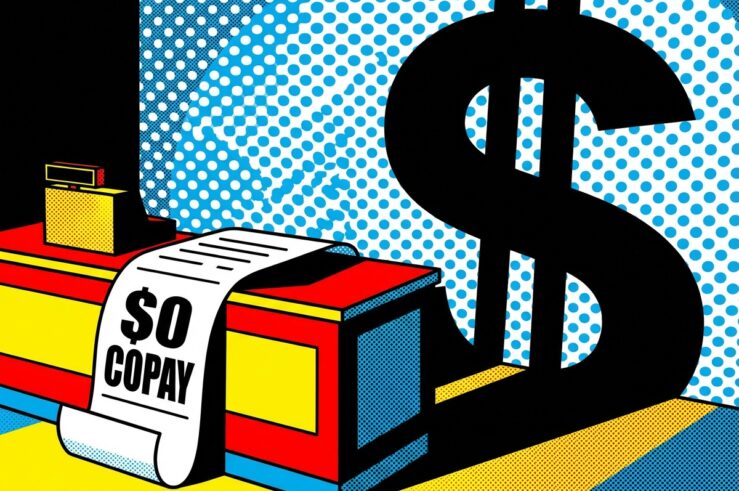
Nearly 17 months after the Federal Trade Commission filed suit against the nation’s three largest pharmacy benefit managers (PBMs), the agency has reached a settlement with one of them: Express Scripts. The complaint alleged that PBMs harmed competition and patients by inflating insulin prices. PBMs negotiate drug prices with pharmaceutical manufacturers and pharmacies on behalf ... The FTC, Express Scripts, and the High Cost of Lower Copays
The Right Approach to Reviewing Netflix-Warner Bros
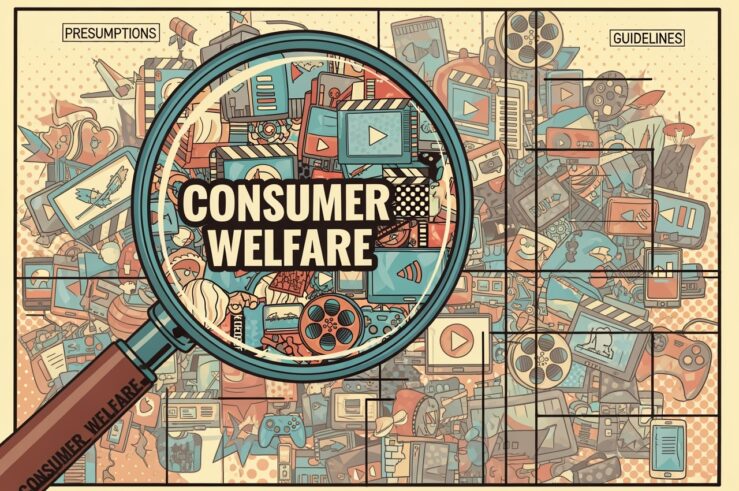
Ahead of tomorrow’s Senate Judiciary Antitrust Subcommittee hearing, a group of former federal antitrust enforcers sent an open letter to the U.S. Justice Department (DOJ) and the full Judiciary Committee urging a consumer-welfare-focused review of the proposed Netflix–Warner Bros. Discovery merger. The letter rejects the progressive analytical framework advanced during the prior administration and calls ... The Right Approach to Reviewing Netflix-Warner Bros
Netflix, WBD, and the Myth of the Streaming Monopoly
The proposed acquisition of Warner Bros. Discovery (WBD) assets by Netflix is already being cast as a landmark antitrust “test case.” If past deals are any guide, the critiques will follow a familiar script: narrow market definitions, selective data points, and headline-friendly market-share claims designed to trigger alarm. Yet in a video ecosystem defined by ... Netflix, WBD, and the Myth of the Streaming Monopoly

Red Cards for the Referees: EU Competition Law Takes on Football’s Gatekeepers
“A battle for the soul of European football.” That was how the Financial Times characterized the Super League crisis of April 2021, when 12 of Europe’s wealthiest football clubs announced their intention to break away from the existing competition structure and form a closed league of their own. The backlash was immediate: fan protests erupted ... Red Cards for the Referees: EU Competition Law Takes on Football’s Gatekeepers
Vertical Restraints in the EU: Economics Has Updated, Law Hasn’t Installed the Patch
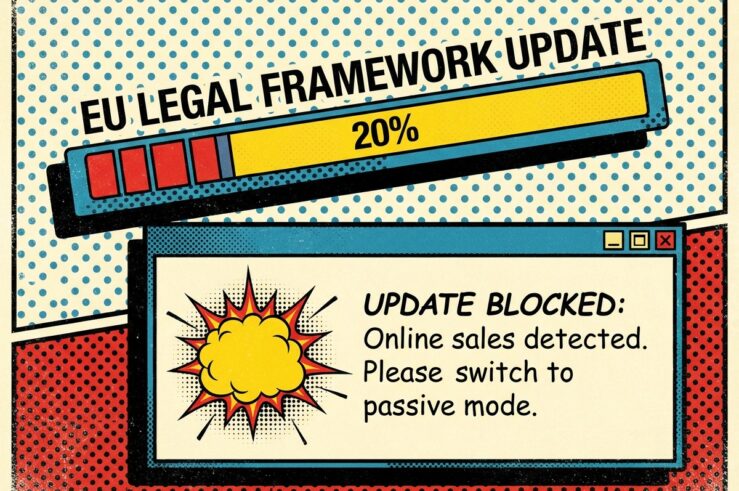
Online commerce has transformed how firms design their distribution systems, yet EU competition law continues to treat many online-sales restrictions as suspect by default. This tension lies at the heart of today’s vertical restraints debate. While the economic theory of vertical agreements has been largely settled for decades, the legal framework has not fully absorbed ... Vertical Restraints in the EU: Economics Has Updated, Law Hasn’t Installed the Patch
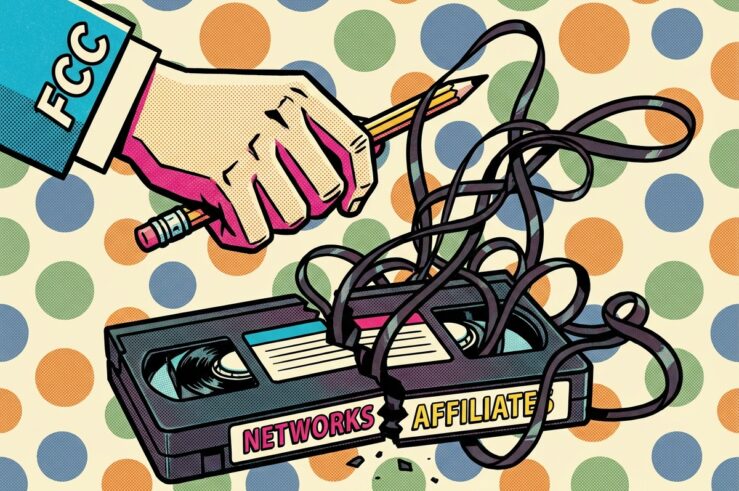
Affiliates vs Networks: The FCC’s Attempt to Rewind a Broken Tape
The Trump administration has had a mixed approach to date on reforming the broadcasting rules. On one hand, broadcast-ownership reforms have been a key issue this year for Republican appointees at the Federal Communications Commission (FCC), as they seek to help struggling broadcasters keep pace with their digital rivals. On the other hand, the president ... Affiliates vs Networks: The FCC’s Attempt to Rewind a Broken Tape
Evaluating the Sale of Warner Bros Discovery to Netflix from an Antitrust Perspective
Warner Bros. Discovery (WBD) has announced that it is selling its major assets to Netflix, including Warner Bros. Pictures (home of Harry Potter), DC Studios, and HBO Max. Netflix was chosen among a group of bidders that also included Paramount and Comcast. This post explores some of the antitrust issues and hurdles that a combined ... Evaluating the Sale of Warner Bros Discovery to Netflix from an Antitrust Perspective