Antitrust has always been a strange regulatory enterprise. Businesses are largely free to engage in various commercial practices involving price, output, product design, distribution, research, and innovation—until they’re not. Outside the paradigmatic examples of explicit agreements among competitors to fix price and output, many business practices live in a gray zone. Whether a particular pricing practice, rebate structure, or distribution strategy is lawful cannot be known with certainty ex ante.
Instead, legality often turns on an ex post judicial inquiry under the “rule of reason,” where a court weighs competitive harms against procompetitive justifications and decides whether the conduct undermines the competitive process and harms consumers. Recurring pressures also push antitrust toward broader social goals, including worker employment levels and environmental impact.
Consider Epic Games’ lawsuit against Apple over various iOS policies, including the requirement that iPhone apps be distributed exclusively via the App Store. Apple adopted this distribution model when the App Store was launched in 2008, just one year after the iPhone entered the market in 2007. Over the next decade, the iPhone grew in popularity to become the leading smartphone in the United States.
In 2020, 12 years after the policy’s adoption, Epic Games sued and alleged the policy violated the Sherman Act due to “Apple’s substantial market power.” Although Apple ultimately prevailed in 2023 after a full trial and appellate review, it took three years of litigation to settle the question. The episode underscores an antitrust oddity: business practices implemented at entry can be retroactively recharacterized as unlawful once market success changes a firm’s market position.
The Law Against a Good Deal
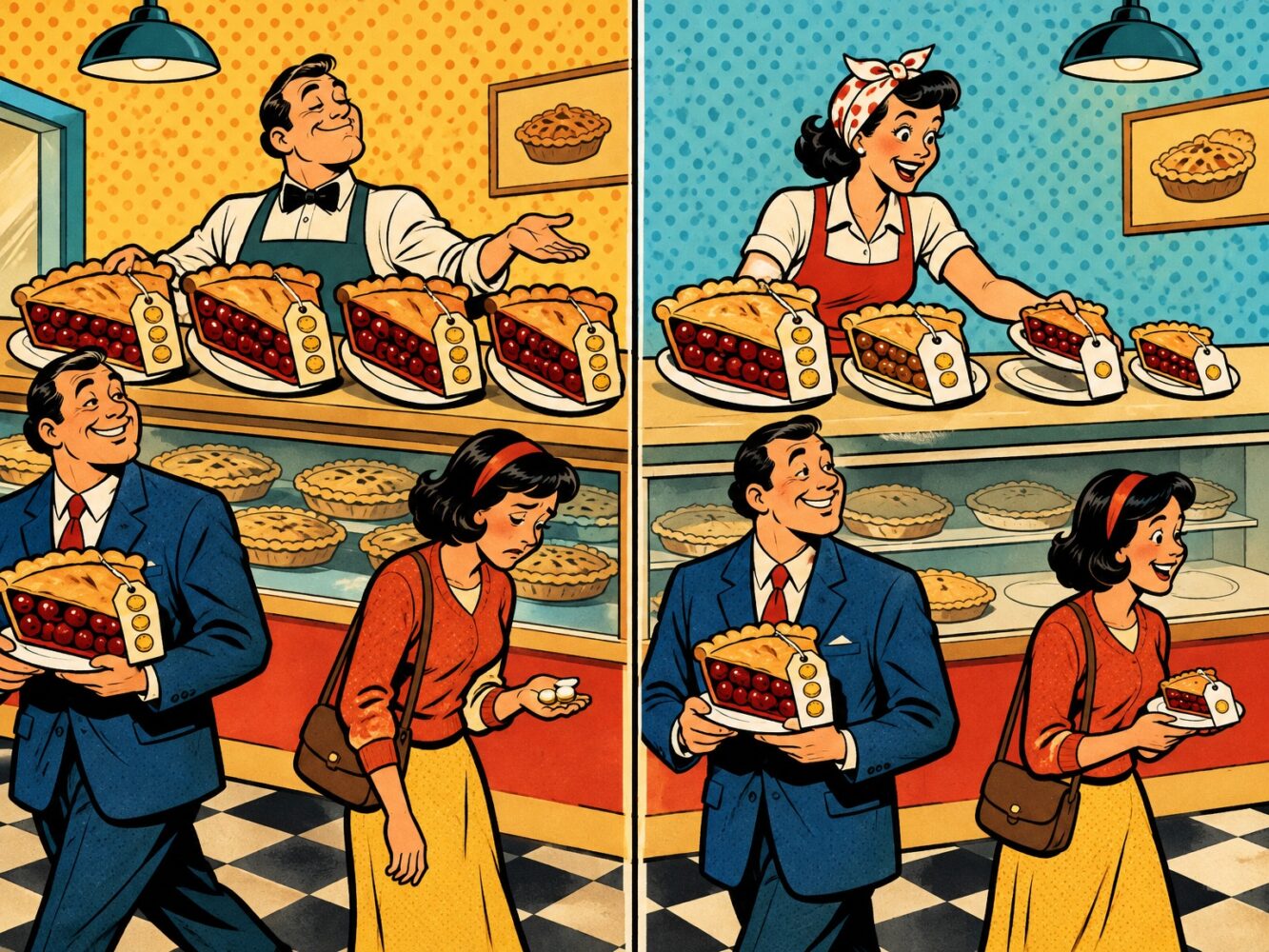
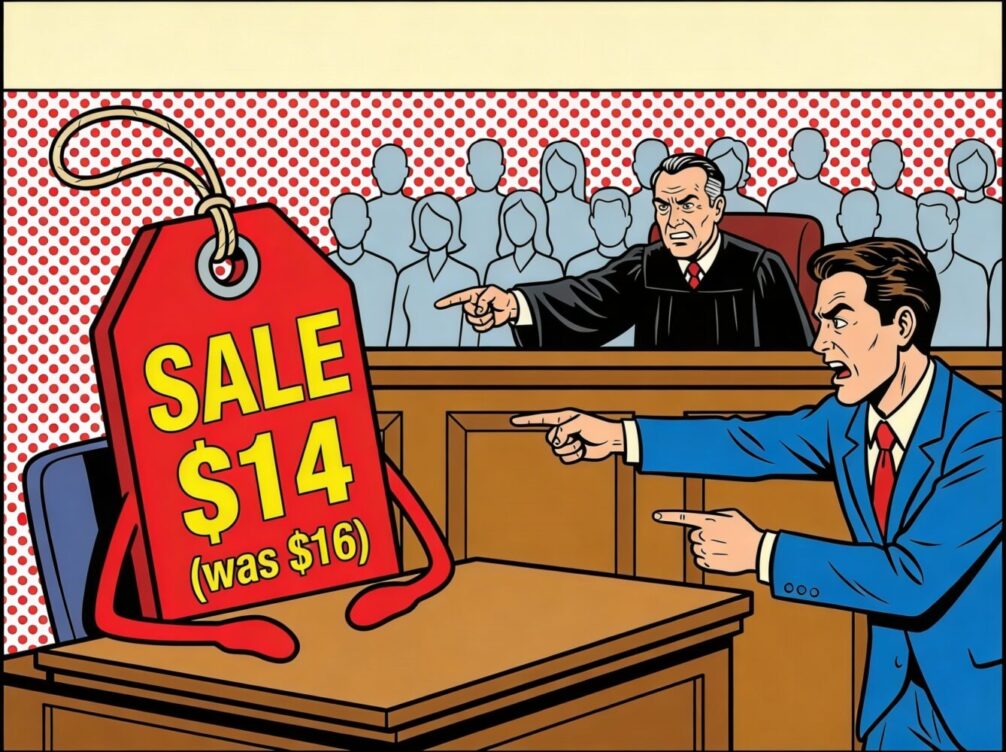
Another example comes from the Robinson-Patman Act, passed in 1936 as an amendment to the Clayton Act. The amendment prohibits sellers from charging different prices to competing purchasers where the effect may be to harm competition. Suppose a supplier sells a 12-pack of spring water to Retailer A at a wholesale price of $16, while offering the same 12-pack to Retailer B at $14 because Retailer B purchases in larger volumes. Under Robinson-Patman, this pricing differential could be challenged as unlawful price discrimination if it is deemed to competitively disadvantage Retailer A.
Conduct that may merely reflect competitive rivalry—negotiating lower prices in exchange for bigger orders, greater loyalty in purchases, etc.—can thus become the basis for legal liability.
Robinson-Patman was passed in part to hobble the Great Atlantic & Pacific Tea Co. (A&P), known for its low prices and efficient operations (including by vertical integration), which disadvantaged higher-priced independent retailers. Those retailers and distributors (including the U.S. Wholesale Grocers Association)—often bypassed when A&P negotiate directly with manufacturers—looked to Congress to stop A&P from securing lower wholesale prices.
Although Robinson-Patman enforcement was robust for much of the 20th century, agencies and courts gradually recognized the distortive effects enforcement could have on markets. For nearly a quarter century, Robinson-Patman enforcement lay largely dormant or was pursued only in limited circumstances. The bipartisan 2007 Antitrust Modernization Commission Report recommended that Congress repeal the act.
But in late 2024 and early 2025, during the waning days of the Biden administration, the Federal Trade Commission (FTC) issued complaints against Southern Glazer’s Wine & Spirits and PepsiCo alleging Robinson-Patman Act violations. New leadership under the Trump administration dropped the PepsiCo case, but the Southern Glazer’s case remains alive and well.
The High Cost of Being Fair
Taken at face value, Robinson-Patman enforcement appeals to a notion of “fairness.” After all, what is wrong with ensuring that, at the wholesale level, no retailer has an input-cost advantage over others? Several problems follow.
First, while the act permits cost differences as a defense for differential pricing, reliably separating cost-justified differences from price discrimination is difficult. What if 80% of a price difference is explained by costs but 20% is not? Is that still a violation? This line-drawing problem is not trivial. It imposes (a) significant evidentiary and administrative burdens on firms, enforcers, and courts and (b) social costs related to false positives, given that quantity discounts are ubiquitous in a market economy.
To understand why cost-driven price differences often arise, consider suppliers’ relationships with national chains versus independent retailers. Large chains provide greater and more stable volumes, predictable ordering cycles, reliable payments, minimal credit risk, and lower transportation costs due to bulk deliveries. These benefits are real but hard to quantify. Large chains also wield substantial bargaining leverage, and suppliers may fear displacement, reputational spillovers, and disruptions to production planning and capacity utilization.
Viewed through this lens, differential pricing reflects ordinary competitive dynamics: sellers tailoring prices to the economic realities of different commercial relationships. A negotiated price to a large chain that does not match a smaller retailer’s price is not evidence of a competition problem. It often reflects different cost structures, commercial risk, and bargaining leverage. Contracts at this level are multifaceted, with wholesale price representing only one negotiated aspect. Consequently, price differences cannot be evaluated in isolation.
A second difficulty is that “fairness” does not necessarily benefit consumers. Equalizing input prices among downstream rivals—even close competitors—does not automatically enhance competition. Retail success depends not only on input costs but also service levels, supply-chain efficiencies, vertical integration, breadth of offerings, and other factors.
As former Commissioner Melissa Holyoak noted in her dissent in the Southern Glazer’s case, a 1934 FTC study found that 85% of chain stores’ competitive advantage over non-chain stores stemmed from lower operating costs, not lower input costs. Similarly, roughly one-third of Costco’s sales come from its private-label brand, Kirkland Signature, which is not impacted by Robinson-Patman.
A third difficulty is incentives. Wholesalers like Southern Glazer’s have little reason to use differential pricing to reduce downstream competition and increase retailer market power and concentration. Independent retailers comprise about 50% of Southern Glazer’s business. Why harm half its customers and strengthen the bargaining leverage of large retailers? Greater retail concentration would likely raise retail prices and reduce output, shrinking distributor sales. The goal of distributors is to distribute—profitably. Driving retailer exit contradicts that objective.
Antitrust Against Itself
Robinson-Patman enforcement fell out of favor for a reason. Regulations mandating uniform pricing function as price controls and should bear a high burden to show improved consumer welfare. They implicate a core feature of competitive markets: lower prices.
The statute also creates internal contradictions. Robinson-Patman allows sellers to charge different prices so long as they are meeting—but not beating—competition. That carve-out encourages uniform pricing because deviations risk antitrust liability. The result can facilitate tacit coordination and even promote information sharing and price coordination.
Now consider the tension with modern enforcement. Robinson-Patman treats price parity and uniformity as desirable, yet agencies often challenge most-favored nation (MFN), or price parity, clauses in supply agreements. MFNs require a seller to give a buyer the same low price offered to other buyers. In the FTC’s current challenge to Amazon’s various business practices, the agency criticizes Amazon’s “anti-discounting strategy” and effort to maintain “price parity.” One concern is that a seller wishing to extend a discount to one buyer must extend the same to all buyers, discouraging discounts in the first place. Robinson-Patman enforcement creates the same incentive.
In sum, as explained by Fred Rowe, who had extensively researched the Robinson-Patman Act, the act “remains a legal enigma whose mysteries are familiar to many but fathomed by few.”