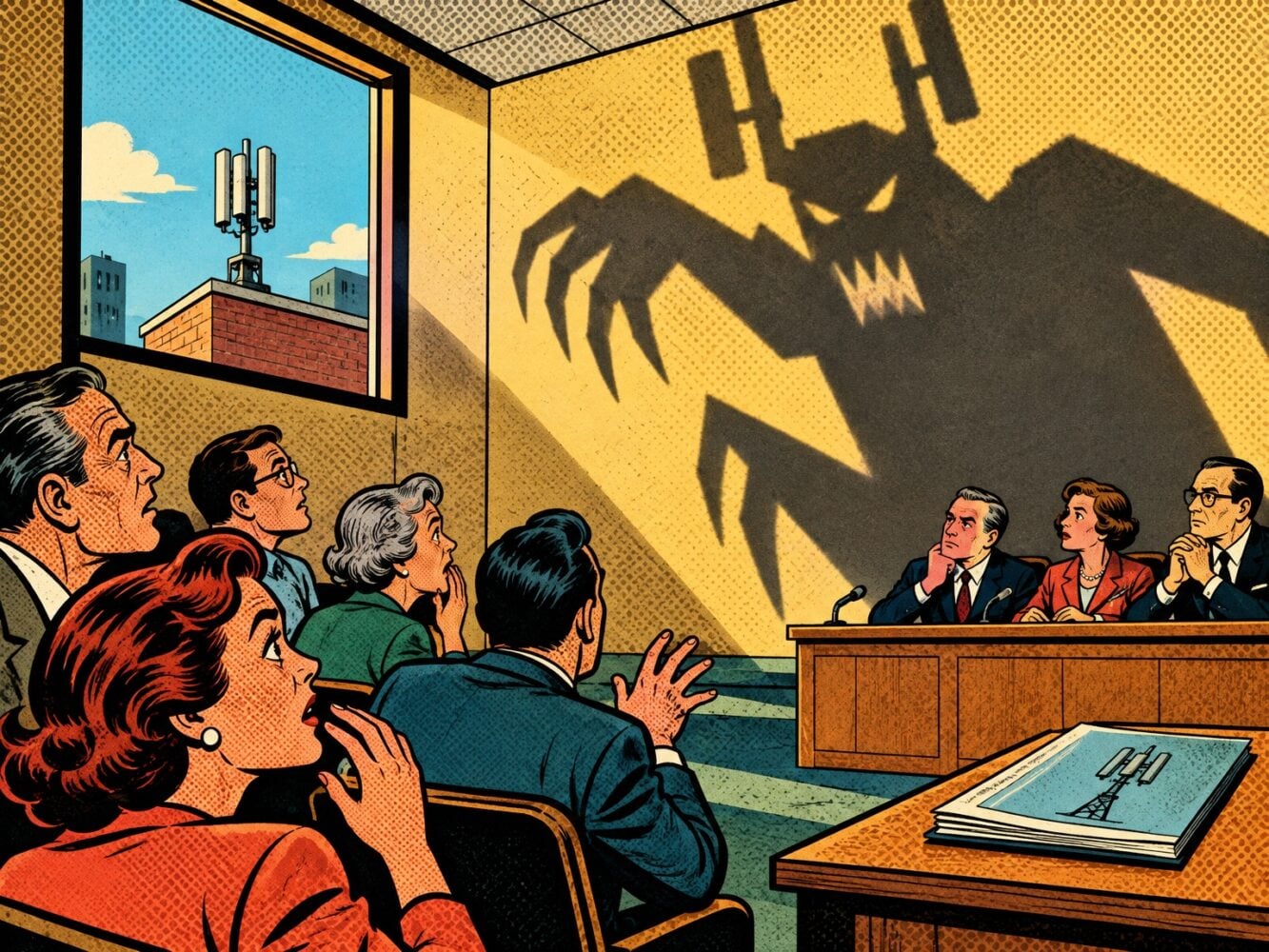
The Live Nation/Ticketmaster antitrust trial now presents a paradox. The U.S. Department of Justice (DOJ) reportedly has settled its claims, yet the litigation continues—with a skeptical judge and 32 state plaintiffs still pressing for a breakup. That unusual posture raises deeper concerns about economics, separation of powers, and the limits of antitrust federalism.
U.S. District Judge Arum Subramanian, who reportedly described the DOJ–Live Nation/Ticketmaster settlement as “absolutely unacceptable,” will continue to preside over the trial with the existing jury. Reports indicate that the judge was frustrated by what he described as a “lack of communication” regarding the DOJ’s settlement negotiations with Live Nation.
The handling of the LNTM case raises serious questions about economic efficiency and the separation of powers. A judicial order requiring divestiture of Ticketmaster also would create significant antitrust federalism tensions.
A Settlement Without a Breakup
Key terms of the tentative DOJ–Live Nation/Ticketmaster settlement—outlined in a term sheet filed with the court—reportedly include the following:
- No Divestiture: Live Nation would not be required to divest Ticketmaster. The remaining state plaintiffs, by contrast, continue to press for divestiture.
- Ticketing Choice: Live Nation would allow venues to use competing ticketing platforms, such as SeatGeek or AXS, enabling up to 50% of tickets to be sold through rival services.
- Venue Divestitures: Live Nation agreed to divest ownership or control of 13 amphitheaters, including venues in Milwaukee; Cincinnati; Syracuse, New York; and Austin, Texas.
- Fee Caps: Ticketmaster’s service fees at Live Nation-owned amphitheaters would be capped at 15%.
- Financial Penalty: The agreement would establish a $280 million settlement fund to pay civil penalties to states that join the deal.
- Behavioral Changes: The settlement would allow artists to rent Live Nation-owned venues regardless of whether they use Live Nation’s promotional services. It also would require termination of Ticketmaster’s ticketing agreement with Oak View Group.
Breaking Up the Band Isn’t Always Procompetitive
Based on what we know so far, there is little reason to view the proposed DOJ–Live Nation/Ticketmaster antitrust settlement with alarm. The agreement appears likely to generate economic benefits, as discussed below. Removing contractual barriers that restrict venues from working with multiple ticket vendors and promoters—changes the settlement reportedly requires—would promote competition.
By contrast, requiring Live Nation to divest Ticketmaster, as the DOJ originally sought, could have eliminated cost-saving efficiencies from vertical integration without materially enhancing competition. Ticketmaster already held a large market share before Live Nation acquired it—indeed, slightly larger than today—and it is far from clear that ticketing competition would increase if Live Nation and Ticketmaster were separated. Market realities also matter: popular artists exert substantial influence over ticket pricing and sales terms, and that dynamic would remain regardless of the outcome of the antitrust case. (See this 2024 Truth on the Market commentary on LNTM.)
A divestiture, moreover, would replace a streamlined integrated system with a fragmented one, likely increasing costs for artists and fans. Live Nation’s integrated structure generates several types of economic benefits.
Elimination of Double Marginalization
Vertical integration allows a single firm to coordinate pricing across multiple stages of the supply chain—promotion, venue operation, and ticketing.
In a fragmented market, each independent firm—such as a standalone promoter and a separate ticketing service—adds its own markup. That dynamic creates “double marginalization,” in which successive firms each impose their own margin. Divesting Ticketmaster could therefore raise final ticket prices for consumers compared with an integrated firm that optimizes a single combined margin.
The ‘Flywheel’ Efficiency Model
Live Nation operates a “flywheel” model in which higher-margin segments—such as ticketing and advertising—help subsidize lower-margin activities like concert promotion.
Vertical integration allows Live Nation to offer artists larger financial guarantees while recouping costs through other parts of the ecosystem, including venue concessions and sponsorship deals. Control across multiple stages of the business also helps the company absorb the substantial risks of concert promotion, which often operates on thin—or even negative—margins for individual shows.
Transaction-Cost Reduction
Bringing promotion, venue management, and ticketing under one corporate umbrella reduces the time and expense required to negotiate complex agreements among separate firms.
An integrated platform also can streamline tour planning and ticket distribution, which proponents argue leads to better-attended events.
Technology and Data Integration
An integrated Ticketmaster can use Live Nation’s extensive consumer data to target advertising more effectively, potentially lowering marketing costs for artists.
Breaking up the companies could sever these data links, forcing venues and promoters to rely more heavily on third-party marketing services.
Investment and Stability
The certainty created by Live Nation’s integrated structure encourages long-term investment in venue upgrades and new technologies.
Separation could introduce significant economic uncertainty for investors, reducing capital flows into the live music industry and potentially leading to fewer shows or less-innovative venues.
Courts Aren’t Super-Prosecutors
A strong legal argument holds that a federal judge’s opposition to an antitrust settlement proposed by the DOJ may exceed the court’s Article III authority and create a separation-of-powers conflict. The concern rests on a basic constitutional principle: the executive branch—acting through the DOJ—has exclusive authority to decide how to enforce federal law and allocate enforcement resources. (See here, for example.)
Prosecutorial Discretion
The U.S. Supreme Court has long recognized that the executive branch has broad—indeed “absolute”—discretion to decide whether to bring a case and how to resolve it. If a judge compels the DOJ to continue litigating a case it no longer wishes to pursue, the court effectively assumes the role of a super-prosecutor.
Resource Allocation
Only the executive branch can decide how to allocate its limited budget and personnel. Blocking a settlement forces the DOJ to devote public resources to litigation it has already concluded should end.
Policy Balancing
Antitrust settlements often reflect complex economic tradeoffs. These judgments involve policy choices that traditionally belong to the political branches—not to the judiciary, whose role is to resolve disputes rather than make enforcement policy.
The Tunney Act’s Constitutional Tightrope
The Tunney Act, 15 U.S.C. § 16 (1974, as amended), requires federal courts to determine whether a proposed antitrust consent decree is in the “public interest.” The Supreme Court has never invalidated the statute. Legal scholars—and even some former DOJ officials—nevertheless argue that it sits uneasily with the Constitution. The statute also raises concerns from a law & economics perspective.
Creating a ‘Chancellery of the Public Interest’
One critique holds that the Tunney Act effectively turns judges into “ministers of industry.” Instead of resolving cases or controversies—interpreting and applying the law—the act invites judges to evaluate the wisdom of a negotiated settlement. That inquiry risks pushing courts into a legislative or executive role by asking them to decide what outcome is “best” for the economy.
Infringing on the Unitary Executive
If the president, acting through the attorney general, concludes that a settlement advances the government’s enforcement objectives, the act effectively gives a non-elected official (the judge) a potential veto. Critics argue that this arrangement conflicts with the unitary-executive theory, which holds that the president must retain full control over the execution of federal law.
Narrow Judicial Scope (The ‘Rubber Stamp’ Tension)
Courts have long recognized these constitutional concerns. Appellate decisions therefore instruct trial judges to give the DOJ “broad latitude” and “substantial deference” when reviewing consent decrees under the Tunney Act. Tension arises when a court applies the statute aggressively. If a judge treats the public-interest inquiry as a license to rewrite a settlement or demand a specific remedy—such as a breakup—the court risks substituting its judgment for that of the president’s appointees.
A Law & Economics Perspective
Active judicial review of antitrust consent decrees—negotiated between the Department of Justice (DOJ) and private parties—can result in higher transaction costs, slower resolution of anticompetitive issues, and inferior economic remedies compared to the expertise-driven approach of the DOJ.
The Current Context
In the Live Nation case, Judge Arum Subramanian’s frustration over a reported “lack of communication” from the DOJ appears to reflect a procedural grievance. A different issue would arise if the court invoked the Tunney Act to block the settlement on the ground that only a breakup would suffice.
Live Nation’s lawyers could then pursue an interlocutory appeal, arguing that the court violated separation-of-powers principles by displacing the DOJ’s enforcement judgment. They could contend that the court’s role is limited to determining whether the settlement falls “within the reaches of the public interest,” not whether it represents the best possible outcome.
Such an argument could draw support from Justice William Rehnquist’s dissent in Maryland v. United States. It could also rely on the U.S. Circuit Court of Appeals for the D.C. Circuit’s reasoning in U.S. v. Microsoft, which emphasized that although the Tunney Act requires courts to assess whether a consent decree serves the public interest, that authority does not permit a court to conduct a full trial or rewrite the agreement.
Too Many Cooks in the Antitrust Kitchen
The states’ decision to continue seeking divestiture of Ticketmaster from Live Nation after the DOJ settled its claims also raises significant tensions in antitrust federalism.
U.S. antitrust enforcement operates through a distributed-enforcement architecture in which federal and state authorities share enforcement power. Their objectives often align, but they can diverge on remedies for the same alleged conduct.
Under principles of competitive federalism, state attorneys general possess independent discovery and enforcement authority under their own statutes. They may pursue structural remedies even when the federal government opts for behavioral ones, so long as they assert independent grounds under state or federal law.
That framework creates significant complications in a case like LNTM. The litigation’s outcome will shape nationwide practices in entertainment promotion, tour scheduling, and ticketing markets. Divergent remedies across jurisdictions could therefore produce regulatory fragmentation in an industry that operates on a national—indeed global—scale.
Don’t Turn a Settlement Into a Constitutional Problem
The uncertainty created by the negative reaction of the trial judge and most state co-plaintiffs to the DOJ–Live Nation/Ticketmaster settlement is troubling. It discounts sound economics. Serious separation-of-powers and federalism questions also would arise if Judge Subramanian ultimately authorized the forced divestiture of Ticketmaster. The better course would be for the remaining state plaintiffs to reconsider their position and endorse the tentative settlement now on the table—with the court’s approval.
The LNTM matter illustrates federalism and separation-of-powers dilemmas—though not yet crises—that are likely to challenge the U.S. antitrust system in the years ahead. Federalism concerns are especially salient, given the growing tendency of state antitrust officials and legislators to expand state-level enforcement activity.
Congress is unlikely to preempt—or significantly limit—state antitrust law in the near future. Greater attention to Dormant Commerce Clause and conflict-preemption issues in antitrust enforcement may therefore become increasingly important. (See here, for example.)
Put simply: antitrust enforcement works best when economics guides remedies, the executive branch sets enforcement policy, and courts resist the temptation to rewrite negotiated settlements.