Showing archive for: “Monetary Economics: Financial System & Institutions”
A Nobel Prize for Thinking Ahead: Hall and Woodford’s Great Expectations
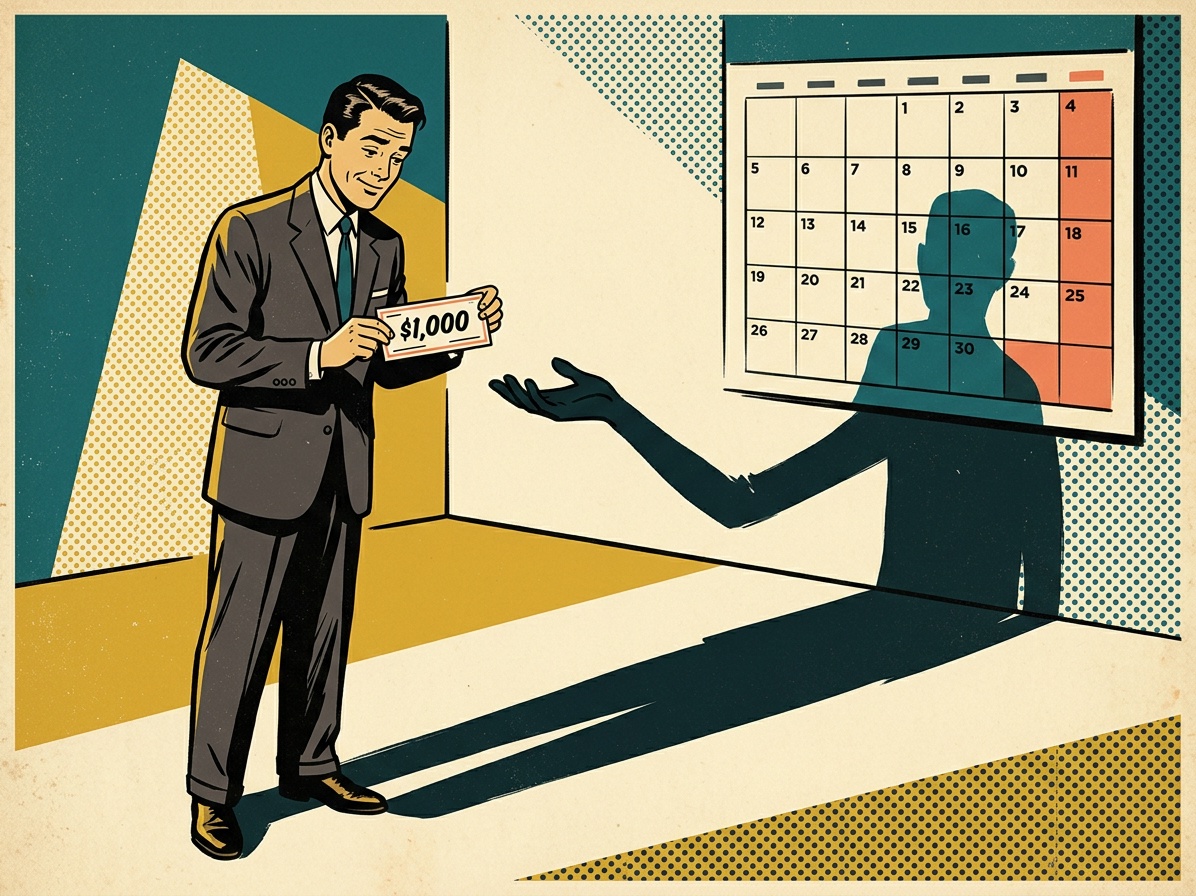
Suppose you get a $1,000 payment. How much do you spend? Before answering, we’d want to know a few things: Is this a one-time payment? The first of many? Can you borrow? Do you already have savings? This year’s Nobel Prize in economics went to Robert Hall and Michael Woodford for providing the theory to ... A Nobel Prize for Thinking Ahead: Hall and Woodford’s Great Expectations
The Price of Peace in the Swipe-Fee Wars
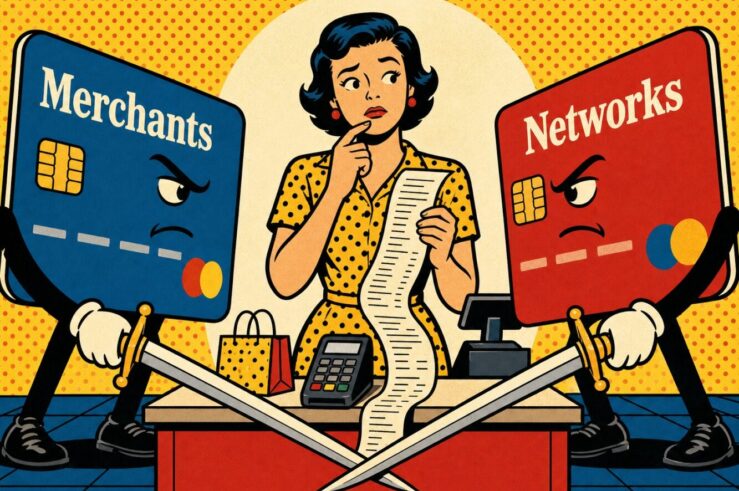
After 21 years, two failed settlements, and enough economic testimony to qualify as its own industry, the great interchange-fee war may finally be nearing a cease-fire. The terms are imperfect, and the case never had much economic merit. Even so, the proposed settlement may offer the best available escape from a dispute whose legislative sequels ... The Price of Peace in the Swipe-Fee Wars
Private Credit, Public Panic: Why Life Insurers Are Stronger Than the Headlines Suggest
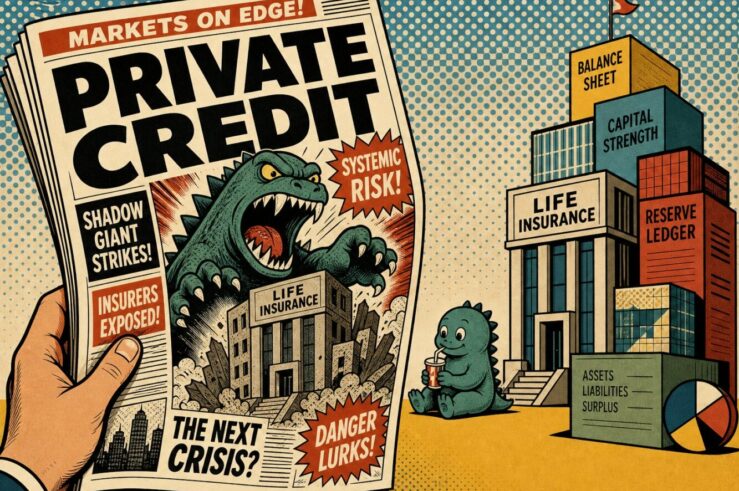
Private credit has become the financial system’s latest designated villain: opaque, fast-growing, and—depending on the headline—one bad quarter away from dragging insurers, banks, and retirees down with it. For the past two years, warnings about life insurers’ private-credit investments have become a staple of financial commentary. In 2024, the International Monetary Fund cautioned that private ... Private Credit, Public Panic: Why Life Insurers Are Stronger Than the Headlines Suggest
What the IMF Gets Wrong About Costa Rica’s Payment-Card Caps
The Asamblea Legislativa de la República de Costa Rica (Costa Rica’s legislature) moved in 2020 to empower the Banco Central de Costa Rica (BCCR), the nation’s central bank, to impose price controls on fees charged by both payment-card issuers and acquirers. I have written previously about the perverse effects these price controls can generate (here, ... What the IMF Gets Wrong About Costa Rica’s Payment-Card Caps
Is Pix Really the End of Credit Cards?
In late August, Roberto Campos Neto, the head of Brazil’s central bank, is reported to have said about Pix, the bank’s two-year-old real-time-payments (RTP) system, that it “eliminates the need to have a credit card. I think that credit cards will cease to exist at some point soon.” Wow! Sounds amazing. A new system that ... Is Pix Really the End of Credit Cards?

Cassandra, the Fear of Overregulation, and the CFPB
In the Huffington Post, Marcus Baram warns against those who claim to be concerned about over-regulation on Wall Street and in the consumer protection sphere. Baram writes: Today, Wall Street is again on the attack against a regulatory overhaul that includes more stringent investor and consumer protections. Though the financial landscape is far different and ... Cassandra, the Fear of Overregulation, and the CFPB
Unconscious Parallelism or Collusion? Libor Edition
News comes that the DOJ and SEC are “examining whether some of the world’s biggest banks colluded to manipulate a key interest rate before and during the financial crisis, affecting trillions of dollars in loans and derivatives, say people familiar with the situation.” The Wall Street Journal Reports that: The inquiry, led by the U.S. ... Unconscious Parallelism or Collusion? Libor Edition
Fin Reg and Too Big to Fail: A New Kind of Antitrust?
Simon Johnson argues that the conventional antitrust tools of Sherman Act are outdated and ill-equipped to deal with the power of big banks: Why are these antitrust tools not used against today’s megabanks, which have become so powerful that they can sway legislation and regulation massively in their favor, while also receiving generous taxpayer-financed bailouts ... Fin Reg and Too Big to Fail: A New Kind of Antitrust?
Judge Posner on Financial Reform and the Consumer Financial Protection Bureau
Judge Posner offers his thoughts on financial reform, mostly negative, at Bloomberg. The thrust of the essay is that the financial regulation produced by the political process has, at best, a poor nexus to the actual causes of the economic crisis, and that what we are left with is primary reorganization and reshuffling to look ... Judge Posner on Financial Reform and the Consumer Financial Protection Bureau
What’s the Best Way to Pop a Bubble?
[NOTE: I was drafting this post when Henry Manne posted his open letter to Fama and French. I’m hesitant to post over Henry’s important letter, particularly since TOTM was down yesterday and lots of folks may not have seen the letter. I’m doing so only because this post is a good follow-up to Henry’s points ... What’s the Best Way to Pop a Bubble?
What caused the crisis?
Writing in the Wall Street Journal, Alan Greenspan, who was at the helm of the Fed during the relevant time period, tells us (surprise!) it wasn’t the Fed’s fault. Greenspan notes that short-term interest rates, which the Fed controls, are only loosely correlated with long-term interest rates, which are most relevant to real estate investing ... What caused the crisis?
Onions Forever! A Response to Allan Shampine
There is nothing like the provocative post from Allan Shampine to move this debate up a notch. First, I did not say that the debate over interchange fees was Onionesque. I reserved that dubious distinction to the on-the-hand-on-the-other-hand title of the GAO report. Allan is right that the stakes are huge, which is why this ... Onions Forever! A Response to Allan Shampine