Showing archive for: “Judicial Remedies”
Antitrust Standing Room Only
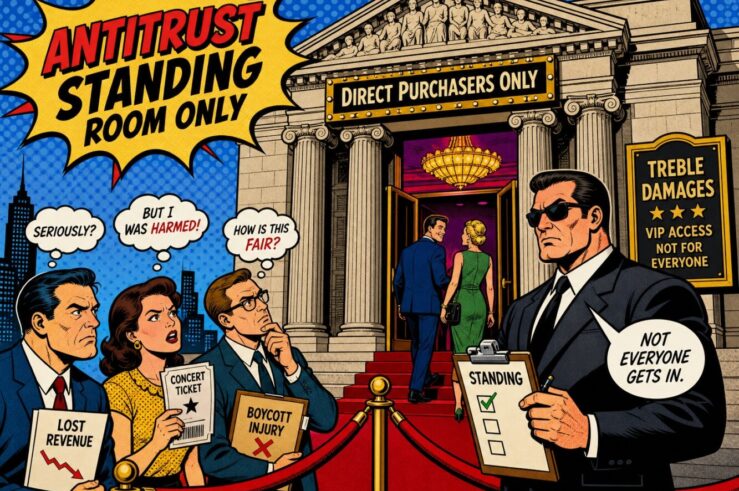
Antitrust law does not hand out damages just because someone got hurt in the general vicinity of an antitrust violation. A plaintiff must show more than bad conduct, more than lost money, and more than a plausible violation of the Sherman Act. The loss must come from the thing antitrust law exists to protect: competition. ... Antitrust Standing Room Only
The EU’s Facebook Marketplace Decision: The Gatekeeper That Wasn’t
Sometimes the most important thing about a gatekeeper case is that there was no gatekeeper after all. That is the quiet lesson of the European Union General Court’s judgment in Meta Platforms v. Commission, which annulled in part the European Commission’s decision to designate Meta as a gatekeeper under the Digital Markets Act (DMA). The ... The EU’s Facebook Marketplace Decision: The Gatekeeper That Wasn’t

‘Punitive Damages as Societal Damages,’ by Catherine M. Sharkey
Catherine Sharkey’s “Punitive Damages as Societal Damages” addresses a tension that has been obvious for decades, but usually treated as an annoyance: punitive damages are justified in public-regarding terms—punishment, deterrence, and condemnation—yet delivered through private litigation and typically paid to a single plaintiff. The doctrinal rhetoric often tracks conduct broad in scope, such as systematic ... ‘Punitive Damages as Societal Damages,’ by Catherine M. Sharkey

False Positives, Real Casualties: The High Price of Populist Antitrust
Spirit Airlines was supposed to be the “maverick” antitrust saved from JetBlue. Instead, the deal died, Spirit followed it into bankruptcy, and the maverick exited the market altogether. That is an awkward result for a merger challenge brought in the name of preserving competition—and a useful place to start a broader reconsideration of error costs. ... False Positives, Real Casualties: The High Price of Populist Antitrust

Bad Medicine: Why Breaking Up Big Health Care Could Make It Worse
Washington has found its latest villain: “Big Medicine.” The proposed fix? Break it up and hope the pieces behave better than the whole. Americans have real reasons to be frustrated about high health care costs, and large conglomerates rank somewhere between unpopular and reviled—roughly where Microsoft’s “Clippy” sat in the 1990s. So it’s no surprise ... Bad Medicine: Why Breaking Up Big Health Care Could Make It Worse

Brussels’ AI Squeeze: Regulating What It Leaves Standing
Brussels has boxed itself into a familiar corner: first limit how a platform can make money, then regulate what is left. The European Commission’s case against Meta over WhatsApp is a near-perfect illustration. On April 15, the European Commission sent Meta a Supplementary Statement of Objections. It signaled its intent to order the company to ... Brussels’ AI Squeeze: Regulating What It Leaves Standing

Treating Speech as a Bug, Not a Feature
A pair of jury verdicts last week, along with a quiet settlement, may mark a turning point for the American internet—and not one that favors free expression. For years, digital platforms have relied on two core protections: the First Amendment and Section 230. Together, they let companies host, organize, and moderate speech without facing crushing ... Treating Speech as a Bug, Not a Feature

Keeping Titans in Quarantine
Antitrust law once imposed a simple rule on dominant firms: stay in your lane. That idea fell out of favor. Unfortunately, its logic did not. The clearest example comes from midcentury enforcement. In 1956, the U.S. Department of Justice (DOJ) imposed a sweeping antitrust remedy on AT&T. The DOJ consent decree required AT&T’s research arm, ... Keeping Titans in Quarantine
Putting the Bite Back in Patents
The U.S. Department of Justice (DOJ) and U.S. Patent and Trademark Office’s (USPTO) Feb. 27 joint statement of interest in Collision Communications v. Samsung signals a possible shift back toward the first Trump administration’s “New Madison Approach” to patent policy. That framework—largely abandoned during the Biden administration—treated patents as property rights and defended the central ... Putting the Bite Back in Patents

Apple in Brazil: Ex Post Antitrust Meets Ex Ante Ambitions
Brazil’s competition authority (CADE) and Apple signed a Dec. 29 settlement agreement (Termo de Compromisso de Cessação, or TCC) resolving a high-stakes antitrust investigation Mercado Livre initiated in 2022 in Brazil and Mexico. Mercado Livre is Latin America’s leading e-commerce and marketplace platform. The agreement marks a watershed moment for Brazil’s digital economy. CADE will ... Apple in Brazil: Ex Post Antitrust Meets Ex Ante Ambitions

Brightline Rules and Case-by-Case Courts: The DMA and Epic v Apple
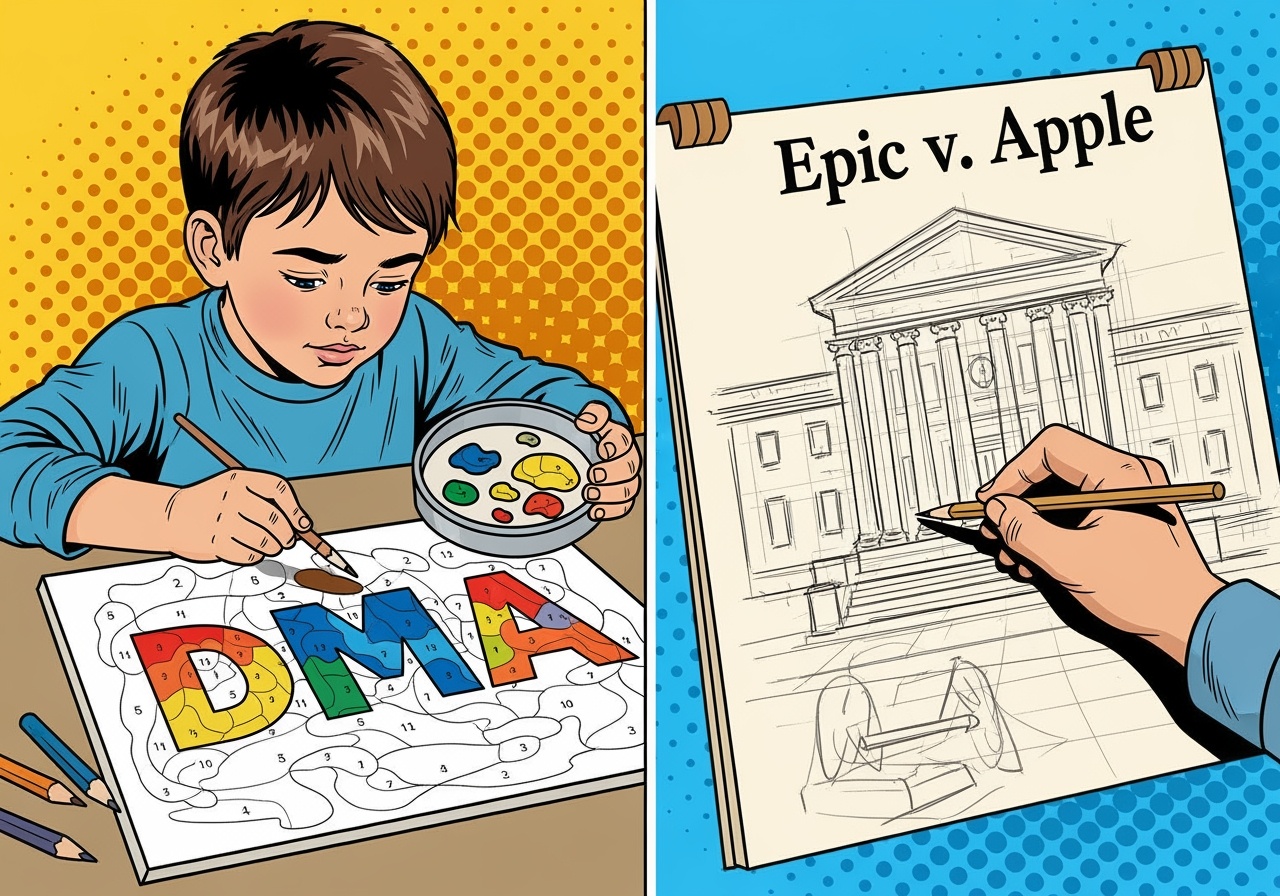
Brightline rules promise clarity. The early enforcement record suggests something closer to friction. Part I of this two-part series examined how mobile app-store anti-steering policies—rules that restrict developers from directing users to alternative offers or payment portals outside the app store—affect competition, consumers, and innovation. It also compared those policies with the restrictions upheld in ... Brightline Rules and Case-by-Case Courts: The DMA and Epic v Apple
Antitrust at the Agencies: More Process, Mo’ Money Edition
The White House announced a slate of administrative nominations Jan. 13, including David MacNeil—founder and CEO of WeatherTech—to fill the Federal Trade Commission (FTC) seat vacated by Melissa Holyoak, who left last November to serve as interim U.S. attorney for the District of Utah. MacNeil made his fortune by importing and later manufacturing (here in ... Antitrust at the Agencies: More Process, Mo’ Money Edition