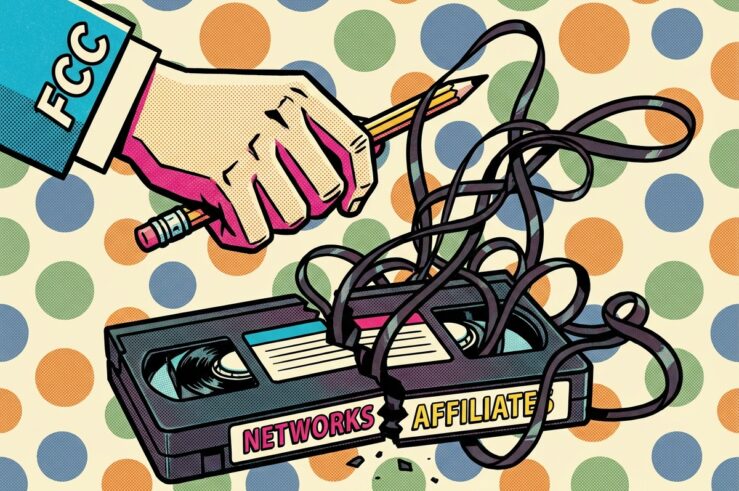
Affiliates vs Networks: The FCC’s Attempt to Rewind a Broken Tape
The Trump administration has had a mixed approach to date on reforming the broadcasting rules. On one hand, broadcast-ownership reforms have been a key issue this year for Republican appointees at the Federal Communications Commission (FCC), as they seek to help struggling broadcasters keep pace with their digital rivals. On the other hand, the president ... Affiliates vs Networks: The FCC’s Attempt to Rewind a Broken Tape
Rules Down, Rockets Up: The Year Telecom Policy Hit Reset
The Federal Communications Commission (FCC) and National Telecommunications and Information Administration (NTIA) have had a busy year on numerous fronts, but perhaps none more important than their work on broadband deployment and adoption. At the FCC, Chairman Brendan Carr made his “Build America” agenda a key agency priority, while the NTIA implemented a variety of ... Rules Down, Rockets Up: The Year Telecom Policy Hit Reset

The FCC’s Ambivalent Approach to Broadcast Regulation
A pair of proceedings currently before the Federal Communications Commission (FCC) illustrate a puzzling incongruity. While the agency proposes in one docket to eliminate broadcasters’ ownership restrictions, in another, it explores imposing new regulations on their contractual relationships. This divergence highlights how the FCC’s flexible application of the “public interest” standard may serve the interests ... The FCC’s Ambivalent Approach to Broadcast Regulation
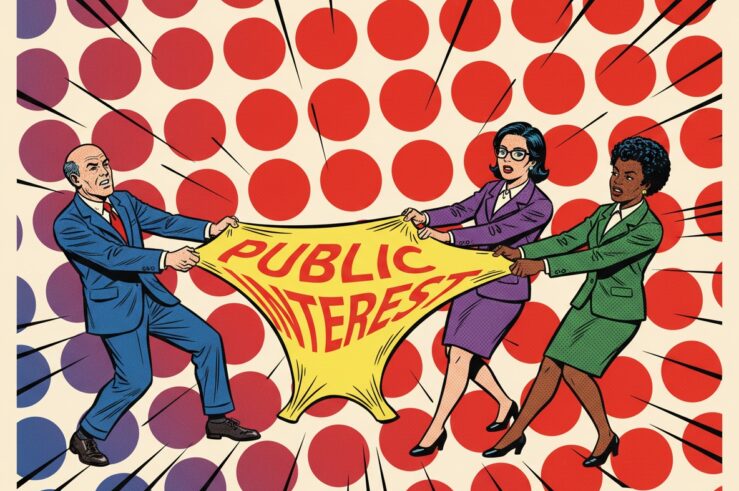
Nexstar-Tegna and the Problem of Double-Secret Merger Review: Why Antitrust Should Trump ‘Public Interest’
The U.S. Justice Department (DOJ) recently sent a second request to Nexstar Media Group and Tegna Inc. seeking additional information about their proposed $6.2 billion merger. This request extends the Hart-Scott-Rodino Act waiting period by 30 days, pending the companies’ compliance. According to a securities filing, the two television-station ownership groups anticipate their planned merger ... Nexstar-Tegna and the Problem of Double-Secret Merger Review: Why Antitrust Should Trump ‘Public Interest’
Broadcast, Cable, and Creative Destruction: What This Year’s Nobel Teaches Us About Cord Cutting
The timing could hardly be better. As traditional television continues on its years-long decline—with millions of cable subscribers cutting the cord, broadcast audiences shrinking, and streaming splintering into a dozen rival platforms—this year’s Nobel Memorial Prize in Economic Sciences has gone to three scholars who have spent their careers studying this very kind of market ... Broadcast, Cable, and Creative Destruction: What This Year’s Nobel Teaches Us About Cord Cutting
A Clean Slate Approach to Broadcast Regulation
The Federal Communications Commission’s (FCC) recently issued notice calling for a review of the agency’s broadcast-ownership rules raises a foundational question: what purpose do these rules serve in a world of digital abundance? Indeed, FCC Chair Brendan Carr has observed the fundamental changes in how broadcasters compete in a marketplace of “numerous online audio and ... A Clean Slate Approach to Broadcast Regulation

The FCC’s Broadcast-Ownership Review: Will the Agency Open the Door for Comprehensive Reform?
On the docket for this week’s meeting of the Federal Communications Commission (FCC) is a notice of proposed rulemaking (NPRM) on broadcast-ownership rules, which just so happens to arrive amid a profound shift in the industry’s content-distribution model from broadcast to streaming. Streaming services now command nearly half of all U.S. television viewing, while local ... The FCC’s Broadcast-Ownership Review: Will the Agency Open the Door for Comprehensive Reform?
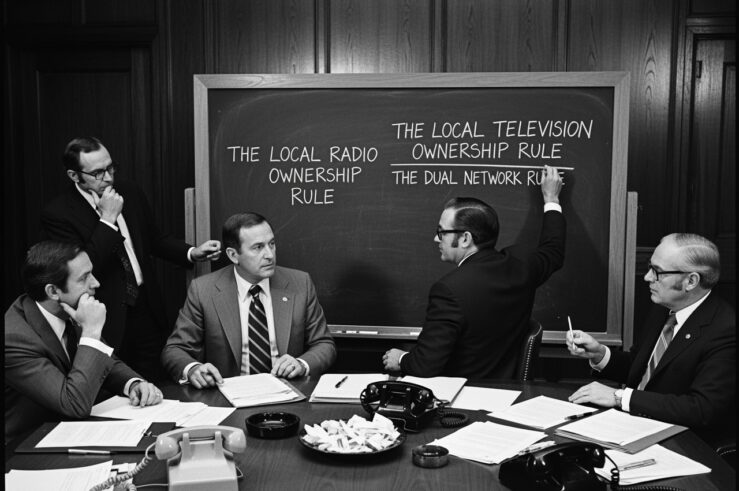
Your Local News Anchors Might Welcome Their New Corporate Overlords
When late-night show Jimmy Kimmel Live! came back from its temporary “break,” viewers in many markets discovered something odd: Kimmel wasn’t back on their local stations. In markets with ABC affiliates owned by media giants Sinclair and Nexstar, stations skipped the show entirely, substituting their own content instead. This incident highlights a bigger question that ... Your Local News Anchors Might Welcome Their New Corporate Overlords

Scale or Fail: Why Paramount Skydance’s Warner Bros Gambit Makes Economic Sense
Just weeks after Skydance Media completed its acquisition of Paramount Global, the new company is reportedly preparing a majority cash bid to acquire Warner Bros. Discovery (WBD) in its entirety, including its cable networks and movie studio. A Skydance-Warner combination could reshape the global entertainment landscape. Backed by Paramount Skydance CEO David Ellison’s substantial family ... Scale or Fail: Why Paramount Skydance’s Warner Bros Gambit Makes Economic Sense

The EU Proposes a DMA for Space
The European Union has a well-established playbook for regulating industries dominated by U.S. firms: Identify a market where American companies are global leaders; Draft sweeping legislation grounded in vague principles like “fairness” or “sustainability”; and Create a regulatory structure that imposes disproportionate burdens on the largest and most successful (and usually foreign) companies. The EU’s ... The EU Proposes a DMA for Space

Claims of Monopsony in the Wireless Industry Don’t Add Up
A recent report prepared for NATE: The Communications Infrastructure Contractors Association by the Brattle Group paints a troubling picture of the U.S. wireless-infrastructure industry. But a closer look at the report’s narrative demonstrates that it is built on faulty premises, misapplied economics, and a failure to connect the dots. While the report serves as a ... Claims of Monopsony in the Wireless Industry Don’t Add Up

Simington’s Video-Competition Proposal Would Double Down on an Outdated Framework
Commissioner Nathan Simington of the Federal Communications Commission (FCC) recently penned an op-ed (together with Gavin Wax, his chief of staff) highlighting a fundamental problem in America’s media landscape: traditional broadcasters operate under strict regulatory constraints, while streaming platforms enjoy virtually unlimited freedom. Their solution? Expand FCC oversight to include streaming services as “multichannel video ... Simington’s Video-Competition Proposal Would Double Down on an Outdated Framework