Showing archive for: “U.S. Constitutional Law: Interpretation & Judicial Review”
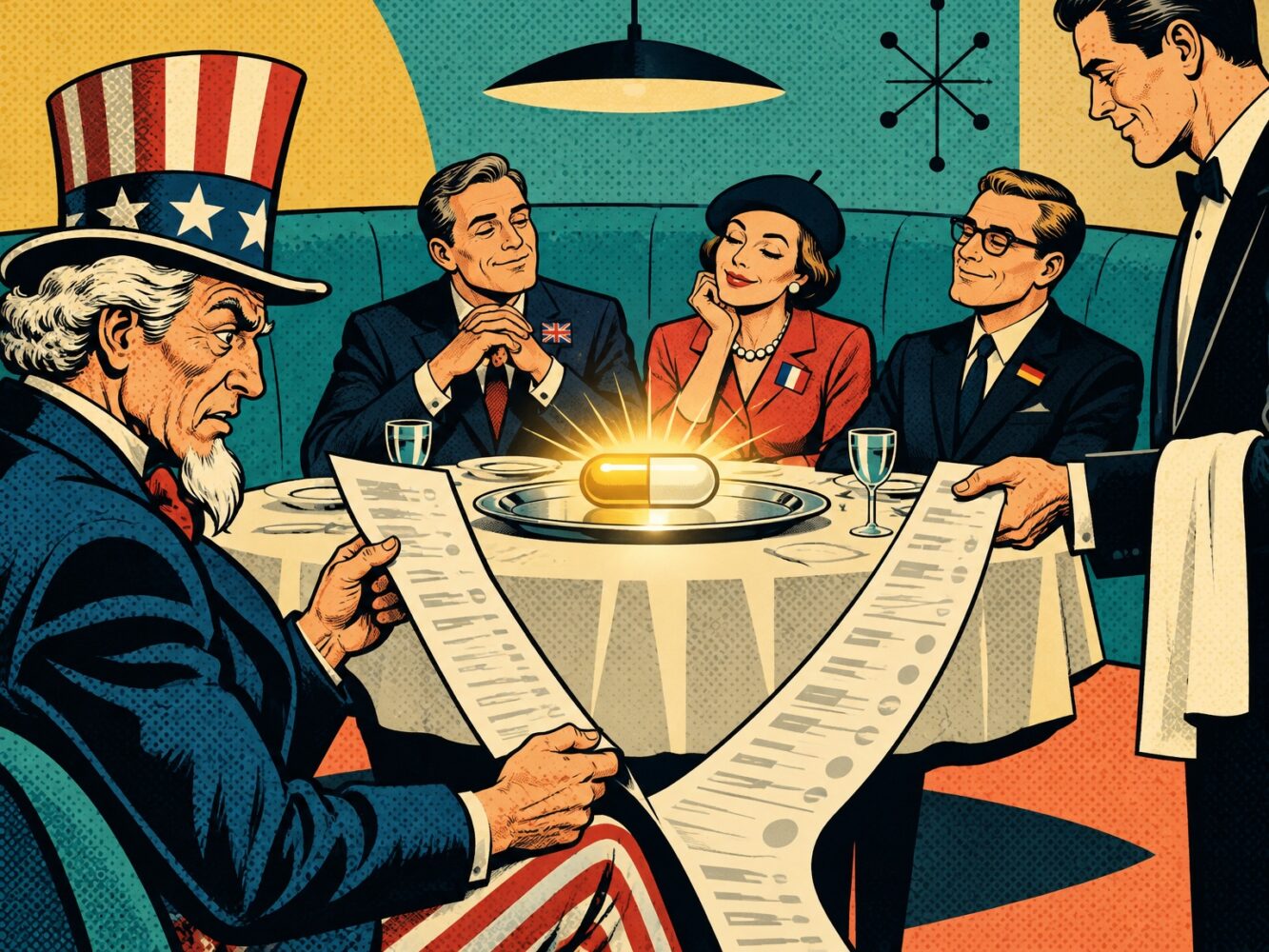
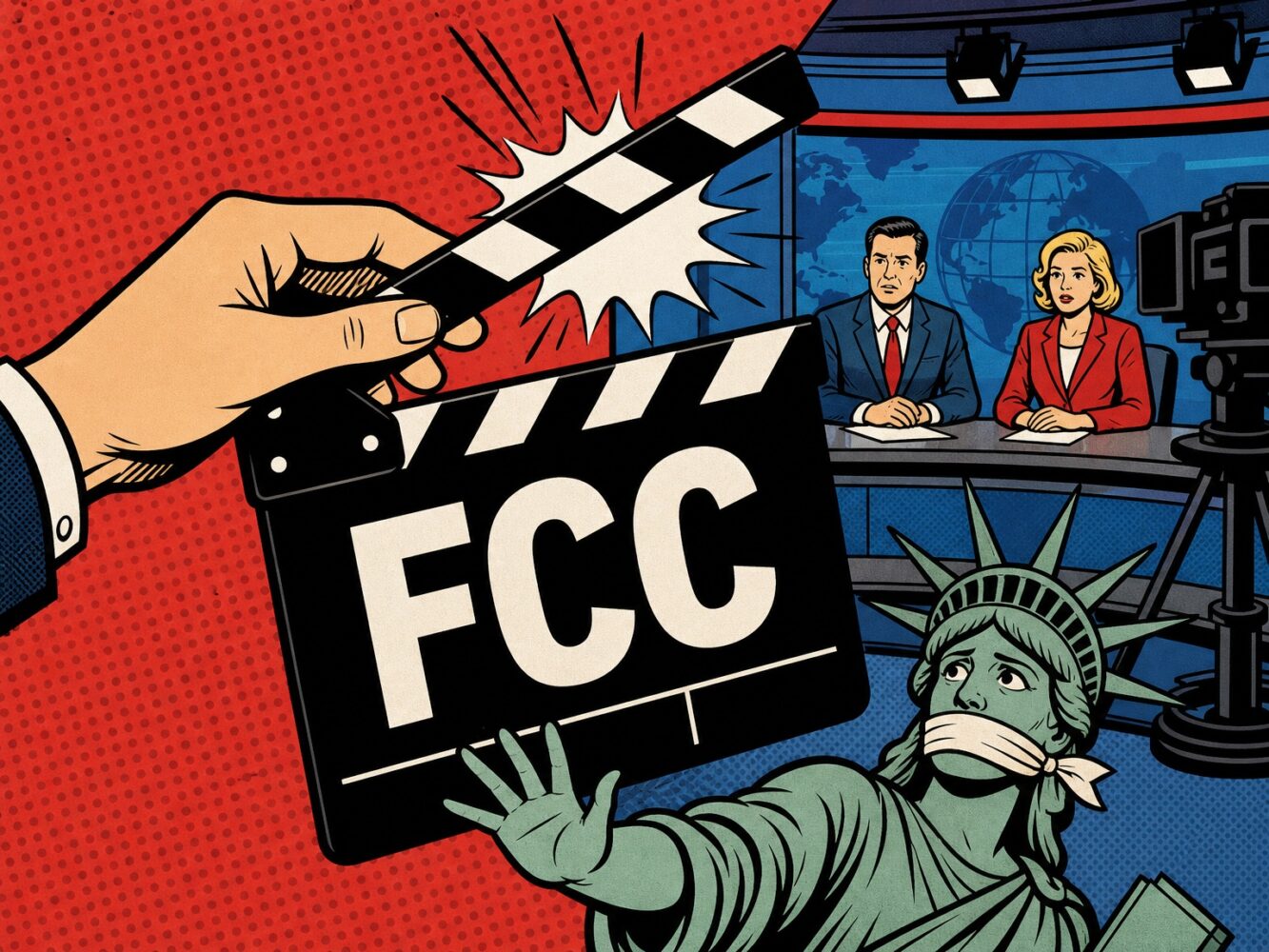
The FCC Wants Final Cut
The government does not need to burn books when it can threaten licenses. Why bother with an inquisitor’s bonfire when a regulator’s raised eyebrow can do the trick? That is the modern First Amendment problem. Censorship no longer arrives only as an outright ban. More often, it comes dressed as “oversight,” “public interest,” or “compliance”—all ... The FCC Wants Final Cut
Trump Tariffs Before the Supreme Court — Who Wins?
The U.S. Supreme Court heard oral arguments last week on a case that will decide whether President Donald Trump has broad legal authority to impose tariffs as a key part of his foreign economic policy. Based on the justices’ questions, it appears more likely than not that the Court will hold the president lacks this ... Trump Tariffs Before the Supreme Court — Who Wins?

First Amendment Jurisprudence Should Reflect Economic Reality: Why Red Lion and Pacifica Must Fall
The U.S. legal landscape is riddled with anachronisms, but few are as indefensible and economically nonsensical as the justifications for regulating broadcast content. This bizarre notion that radio and television broadcasters deserve fewer First Amendment protections than newspapers, websites, or cable networks is a vestige of mid-20th-century technological reasoning that has long overstayed its constitutional ... First Amendment Jurisprudence Should Reflect Economic Reality: Why Red Lion and Pacifica Must Fall

Termination Tuesday: A Quasi-Comprehensive, Quasi-Definitive Discussion of the FTC and Humphrey’s Executor
Author’s Note: Sometimes “quasi” means “sort of” or, as Merriam-Webster’s would have it, “having some resemblance usually by possession of certain attributes.” And sometimes, “some resemblance” means “not very much.” On March 18, President Donald Trump fired—or purported to fire—the two Democratic members of the Federal Trade Commission (FTC): Alvaro Bedoya and Rebecca Slaughter. Bedoya ... Termination Tuesday: A Quasi-Comprehensive, Quasi-Definitive Discussion of the FTC and Humphrey’s Executor

There’s nothing “conservative” about Trump’s views on free speech and the regulation of social media
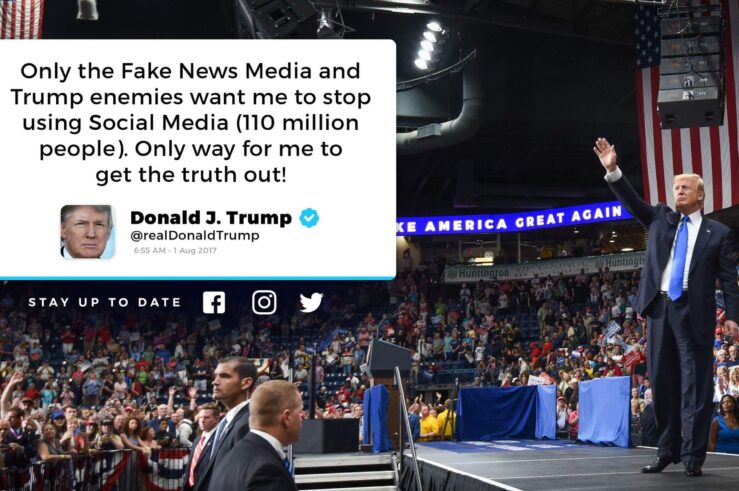
Yesterday was President Trump’s big “Social Media Summit” where he got together with a number of right-wing firebrands to decry the power of Big Tech to censor conservatives online. According to the Wall Street Journal: Mr. Trump attacked social-media companies he says are trying to silence individuals and groups with right-leaning views, without presenting specific ... There’s nothing “conservative” about Trump’s views on free speech and the regulation of social media
Rationally Defeating Cronyism in the Boston TNC Suit
On March 31, a federal judge gave the city of Boston six months to rectify the disparities between the way it treats Transportation Network Companies (“TNC”) (such as Uber and Lyft) and taxicab companies. This comes pursuant to an order by US District Court Judge Nathaniel M. Gorton in a suit filed by members of ... Rationally Defeating Cronyism in the Boston TNC Suit

Renee Newman Knake on Corporations, the Delivery of Legal Services, and the First Amendment Part I
Last month the New York Times ran an editorial with the headline “Addressing the Justice Gap,” observing that “the poor need representation and thousands of law graduates need work.” The piece proposed several solutions, but notably absent was the reform most likely to deliver legal services to those in need and to create jobs for ... Renee Newman Knake on Corporations, the Delivery of Legal Services, and the First Amendment Part I
Is The Dodd-Frank Wall Street Reform & Consumer Protection Act of 2010 Constitutional?
C. Boyden Gray and John Shu offer a very helpful discussion on this issue in an article in Engage. Here is the abstract: President Obama signed the Dodd-Frank Wall Street Reform and Consumer Protection Act of 2010 (“Dodd-Frank” or “the Act”) into law on July 21, 2010. The massive and complex Act is reportedly the ... Is The Dodd-Frank Wall Street Reform & Consumer Protection Act of 2010 Constitutional?
A proposed amendment to our Constitution
Ask any conservative what the problem with America is today, and the answer you will get is government spending. But ask that same conservative, or any conservative for that matter, what to do about it, and the shoulders will inevitably shrug. Politicians, including conservatives, simply cannot be trusted when they get control of the purse ... A proposed amendment to our Constitution