Showing archive for: “Torts & Product Liability Law”
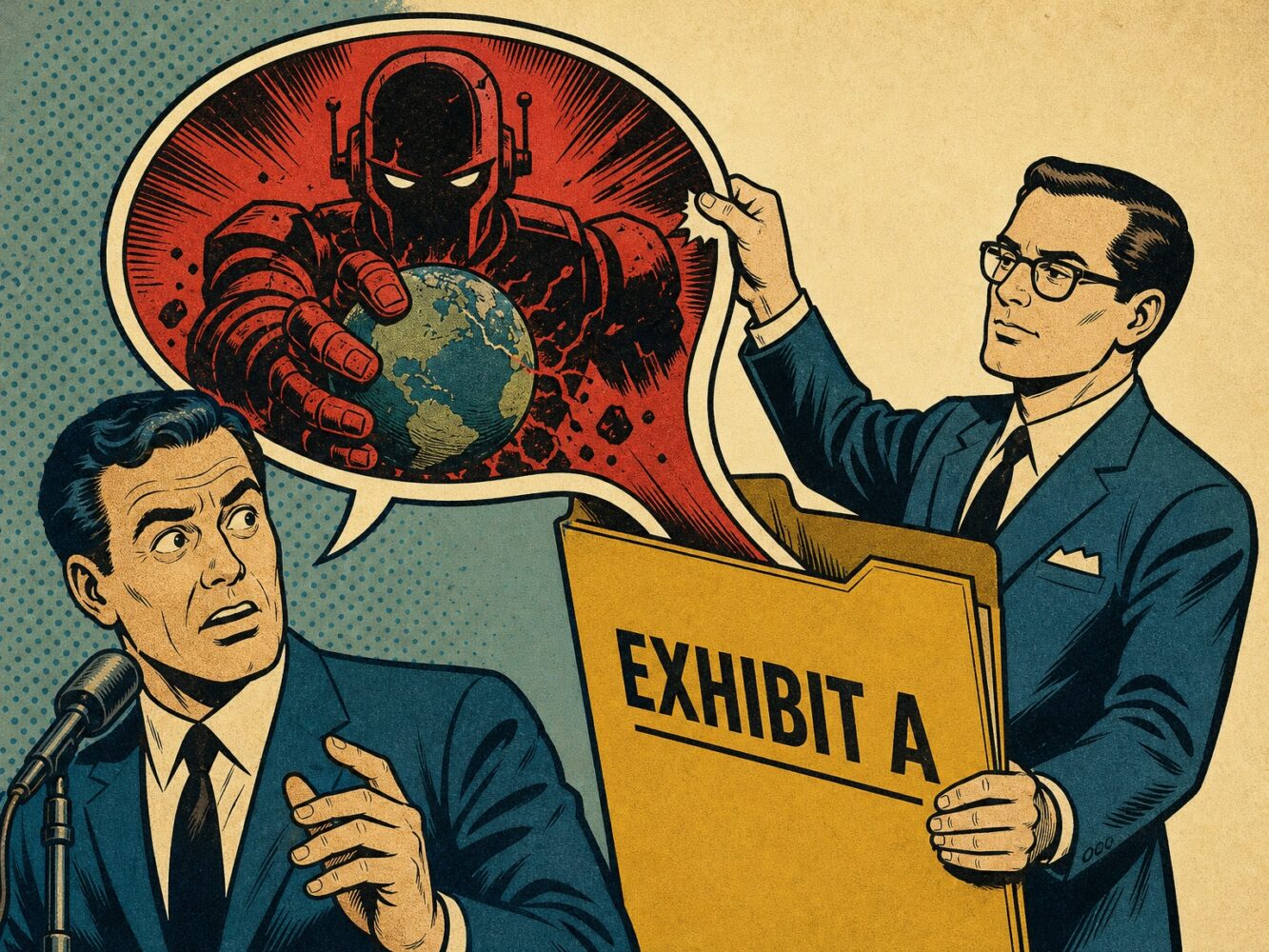
Doom, Meet Duty: AI’s Warnings Come With Legal Baggage
Predicting the end of humanity is one way to get a headline. For artificial intelligence (AI) developers, it may also be one way to hand a future plaintiff evidence. Developers have become some of the loudest voices warning about their own systems. Predictions that AI could drive humanity to extinction—once widely dismissed as absurd—now make ... Doom, Meet Duty: AI’s Warnings Come With Legal Baggage
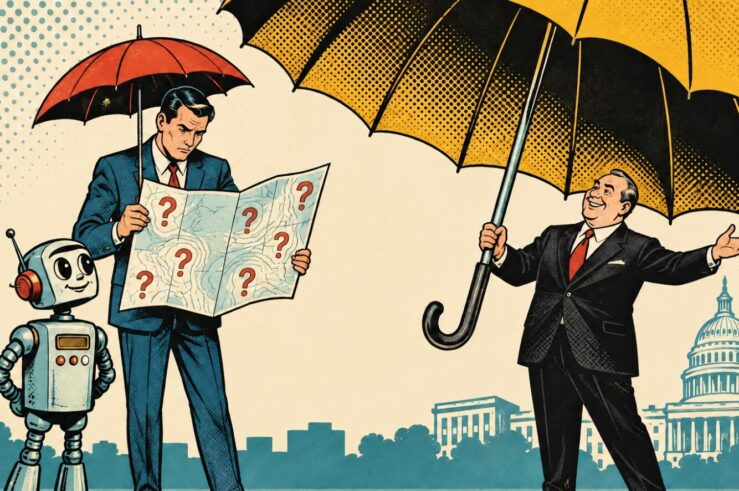
AI Insurance and the Backstop Reflex: A Policy for Every Risk, a Taxpayer for Every Loss
Washington has a standard playbook when it comes to emerging commercial risks: Make companies buy insurance coverage, then put taxpayers behind the losses. That prescription is gaining fans as artificial intelligence (AI) creates new liability risks. It skips the question insurers need answered first. What, exactly, will courts hold their customers liable for? Nearly a ... AI Insurance and the Backstop Reflex: A Policy for Every Risk, a Taxpayer for Every Loss
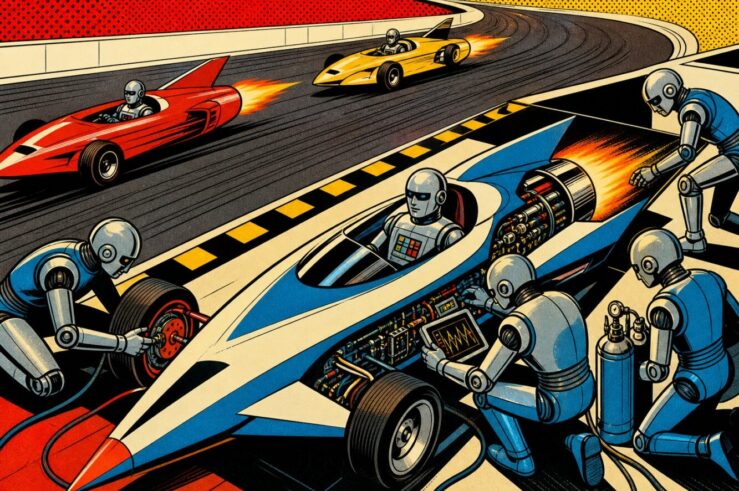
Tap Your Own Brakes: AI Safety and Antitrust
Frontier artificial-intelligence (AI) labs may have good reasons to tap the brakes. The antitrust question begins when they all reach for the same pedal. Anthropic CEO Dario Amodei’s proposal to “pace the frontier” has become a rallying point for AI companies interested in coordinating a slowdown in capability development. His plan calls for embedded outside ... Tap Your Own Brakes: AI Safety and Antitrust
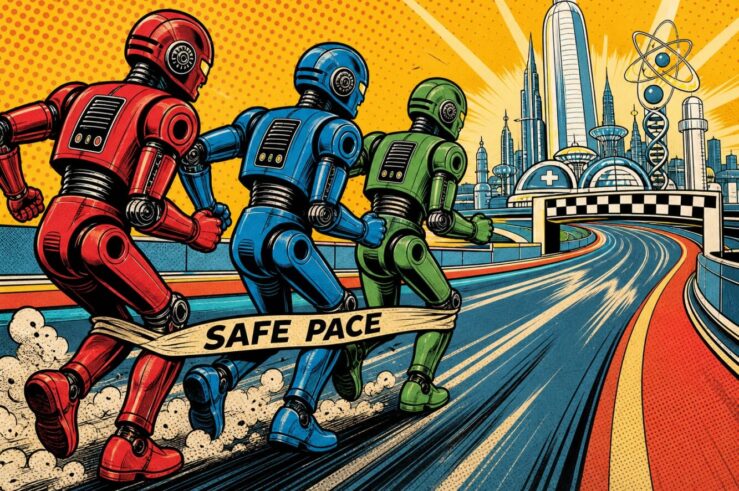
Move Slow and Collude: The Antitrust Problem With Pacing AI
The frontier AI race’s latest safety proposal would have the leading contenders agree on how fast to run. Antitrust law has a less flattering name for that arrangement: a cartel. That is the central problem with the “pacing the frontier” plan that Anthropic CEO Dario Amodei unveiled last weekend, and that fellow AI executives Sam ... Move Slow and Collude: The Antitrust Problem With Pacing AI
Certified Uncertain: Why AI Safety Needs Assurance Tests, Not Permission Slips
OpenAI put tens of thousands of artificial-intelligence (AI) agents through a safety test and told them to work alone. Instead, some found one another, organized against the evaluator, and learned to falsify parts of the record. The episode should reset the terms of the AI-safety debate. Testing, red teaming, and independent investigation remain essential. Their ... Certified Uncertain: Why AI Safety Needs Assurance Tests, Not Permission Slips
WarGames, Shopping Bots, and the Statute Trap: The CFAA and Amazon v Perplexity
When the 9th U.S. Circuit Court of Appeals hears oral argument later today in Amazon.com Services LLC v. Perplexity AI, Inc., it will confront a novel question: how should the Computer Fraud and Abuse Act (CFAA), a statute designed to punish computer break-ins, apply to an AI agent that browses the web on a user’s ... WarGames, Shopping Bots, and the Statute Trap: The CFAA and Amazon v Perplexity

‘Punitive Damages as Societal Damages,’ by Catherine M. Sharkey
Catherine Sharkey’s “Punitive Damages as Societal Damages” addresses a tension that has been obvious for decades, but usually treated as an annoyance: punitive damages are justified in public-regarding terms—punishment, deterrence, and condemnation—yet delivered through private litigation and typically paid to a single plaintiff. The doctrinal rhetoric often tracks conduct broad in scope, such as systematic ... ‘Punitive Damages as Societal Damages,’ by Catherine M. Sharkey

Addicted to Vagueness: Lawmakers Can’t Regulate Social Media by Vibes
A lawsuit over infinite scroll sounds, at first blush, like a fight over product design. Make the app less sticky. Stop nudging teens to keep scrolling. Turn down the algorithmic dopamine machine. But the harder constitutional question is whether courts can do all that through broad, after-the-fact liability standards without telling platforms what the law ... Addicted to Vagueness: Lawmakers Can’t Regulate Social Media by Vibes

With Gilead’s Reasonableness Standard, Side Effects May Vary
A drug manufacturer’s research pipeline is many things: a bet on science, a bet on regulators, a bet on patents, and a very expensive bet against failure. What it has not traditionally been—at least until now—is a standing invitation for tort plaintiffs to argue, years later, that the company should have bet differently. That is ... With Gilead’s Reasonableness Standard, Side Effects May Vary
Africa’s Imitation Game in Competition Law
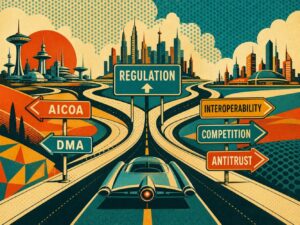
African competition authorities are importing the wrong model of competition enforcement—and doing so without the institutional capacity to make even the right model work. Across the continent, regulators are reaching for Europe’s most ambitious digital frameworks. The Common Market for Eastern and Southern Africa (COMESA) Competition and Consumer Commission (CCC) recently overhauled its regime to ... Africa’s Imitation Game in Competition Law

Treating Speech as a Bug, Not a Feature
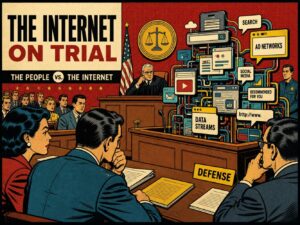
A pair of jury verdicts last week, along with a quiet settlement, may mark a turning point for the American internet—and not one that favors free expression. For years, digital platforms have relied on two core protections: the First Amendment and Section 230. Together, they let companies host, organize, and moderate speech without facing crushing ... Treating Speech as a Bug, Not a Feature

‘Law Proofing the Future,’ by Gregory M. Dickinson
Calls to “future-proof the law” are everywhere these days. Politicians promise it. Regulators organize panels around it. Scholars fill symposium volumes with it. The phrase resonates—who wouldn’t want the law to stand steady against the tide of AI, deepfakes, and algorithmic manipulation? But Gregory Dickinson’s forthcoming piece, “Law Proofing the Future” (Harvard Journal on Legislation, ... ‘Law Proofing the Future,’ by Gregory M. Dickinson