Calls to “future-proof the law” are everywhere these days. Politicians promise it. Regulators organize panels around it. Scholars fill symposium volumes with it. The phrase resonates—who wouldn’t want the law to stand steady against the tide of AI, deepfakes, and algorithmic manipulation? But Gregory Dickinson’s forthcoming piece, “Law Proofing the Future” (Harvard Journal on Legislation, 2026), flips the intuition: it is not the law that needs protection from the future, but the future that needs protection from the law.
The Familiar Arc of Technological Panic
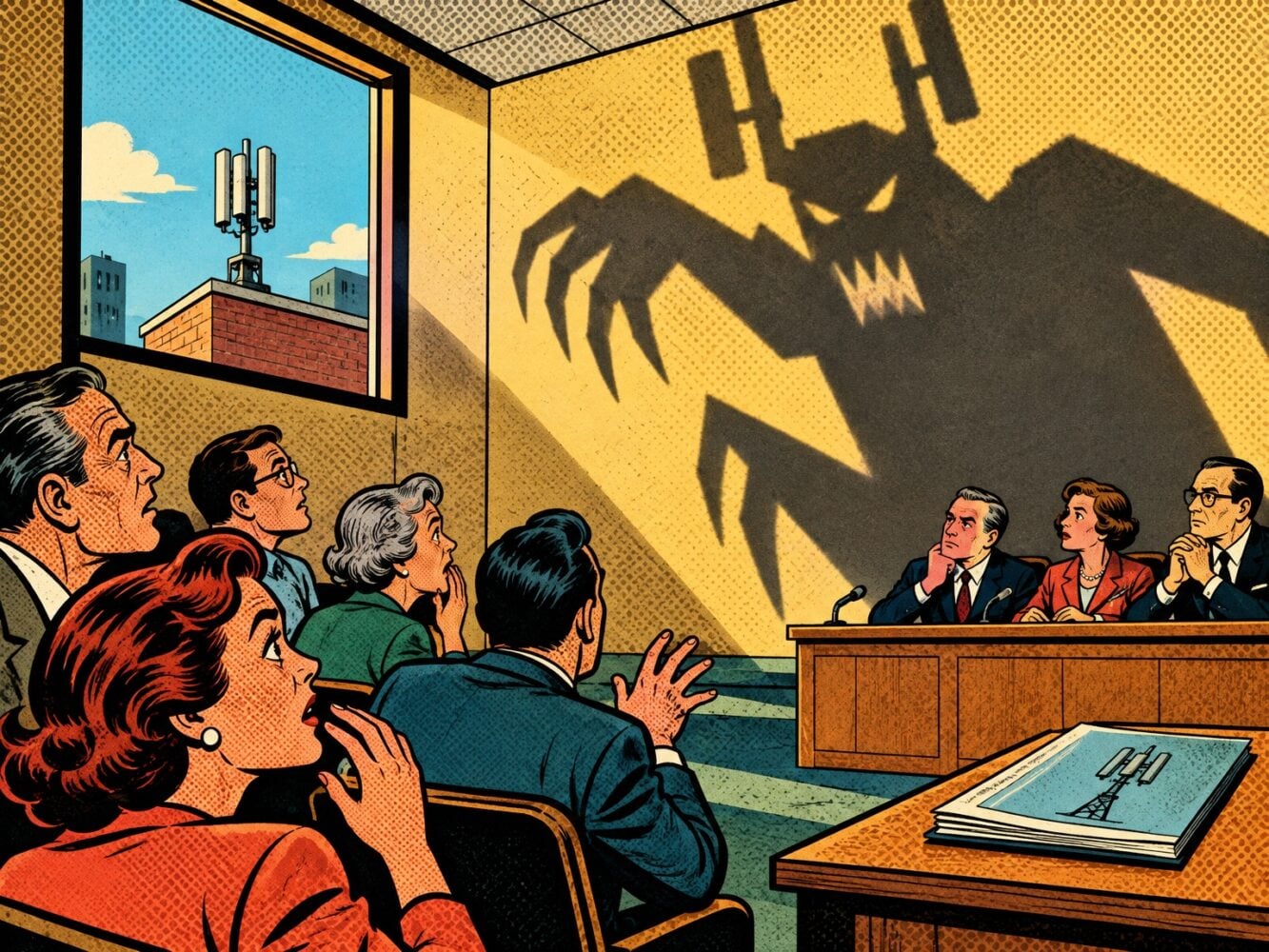
Dickinson begins with a tour through the long history of technological scares. The printing press, first hailed as a divine invention, quickly became an object of suspicion when Martin Luther’s pamphlets began to circulate. Magazines alleged to cause “brain rot” at the turn of the 20th century inspired headlines about the collapse of young minds. Mid-century comic books were blamed for juvenile delinquency, prompting Senate hearings and creation of the Comics Code Authority. Even elevators—today, so banal we barely notice them—provoked an avalanche of rules about rope tensile strength and operator licensing.
Each case follows the same arc: marvel, fear, regulation. Each leaves behind a residue of statutes ill-suited to rapidly evolving technologies, along with flawed assumptions that, in retrospect, tell us more about the anxieties of their age than about the technology itself.
Armed with that history, Dickinson turns to the present. Do we need an entirely new defamation law because chatbots occasionally make up defamatory claims about public figures? No: the doctrines of publication, fault, and negligence already handle the question, whether the words are produced by a human typist, a telephone-directory misprint, or a large language model.
Do self-driving cars demand a new liability regime? Not necessarily: product liability and negligence law already ask whether a manufacturer or driver exercised reasonable care.
Are “dark patterns” in digital interfaces some new beast beyond the law’s reach? Hardly: they are fraud and deceptive practices dressed up with modern design, long policed by common-law courts and the Federal Trade Commission (FTC). The facts may be novel and the technology may be new, but the laws addressed to tackle the alleged harms are enduring.
A Case for Generality and Institutional Humility
What explains the recurring push for new law? Here, Dickinson’s argument takes its law & economics turn. Legislators suffer from F.A. Hayek’s knowledge problem: they lack the dispersed, contextual information necessary to regulate fast-moving technologies wisely. They are vulnerable to George Stigler’s capture dynamic: when regulation comes, it tends to serve the interests of the best-organized incumbents rather than the diffuse public. They fall prey to Harold Demsetz’s nirvana fallacy: comparing imperfect institutions to an idealized alternative, and assuming imperfect new statutes will deliver perfectly upon their promises, where imperfect markets don’t live up perfectly to their own.
Add in the biases of enforcement and the tendency of rules to ossify, and the hazards of “future proofing” start to look greater than the risks of doing less.
The Computer Fraud and Abuse Act is Dickinson’s warning shot. Enacted in 1986 to address hacking of government systems, the CFAA soon expanded into a sweeping prohibition on “unauthorized access” to any computer connected to the internet—which, in practice, meant nearly everything. Prosecutors wielded it against employees checking personal email at work. Companies used it to turn workplace disputes into federal cases.
It took the Supreme Court in Van Buren v. United States (2021) to pare it back, decades too late. What began as a targeted fix for a Cold War fear became a vague, overbroad, and ill-fitting statute that chilled ordinary activity. It is precisely the kind of misfire we should expect when lawmakers legislate in haste against technologies they barely understand.
Methodologically, Dickinson blends history, doctrinal analysis, and institutional economics. He shows how common law adapts incrementally to new facts, while statutes lock in early guesses; how courts, resolving actual disputes with known facts, are better positioned to absorb change than legislatures trying to anticipate the unknown; and how the economic logic of general rules—lower information costs, reduced capture risk, greater adaptability—counsels restraint.
He closes with four prescriptions: default to generality, practice institutional humility, let courts do their work, and allow innovation to proceed by default.
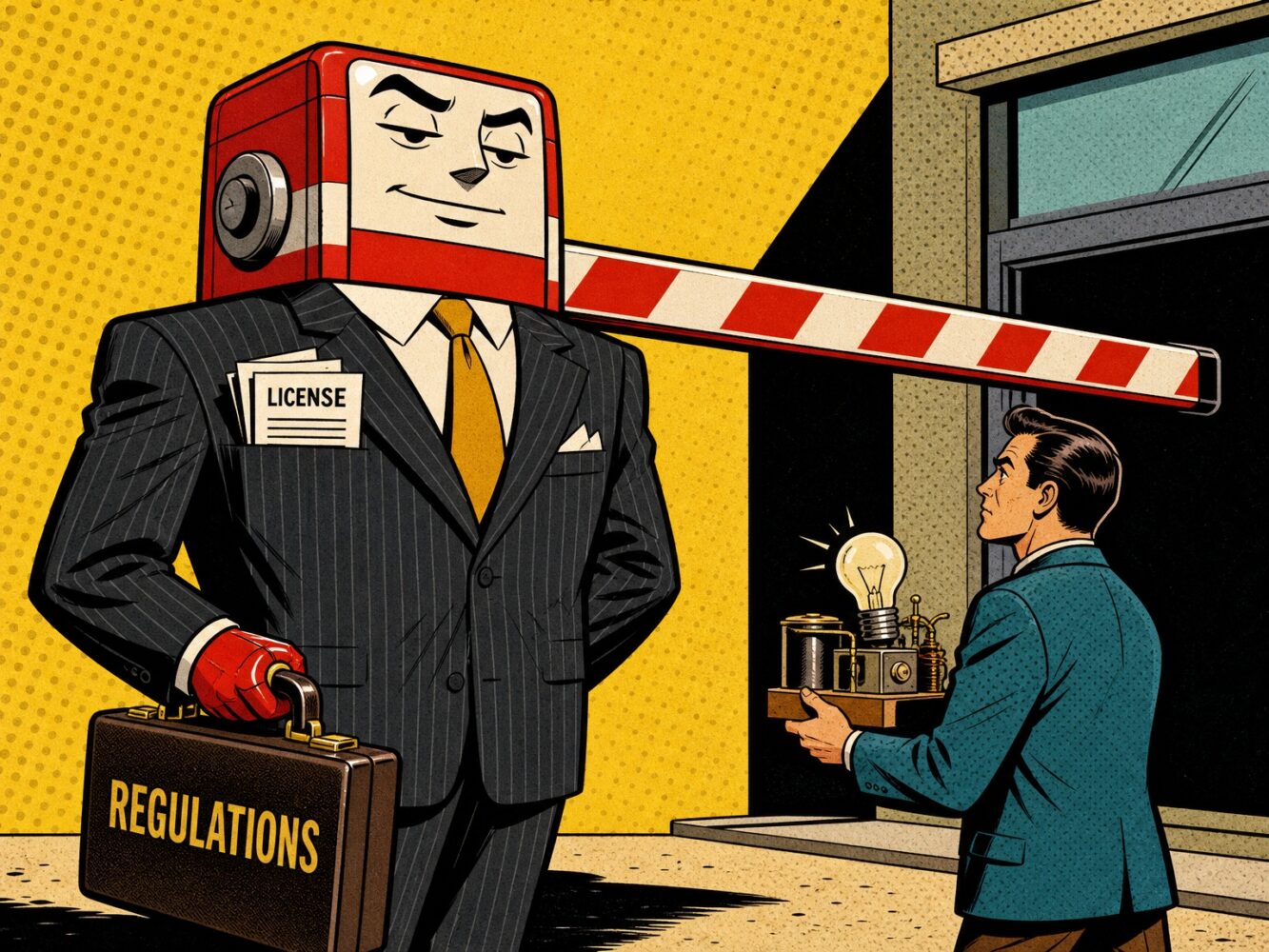
The invitation here is not to laissez-faire romanticism. Dickinson does not deny that AI will cause harms or that dark patterns will dupe consumers. He insists only that we take the hidden costs of precaution seriously. Every bespoke statute risks entrenching incumbents, stifling small-scale experimentation, and diverting innovation into legally safer but socially less valuable domains. Permissionless innovation, backstopped by ex post remedies, lets society discover the benefits before moving to restrict them. The alternative is to require permission in advance—an approach that too often means never getting the experiment at all.
Critics will find places to push back. Courts can be slow, litigation costly, and harms widespread before doctrines adapt. Insurance markets can mitigate some of this, but distributional concerns remain. And while capture plagues agencies, asymmetry also plagues litigation, where only the well-resourced can afford to press claims.
Dickinson’s faith in the common law may sometimes gloss over those inequities. Yet the provocation stands: if the choice is between general principles that flex with new facts and bespoke statutes written in fear of futures we cannot predict, the former deserves more credit than our current debates allow.
Law as a Framework, Not a Fortress
In the end, “Law Proofing the Future” reminds us that law is not brittle glass that must be braced against the storms of innovation. At its best, it is a stable framework—property, contract, tort, fraud—that has already weathered centuries of change. Rather than rushing to draft the next AI Act or algorithmic-fairness statute, we might better preserve both law’s virtues and innovation’s promise by remembering that lesson. The law doesn’t need to be future proofed. The future needs room to grow.
For Further Reading
- Brad A. Greenberg, “Rethinking Technology Neutrality,” Minnesota Law Review Vol. 207 (2016).
- Gary M. Lucas, Jr., “Out of Sight, Out of Mind: How Opportunity Cost Neglect Undermines Democracy,” New York University Journal of Law and Liberty, Vol. 9, No. 1 (2015).
- Adam Thierer & Kevin Frazier, “America’s Litigation Addiction Threatens Its AI Leadership,” Civitas Outlook (Nov. 11, 2025).