Showing archive for: “South & Central American Law”
What the IMF Gets Wrong About Costa Rica’s Payment-Card Caps
The Asamblea Legislativa de la República de Costa Rica (Costa Rica’s legislature) moved in 2020 to empower the Banco Central de Costa Rica (BCCR), the nation’s central bank, to impose price controls on fees charged by both payment-card issuers and acquirers. I have written previously about the perverse effects these price controls can generate (here, ... What the IMF Gets Wrong About Costa Rica’s Payment-Card Caps
In Reforming Its Antitrust Act, Argentina Should Not Ignore Its Institutional Achilles Heel
As part of a set of “shock therapy” measures introduced to deregulate and stabilize its economy, the Argentinian government led by newly elected President Javier Milei has already adopted an emergency decree (Decreto de Necesidad y Urgencia) that makes broad array of legal changes. Toward the same goal, the government in late December sent up ... In Reforming Its Antitrust Act, Argentina Should Not Ignore Its Institutional Achilles Heel

Latin America Should Follow Its Own Path on Digital-Markets Competition
In order to promote competition in digital markets,[1] Latin American countries should not copy and paste “solutions” from other jurisdictions, but rather design their own set of policies. In short, Latin American countries—like my own, Peru—should not “put the cart before the horse” and regulate markets that are not yet mature. Digital or “tech” markets ... Latin America Should Follow Its Own Path on Digital-Markets Competition
The View From Brazil: A TOTM Q&A with Mariana Tavares de Araujo
How did you come to be interested in the regulation of digital markets? Prior to joining Levy & Salomão Advogados, I worked with the Brazilian government for nine years, four of which I served as head of the government agency in charge of antitrust enforcement and consumer protection policy. During this time, I was very ... The View From Brazil: A TOTM Q&A with Mariana Tavares de Araujo

The Effect of VAT Withholding Requirements in Latin America
Innovations in payment systems are rapidly transforming the world economy. While Bitcoin, Ethereum, and other decentralized blockchain-based systems tend to garner much of the press (good and bad), centralized peer-to-peer (P2P) payment systems are far more common. (Note that I use the term P2P here in its original sense to mean all peer-to-peer transactions, which ... The Effect of VAT Withholding Requirements in Latin America

Does ‘Open Finance’ Promote Competition or Facilitate Free Riding?
Financial technology, or so-called “fintech,” is disrupting the financial sector, and that’s a good thing. Fintech services are making finance more digital and more user-friendly. This, in turn, has led to reduced transactions costs and increased levels of competition, innovation, and financial inclusion. Alas, the emergence of fintech has also been accompanied by a rising ... Does ‘Open Finance’ Promote Competition or Facilitate Free Riding?
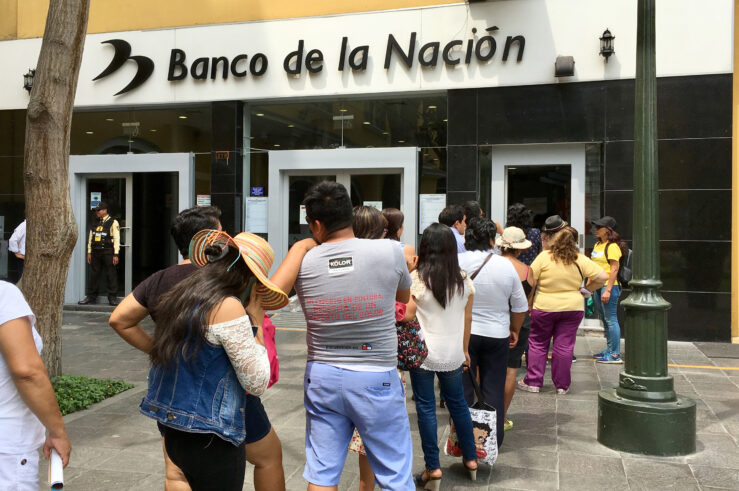
Is Pix Really the End of Credit Cards?
In late August, Roberto Campos Neto, the head of Brazil’s central bank, is reported to have said about Pix, the bank’s two-year-old real-time-payments (RTP) system, that it “eliminates the need to have a credit card. I think that credit cards will cease to exist at some point soon.” Wow! Sounds amazing. A new system that ... Is Pix Really the End of Credit Cards?

The ICANN Board’s Important Test of Independence: .Amazon
One of the main concerns I had during the IANA transition was the extent to which the newly independent organization would be able to behave impartially, implementing its own policies and bylaws in an objective and non-discriminatory manner, and not be unduly influenced by specific “stakeholders”. Chief among my concerns at the time was the ... The ICANN Board’s Important Test of Independence: .Amazon